
Landschaft Mit Fischern, Hirten Und Vieh — History & Facts
What if silence could speak through light? In the stillness of Landschaft Mit Fischern, Hirten Und Vieh, memory lingers like a whisper, imbuing the landscape with a profound sense of history and presence. Look to the left where the gentle curve of the river invites your gaze. Notice how the soft, muted colors evoke a sense of tranquility, with pale blues and greens seamlessly blending into the horizon. The figures of fishermen and shepherds are positioned harmoniously, their subtle gestures hinting at a shared understanding with nature.
The light, filtered through a thin veil of clouds, casts delicate shadows that stretch across the ground, creating depth and guiding your eye through this pastoral symphony. Within this serene tableau, contrasts emerge: the stillness of the water juxtaposed against the gentle movement of livestock, the communion between man and nature speaking of a bygone era. Each figure, while seemingly small against the vast landscape, carries the weight of their roles, illustrating the interdependence between humanity and the environment. The quietude of the scene invites contemplation, as if the viewer can hear the soft rustle of leaves and the distant call of birds, echoing memories of simpler times. In the years surrounding its creation, Johann Heinrich Wüest found himself in an evolving landscape of artistic expression, where realism embraced natural beauty.
Active primarily in the early to mid-19th century, his work reflected a growing admiration for the picturesque, influenced by the Romantic ideals of connection to nature and rural life. Though the exact date remains unknown, the painting encapsulates an era of longing for pastoral simplicity amidst the rapid industrial changes of his time.
More Artworks by Johann Heinrich Wüest
Browse all →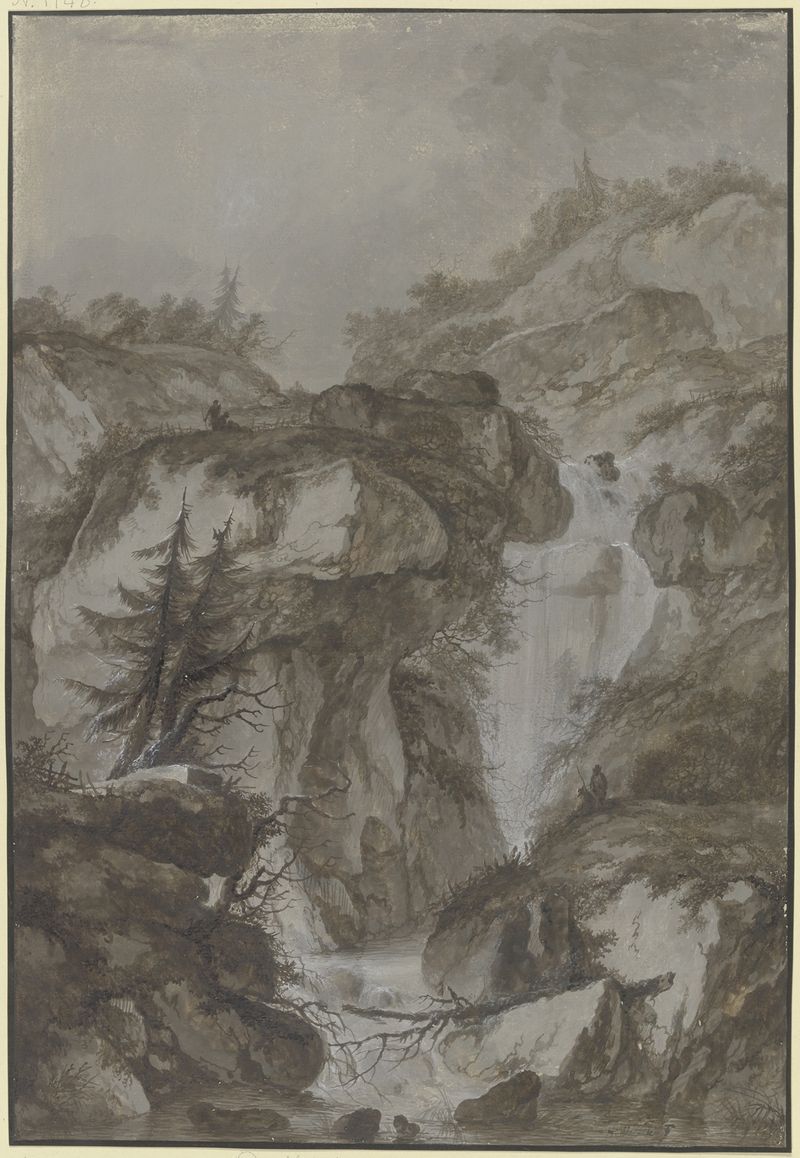
Gebirgsschlucht mit Wasserfall, angeblich der Handeckfall im Haßlital
Johann Heinrich Wüest
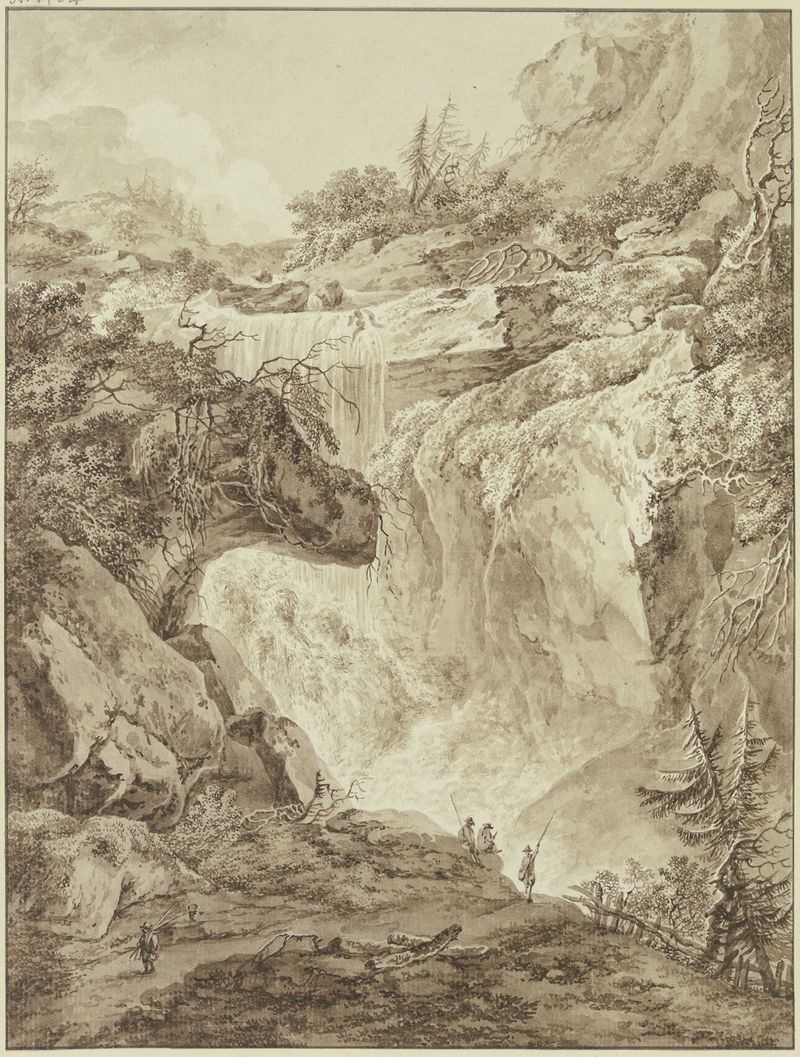
Wasserfall in einer Gebirgsschlucht, im Vordergrund vier Angler
Johann Heinrich Wüest
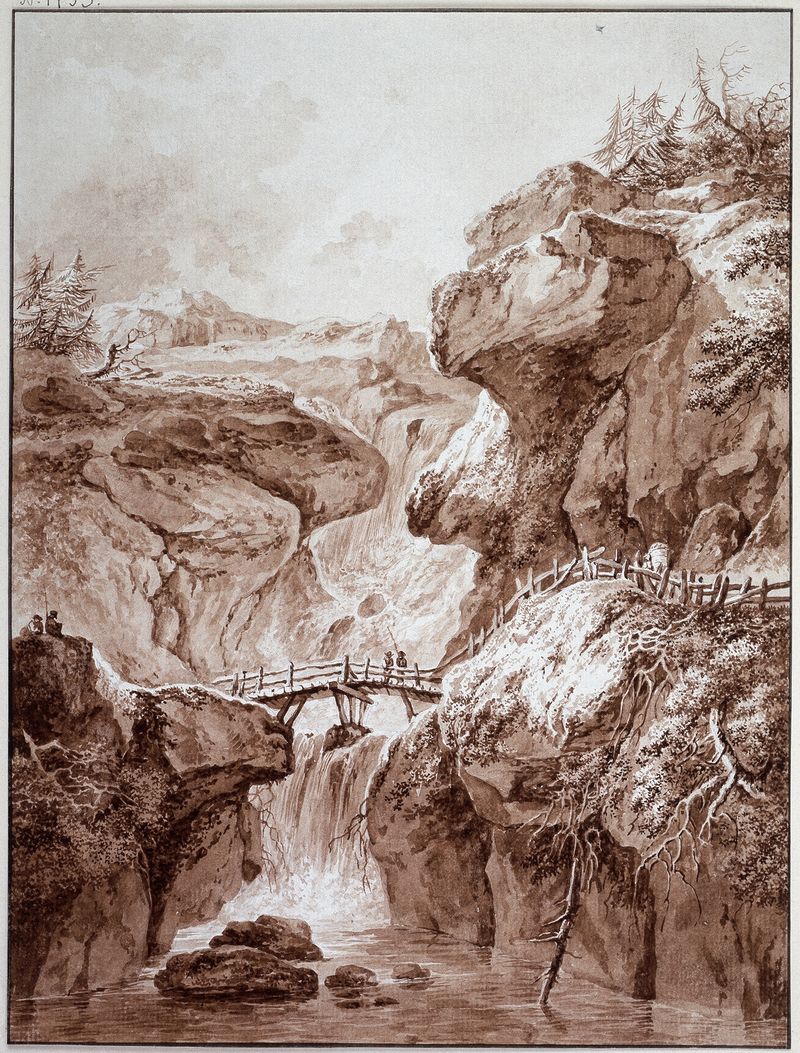
Wasserfall in einer Felsenschlucht
Johann Heinrich Wüest

Mittelgebirgslandschaft mit Bach, rechts Viehherde
Johann Heinrich Wüest
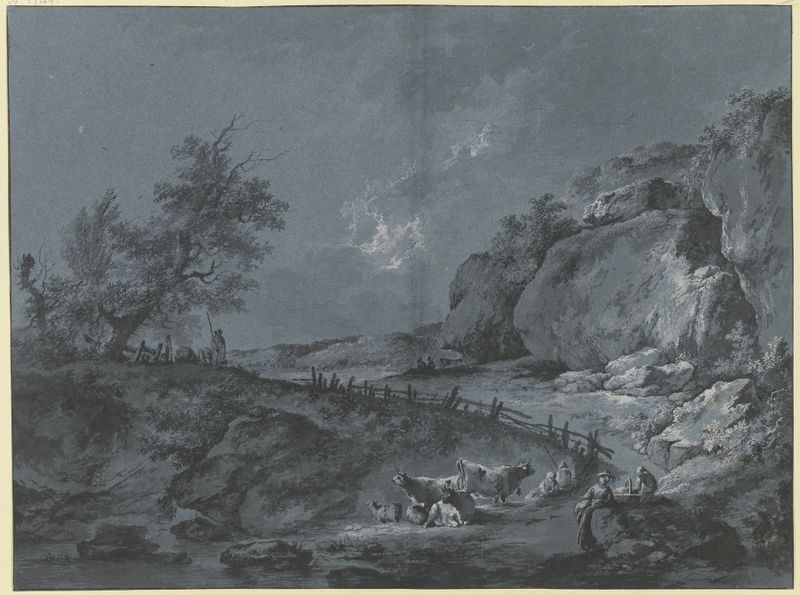
Bergweg am Fuß von Felsen, an der Biegung durch einen Lattenzaun begrenzt, iIm Vordergrund Hirten, Rinder und Schafe
Johann Heinrich Wüest
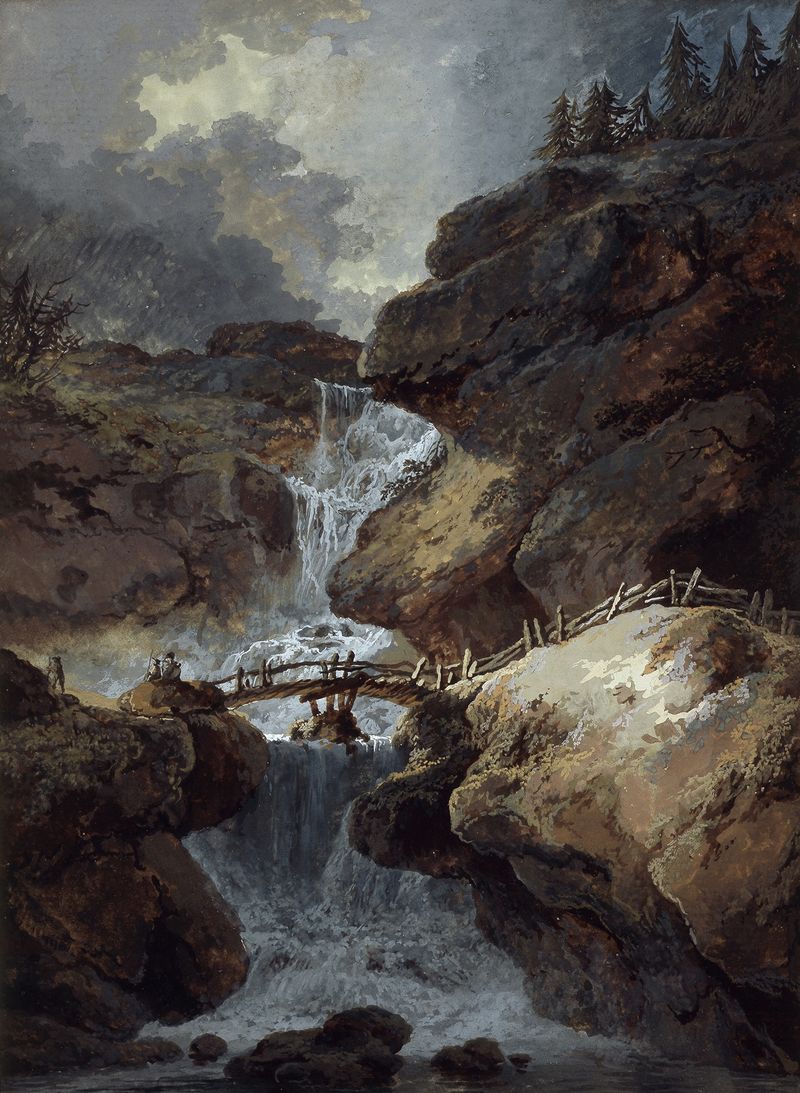
Wasserfall in einer Felsenschlucht bei Gewitterstimmung
Johann Heinrich Wüest
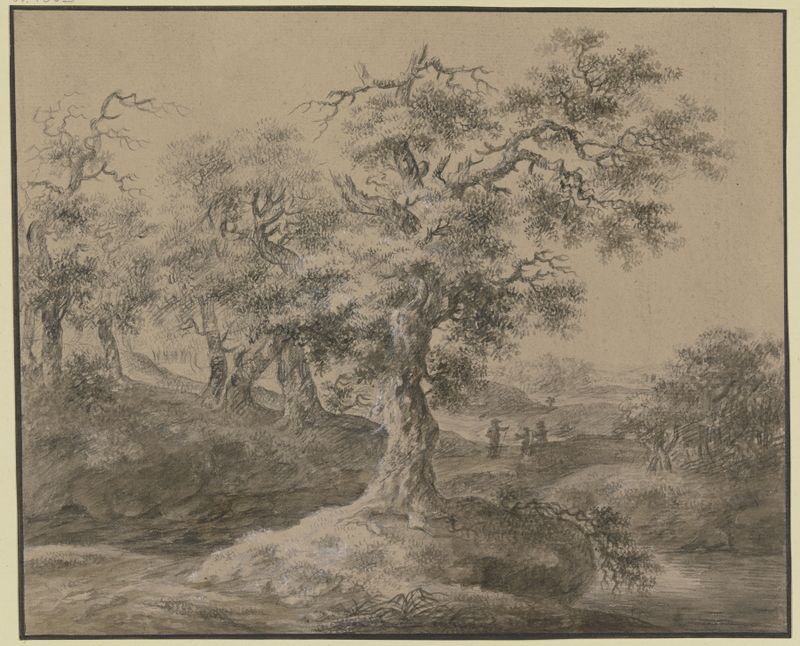
Eichenwald, am Weg eine rastende Familie
Johann Heinrich Wüest

Hügellandschaft mit Ausblick in weite Ferne, vorne am Weg rastende Hirten mit ihrer Herde und wandernde Bauern
Johann Heinrich Wüest
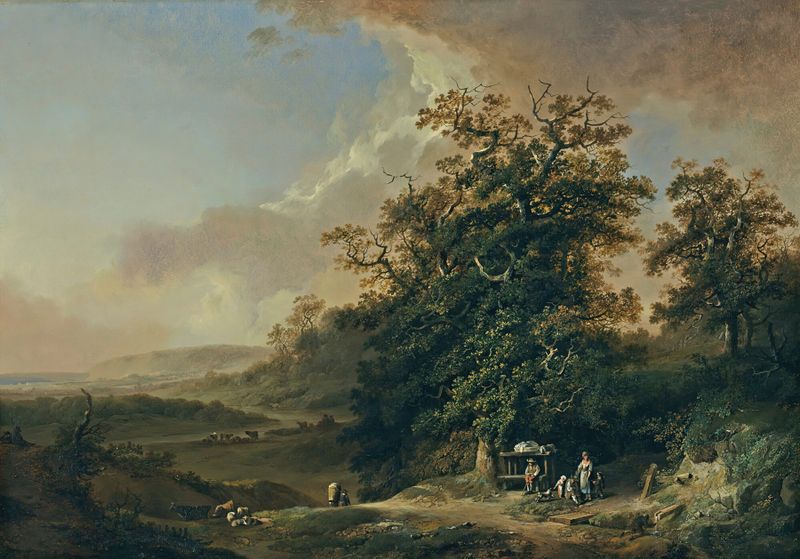
Landschaft Mit Reisenden An Einem Flussufer
Johann Heinrich Wüest





