
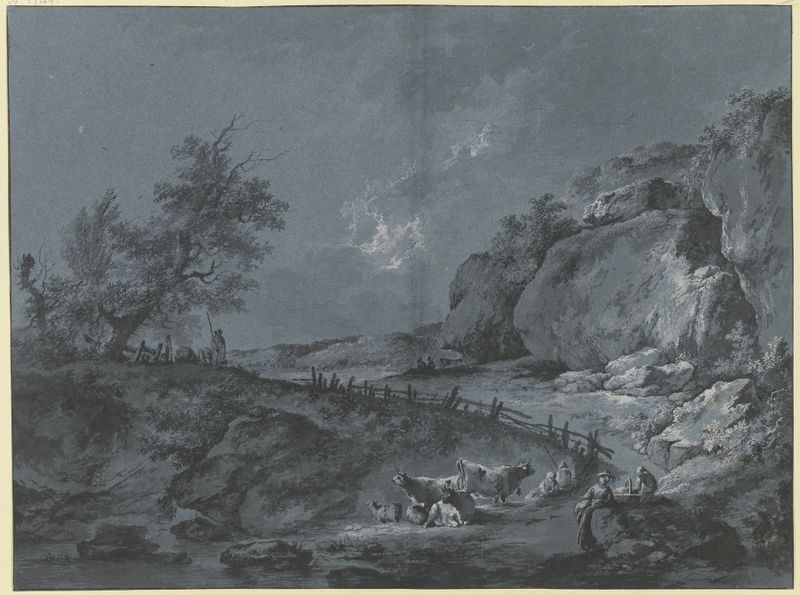
Mittelgebirgslandschaft mit Bach, rechts Viehherde — History & Facts
In a world of fleeting moments, how does one capture the essence of fragility? This painting beckons the viewer to pause and reflect on the delicate interplay of nature and life. Look to the left at the gentle curve of the brook, its water shimmering like liquid glass under a soft, diffused light. The lush greenery surrounding it breathes life into the piece, inviting viewers to trace the outlines of the trees that cradle the scene. A herd of cattle grazes peacefully to the right, their forms rendered with a tenderness that speaks to the artist’s careful observation of rural life.
The muted palette, with its earthy greens and warm browns, envelops the landscape in an intimate embrace, highlighting the interdependence of the natural elements. Within this pastoral setting lies a profound tension between serenity and vulnerability. The cattle, serene in their presence, hint at the fragility of rural existence — a reminder of life’s dependence on the land. Notice how the winding brook symbolizes both movement and stillness, a duality that reflects the transient nature of time and existence.
The delicate balance of light and shadow captures the ephemeral moments that are often overlooked, urging us to appreciate the beauty before it fades. Created in an unknown year, this work reflects a time when Johann Heinrich Wüest was immersed in the Romantic tradition, focusing on the natural world as a source of inspiration. Known for his landscapes, he was influenced by the burgeoning appreciation for nature during the 18th and 19th centuries. Wüest’s exploration of the rural life and its intrinsic fragility was a poignant response to the changing landscapes of his era, where industrialization threatened the very essence of pastoral beauty.
More Artworks by Johann Heinrich Wüest
Browse all →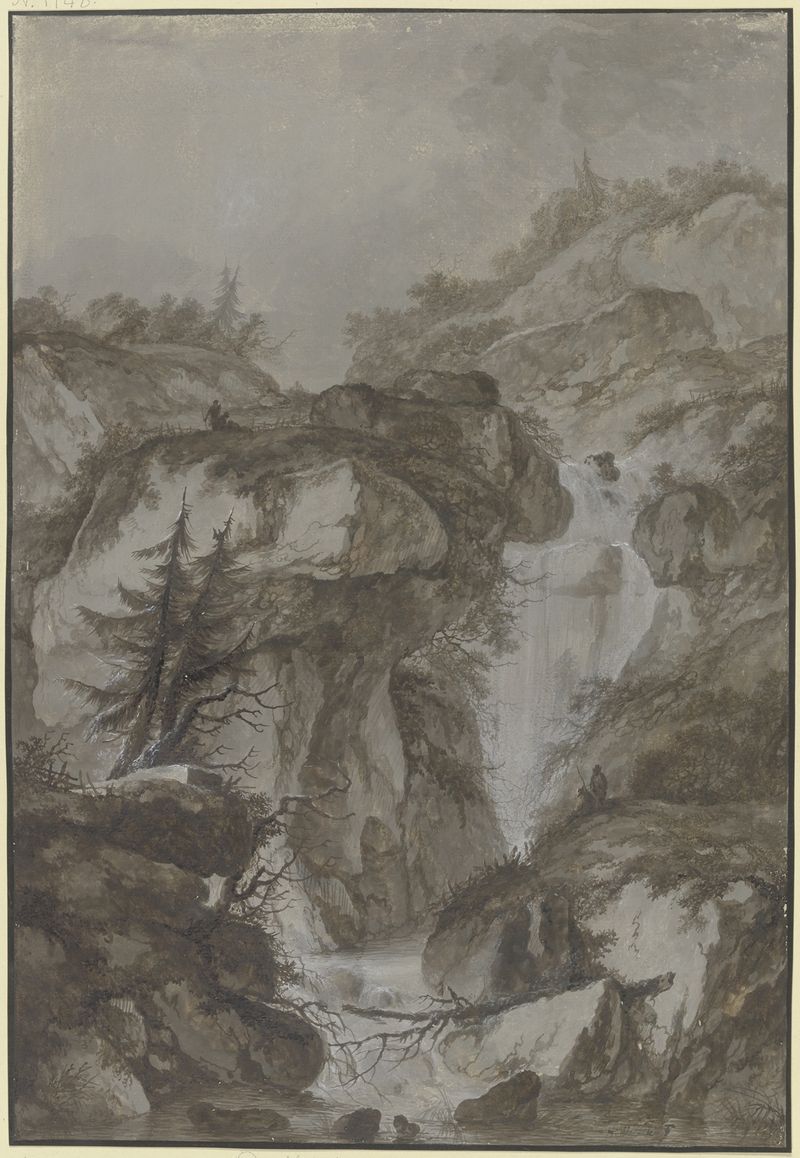
Gebirgsschlucht mit Wasserfall, angeblich der Handeckfall im Haßlital
Johann Heinrich Wüest
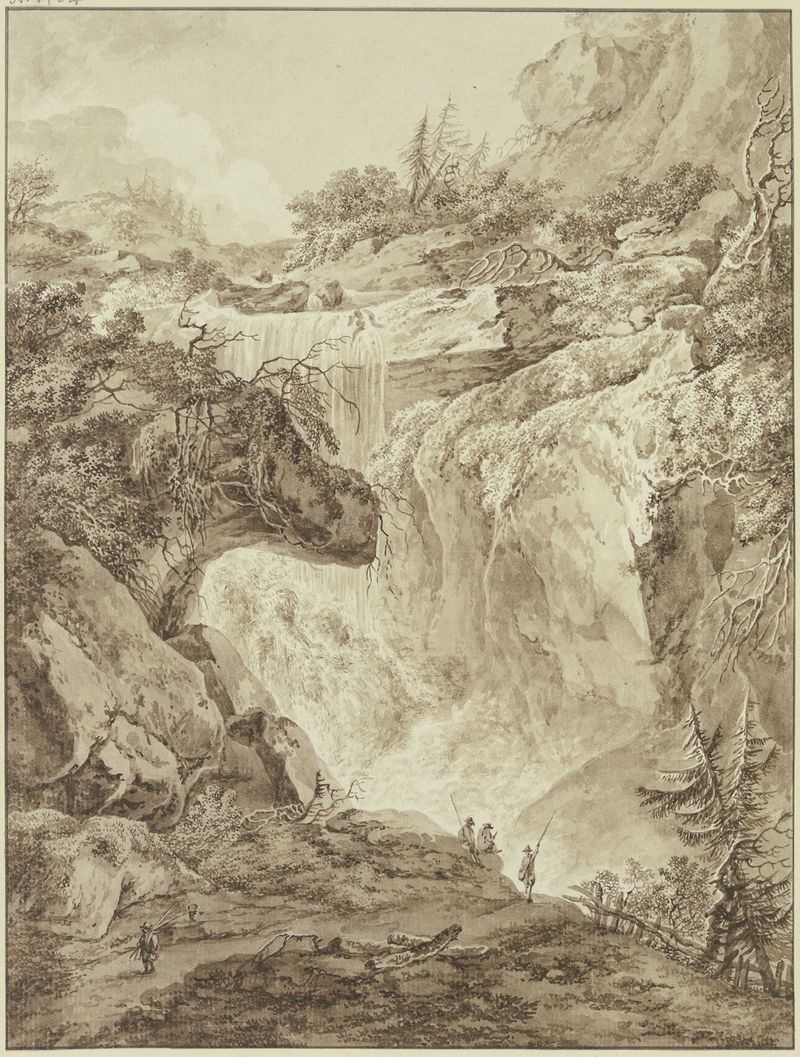
Wasserfall in einer Gebirgsschlucht, im Vordergrund vier Angler
Johann Heinrich Wüest
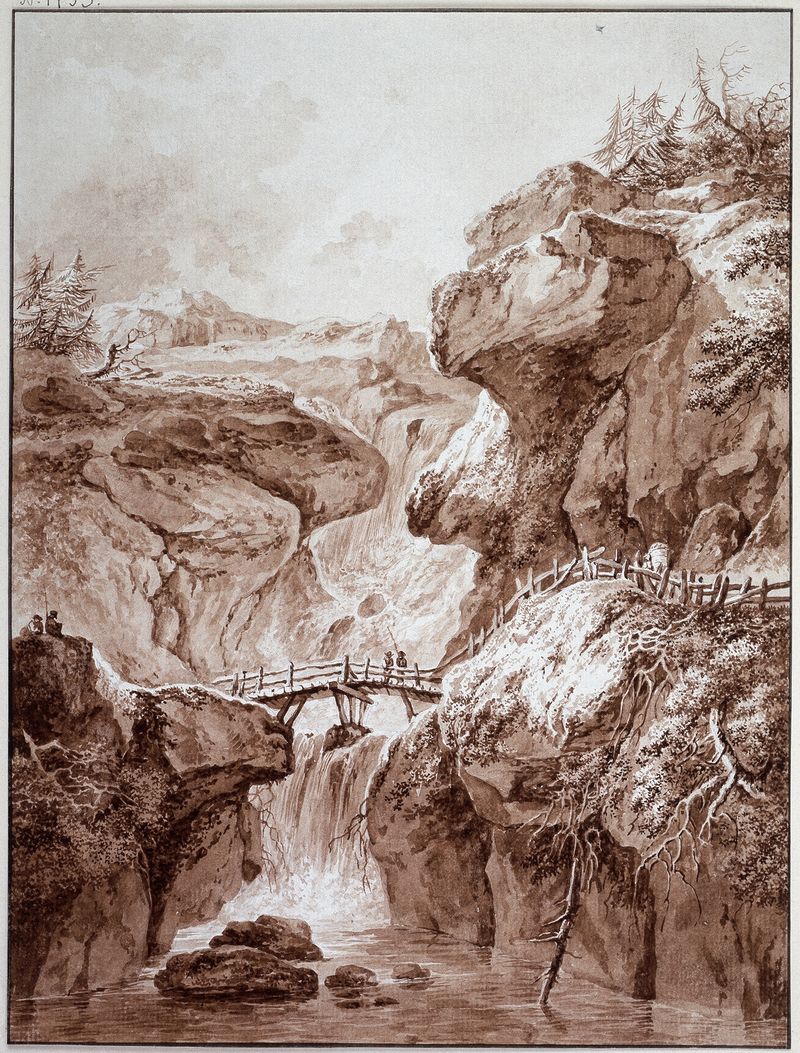
Wasserfall in einer Felsenschlucht
Johann Heinrich Wüest
Bergweg am Fuß von Felsen, an der Biegung durch einen Lattenzaun begrenzt, iIm Vordergrund Hirten, Rinder und Schafe
Johann Heinrich Wüest
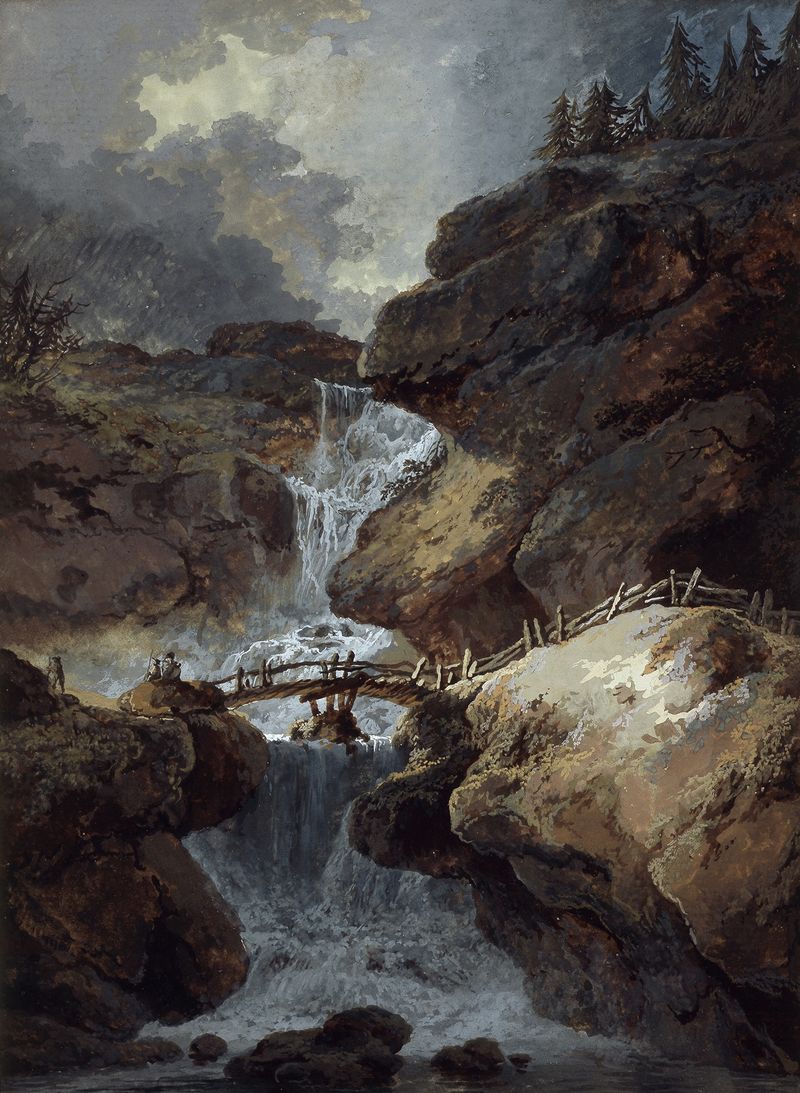
Wasserfall in einer Felsenschlucht bei Gewitterstimmung
Johann Heinrich Wüest
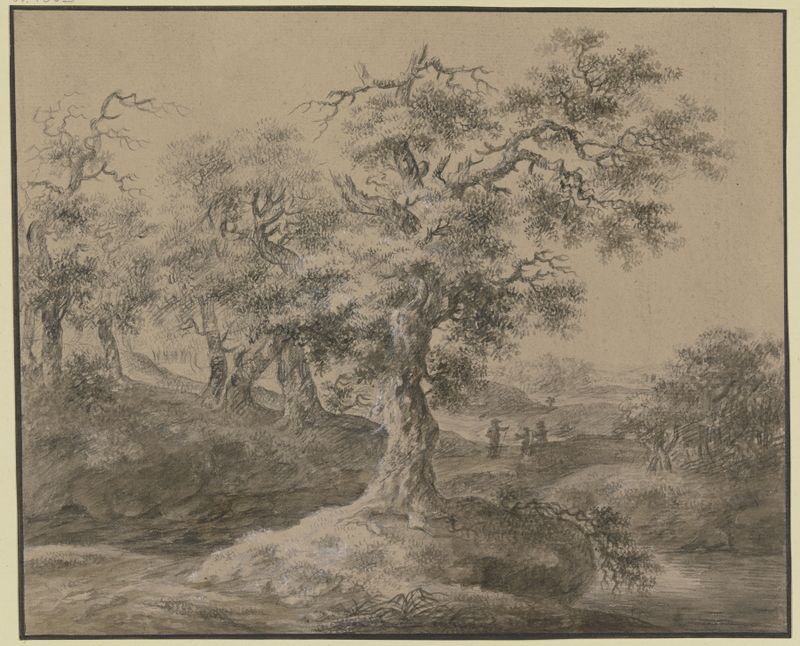
Eichenwald, am Weg eine rastende Familie
Johann Heinrich Wüest

Hügellandschaft mit Ausblick in weite Ferne, vorne am Weg rastende Hirten mit ihrer Herde und wandernde Bauern
Johann Heinrich Wüest
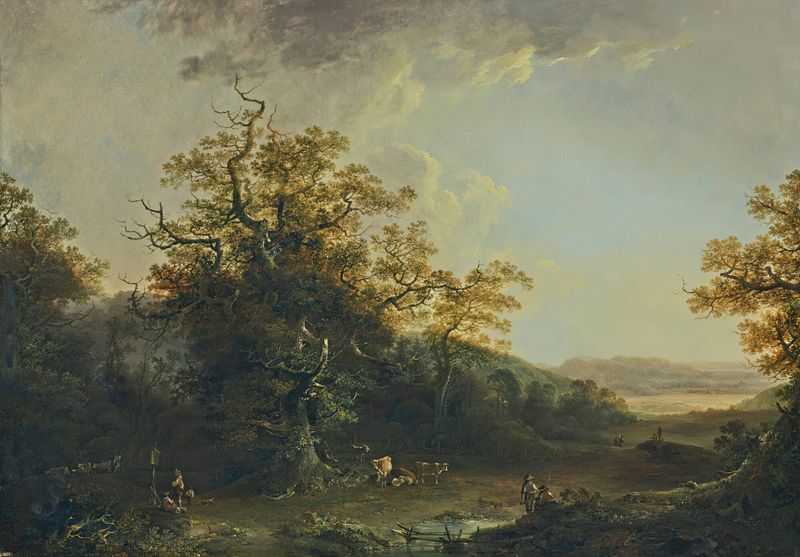
Landschaft Mit Fischern, Hirten Und Vieh
Johann Heinrich Wüest
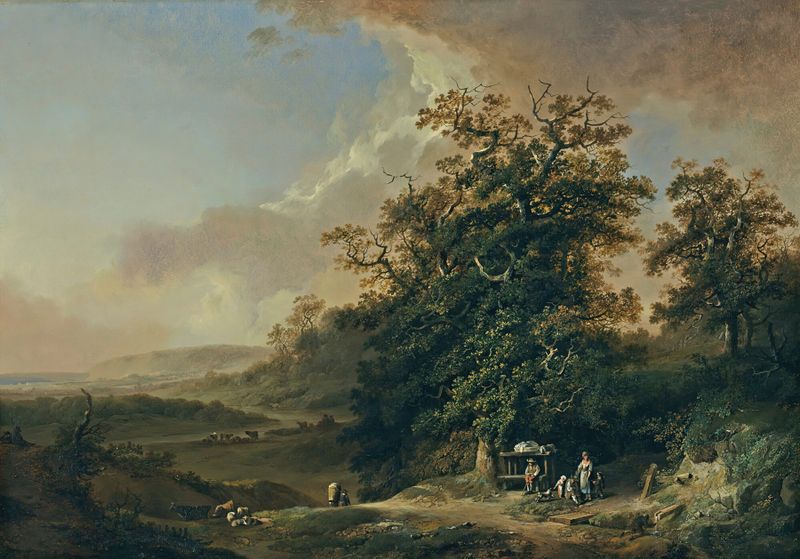
Landschaft Mit Reisenden An Einem Flussufer
Johann Heinrich Wüest





