
Landschaft mit Nepomuk-Statue — History & Facts
This reflection captures the essence of a moment where nature and human artistry converge, revealing layers of meaning beneath the surface. Look closely at the left side of the canvas, where the serene figure of the Nepomuk statue stands sentinel amid the wild landscape. The muted earth tones of the surrounding foliage contrast sharply with the stone’s cool gray, drawing the viewer's eye directly to its still presence. The gentle brushwork creates a sense of movement in the lush greenery, as if the landscape is alive and breathing, while the soft light filters through the overhanging branches, casting delicate shadows that play upon the statue's surface. There is a palpable tension between the natural world and the man-made icon, suggesting a dialogue about faith and nature's enduring strength.
The statue, representative of tranquility and protection, stands resolutely against a backdrop of vibrant, almost chaotic life, hinting at the fragility of human constructs in the face of nature's relentless force. Each detail, from the dappled sunlight to the intertwining roots, speaks to the coexistence of divine and earthly realms, blurring the lines between spirituality and the organic world. Eduard Zetsche created this work in 1918, during a tumultuous period in post-war Europe, marked by political upheaval and a longing for solace. At this time, the artist was exploring themes of nature's beauty juxtaposed with the scars of modernity, reflecting a desire to reconnect humanity with the tranquil essence of the landscape.
This painting stands as a testament to that pursuit, inviting viewers to pause and reflect on the delicate balance of existence.
More Artworks by Eduard Zetsche
Browse all →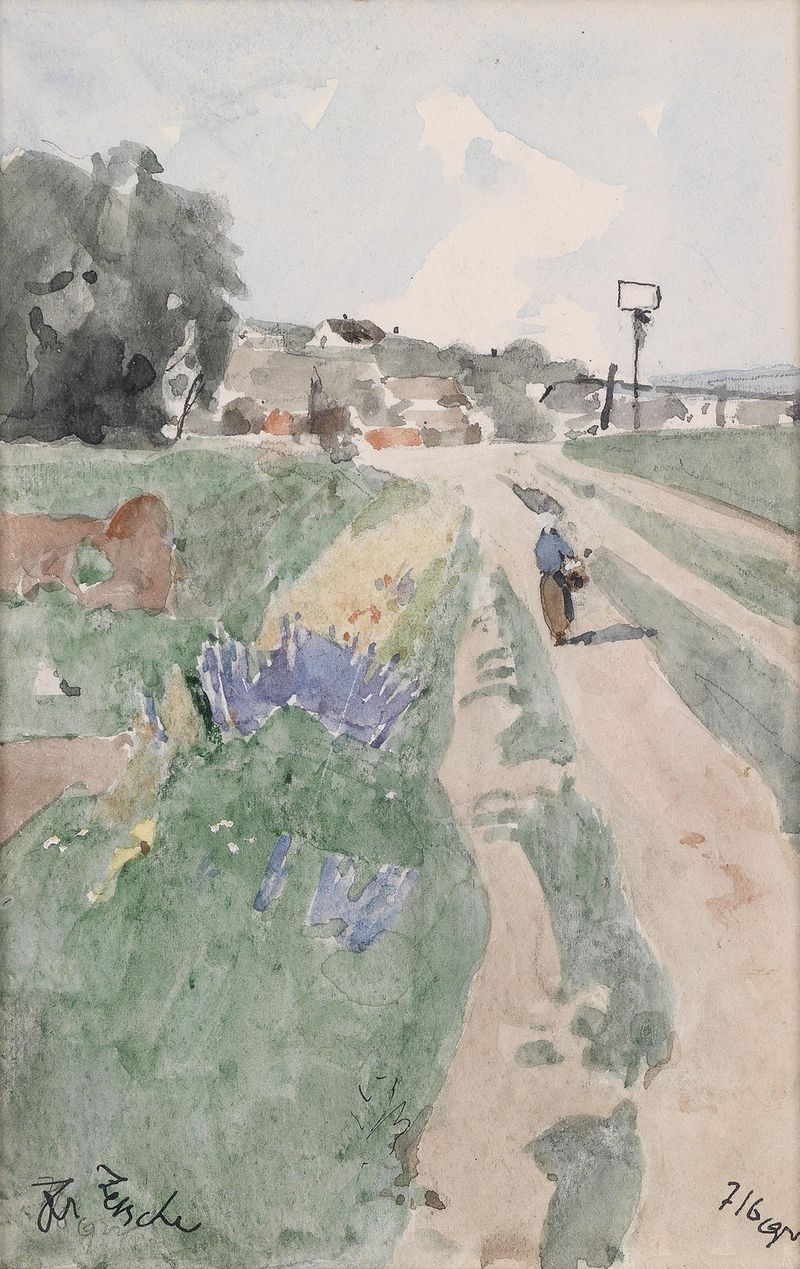
Weg bei Hadersdorf
Eduard Zetsche
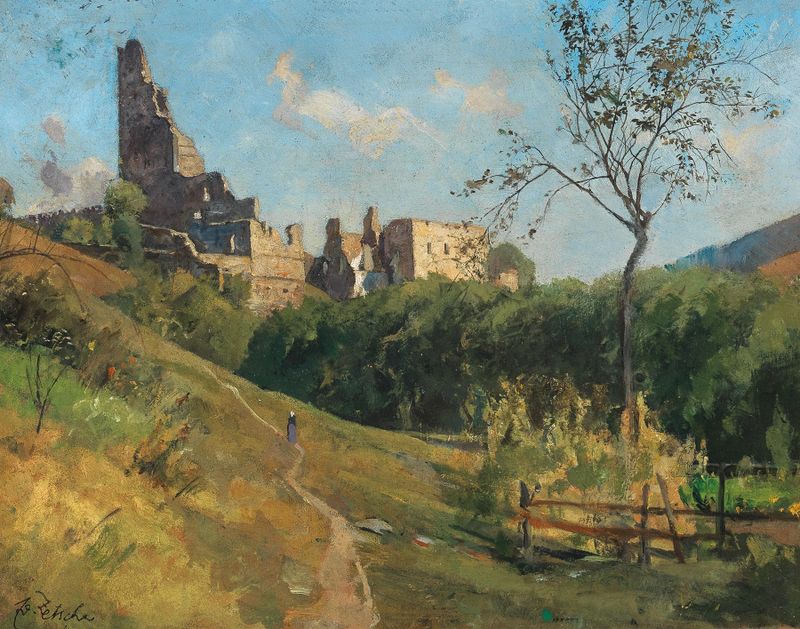
Ruins in the Wachau region
Eduard Zetsche
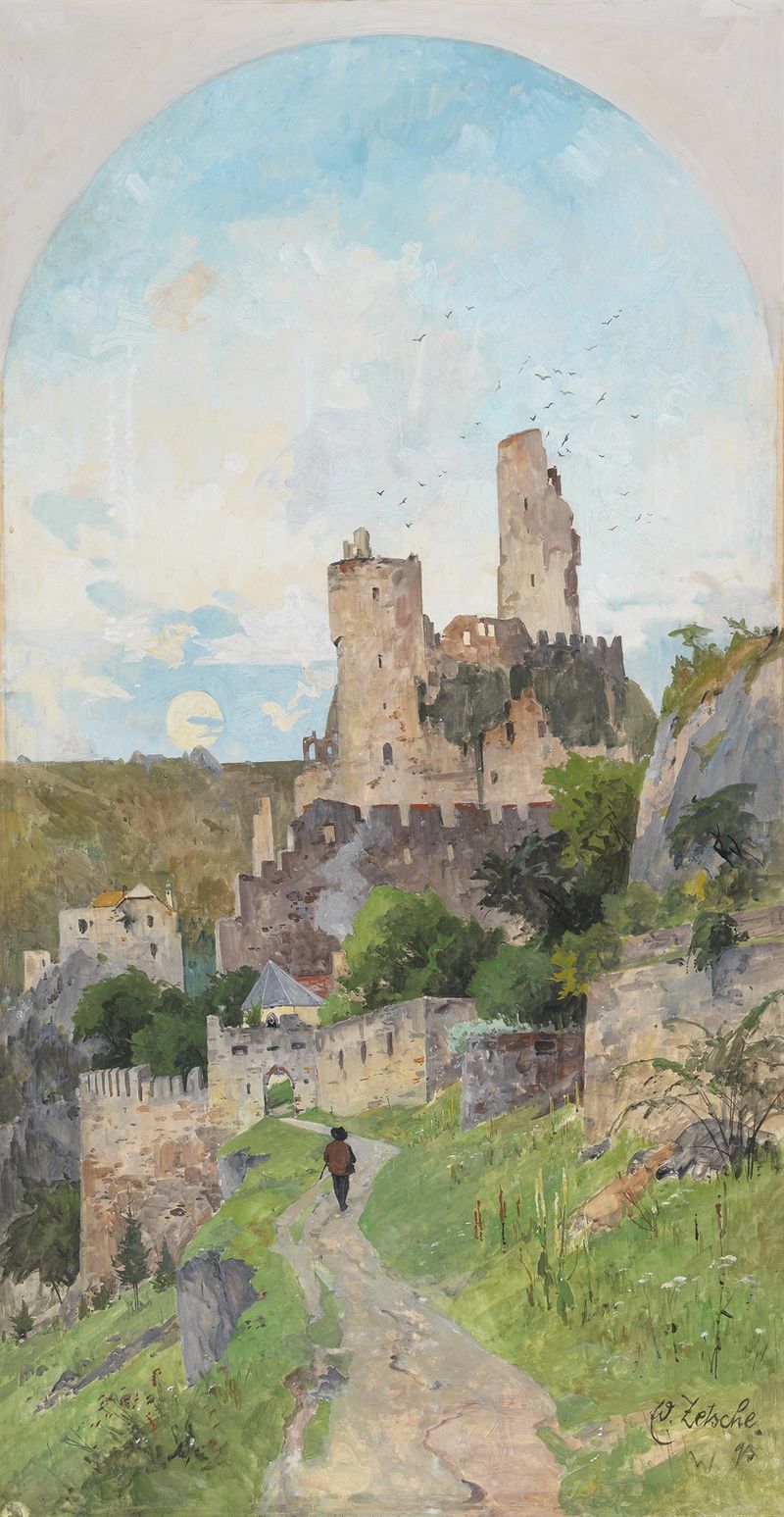
Blick auf die Ruine Dürnstein
Eduard Zetsche
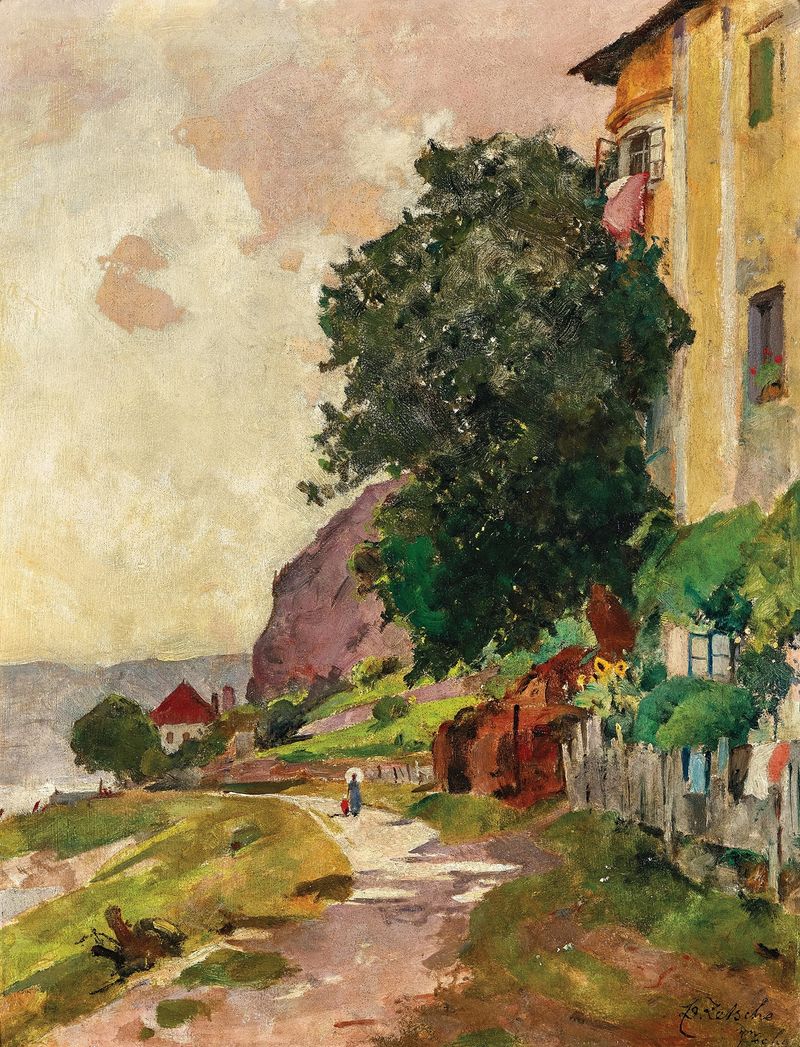
Beim Förthof, Ramsau
Eduard Zetsche
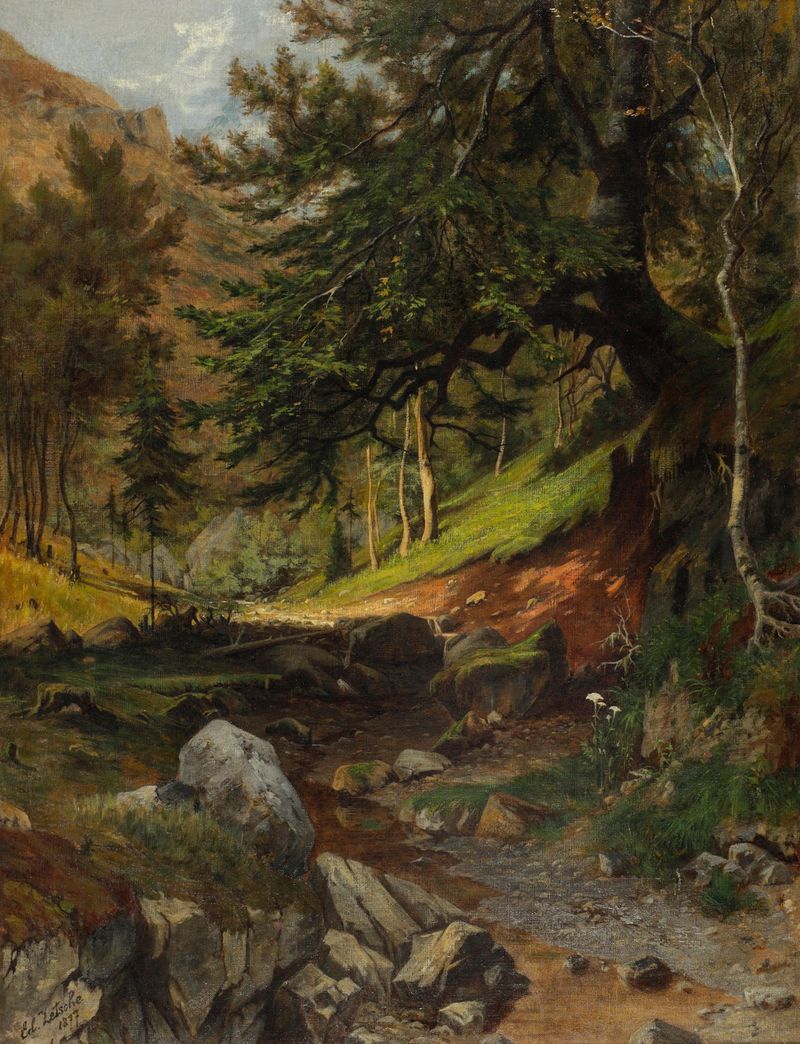
Waldpartie mit Bachlauf
Eduard Zetsche
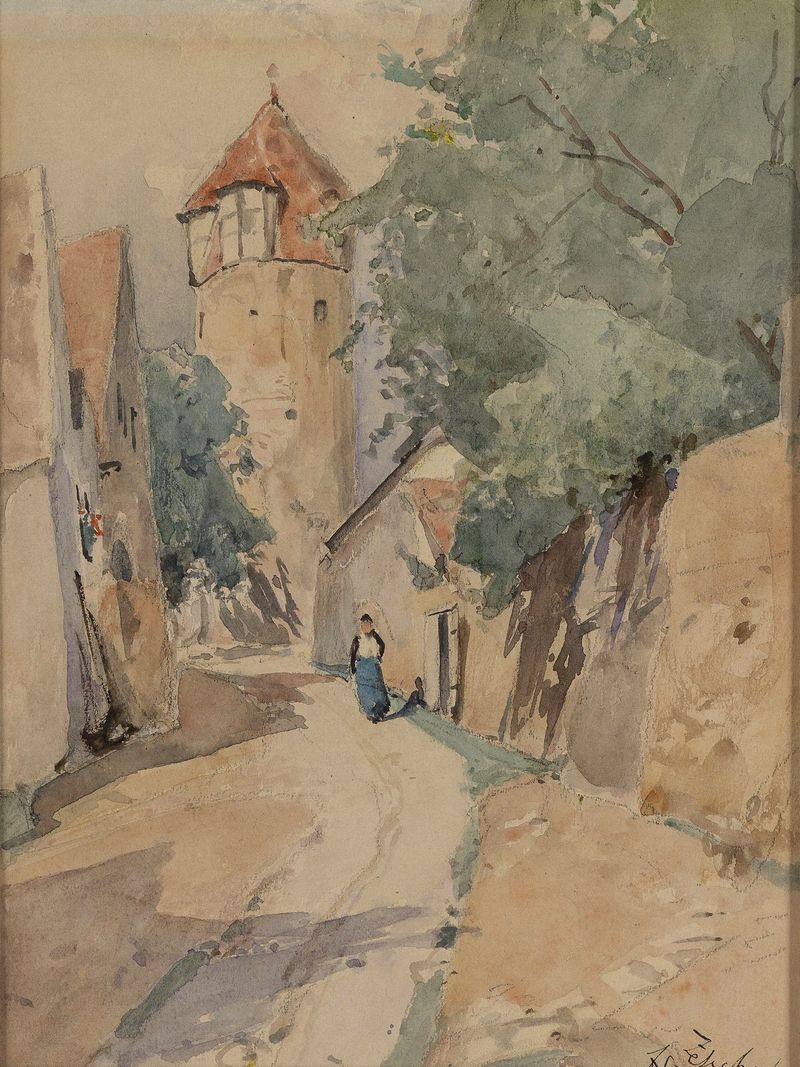
Sulzbach
Eduard Zetsche

Praterpartie
Eduard Zetsche
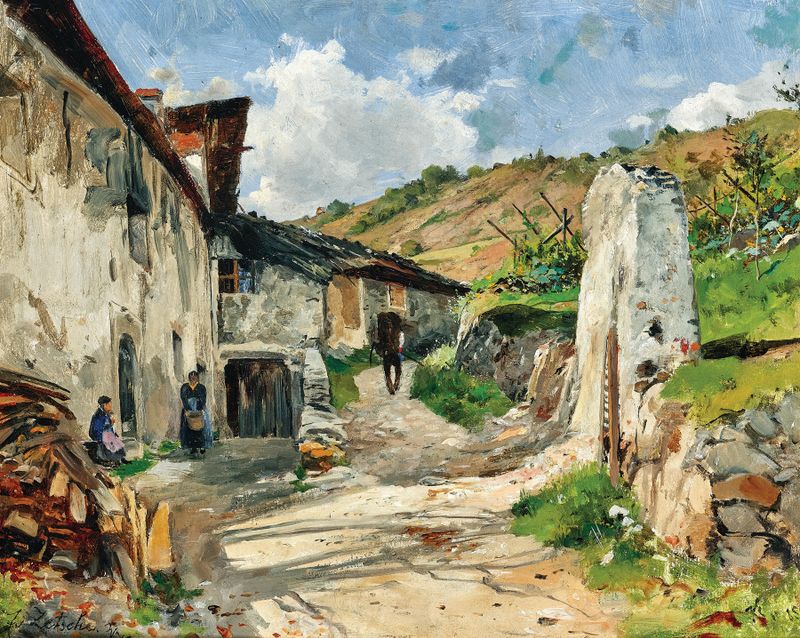
Wachau region, a path to a vineyard near a village
Eduard Zetsche

Motiv bei Lichtenwörth
Eduard Zetsche
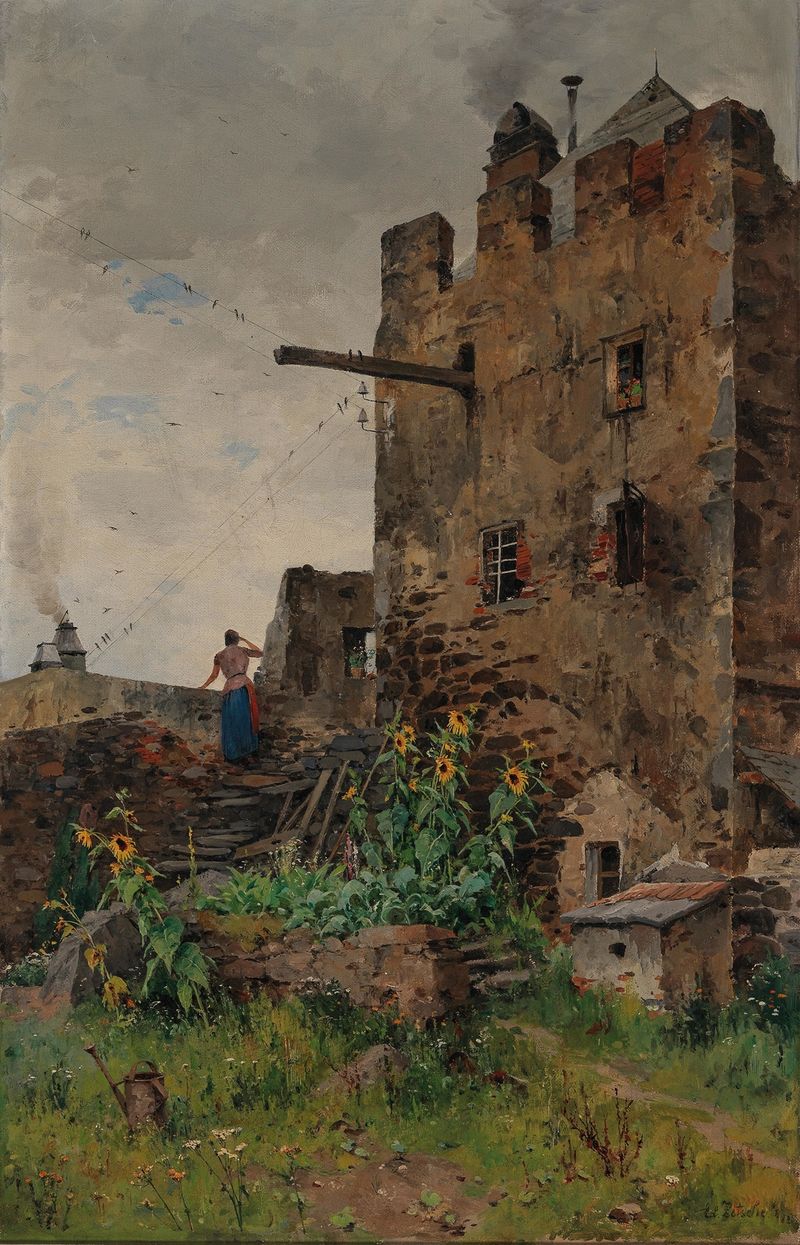
Wachau, Scene of Dürnstein, by the Old Town Wall
Eduard Zetsche





