
Landschaftsstudie; Hirschbergen – Böhmerwald — History & Facts
In Landschaftsstudie; Hirschbergen – Böhmerwald, Egon Schiele presents a striking landscape filled with vibrant colors. The painting features rolling hills and a dynamic sky, showcasing a blend of greens and blues. Schiele's use of bold brushstrokes adds a sense of movement to the scene.
The overall composition invites the viewer to immerse themselves in this natural setting. The artwork is characterized by its expressive use of color and form, typical of Expressionism. Schiele employs a loose painting technique, allowing the colors to blend and create a sense of depth. The dimensions of the piece are approximately 70 x 90 cm, making it a substantial work that commands attention.
The choice of oil on canvas as a medium enhances the richness of the colors. Egon Schiele was an influential figure in early 20th-century Austrian art, known for his emotive style and unique perspectives. This particular work reflects his fascination with nature and the landscapes of his homeland. An interesting fact about this painting is that it captures the essence of the Böhmerwald region, which was significant to Schiele's personal and artistic development.
His landscapes often convey a sense of isolation, mirroring his own experiences.
More Artworks by Egon Schiele

Lovers
Egon Schiele
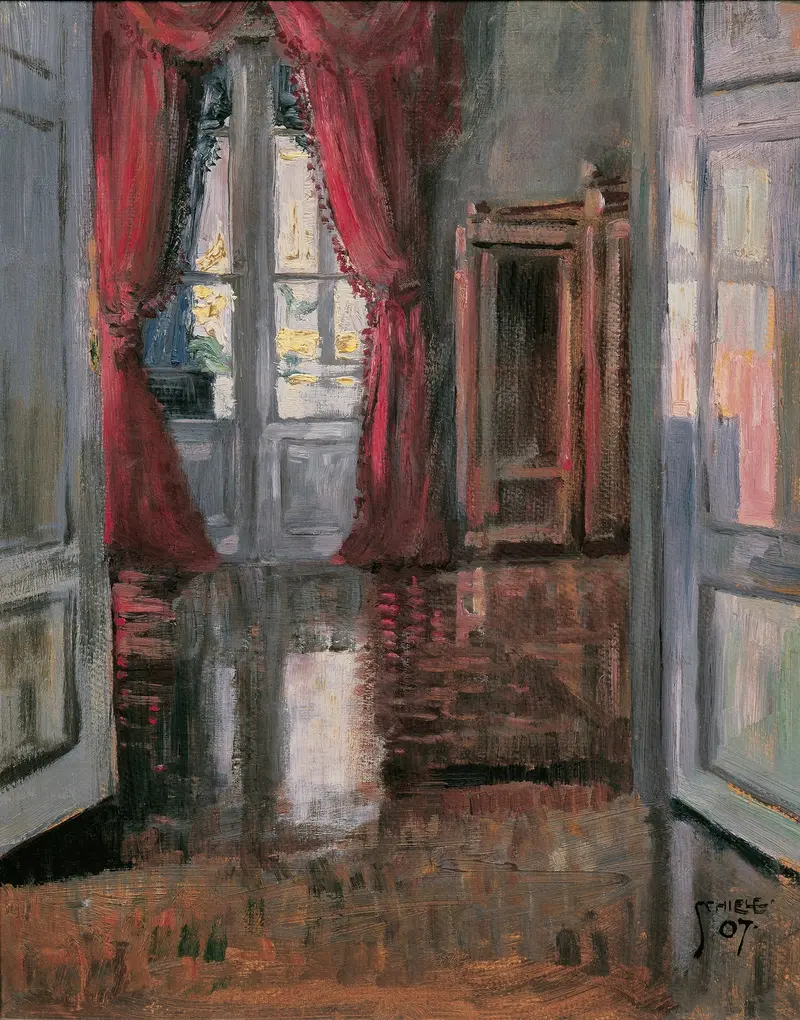
Blick in die Wohnung von Leopold und Marie Czihaczek
Egon Schiele
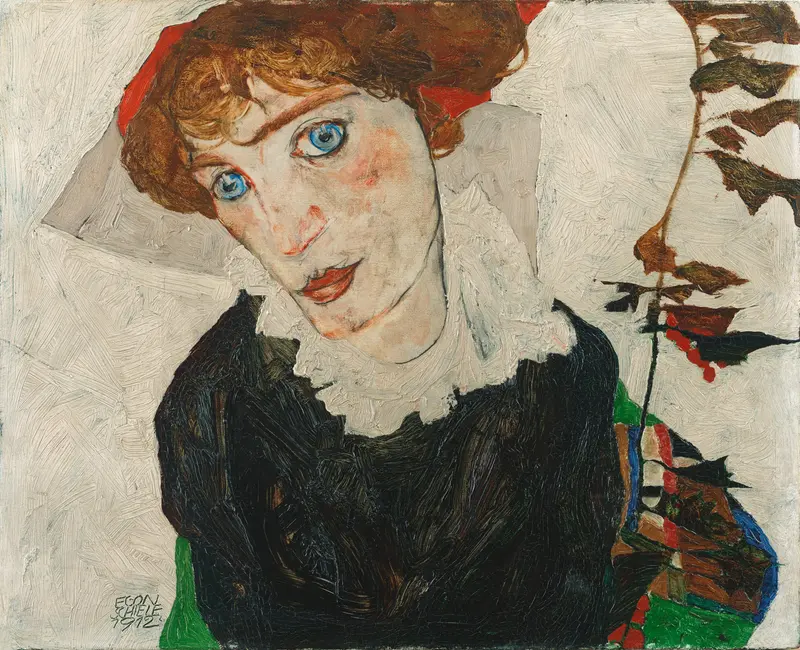
Portrait Of Wally Neuzil
Egon Schiele
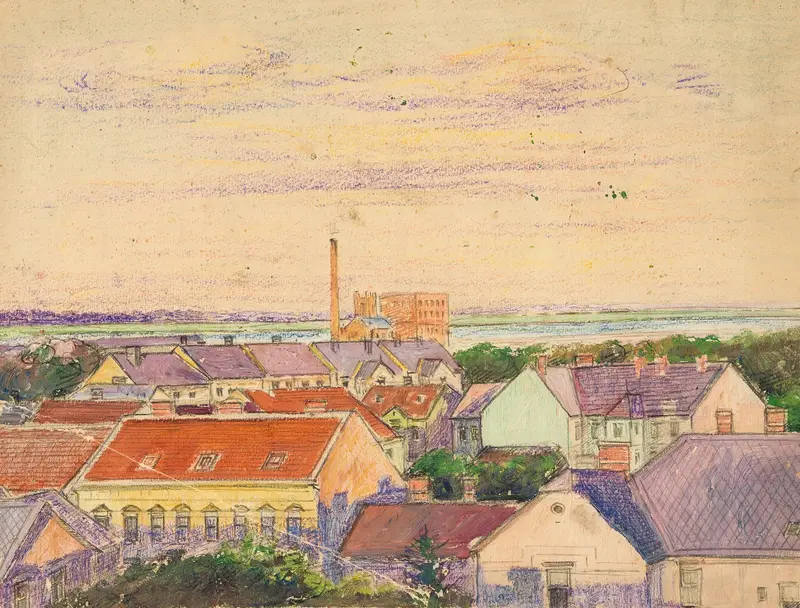
Stadtansicht
Egon Schiele
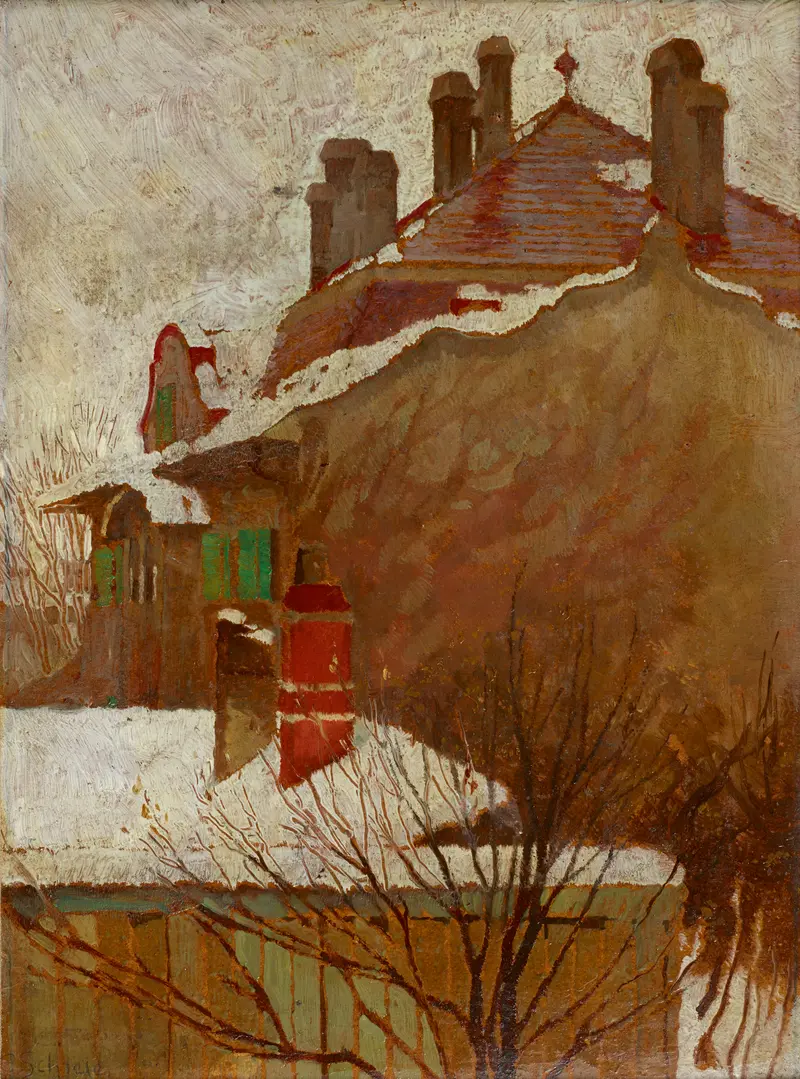
Häuser im Winter (Blick aus dem Atelier)
Egon Schiele
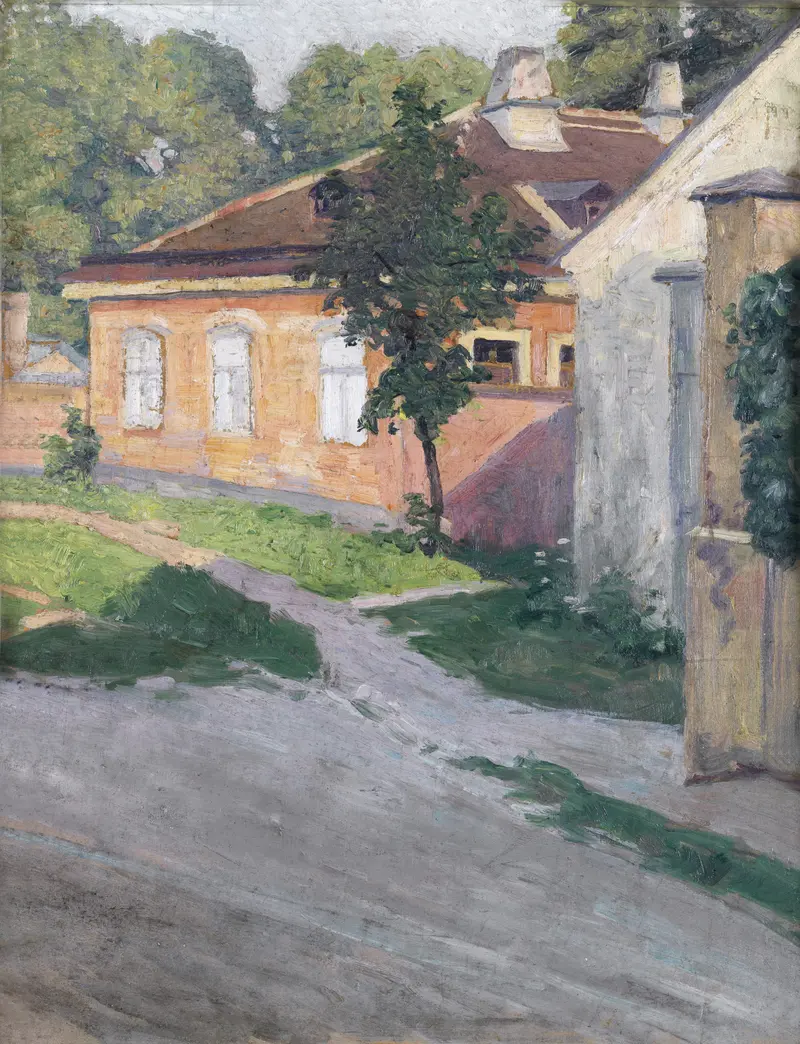
Haus In Hütteldorf (House In Hütteldorf)
Egon Schiele
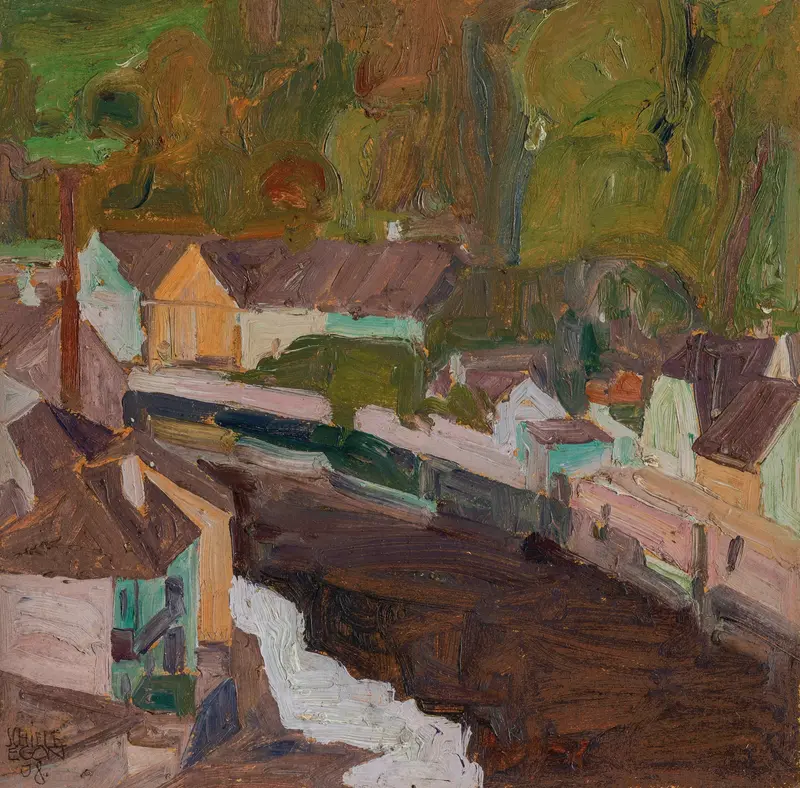
Dorf am Fluss II
Egon Schiele
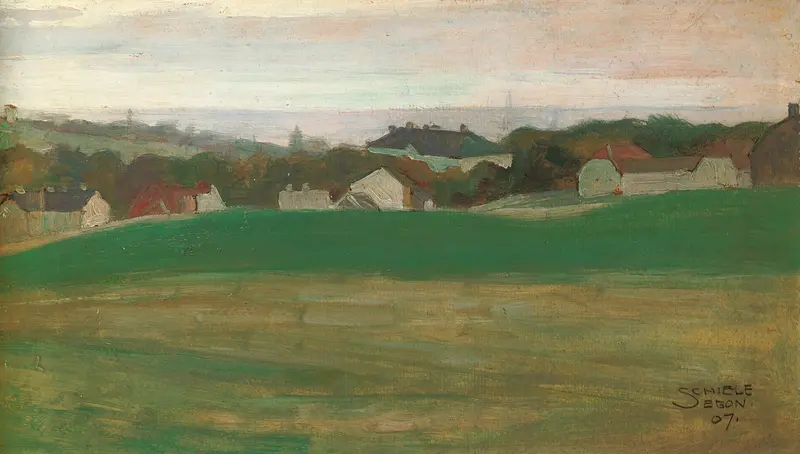
Wiese mit Dorf im Hintergrund II
Egon Schiele
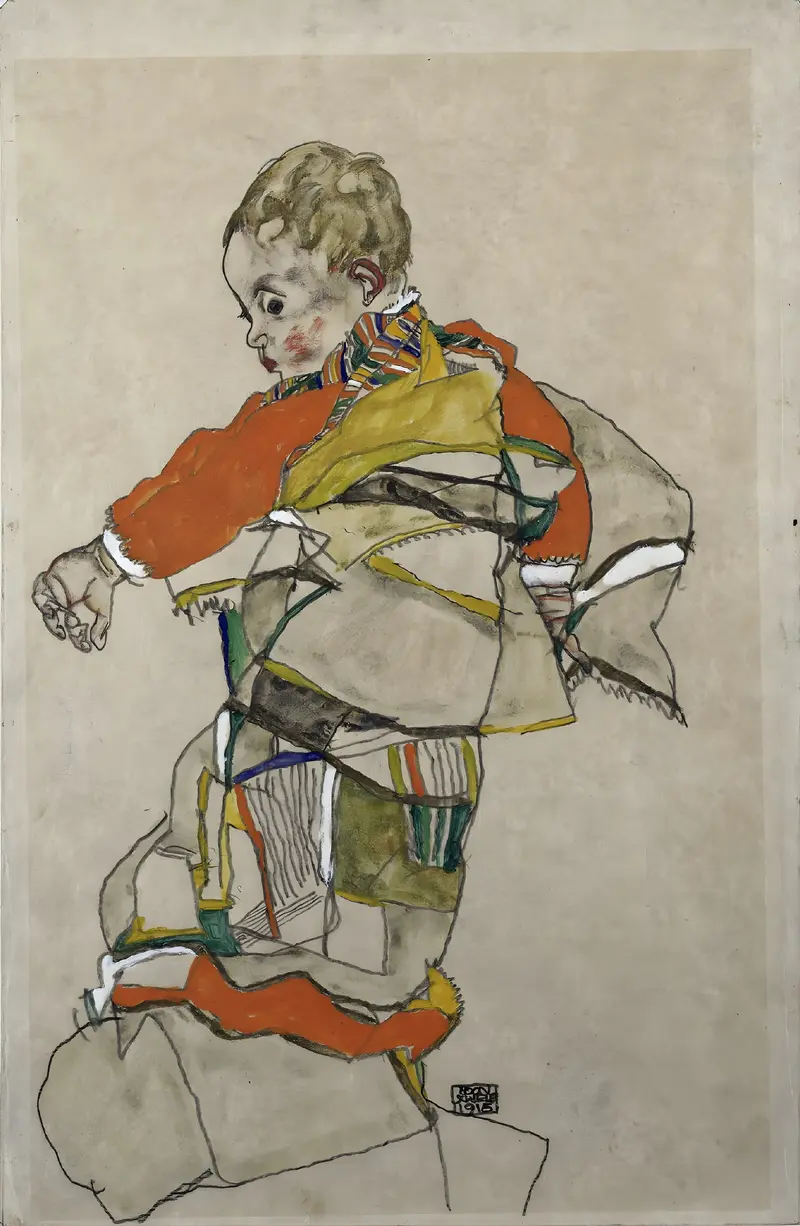
Portrait of a Child (Anton Peschka, Jr.)
Egon Schiele
The Embrace
Egon Schiele
More Landscape Art

The Starry Night
Vincent van Gogh

View of Delft
Johannes Vermeer

Water Lilies
Claude Monet

The Grand Canal, Venice, looking north-west from the Ca' Corner to the Ca' Contarini degli Scrigni, with the campanile of Santa Maria della Carità
Canaletto

Windsor Castle
Canaletto

The Grand Canal looking North-East from the Palazzo Dolfin-Manin to the Rialto Bridge
Canaletto