
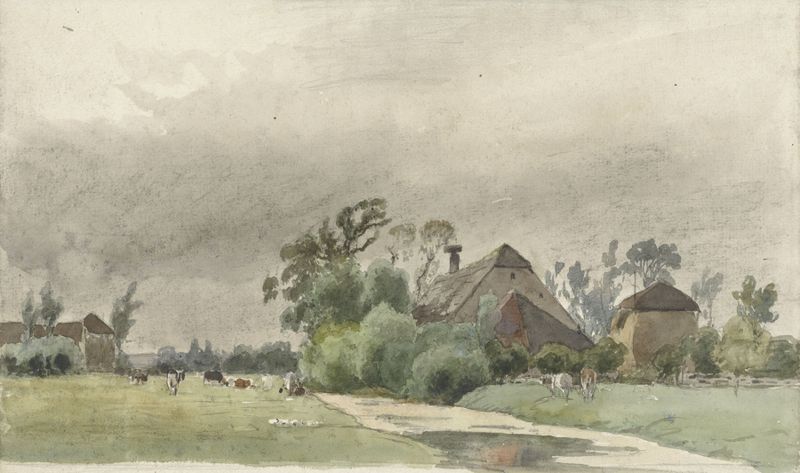
Landschap met boerderij en herder met schapen — History & Facts
In the gentle embrace of the countryside, the subtle traces of loss linger in the air, weaving a narrative of solitude and nostalgia. Look to the left at the farmhouse, nestled against the backdrop of rolling hills, its muted tones reflecting the quietude of the landscape. Notice how the light bathes the scene in a soft, golden hue, creating a warm contrast against the cooler greens and browns of the fields. The shepherd, rendered with delicate strokes, stands as a solitary figure, guiding his flock through the whispers of the grass, drawing the eye with his gentle posture and the rhythm of his movements. Yet, beneath this idyllic surface lies a profound tension.
The untouched expanse of land suggests a history unspoken, a reminder of absences that resonate within the pastoral setting. The sheep, though numerous, seem scattered and distant, echoing a feeling of fragmentation and a search for connection. Each blade of grass sways in an unbroken silence, amplifying the weight of what once was, and what cannot be reclaimed. In 1872, while residing in The Hague, the artist painted this piece during a transformative period for Dutch landscape painting.
It was an era marked by a shift towards realism, reflecting the changing societal dynamics and an increasing appreciation for rural life. At that time, the artist was exploring the emotional depths of nature, capturing not only its beauty but also its capacity to evoke a sense of longing and introspection.
More Artworks by Julius Jacobus van de Sande Bakhuyzen
Browse all →
Bomen zich spiegelend in het water bij een bewolkte lucht
Julius Jacobus van de Sande Bakhuyzen

Koe grazend in een weide
Julius Jacobus van de Sande Bakhuyzen
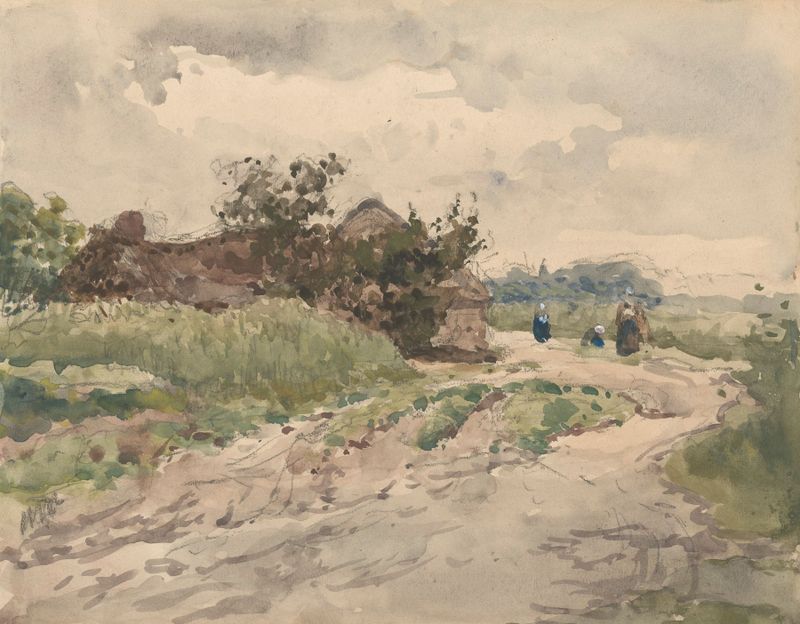
Landweg met enkele figuren, leidend naar een boerderij
Julius Jacobus van de Sande Bakhuyzen

Tropisch kustlandschap
Julius Jacobus van de Sande Bakhuyzen
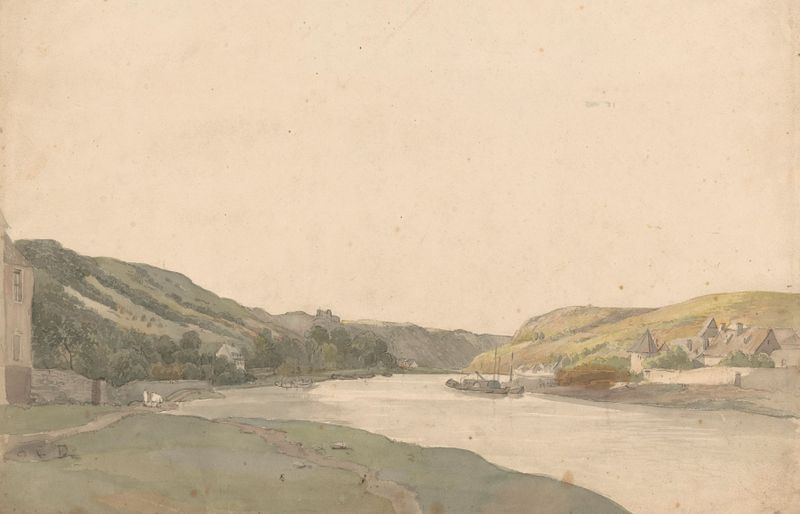
Gezicht op de Maas
Julius Jacobus van de Sande Bakhuyzen
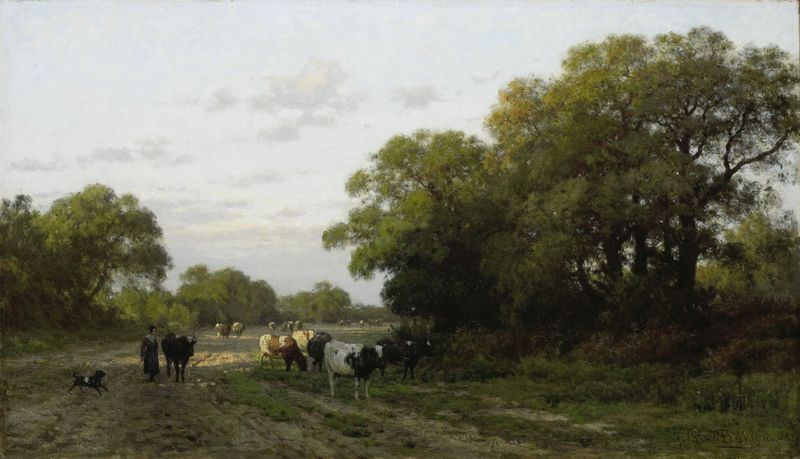
Landschap in Drenthe
Julius Jacobus van de Sande Bakhuyzen

Beboste kust van een meer
Julius Jacobus van de Sande Bakhuyzen

Boerderij onder hoge bomen met water op de voorgrond
Julius Jacobus van de Sande Bakhuyzen
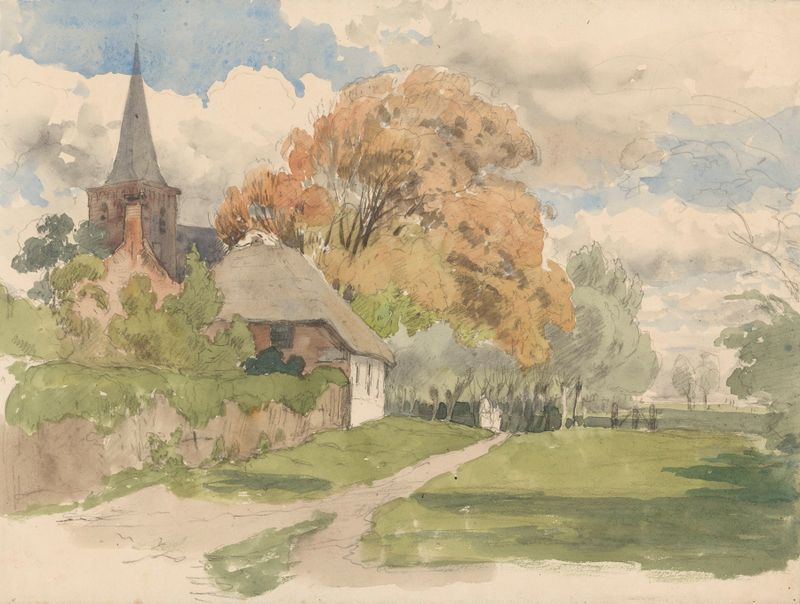
Erf bij een dorpskerk
Julius Jacobus van de Sande Bakhuyzen
Vaart leidend naar een boerderij
Julius Jacobus van de Sande Bakhuyzen





