
Landschap met een ossewagen, gezicht tussen Ancona en Senigallia — History & Facts
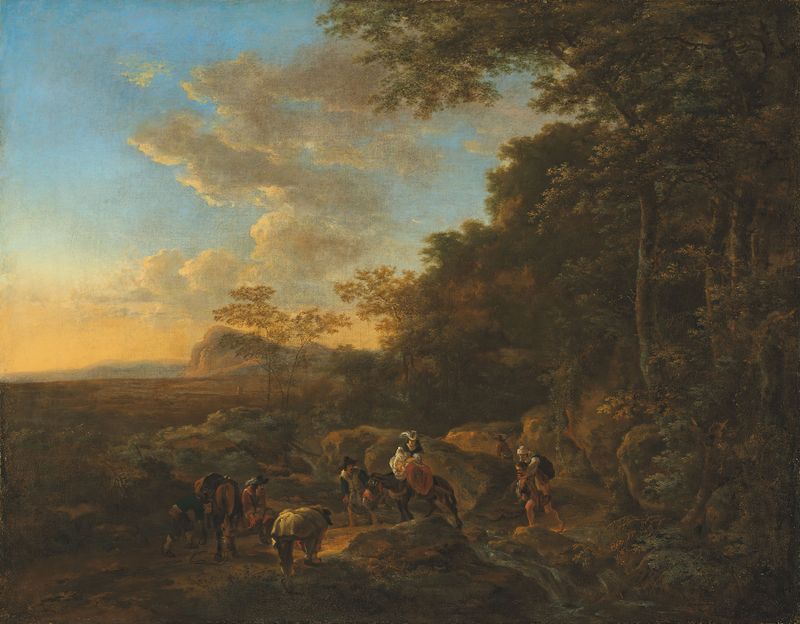
Did the painter know this moment would outlive them? In Landschap met een ossewagen, gezicht tussen Ancona en Senigallia, the essence of movement breathes through the brushstrokes, capturing a fleeting slice of rural life that resonates beyond its time. Look to the center, where the ox cart rolls through the undulating landscape, flanked by the warm embrace of hills. The earthy palette—deep greens and ochres—contrasts with the soft azure sky, accentuating the tranquility of this pastoral scene. Notice how sunlight dapples the ground, illuminating the figures and the rich textures of the foliage, inviting you to step into this serene moment of harmony between man and nature. Hidden within the vibrant colors and dynamic composition lies a tension between labor and leisure.
The oxen, symbols of toil, pull the cart with a steady grace, while the distant figures resonate with a leisurely pace, embodying the balance of work and rest in rural existence. The interplay of light and shadow further emphasizes this duality, suggesting both the weight of responsibility and the freedom inherent in the vast landscape. In the years between 1644 and 1652, Jan Both found himself in Italy, deeply influenced by the natural beauty surrounding him. It was a time when artists were increasingly drawn to the representation of landscapes, capturing the subtleties of light and atmosphere.
This period marked a significant shift in how landscapes were perceived in art, reflecting the artist's personal journey and the evolving narrative of European painting.
More Artworks by Jan Both
Browse all →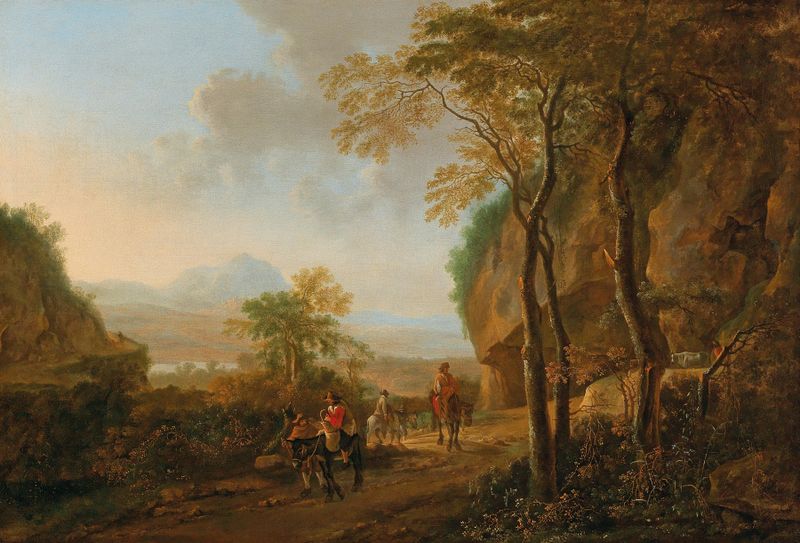
An Italianate landscape with travellers
Jan Both
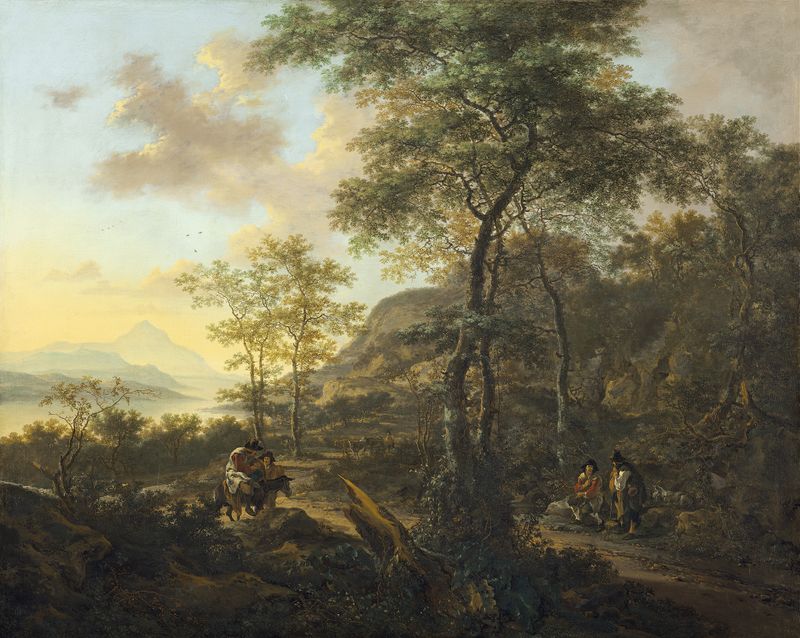
An Italianate Evening Landscape
Jan Both
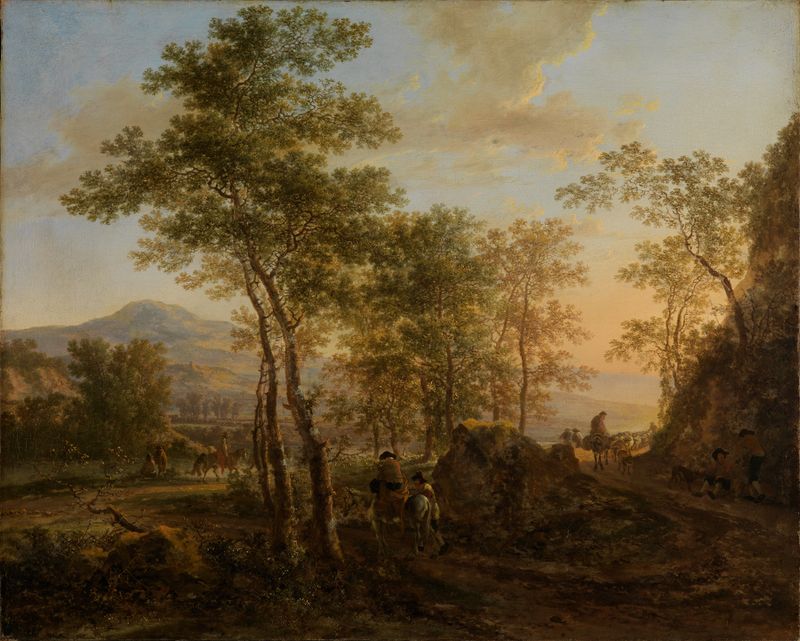
Italienische Landschaft am Abend
Jan Both
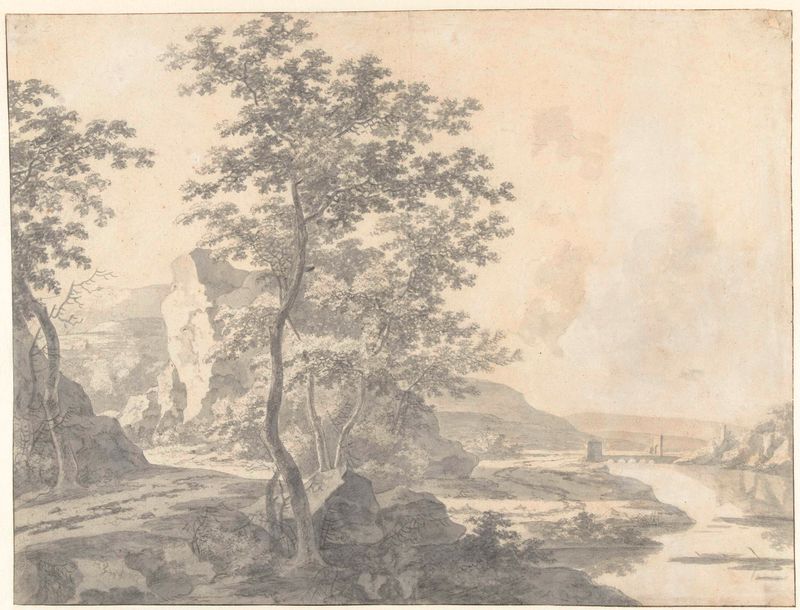
Italiaans landschap
Jan Both
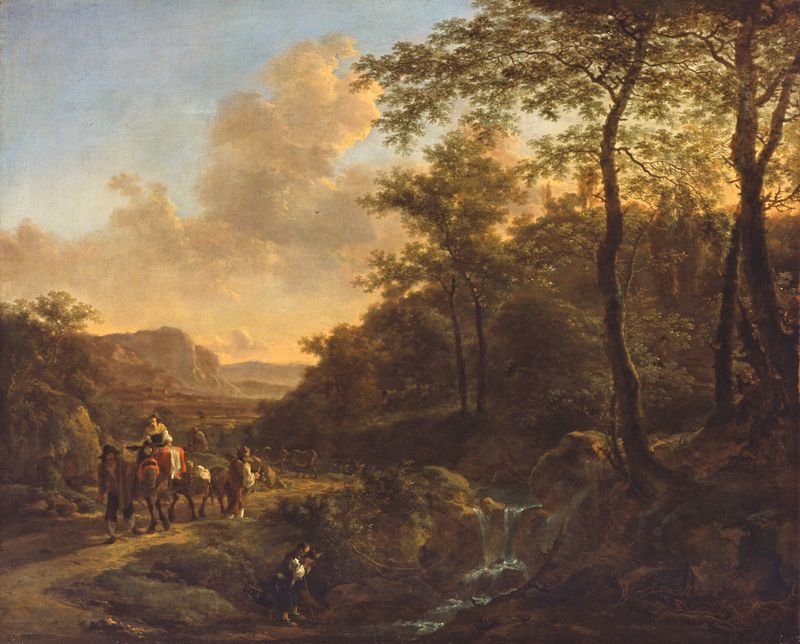
Scene of the Roman Campagna
Jan Both
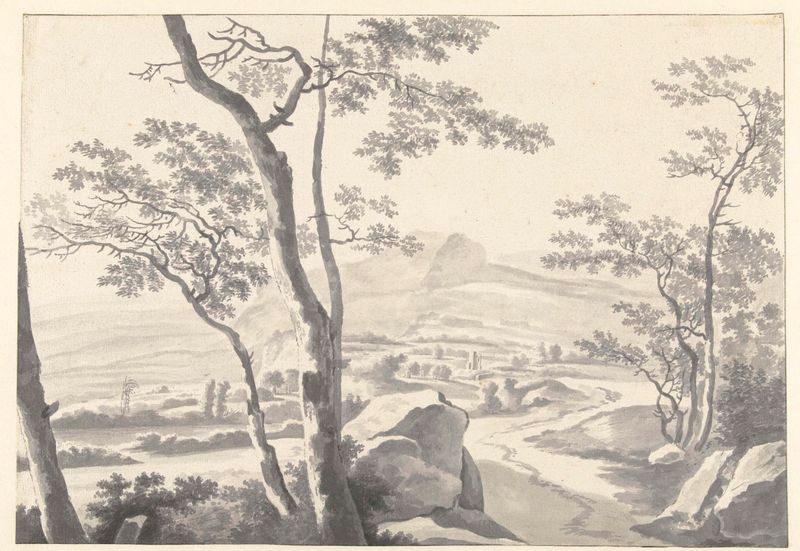
Landschap
Jan Both
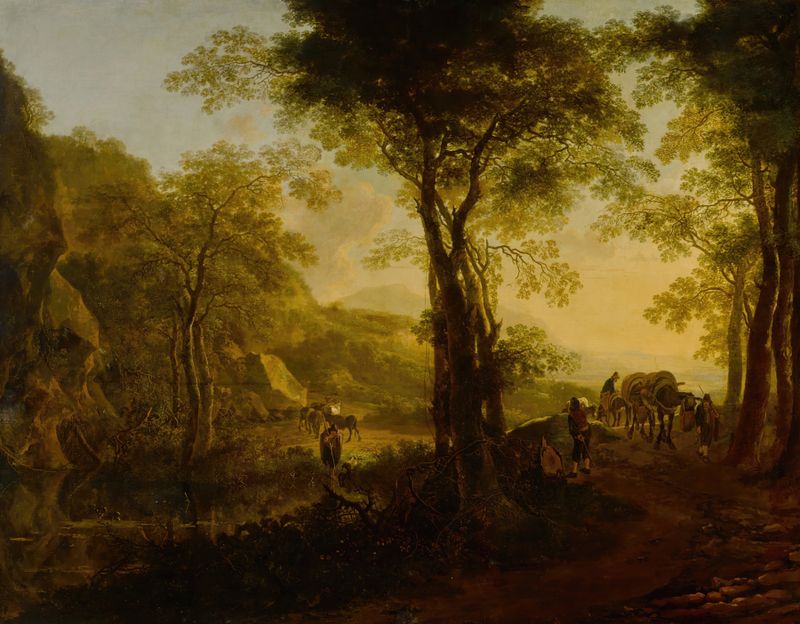
Italianate landscape at sunset, with travelers on a country road
Jan Both
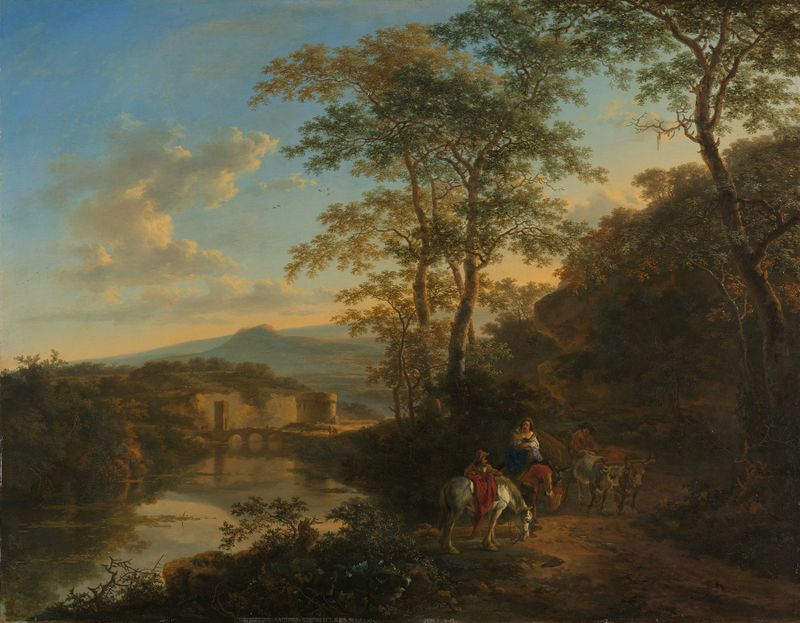
Italian Landscape with the Ponte Lucano over the Aniene River
Jan Both
A wooded landscape with travellers crossing a ford
Jan Both

Italian Landscape
Jan Both





