
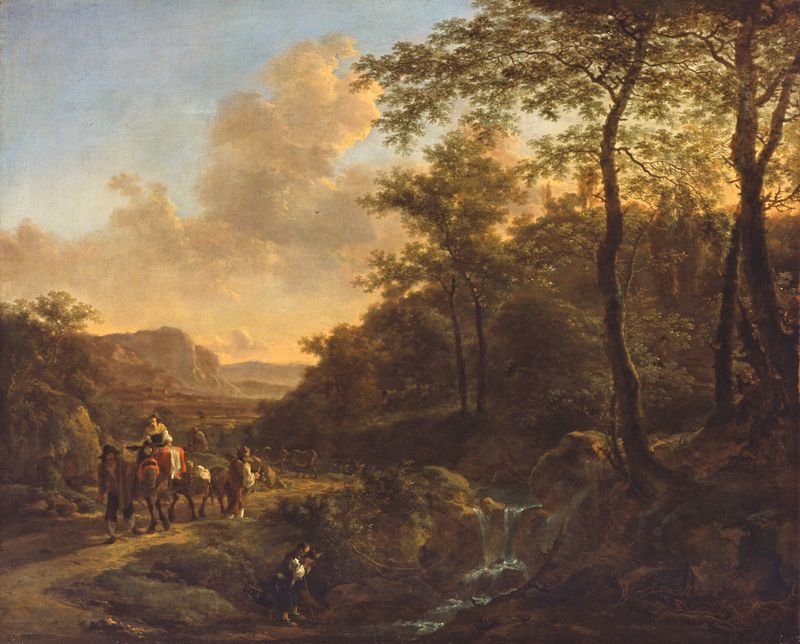
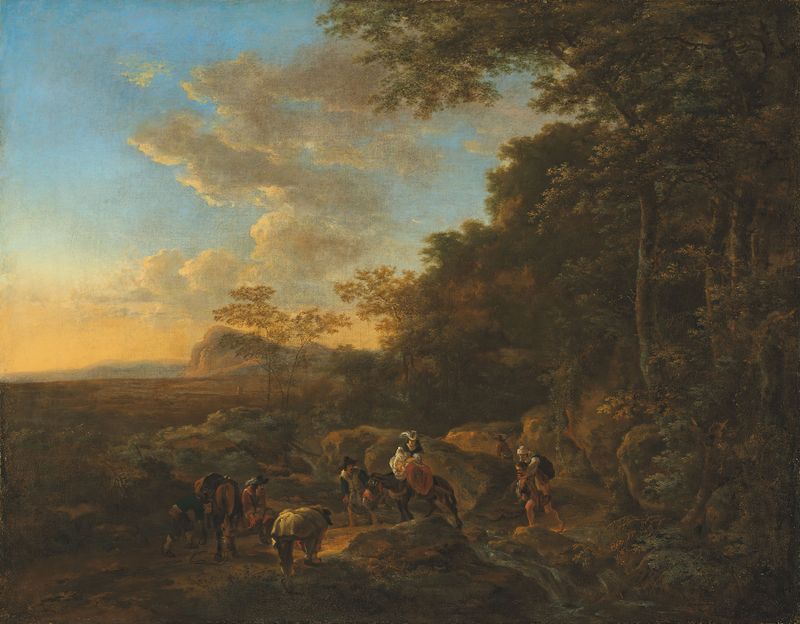
Landschap met vrouw rijdend op een muilezel langs de Aqua Negro tussen Bologna en Florence — History & Facts
When did color learn to lie? In the tension between vibrancy and fragility, nature hides its truths, whispering secrets beneath a lush façade. Look to the left at the gentle curve of the Aqua Negro, glistening under the soft embrace of sunlight. The water flows serenely, guiding your gaze toward the figure of a woman riding a mule, her posture relaxed yet purposeful. Notice the rich greens and earthy tones that blanket the landscape, creating a harmonious balance that invites serenity while simultaneously concealing the underlying complexities of existence. As you explore deeper, consider the woman’s solitude; she traverses a world filled with beauty yet remains isolated in her journey.
The contrast of her stillness against the dynamic movement of the flowing river suggests a fragile connection between humanity and nature. The vibrant foliage surrounding her is not just a backdrop; it becomes a poignant reminder of life's transience, echoing the artist's contemplations of the natural world and its fleeting moments. In the early 1640s, Jan Both created this piece while residing in Italy, a period marked by the flourishing of Baroque artistry. Influenced by the picturesque landscapes of the region, he sought to capture the essence of nature's beauty, showcasing his mastery of color and light.
This was a time when artists began to shift their focus from grand historical narratives to intimate, personal landscapes, reflecting the changing tides of art and society.
More Artworks by Jan Both
Browse all →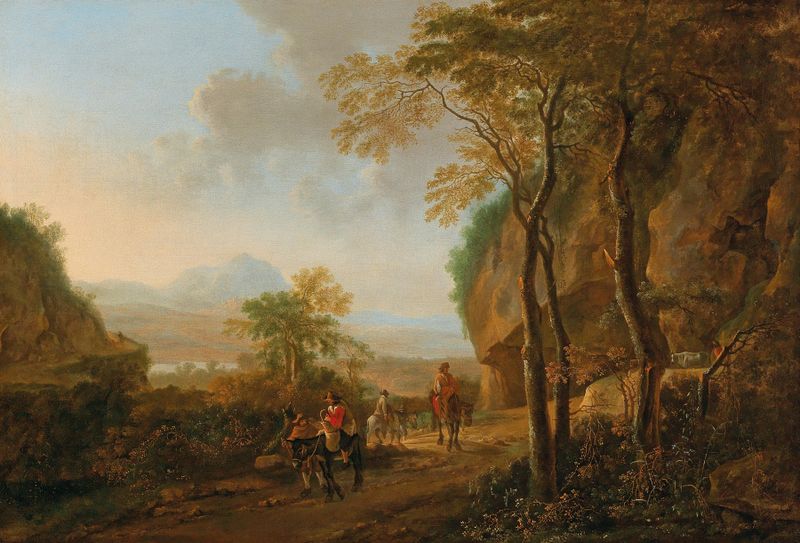
An Italianate landscape with travellers
Jan Both
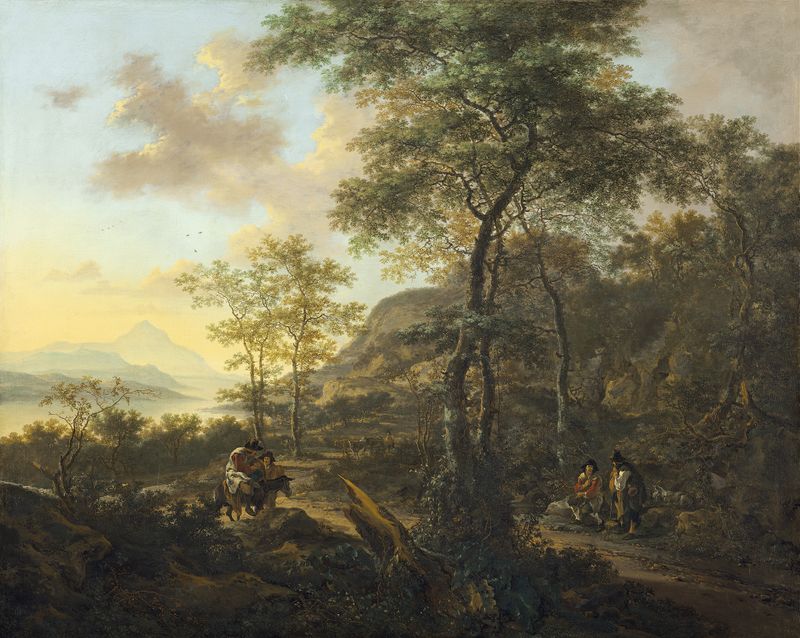
An Italianate Evening Landscape
Jan Both
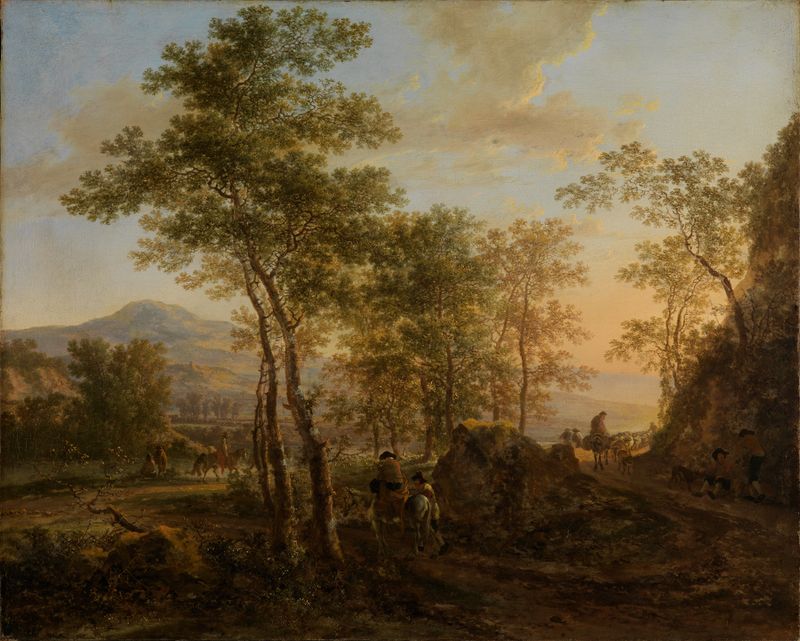
Italienische Landschaft am Abend
Jan Both
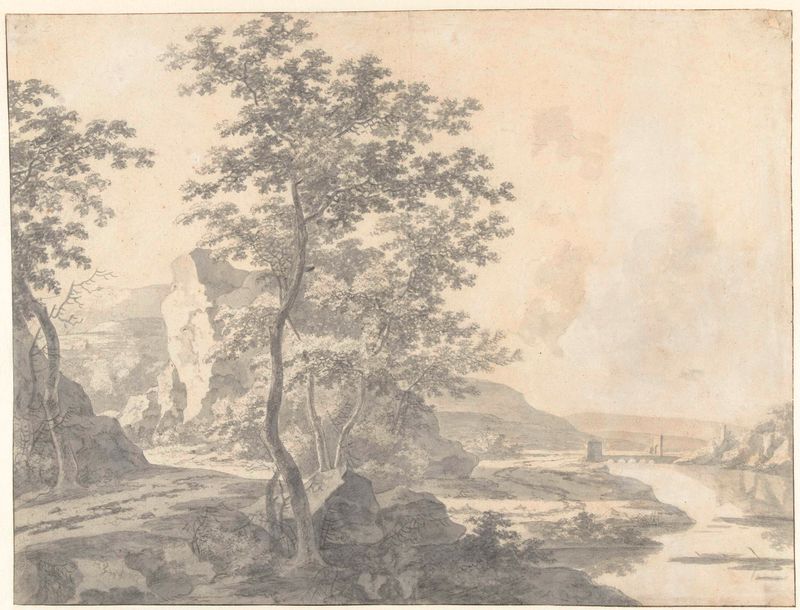
Italiaans landschap
Jan Both
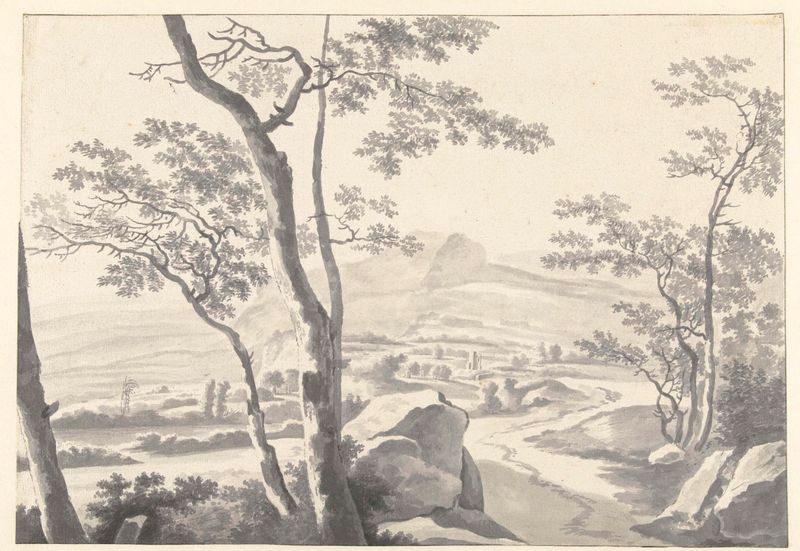
Scene of the Roman Campagna
Jan Both
Landschap
Jan Both
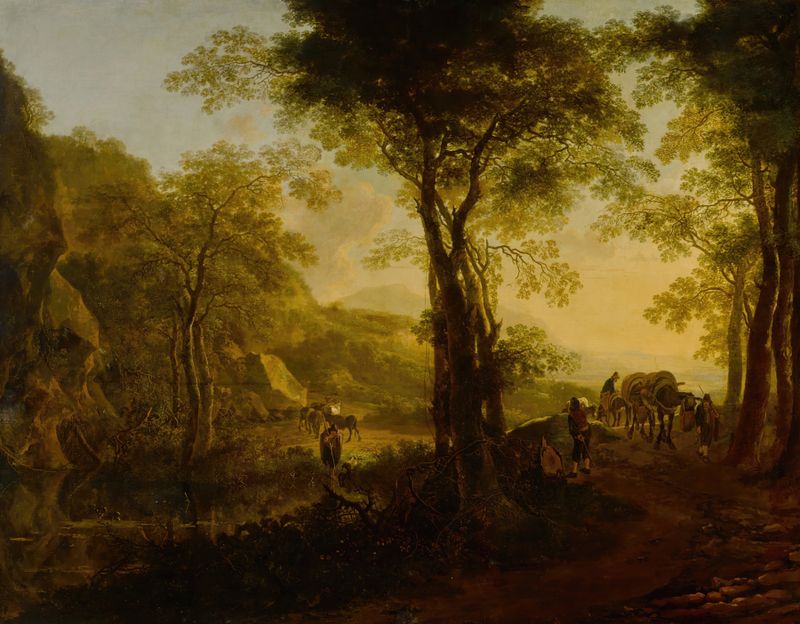
Italianate landscape at sunset, with travelers on a country road
Jan Both
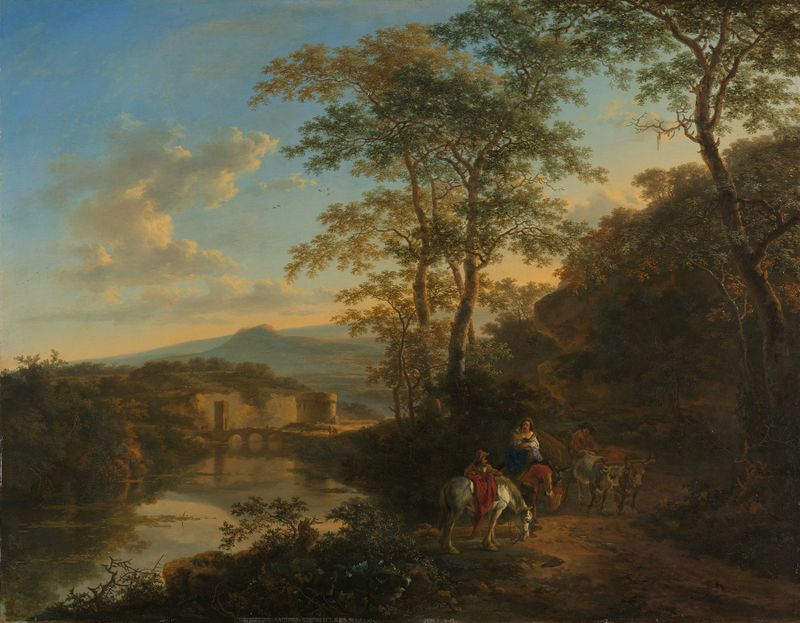
Italian Landscape with the Ponte Lucano over the Aniene River
Jan Both
A wooded landscape with travellers crossing a ford
Jan Both

Italian Landscape
Jan Both





