
Landschap met vrouw rijdend op een muilezel langs de Aqua Negro tussen Bologna en Florence — History & Facts
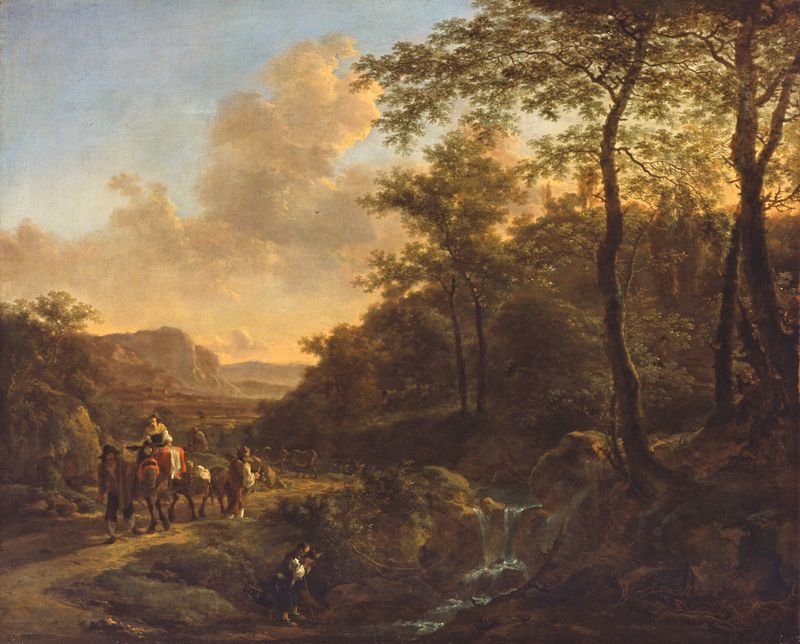
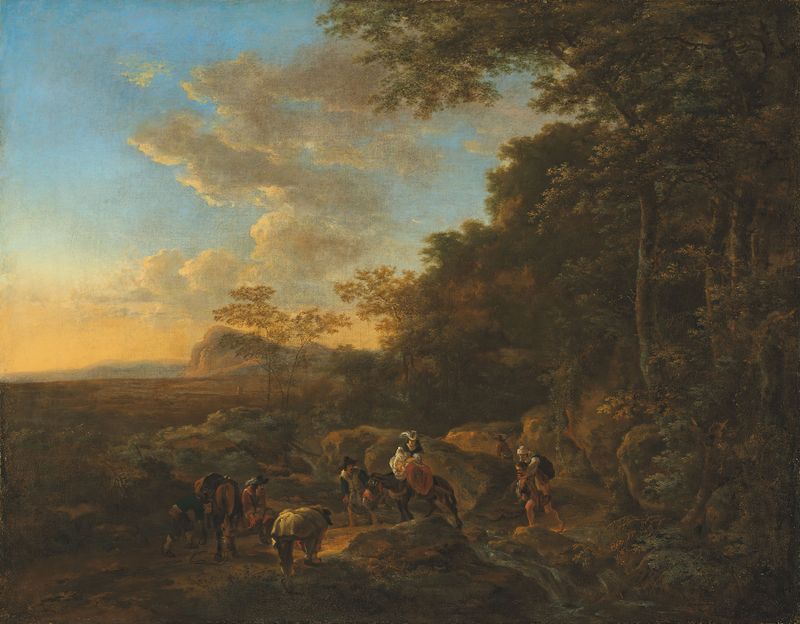
Can beauty exist without sorrow? In the delicate interplay of light and landscape, this question lingers like a whisper in the breeze. Look closely at the vibrant greens and earthy browns that stretch across the canvas, guiding your gaze through the undulating hills. Notice how the woman riding the mule aligns perfectly with the winding Aqua Negro, her figure becoming a fluid part of the landscape. The sunlight dances upon the water’s surface, casting a shimmering glimmer that accentuates the vibrancy of the foliage surrounding her.
Every brushstroke reveals the artist's meticulous attention to detail, creating a sense of movement that pulls you into the scene. The juxtaposition of the serene ride and the dynamic flow of the river evokes a profound sense of contrast — tranquility amidst an ever-changing world. The woman, seemingly at peace, embodies a fleeting moment of joy, yet her solitary journey suggests a deeper narrative of longing and isolation. The lush surroundings, while beautiful, also hint at the fragility of nature, inviting contemplation on the delicate balance between joy and melancholy inherent in existence. Jan Both painted this work between 1644 and 1652, during a period marked by his exploration of Italian landscapes while living in the Netherlands.
His artistry flourished amid the Baroque movement, which emphasized dramatic expressions and vivid realism. Both's travels between Bologna and Florence influenced his understanding of light and composition, shaping the way he captured the essence of the Italian countryside and its emotional resonance.
More Artworks by Jan Both
Browse all →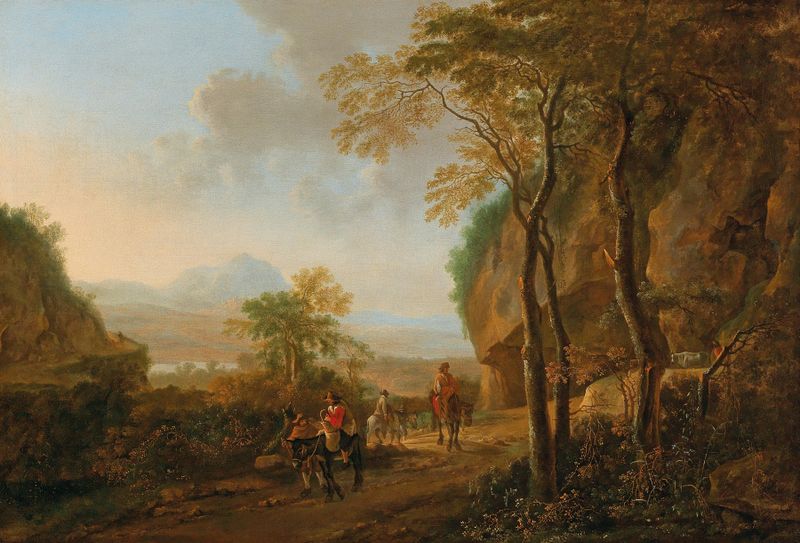
An Italianate landscape with travellers
Jan Both
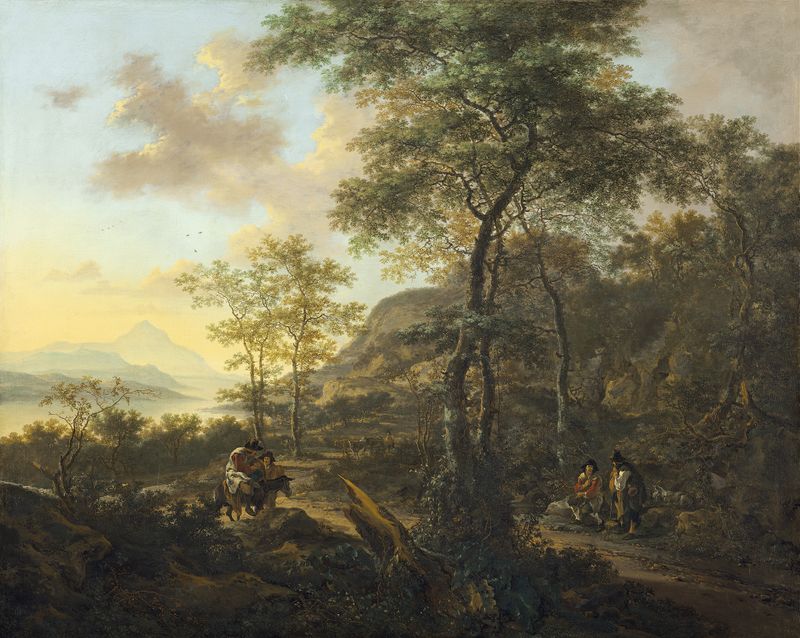
An Italianate Evening Landscape
Jan Both
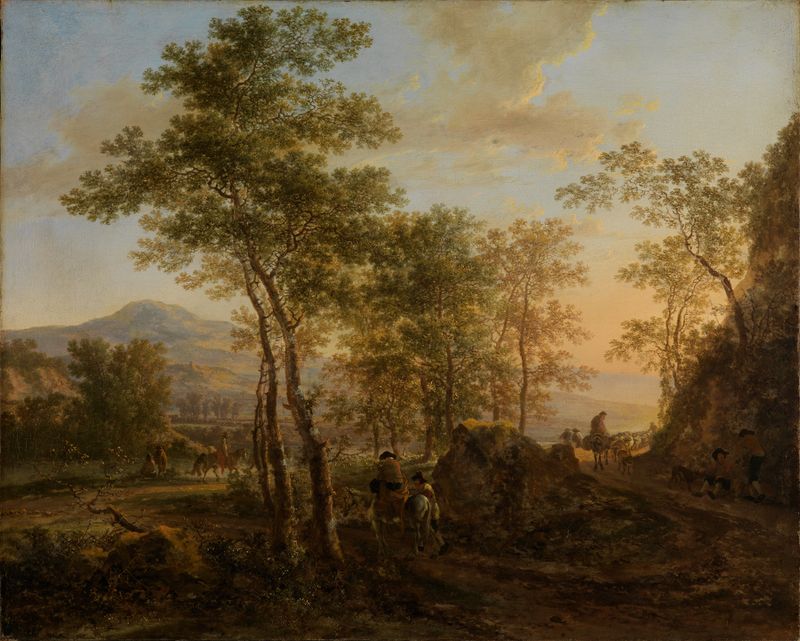
Italienische Landschaft am Abend
Jan Both
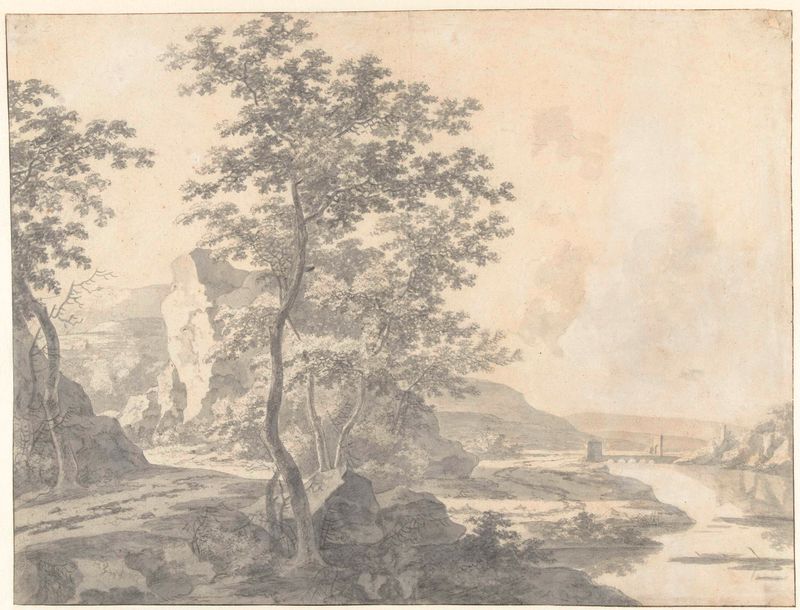
Italiaans landschap
Jan Both
Scene of the Roman Campagna
Jan Both
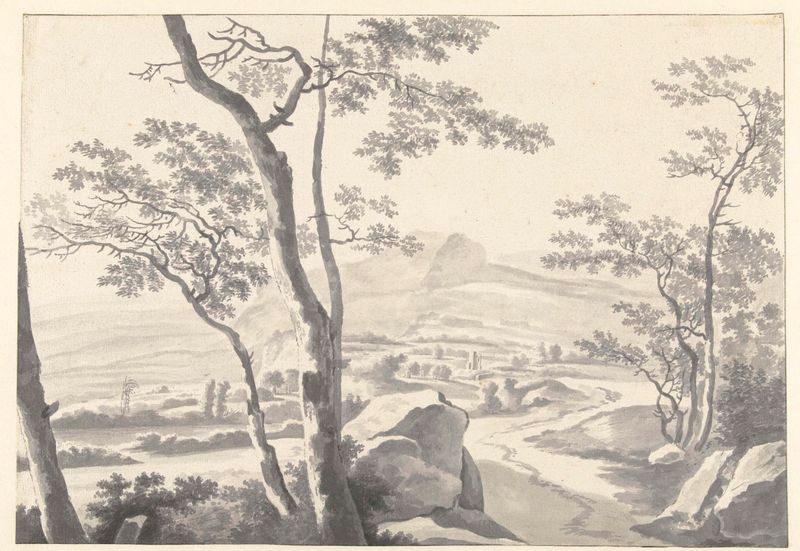
Landschap
Jan Both
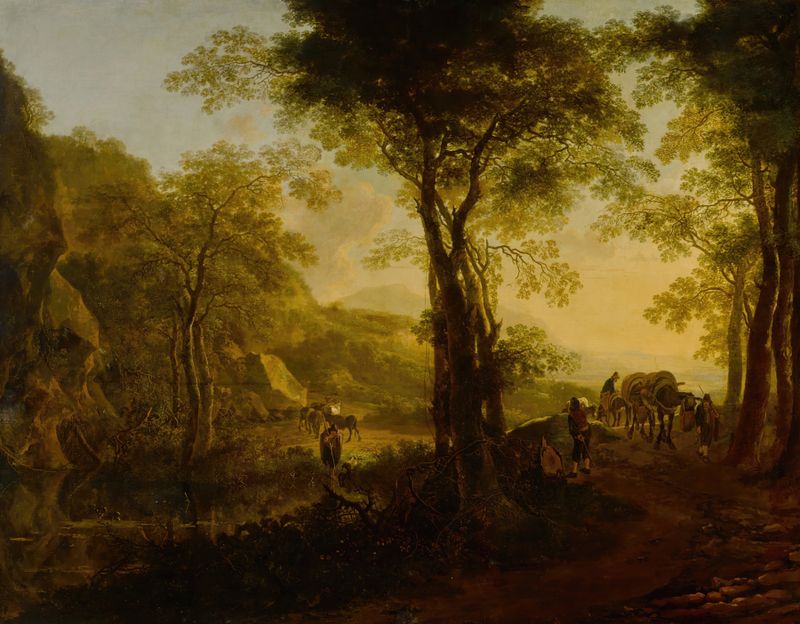
Italianate landscape at sunset, with travelers on a country road
Jan Both
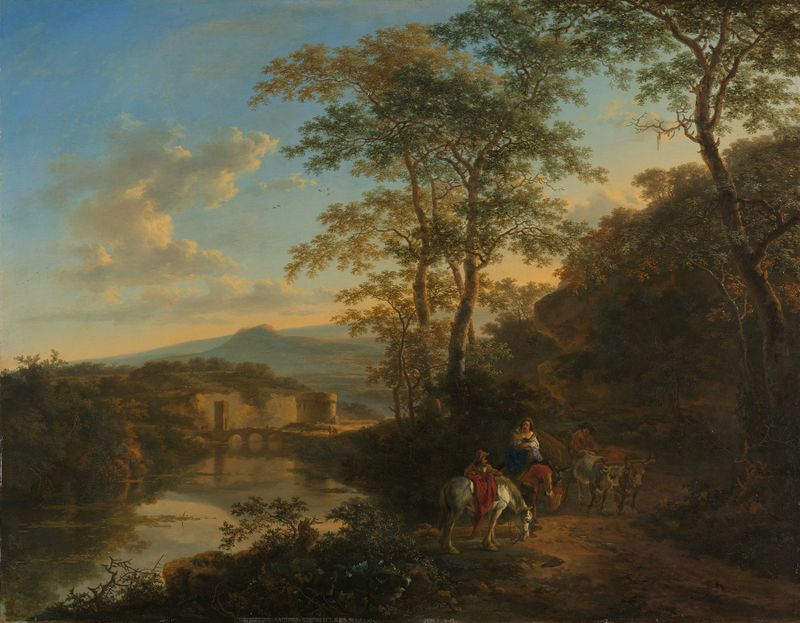
Italian Landscape with the Ponte Lucano over the Aniene River
Jan Both
A wooded landscape with travellers crossing a ford
Jan Both

Italian Landscape
Jan Both





