
Landstraße bei Plankenberg — History & Facts
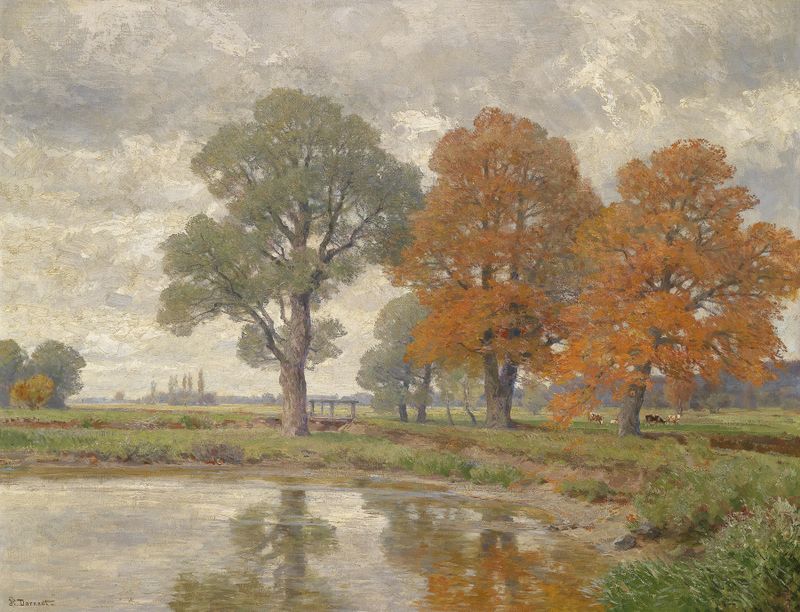
What if beauty was never meant to be finished? In the tender embrace of a sunlit landscape, the incomplete whispers of nature beckon us to linger longer, to yearn for what lies just beyond our grasp. Look to the horizon, where a winding road draws your eye through lush greenery, inviting you deeper into the canvas. Notice how the gentle undulations of the land are accentuated by a palette of rich greens and golden hues, each stroke reflecting a delicate balance between reality and an artist’s dream. The brushwork feels almost spontaneous, as if Darnaut sought to capture a fleeting moment, allowing the viewer to sense the life that pulses within this tranquil scene. As you explore further, contemplate the contrast between the seemingly serene landscape and the underlying tension of unfulfilled desire.
The road leads somewhere undefined, suggesting a journey ongoing rather than complete, embodying a sense of longing that transcends mere visual beauty. The interplay of light and shadow not only illuminates the vibrant colors but also evokes an emotional depth, hinting at the complexities of life and aspirations intertwined within this pastoral setting. In 1898, while creating Landstraße bei Plankenberg, Hugo Darnaut was immersed in the vibrant art scene of Vienna, a city seeing a blend of tradition and modernity. This period marked a time where artists were beginning to move away from strict realism, allowing for impressions of beauty that capture the essence of moments instead.
His connection to nature and longing for emotional resonance in art mirrored the broader societal shifts of the era, capturing a burgeoning desire for deeper truths beyond mere representation.
More Artworks by Hugo Darnaut
Browse all →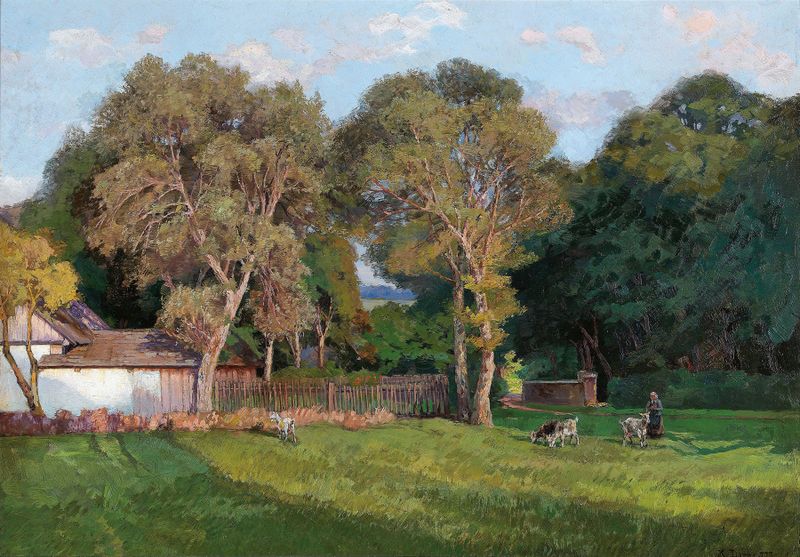
Aus dem Wienerwald
Hugo Darnaut
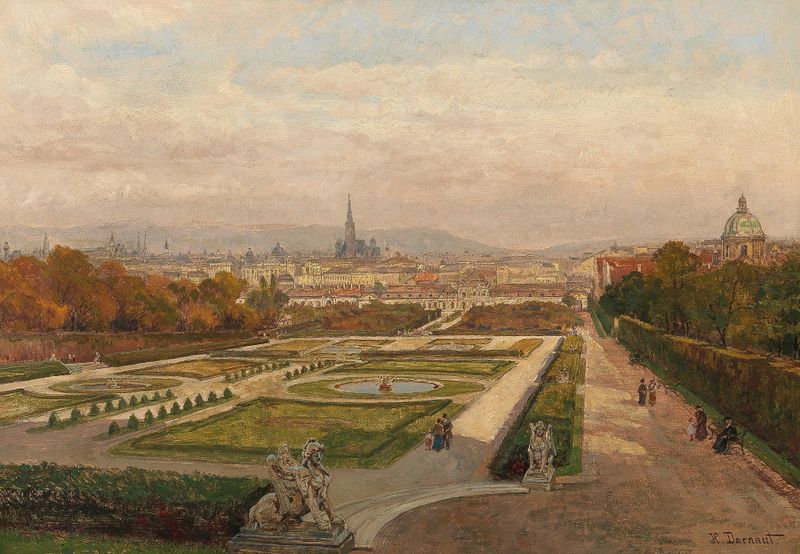
Blick vom Belvedere auf Wien
Hugo Darnaut

Motiv aus Plankenberg
Hugo Darnaut

In einem Wiener Garten (II., Praterstraße 60)
Hugo Darnaut

A Scene at Dusk in Late Autumn
Hugo Darnaut
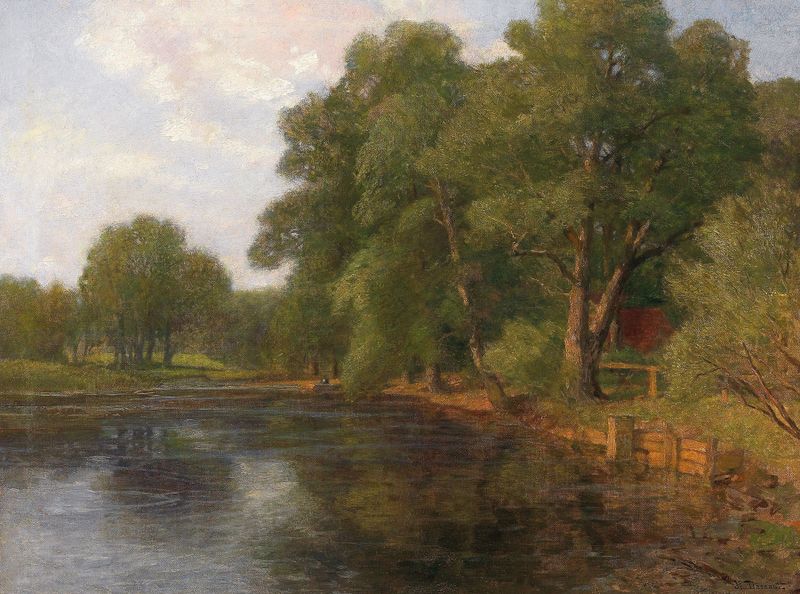
Motiv bei Plankenberg
Hugo Darnaut

Die Ruine Starhemberg im Piestingtal
Hugo Darnaut
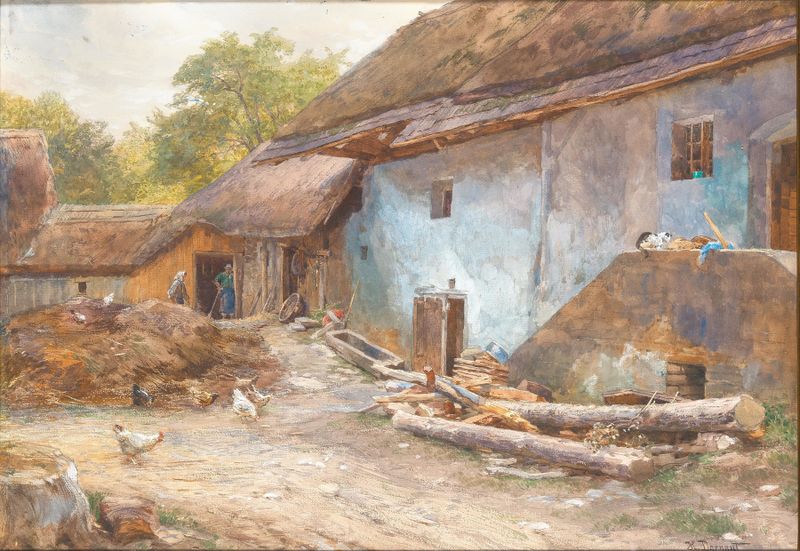
Niederösterreichischer Bauernhof
Hugo Darnaut

River Landscape with Small Herd of Cows and a Village in the background
Hugo Darnaut
Spätherbsttag
Hugo Darnaut





