
L’arc De Triomphe — History & Facts
Where does light end, and longing begin? In L’arc De Triomphe, the tension between illumination and shadow whispers secrets of both beauty and violence, encapsulating a moment where history breathes. Look to the left at the vibrant foliage, its lush greens contrasting against the gray elegance of the Arc itself. The brush strokes dance across the canvas, capturing the bustling activity of Parisian life in vivid hues; a horse-drawn carriage ambles past, its passengers immersed in their own world. Notice how the light spills from the sky, casting an ethereal glow over the scene, inviting the viewer to become part of this urban tapestry where each detail, from the cobblestone ground to the intricate carvings of the monument, is meticulously rendered. Yet, beneath the serene façade lies an undercurrent of unease.
The juxtaposition of animated life against the stoic permanence of the Arc conveys a sense of mortality, a reminder of the sacrifices made for triumph. The soft pastels of the sky are punctuated by the jagged lines of the monument, suggesting that even in moments of beauty, there exists a shadow of violence—past battles fought and lives lost, forever intertwined with the celebration of victory. Eugène Galien-Laloue created this piece during a time of profound change in France. The late 19th century was marked by rapid industrialization and a reawakening of national pride, as well as the echoes of political turmoil.
As he painted, the world around him was shifting, absorbing the complexities of modernity while still paying homage to its vibrant history. His work reflects not only the sights of Paris but also the emotional landscape of a nation caught between its glorious past and an uncertain future.
More Artworks by Eugène Galien-Laloue
Browse all →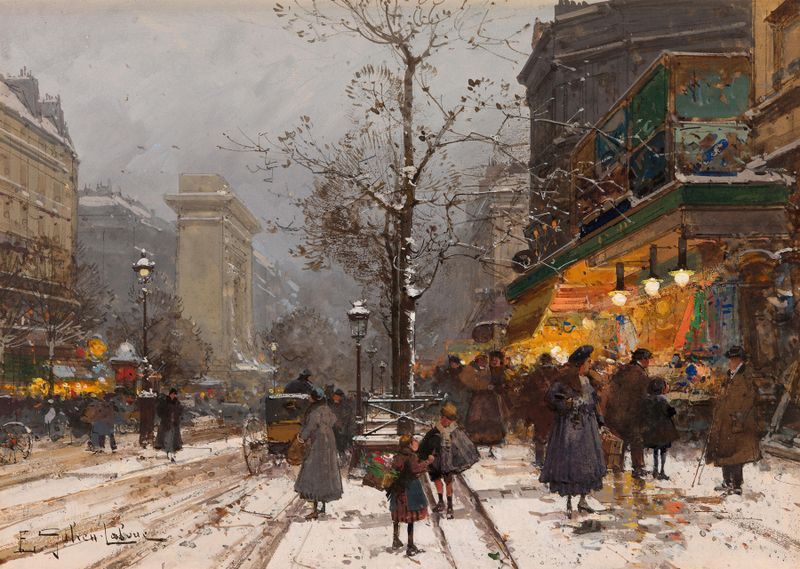
Boulevard Bonne – Nouvelle sous la neige
Eugène Galien-Laloue
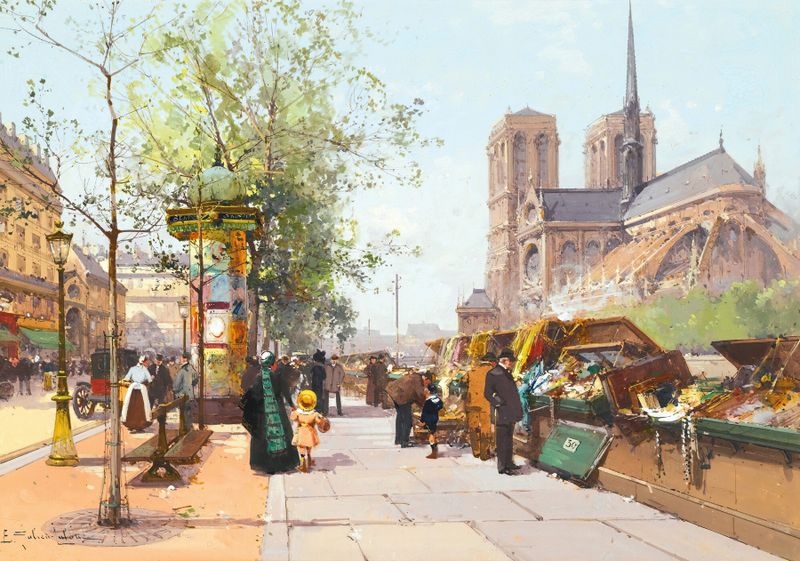
Notre Dame De Paris
Eugène Galien-Laloue
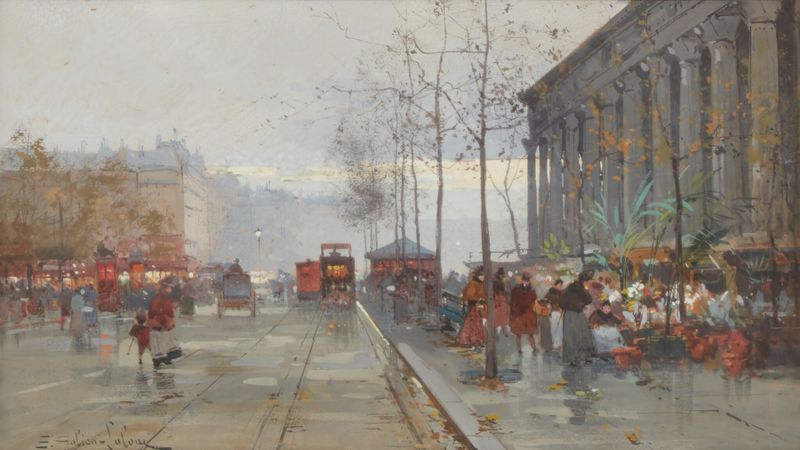
Le Marché aux fleurs de la Madeleine
Eugène Galien-Laloue
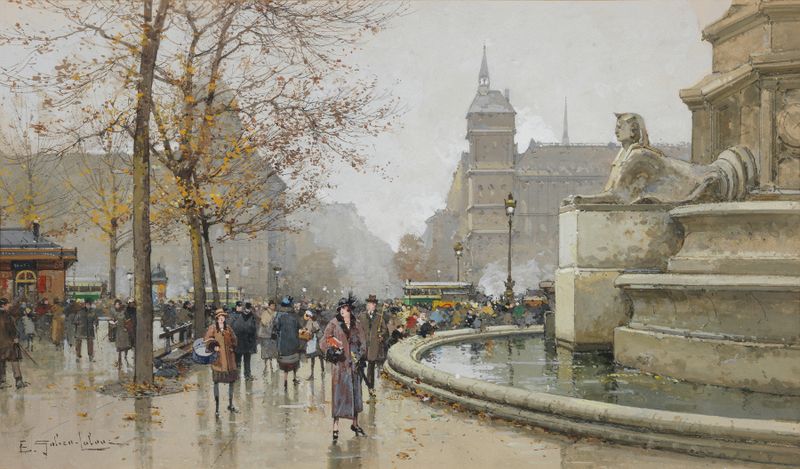
La fontaine du Palmier, place du Châtelet
Eugène Galien-Laloue
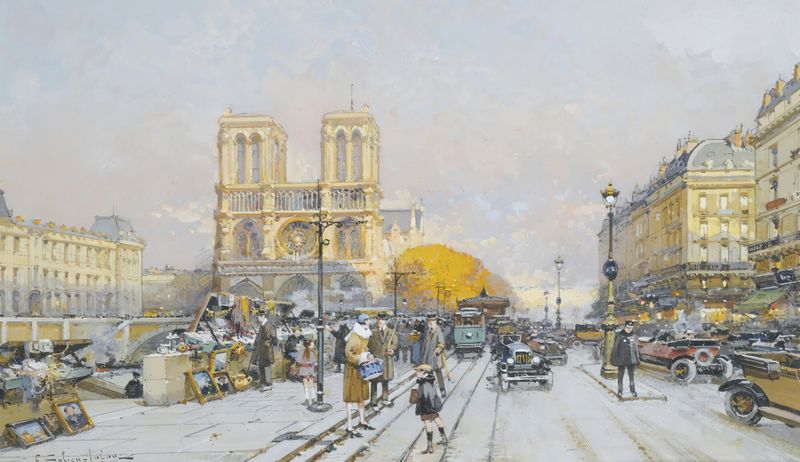
Notre Dame
Eugène Galien-Laloue
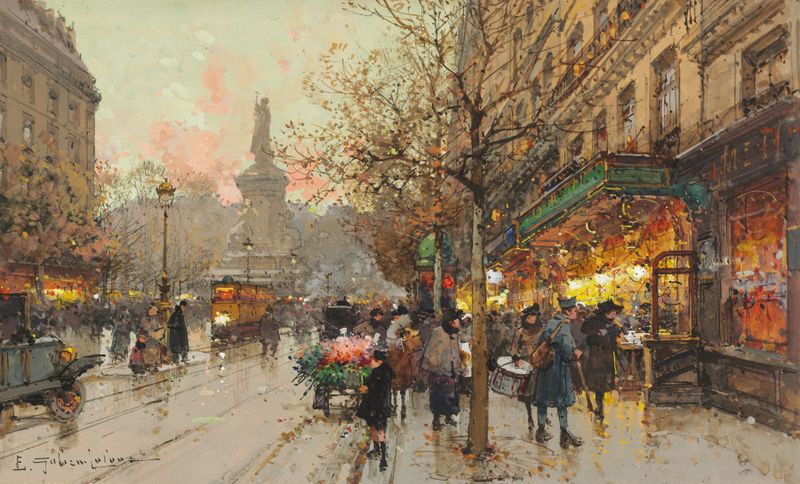
Place De La République
Eugène Galien-Laloue
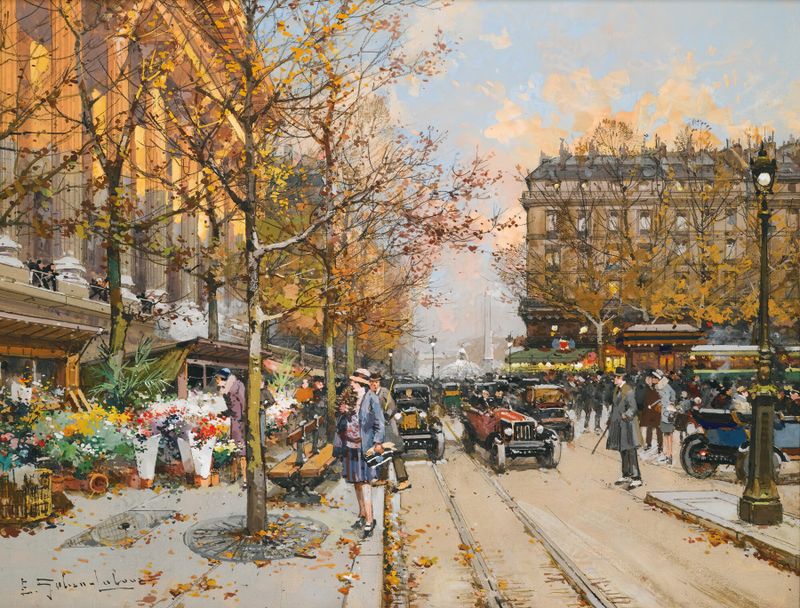
Place De La Madeleine
Eugène Galien-Laloue
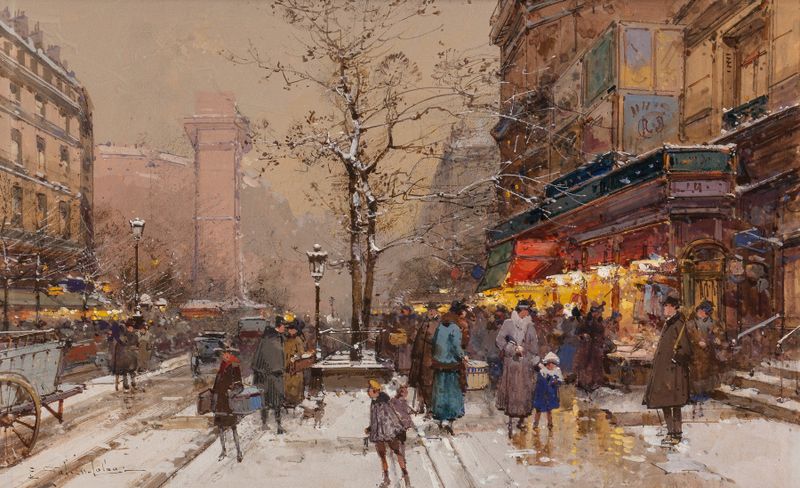
Porte Saint-Denis
Eugène Galien-Laloue
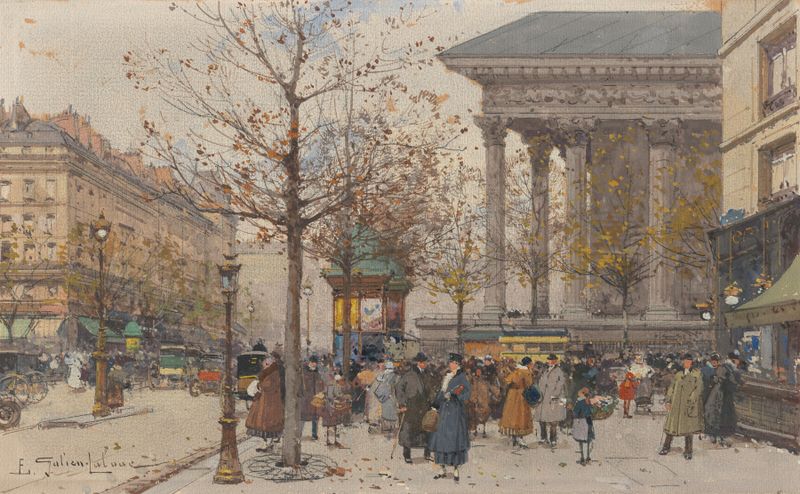
Vue animée de la Madeleine
Eugène Galien-Laloue
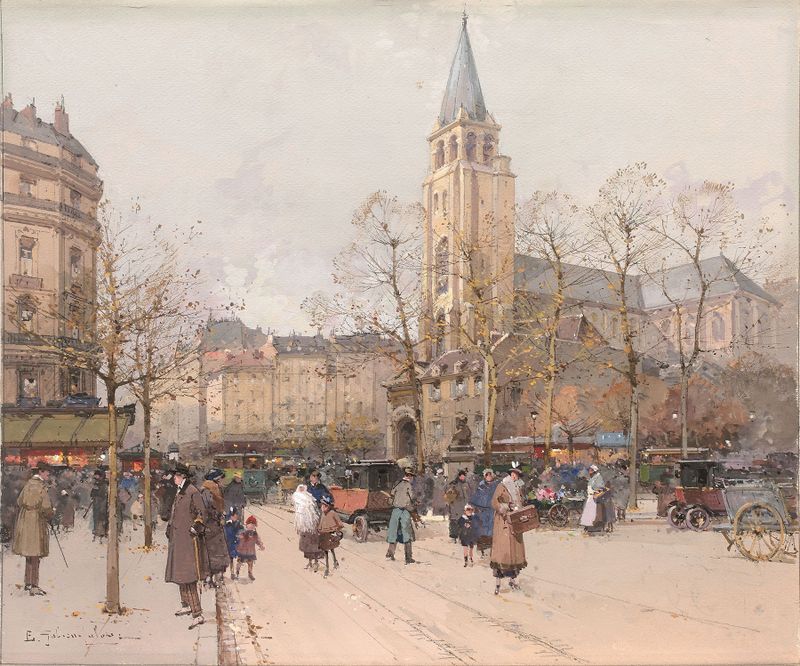
Vue des boulevards à Saint-Germain-des-Prés
Eugène Galien-Laloue





