
L’Arc de Triomphe, Place de l’Étoile — History & Facts
Could beauty survive in a century of chaos? In a world where the tumult of progress often overshadows the serenity of the past, the answer lies in the delicate balance of desire and remembrance. Look to the fore of L’Arc de Triomphe, Place de l’Étoile, where the iconic monument stands resolutely against the canvas of Paris. The artist captures the grandeur of the arch, its intricate details framed by the bustling life of the street below. Notice how the soft light bathes the scene, accentuating the warm tones of the building facades while casting long shadows that suggest the passage of time.
Galien-Laloue’s deft brushwork allows the viewer to feel both the stillness of the architecture and the vibrant energy of the city, drawing you into the heart of this moment. As you take in the scene, consider the contrast between the permanence of the arch and the fleeting nature of the pedestrians rushing by. Each figure represents a desire to connect with something greater, while also embodying the individual struggles of city life. The small details, such as the fluttering flags and the distant horse-drawn carriages, evoke nostalgia and longing, challenging the viewer to reflect on their place within this ever-evolving landscape. During the late 19th and early 20th centuries, when this piece was likely created, Eugène Galien-Laloue was immersed in a Paris that was rapidly transforming.
The city was a hub of artistic innovation and social change, teeming with new ideas and movements. The arch, a symbol of triumph and national pride, stands as a testament to resilience in the face of the chaos surrounding the artist, encapsulating an era where beauty fought to maintain its relevance.
More Artworks by Eugène Galien-Laloue
Browse all →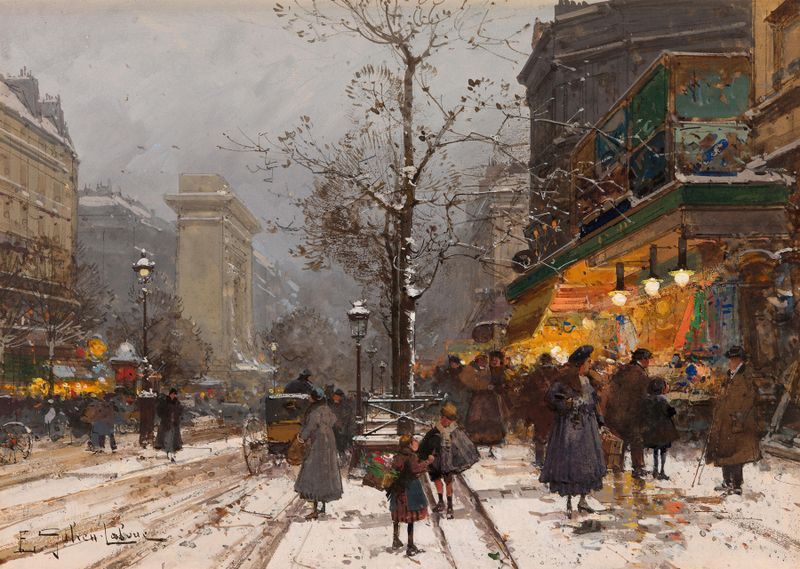
Boulevard Bonne – Nouvelle sous la neige
Eugène Galien-Laloue
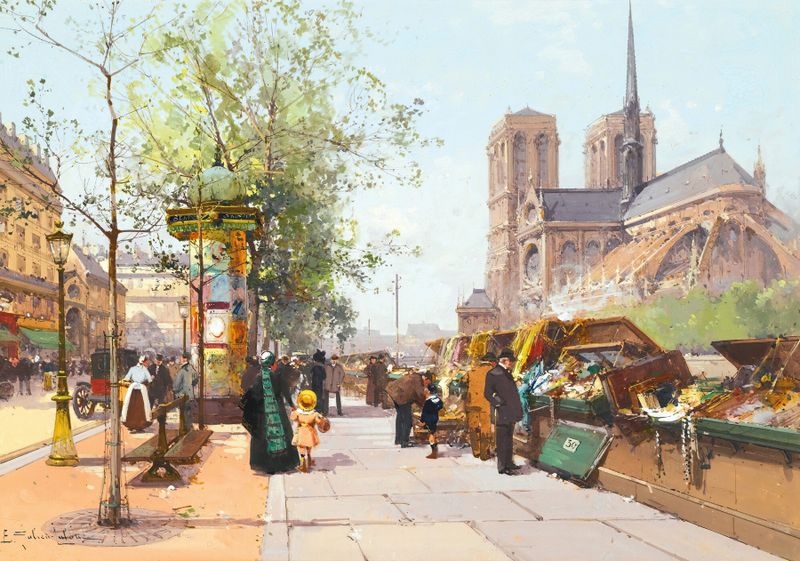
Notre Dame De Paris
Eugène Galien-Laloue
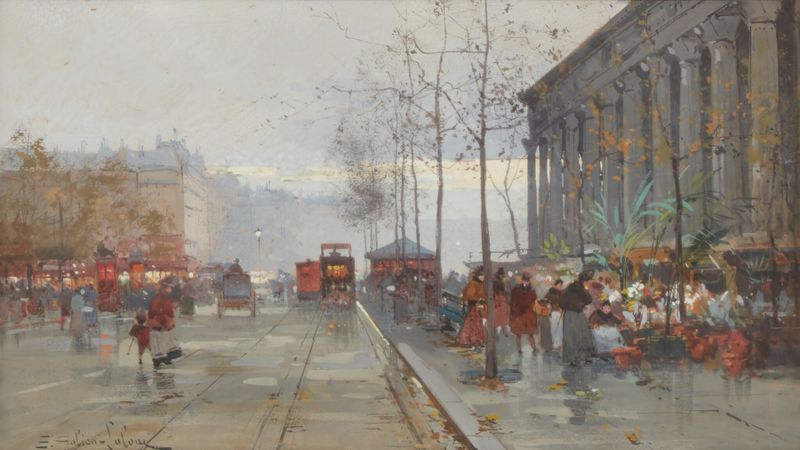
Le Marché aux fleurs de la Madeleine
Eugène Galien-Laloue
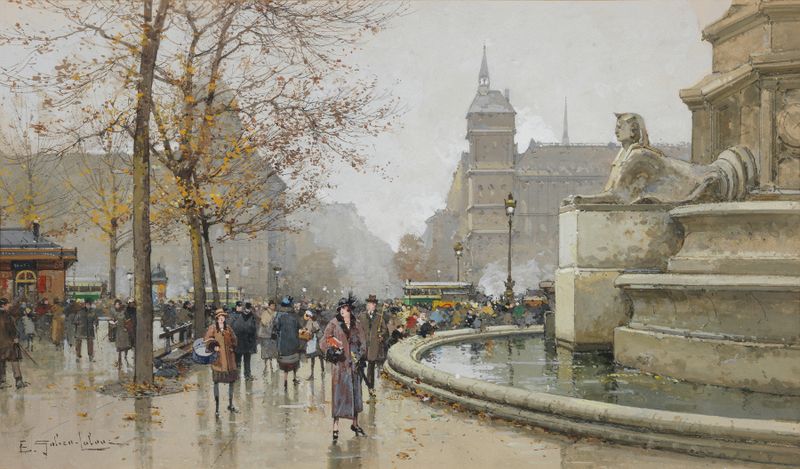
La fontaine du Palmier, place du Châtelet
Eugène Galien-Laloue
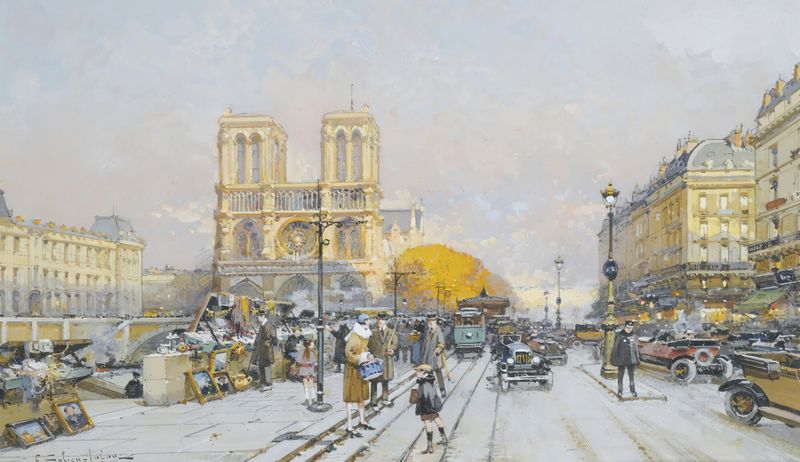
Notre Dame
Eugène Galien-Laloue
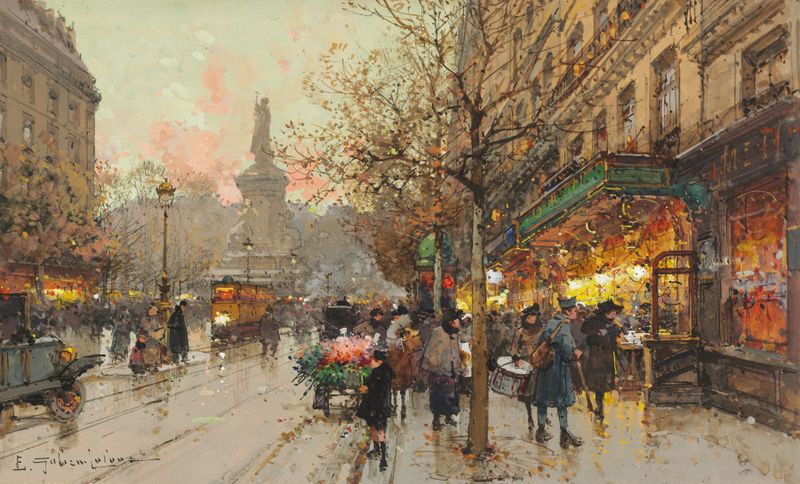
Place De La République
Eugène Galien-Laloue
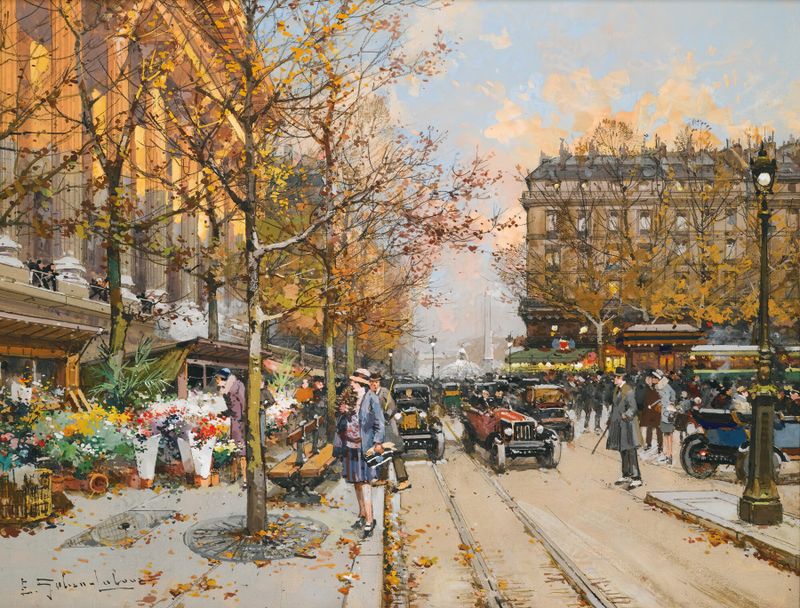
Place De La Madeleine
Eugène Galien-Laloue
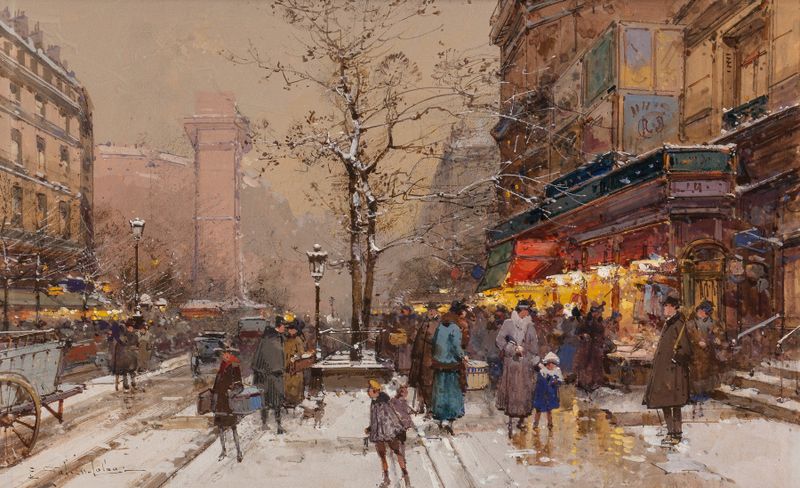
Porte Saint-Denis
Eugène Galien-Laloue
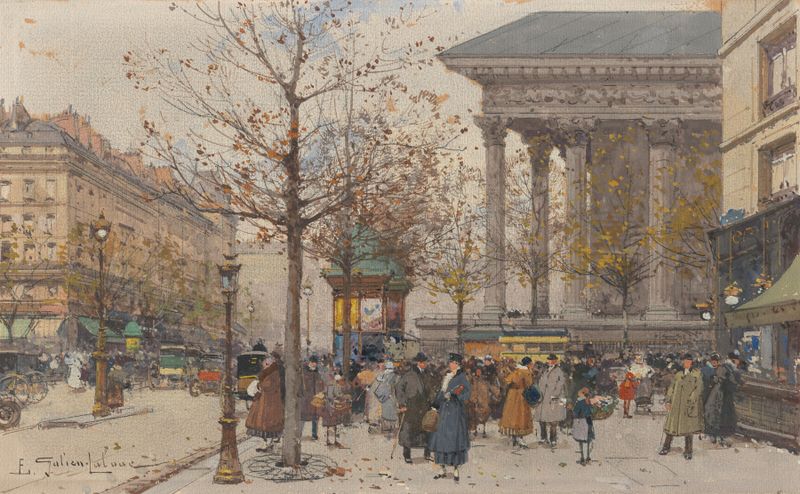
Vue animée de la Madeleine
Eugène Galien-Laloue
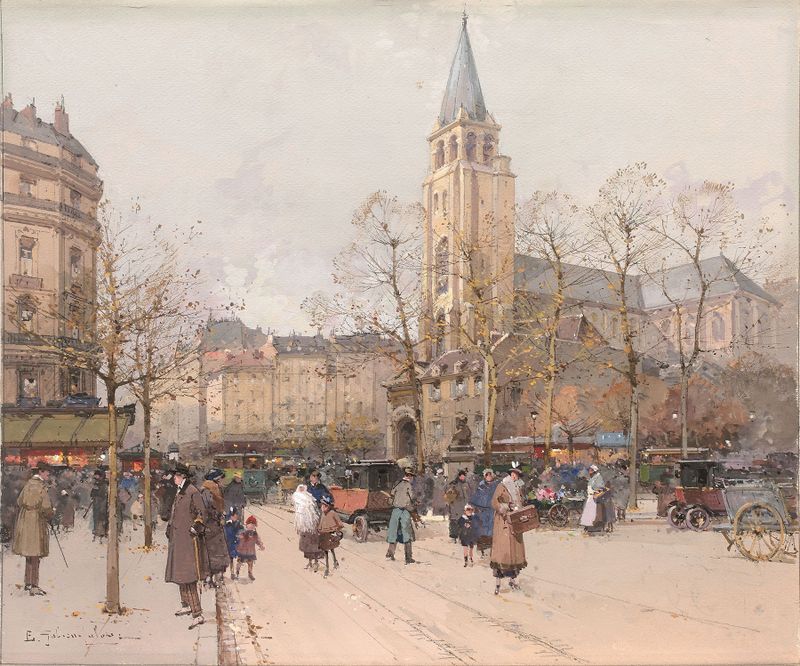
Vue des boulevards à Saint-Germain-des-Prés
Eugène Galien-Laloue
More Architecture Art
Browse all →
The statue of Liberty
Frédéric Auguste Bartholdi

View of Houses in Delft, Known as ‘The Little Street’
Johannes Vermeer

View of Houses in Delft, Known as ‘The Little Street’
Johannes Vermeer

The Cathedral in Rouen. The portal, Grey Weather
Claude Monet

The yellow house
Vincent van Gogh

The Church in Auvers-sur-Oise, View from the Chevet
Vincent van Gogh