
Lavandières — History & Facts
In Lavandières, shadows mingle effortlessly with the vibrant hues, whispering untold stories of labor and life. The interplay of light and darkness reveals the hidden depths of the human experience, urging us to contemplate the intensity of existence beneath the surface. Look to the left at the elegantly draped linen, gleaming with the touch of sunlight that pours through the trees. The figures, serene yet purposeful, are framed by the gentle arch of foliage, commanding attention as they labor beside the water’s edge.
Notice how the artist’s choice of soft pastels evokes a sense of tranquility, while deeper shadows hint at the weight of toil, creating a visual harmony that invites both admiration and reflection. The juxtaposition of light and shadow serves as a poignant metaphor for resilience and struggle. The laughter of the women, captured in their fluid motion, contrasts starkly with the stillness of the water, symbolizing the delicate balance between joy and duty. Each detail, from the ripples in the stream to the textures of their garments, reveals the contrast between the beauty of nature and the arduous work that sustains it. Hubert Robert painted Lavandières during a time when the artistic community was embracing the transition from Rococo to Neoclassicism in 18th century France.
Living in Paris, Robert was simultaneously a celebrated architect and painter, experimenting with landscapes that reflected both reality and idealism. This period marked a burgeoning appreciation for pastoral themes, and Lavandières epitomizes his ability to intertwine picturesque beauty with the essence of everyday life.
More Artworks by Hubert Robert
Browse all →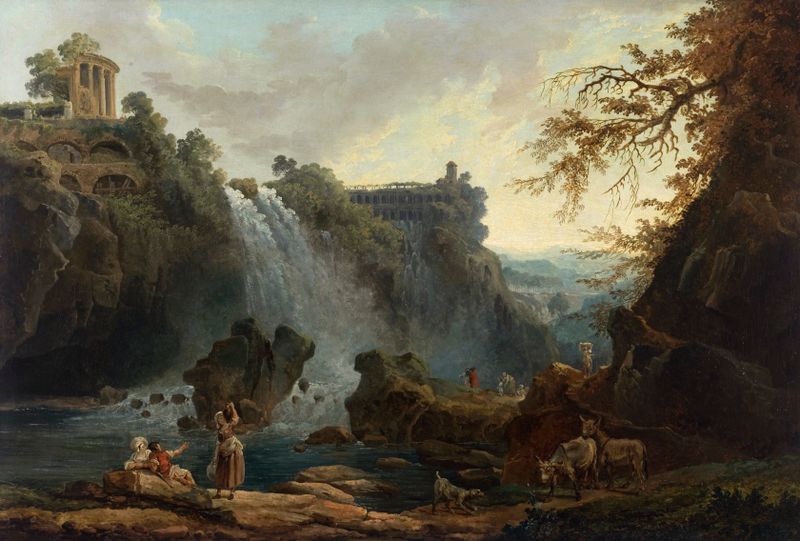
Les Cascatelles de Tivoli
Hubert Robert
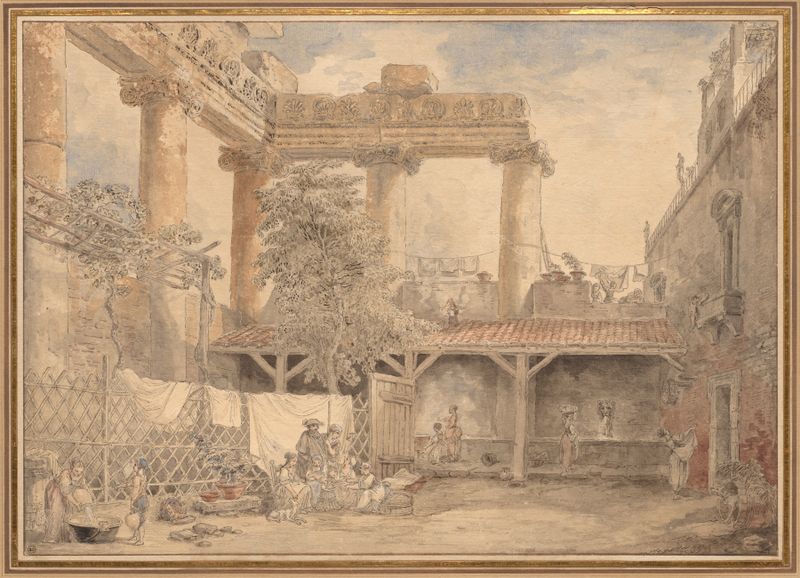
Roman Ruins, Villa Pamfili
Hubert Robert

The Rustic Bridge, Château de Méréville, France
Hubert Robert

The Portico of a Country Mansion
Hubert Robert

Architectural Capriccio
Hubert Robert

The Obelisk
Hubert Robert
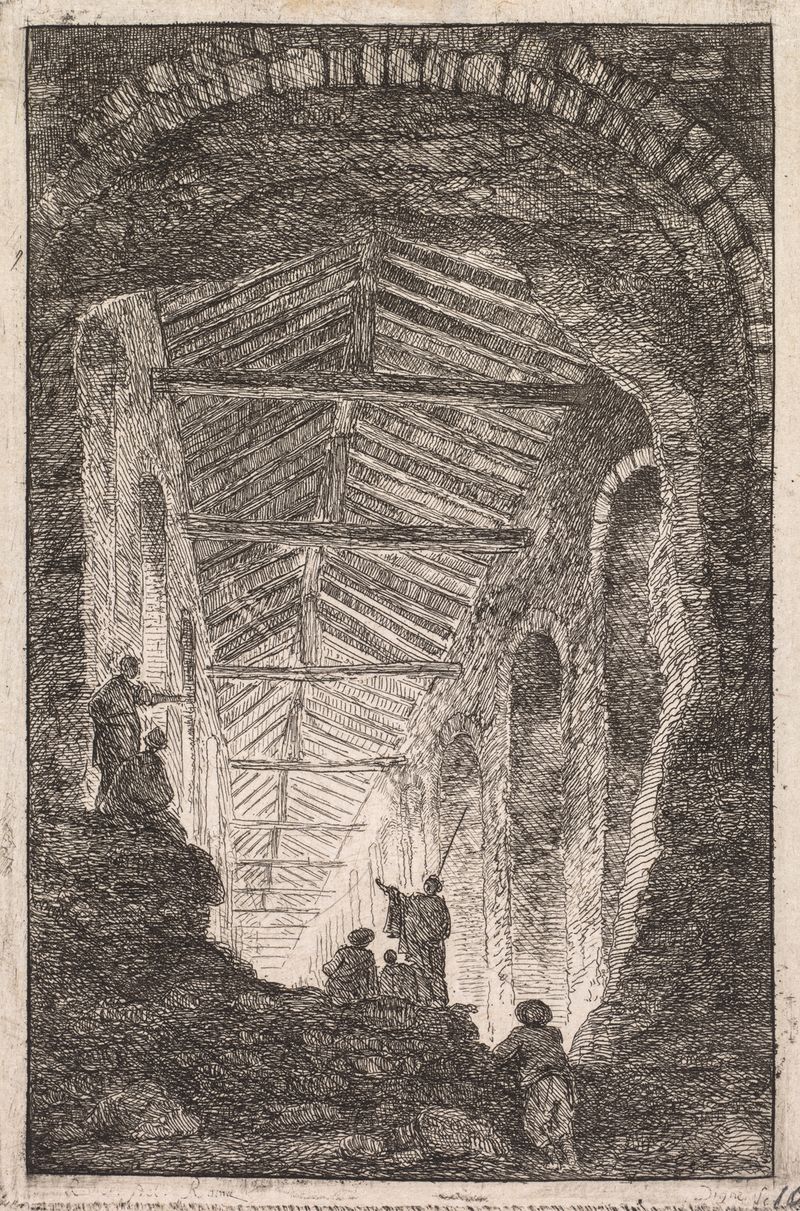
The Antique Gallery
Hubert Robert

L’incendie de l’Opéra, vu des jardins du Palais-Royal, le 8 juin 1781
Hubert Robert
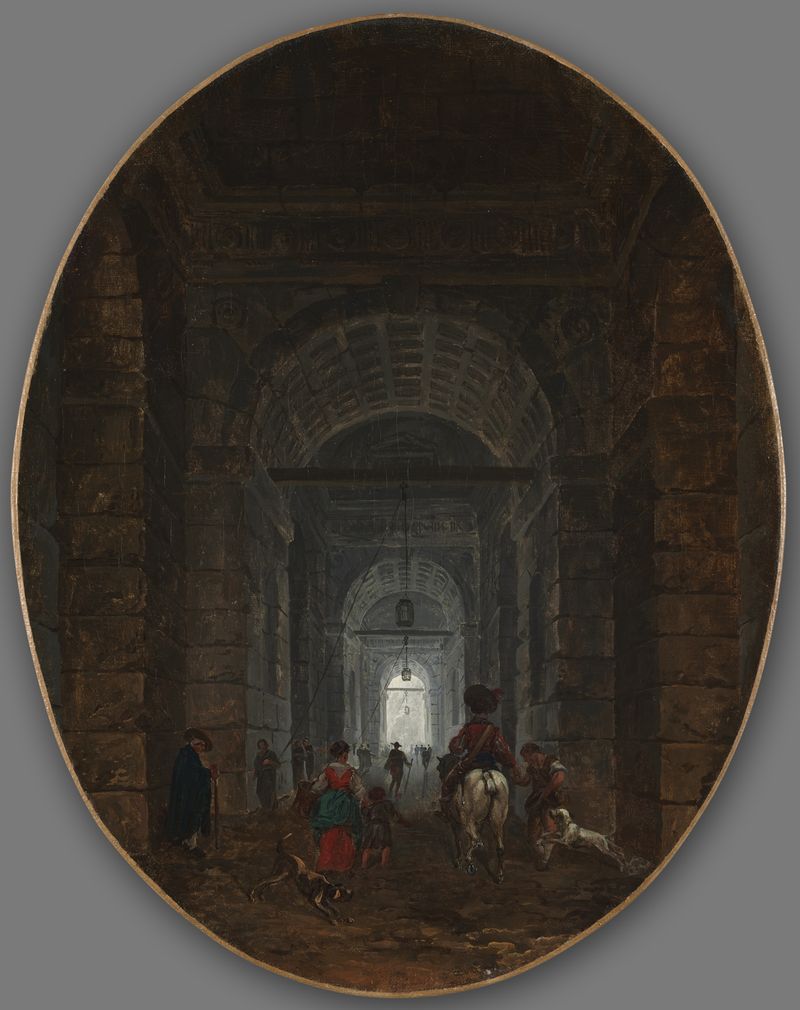
The Grotto of Posillipo
Hubert Robert

Architectural Capriccio with ruins of the Temple of Saturn and the Colosseum in the background
Hubert Robert





