
Lavandières dans un parc — History & Facts
What if beauty was never meant to be finished? In Lavandières dans un parc, the harmony of nature and human activity invites a sense of awe, as if the moment lingers forever in a loop of serene labor. Look to the left at the gathering of women, their graceful postures and flowing dresses echoing the gentle curves of the trees around them. Soft sunlight filters through the leaves, casting dappled shadows on their work, while the rich palette of greens and earthy tones evokes a tranquil rural paradise. Notice how the figures' gestures — hands moving fluidly in the fabric, laughter almost audible — capture a striking contrast between the toil of washing and the peace of their idyllic setting. Delve deeper into the scene and observe the juxtaposition of labor and leisure.
Each woman embodies a different aspect of the cycle of life; some are engrossed in their task, while others seem to momentarily escape into thought, reflecting the duality of existence. The backdrop, with its classical architecture partially veiled by leaves, hints at an unspoken relationship between nature and humanity, suggesting that beauty thrives in the mundane as much as in the grand. In 1775, when this piece was created, Robert was immersing himself in the lush landscapes of the French countryside while balancing the ideals of the Rococo style with emerging Romantic sensibilities. This period was marked by significant shifts in art, reflecting a growing interest in the emotional resonance of everyday scenes that transcended mere aesthetics.
More Artworks by Hubert Robert
Browse all →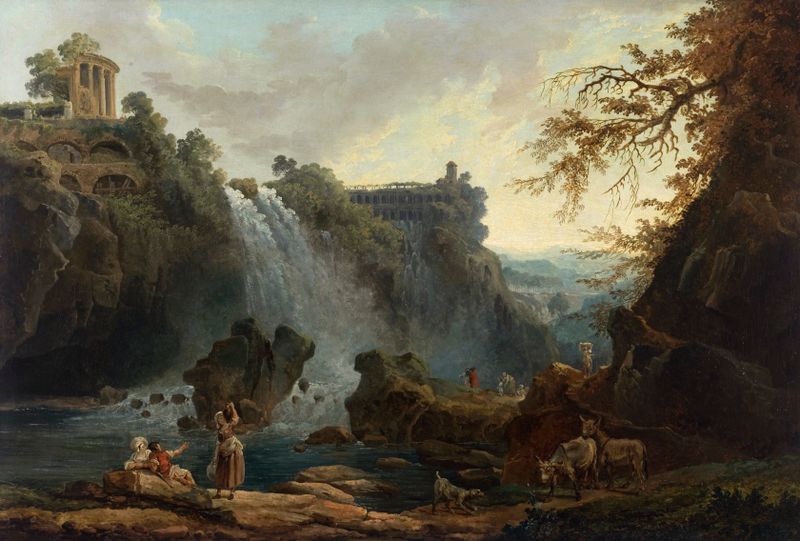
Les Cascatelles de Tivoli
Hubert Robert
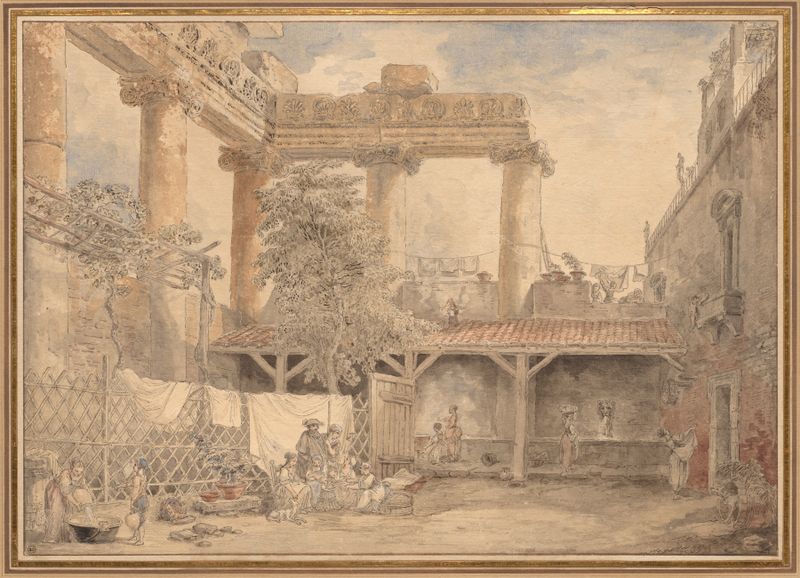
Roman Ruins, Villa Pamfili
Hubert Robert

The Rustic Bridge, Château de Méréville, France
Hubert Robert

The Portico of a Country Mansion
Hubert Robert

Architectural Capriccio
Hubert Robert

The Obelisk
Hubert Robert
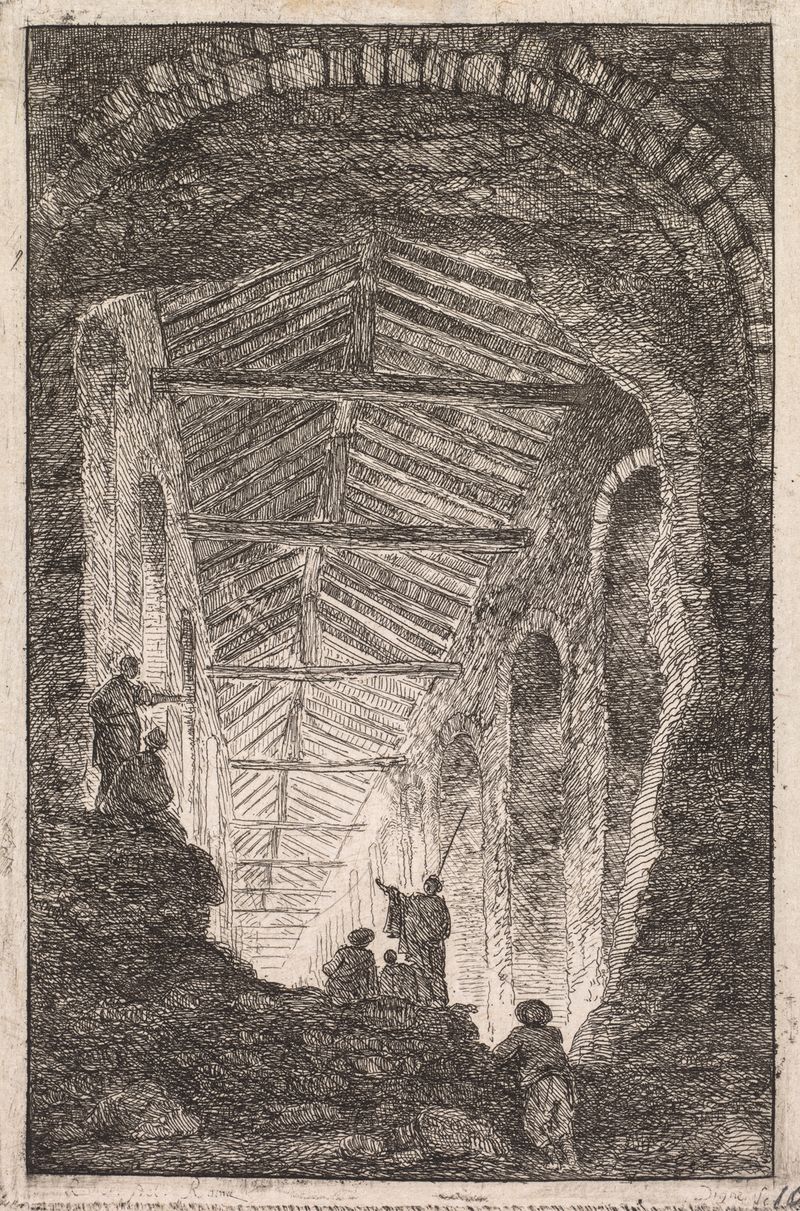
The Antique Gallery
Hubert Robert

L’incendie de l’Opéra, vu des jardins du Palais-Royal, le 8 juin 1781
Hubert Robert
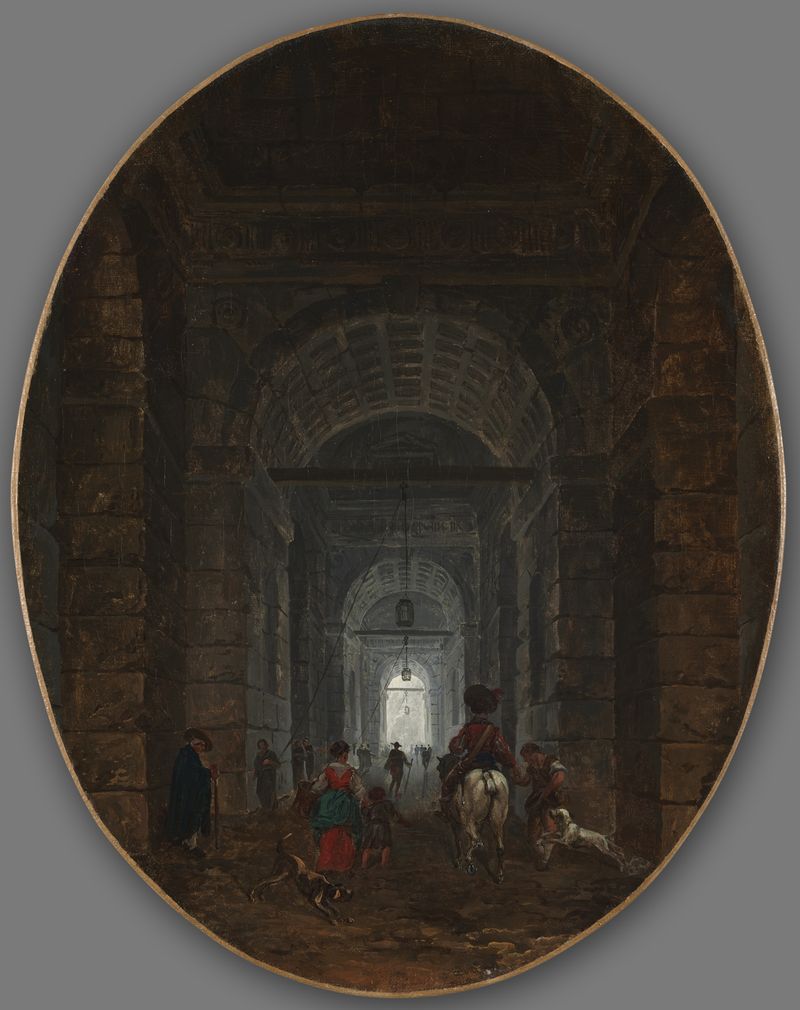
The Grotto of Posillipo
Hubert Robert

Architectural Capriccio with ruins of the Temple of Saturn and the Colosseum in the background
Hubert Robert





