
Lavandières dans une architecture romaine — History & Facts
In Lavandières dans une architecture romaine, Hubert Robert captures the delicate balance between beauty and labor, where truth unfolds amidst ancient ruins and bustling life. Look to the center where figures in flowing garments diligently attend to their tasks, their movements echoing the rhythms of the water and the architecture surrounding them. Notice how the light pours softly through the open arches, illuminating the delicate ripples in the water and the texture of the stones. The interplay of light and shadow imbues the scene with a sense of timelessness, inviting you to linger in the beauty of both nature and human endeavor. As you dive deeper into the work, consider the juxtaposition of the serene Roman architecture with the industriousness of the washerwomen.
Their hands, submerged in the water, symbolize labor's essential yet often overlooked dignity. The tranquil backdrop serves as a reminder of history’s permanence, contrasting with the fleeting nature of everyday life. The intricate details of the ruins whisper stories of the past, while the workers remind us of the present's relentless march. In 1804, Robert was painting in Paris, a time of great transformation in France and the art world.
The neoclassical influence was waning, giving way to Romanticism, which emphasized individual experience and emotion. As a prominent figure in this transition, Robert found inspiration in blending the grandeur of classic architecture with pastoral scenes, reflecting the evolving tastes and sentiments of his era.
More Artworks by Hubert Robert
Browse all →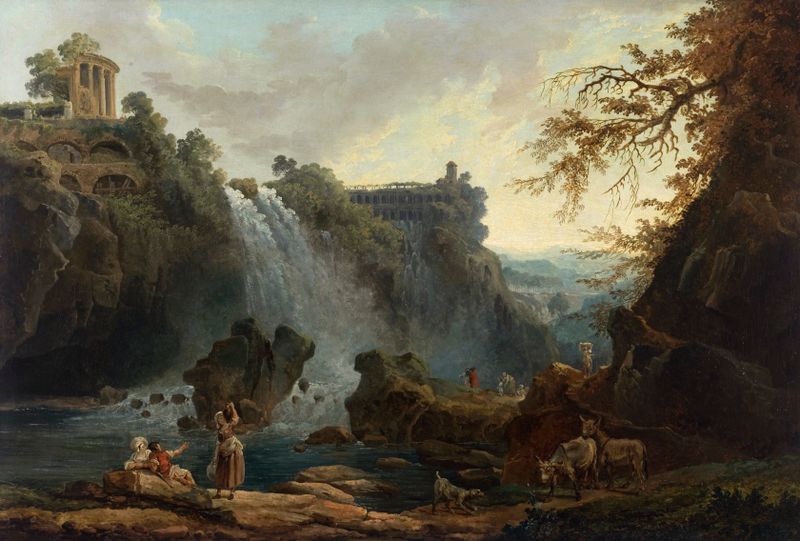
Les Cascatelles de Tivoli
Hubert Robert
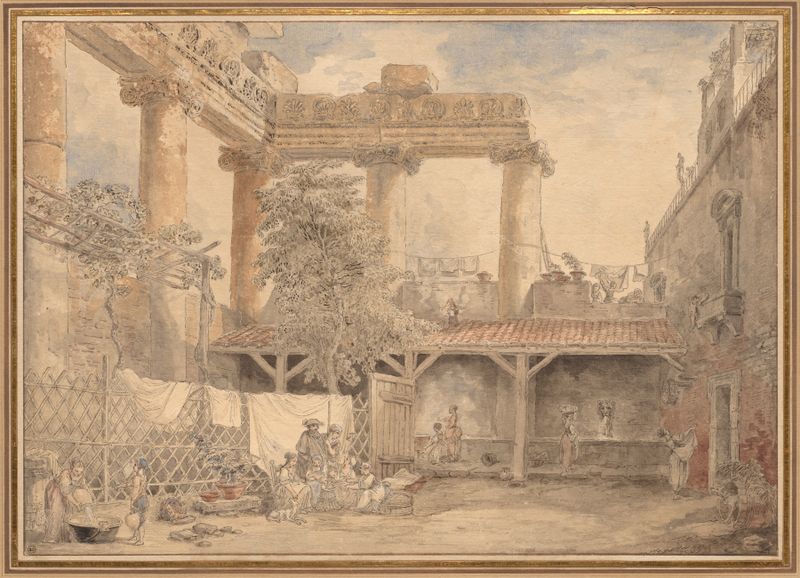
Roman Ruins, Villa Pamfili
Hubert Robert

The Rustic Bridge, Château de Méréville, France
Hubert Robert

The Portico of a Country Mansion
Hubert Robert

Architectural Capriccio
Hubert Robert

The Obelisk
Hubert Robert
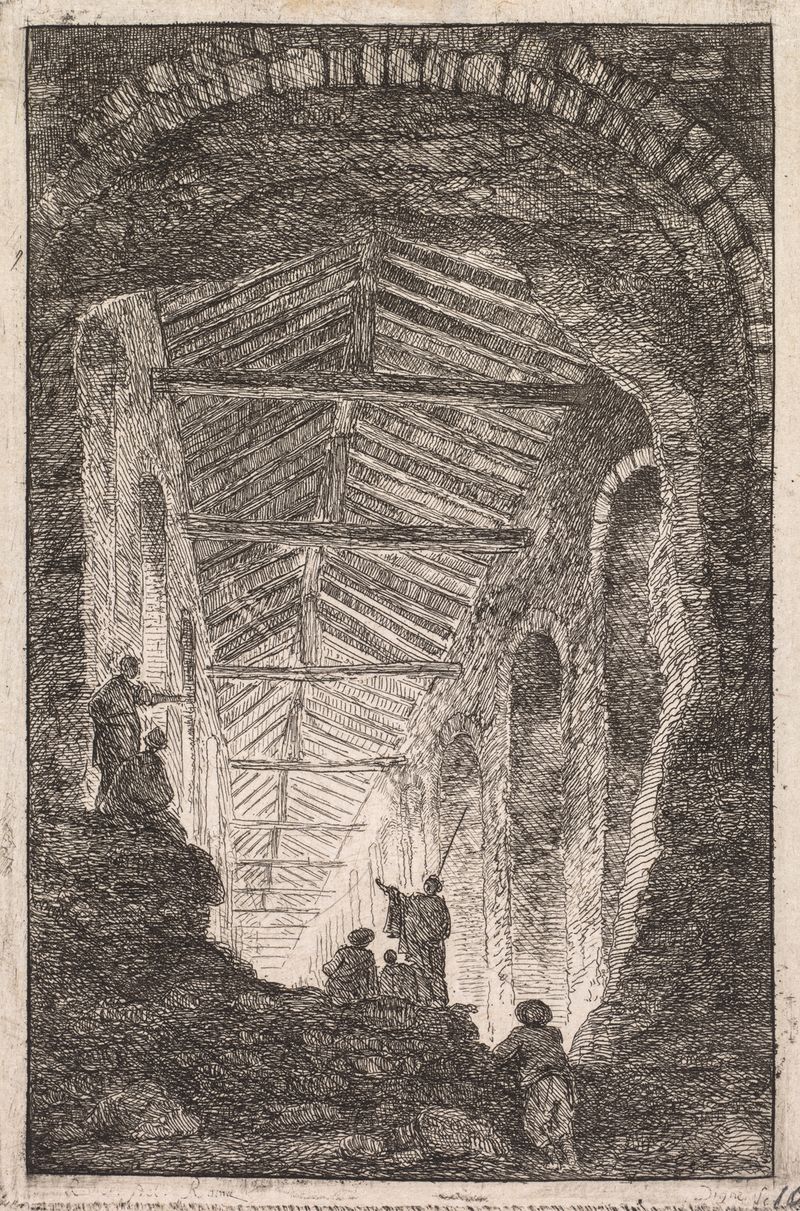
The Antique Gallery
Hubert Robert

L’incendie de l’Opéra, vu des jardins du Palais-Royal, le 8 juin 1781
Hubert Robert
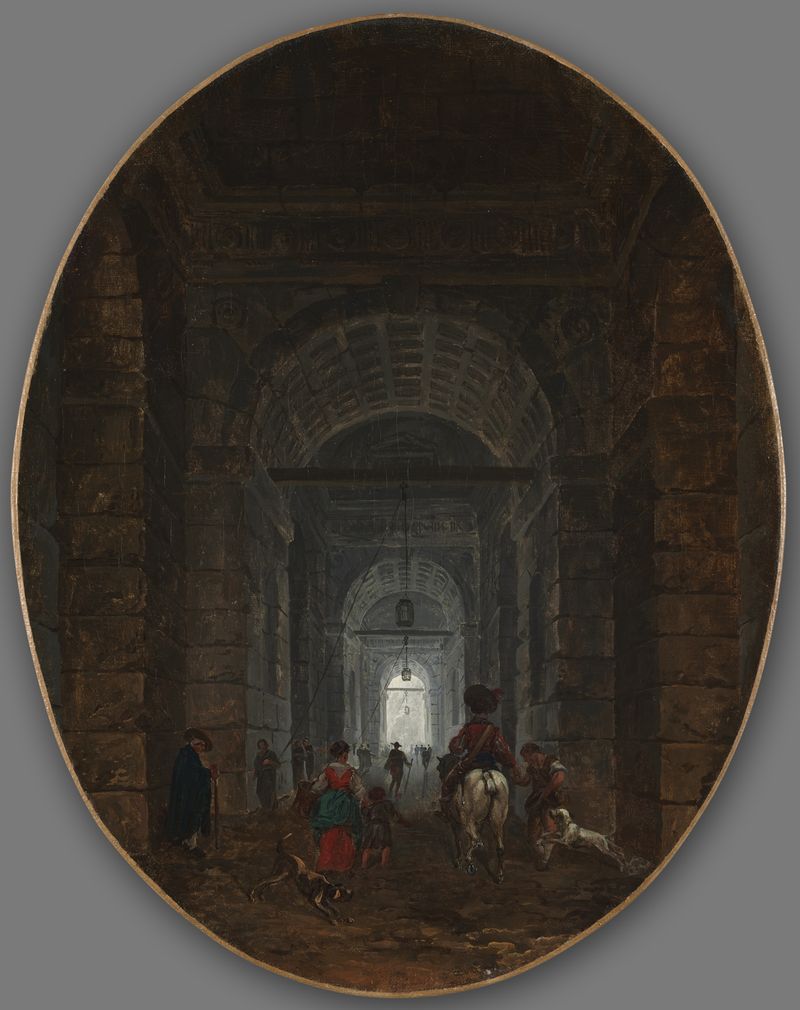
The Grotto of Posillipo
Hubert Robert

Architectural Capriccio with ruins of the Temple of Saturn and the Colosseum in the background
Hubert Robert





