
Le Chêne De Roche — History & Facts
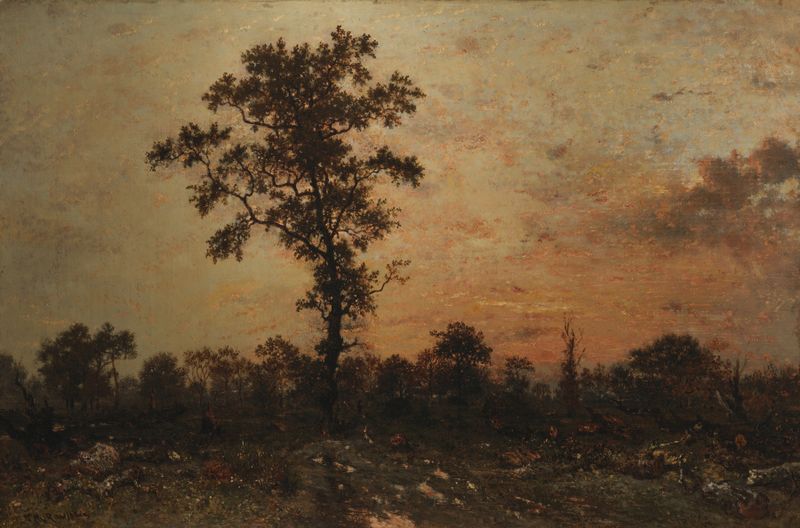
In the stillness of nature, desire intertwines with memory, capturing the essence of what must endure against the passage of time. Look to the heart of the canvas, where a majestic oak tree stands resolute, its gnarled branches reaching outward in a display of natural strength. The colors are rich and deep, earthy browns and vibrant greens intertwining, evoking a sense of place that feels both familiar and timeless. Notice how the dappled sunlight filters through the leaves, casting intricate shadows that dance across the ground, inviting you into this serene sanctuary. Beneath the surface of this tranquil scene lies a tension between permanence and impermanence.
The oak, a symbol of endurance, hints at a longing for continuity, a desire to hold onto moments that are fleeting. The delicate play of light and shadow speaks to the inevitable passage of time, suggesting that even the strongest of trees must yield to nature’s rhythms. Each brushstroke reveals the artist’s intimate connection to the landscape, transforming desire into a visual memory. In 1860, Rousseau painted this masterpiece during a period of personal and artistic exploration while residing in Barbizon, France.
It was a time when the Barbizon School was burgeoning, focusing on naturalism and plein air painting, a movement that sought to break from the constraints of traditional art. Deeply influenced by his surroundings, Rousseau's work reflects his passionate commitment to capturing the essence of nature and the emotions it evokes in the observer.
More Artworks by Théodore Rousseau
Browse all →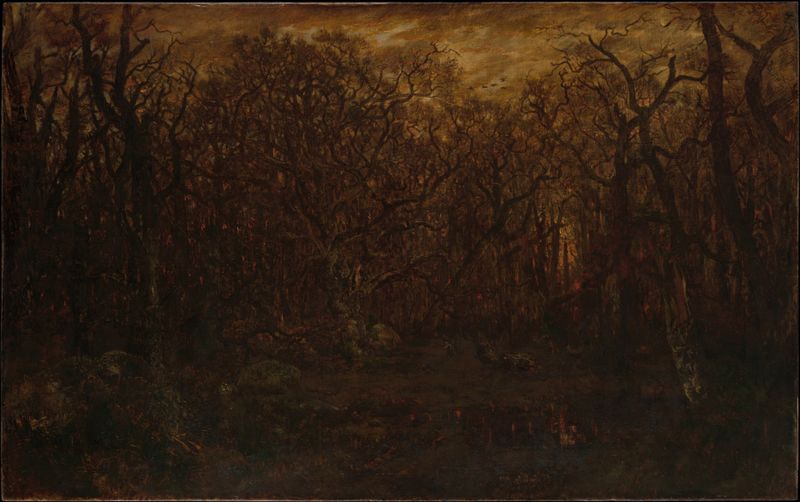
The Forest in Winter at Sunset
Théodore Rousseau
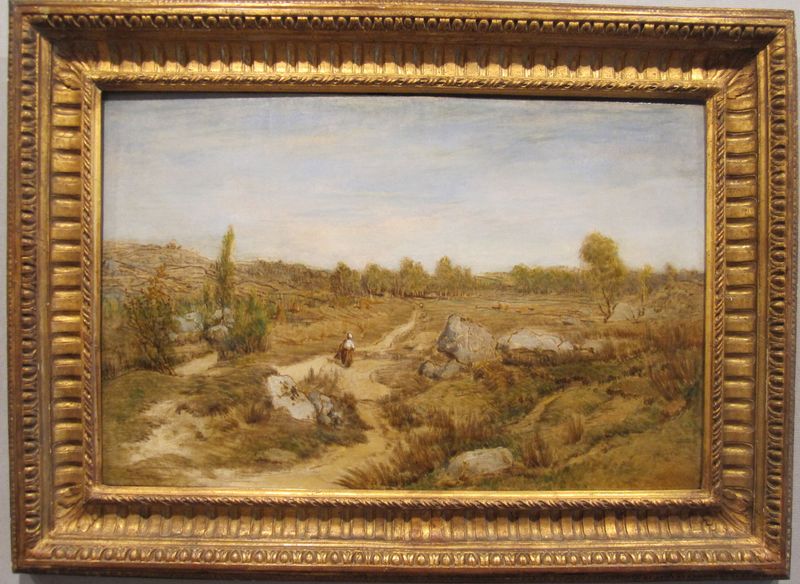
Valley of the Rouars in the Gorges d’Apremont
Théodore Rousseau
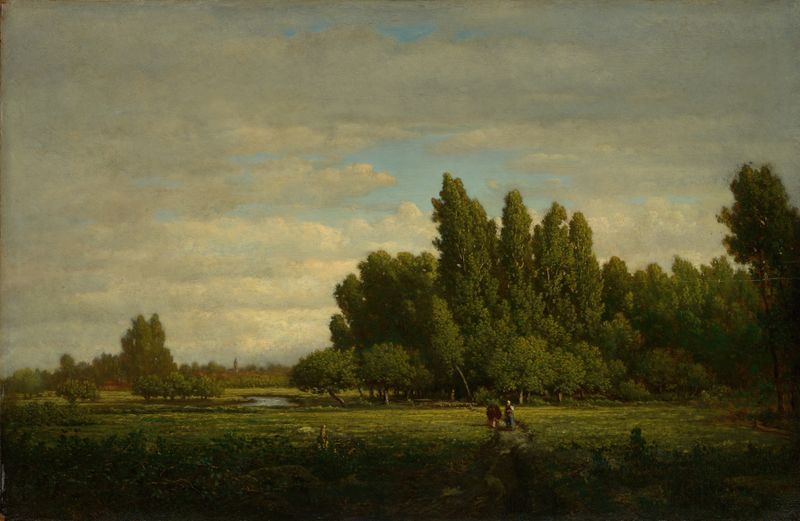
A Meadow Bordered by Trees
Théodore Rousseau
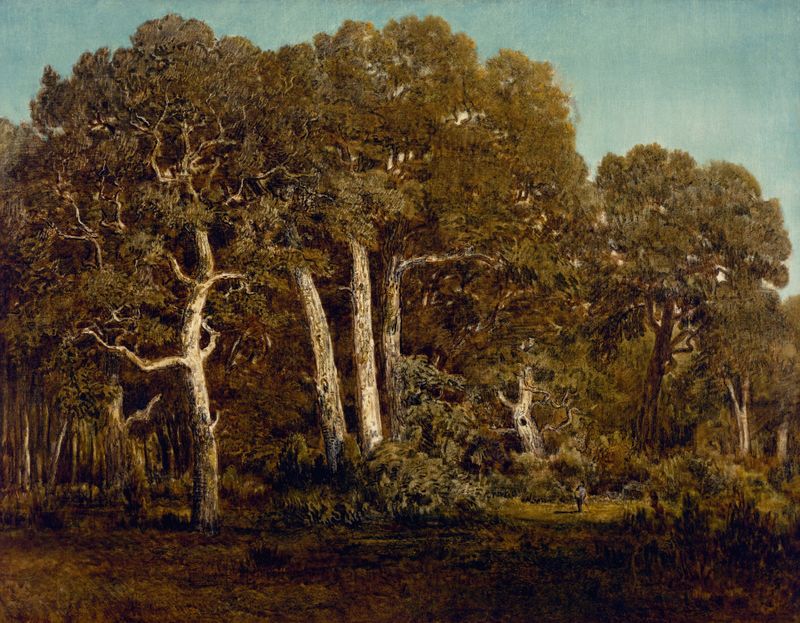
The Great Oaks of Old Bas-Bréau
Théodore Rousseau
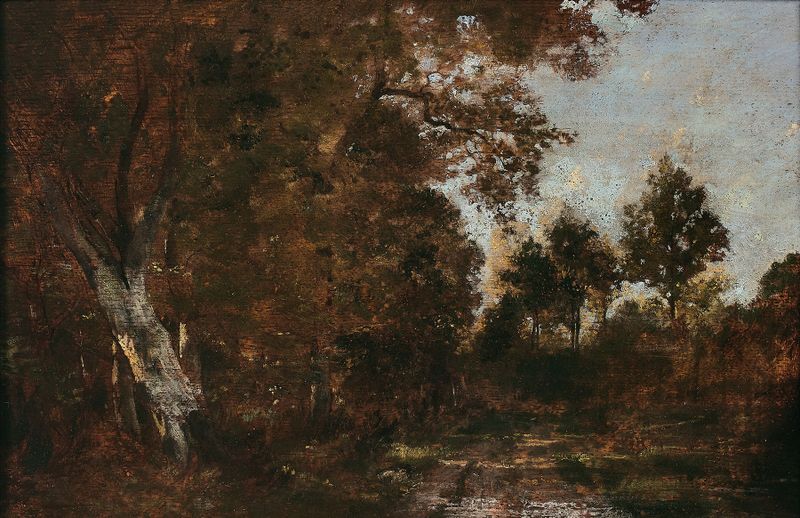
Paysage de sous-bois
Théodore Rousseau
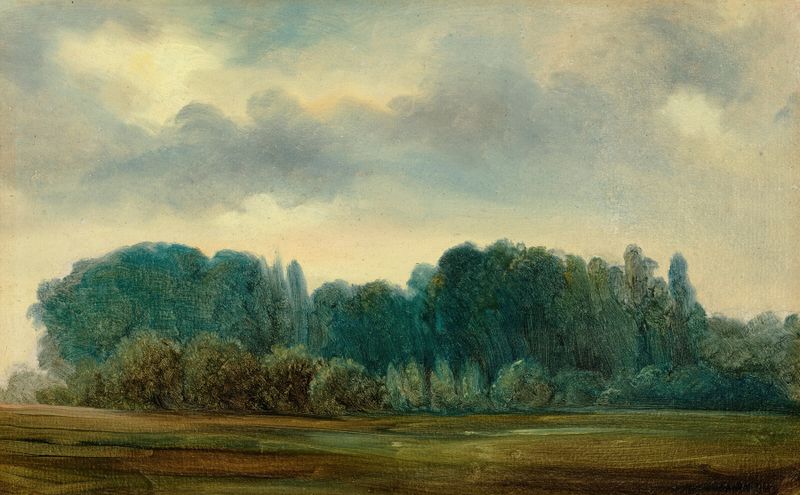
Paysage
Théodore Rousseau
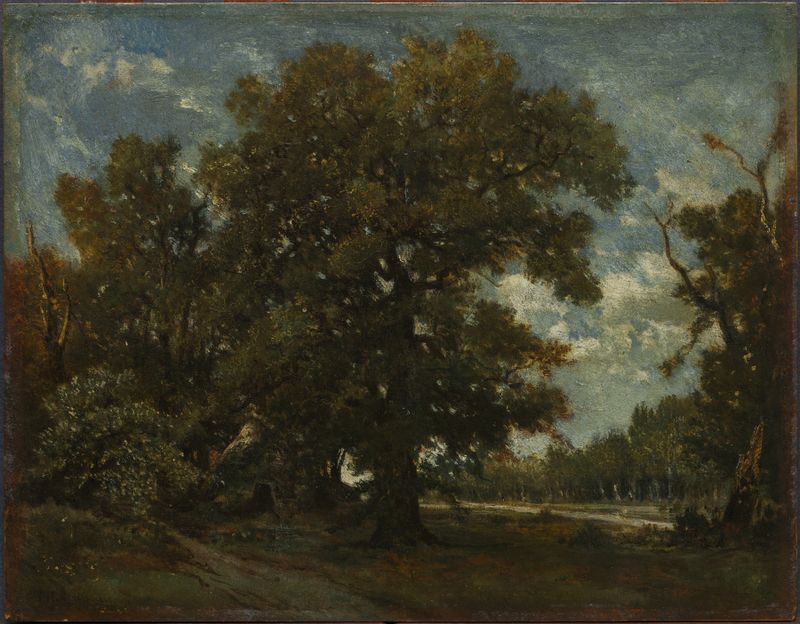
The Oak Tree
Théodore Rousseau
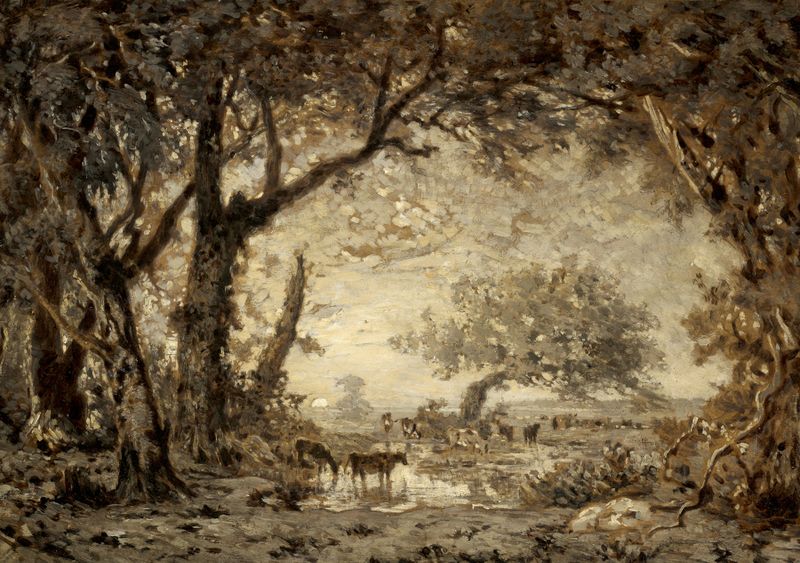
Sunset from the Forest of Fontainebleau
Théodore Rousseau
Edge of the Forest, Sun Setting
Théodore Rousseau
Soleil Couchant
Théodore Rousseau





