Le Couronnement de l'Empereur Alexandre III de Russie (27 Mai) — History & Facts
What draws the eye first in Le Couronnement de l'Empereur Alexandre III de Russie (27 Mai) is not the emperor himself, but the dense choreography of figures, each locked in their own ritual gesture, as if the entire scene is a living mechanism set in motion for this single moment. The composition funnels our gaze up the broad ceremonial steps, past the richly robed courtiers and the forest of scepters, to the focal point beneath the heavy canopy: the act of coronation itself. The artist, Auguste Lepère, uses a play of light and shadow to spotlight the crowned figures, while the surrounding faces recede into a tapestry of anticipation and solemnity.
Every detail—the embroidered robes, the glint of regalia, the careful positioning of hands—serves to reinforce the gravity and spectacle of imperial power, yet there is a sense of human vulnerability in the bowed heads and clasped hands at the margins. Created in 1883, this work belongs to a tradition of grand historical documentation that flourished in the late nineteenth century, when such images were commissioned to immortalize state occasions and reinforce dynastic legitimacy. The genre often demanded both accuracy and grandeur, blending reportage with a theatrical sense of occasion. While little is recorded about the specific journey of this piece, its presence in the National Gallery of Art’s collection today—thanks to an open access initiative—reminds us how such images once shaped public memory of distant courts and ceremonies.
The viewer is left to wonder not just about the fate of the crowned, but about the silent stories of those who stood in the shadows, watching history unfold.
More Artworks by Auguste Lepère

Le Pont-Neuf (Paris)
Auguste Lepère
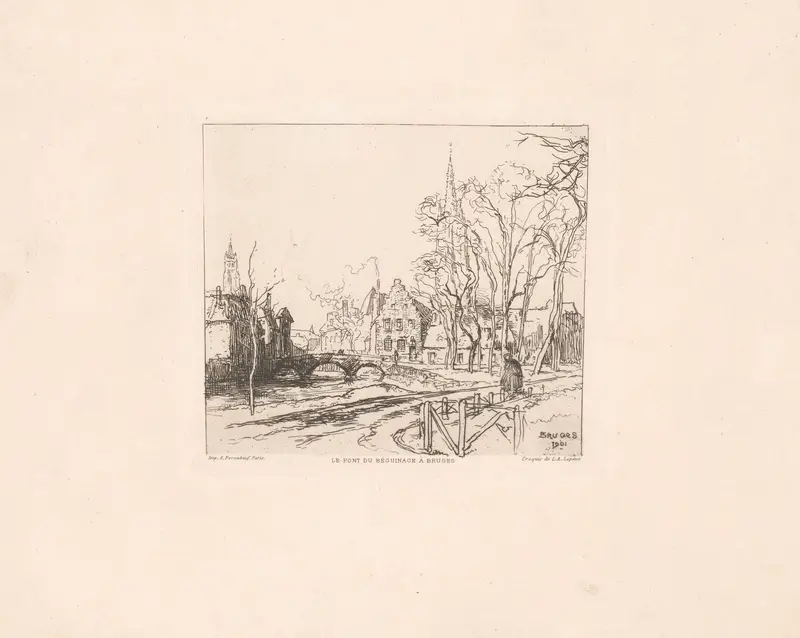
Le pont du Beguinage à Bruges
Auguste Lepère
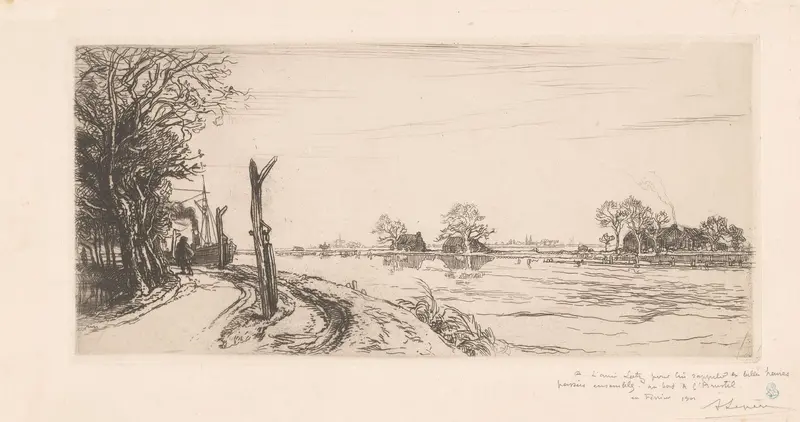
Au bord de l’Amstel
Auguste Lepère
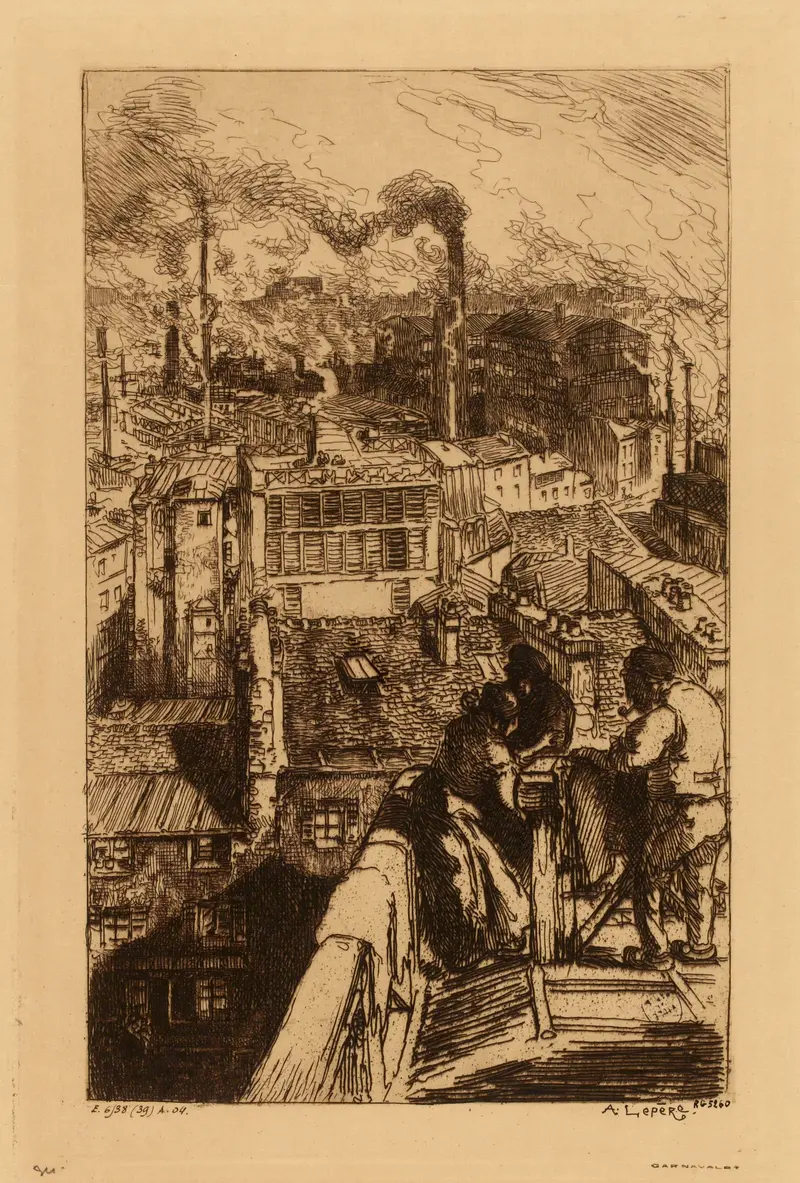
Le quartier des Gobelins
Auguste Lepère
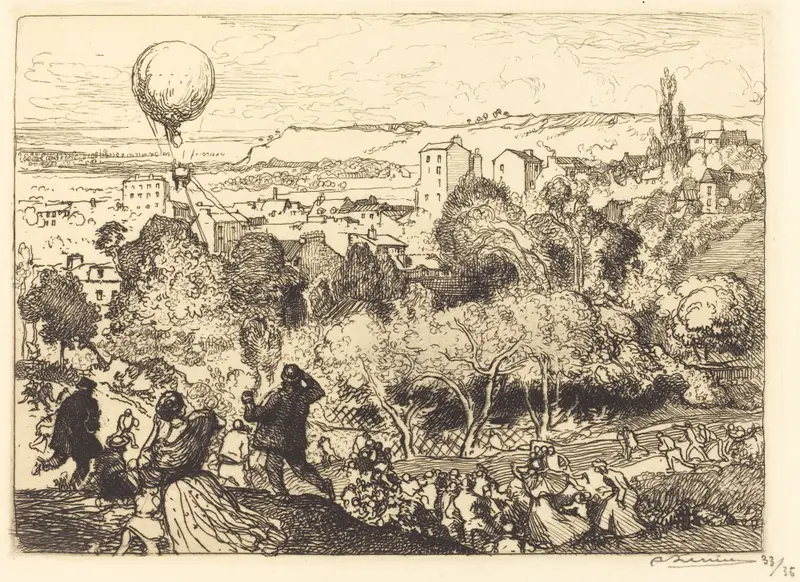
The Falling Balloon, in Pre-Saint-Gervais (Lebaloon qui tombe, au Pre-Saint-Gervais)
Auguste Lepère
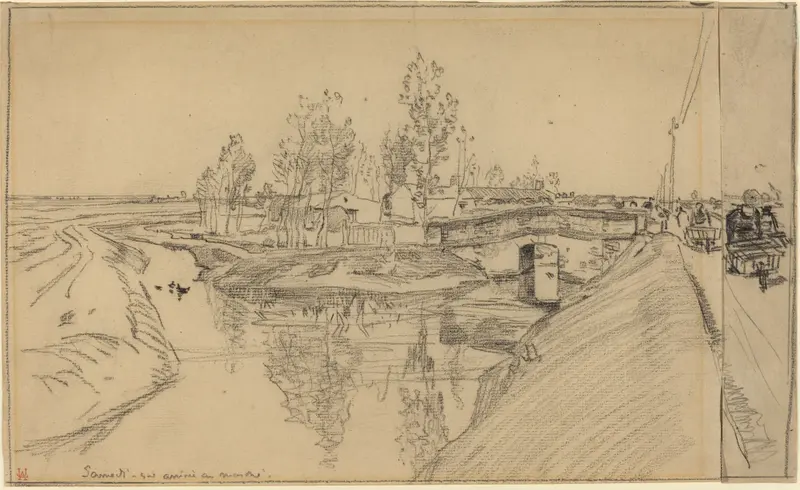
Arrivee au Marche
Auguste Lepère
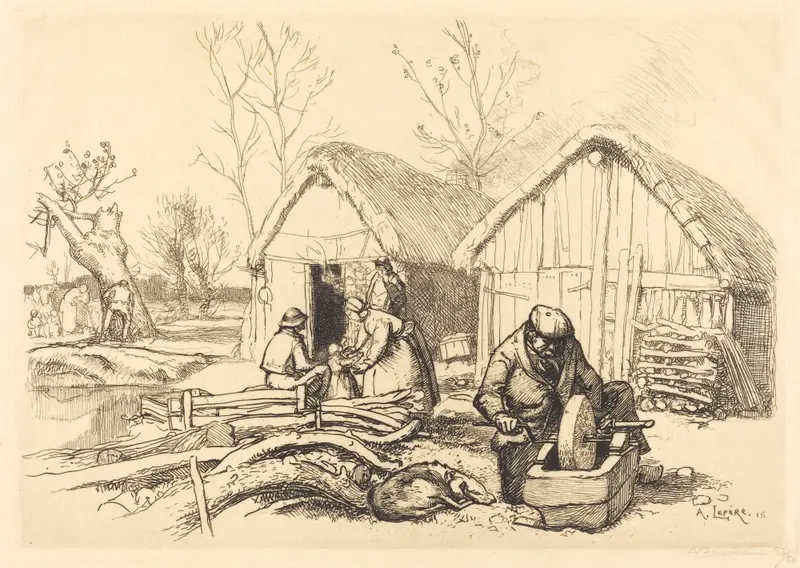
The House of the Woodcutter, Vendee (La maison du bucheron, Vendee)
Auguste Lepère
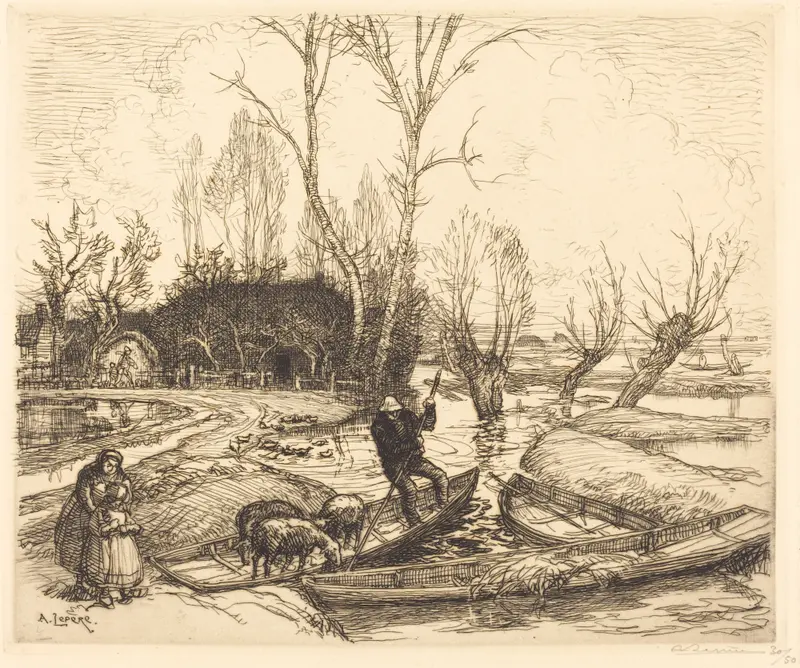
In the Deluged Marsh - The Shepherd (Au marais inonde - Le berger)
Auguste Lepère
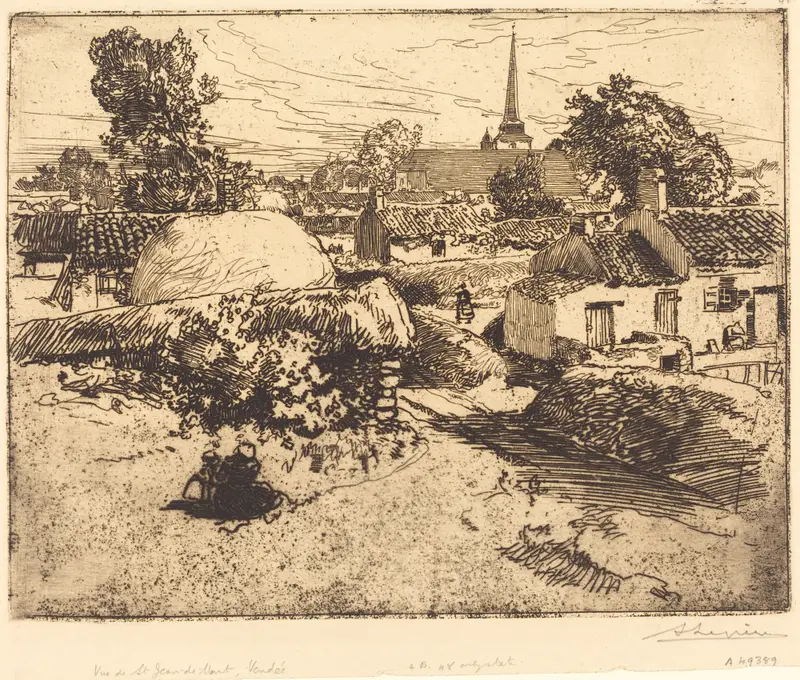
View of St.-Jean-de-Mont, Vendee (Vue de St.-Jean-de-Mont, Vendee)
Auguste Lepère
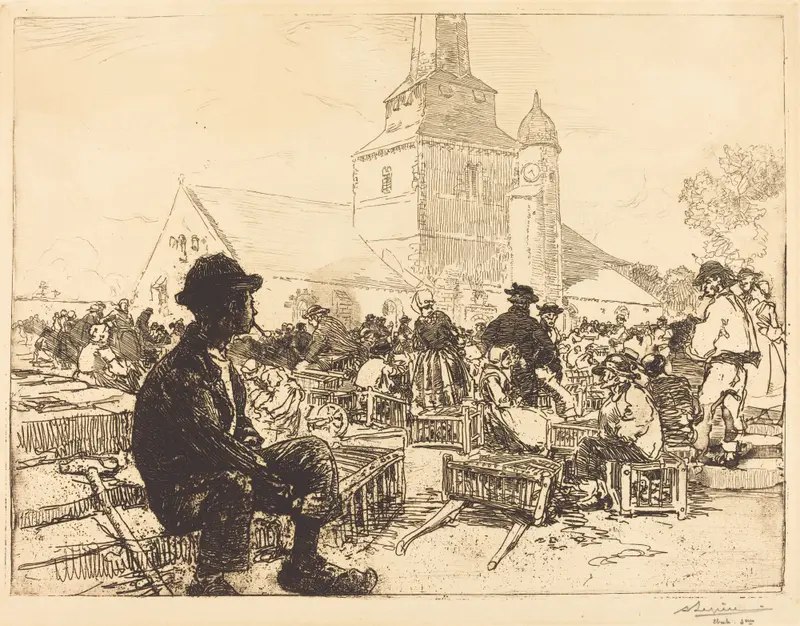
Poultry Market at St.-Jean-de-Mont (Marche a la volaille, a St.-Jean-de-Mont)
Auguste Lepère