
Le Mausolée provisoire de Jean-Jacques Rousseau, sur le bassin des Tuileries, avant la translation de ses cendres au Panthéon. Nuit du 10 au 11 octobre 1794 — History & Facts
Could a single brushstroke hold eternity? In the stillness of the night, as silence envelops the scene, the transient beauty of life and death merges within a canvas that captures a fleeting moment in time. Look to the center of the painting, where the mausoleum emerges, its form partially illuminated by the soft glow of moonlight. Notice the intricate architecture, surrounded by the serene waters of the basin, reflecting ripples of muted silver. The dark hues of the night sky contrast with the glowing whites, allowing the mausoleum to stand as an almost spectral presence, a whisper of an immortal legacy amidst the palpable quietude. This piece conveys the tension between permanence and evanescence, as the temporary structure alludes to the monumental journey of Rousseau's remains to the Panthéon.
The juxtaposition of light and shadow evokes a sense of reverence and melancholy, inviting contemplation on the weight of a philosopher’s thoughts that echo far beyond his mortal existence. Each detail, from the delicate handling of the water's surface to the somber silhouettes of trees, adds layers to the emotional experience, embodying not just a moment but a profound meditation on legacy. Created during a politically charged time in France, this artwork emerged in 1794, a year marked by the turbulent aftermath of the Revolution. Hubert Robert painted it shortly before Rousseau’s body was transferred to its permanent resting place, encapsulating both the artist's personal reflections on mortality and the wider shifts within the French artistic and cultural landscape of that era.
The painting seeks to immortalize a fleeting tribute, bridging the gap between history and art.
More Artworks by Hubert Robert
Browse all →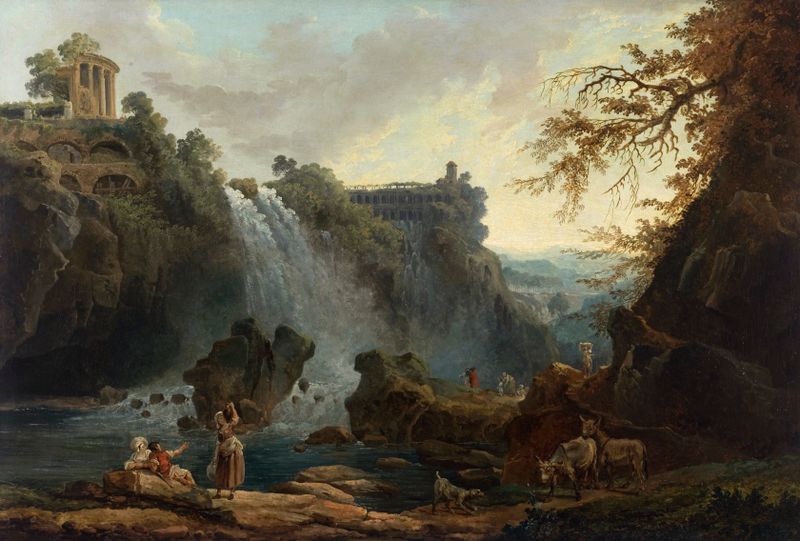
Les Cascatelles de Tivoli
Hubert Robert
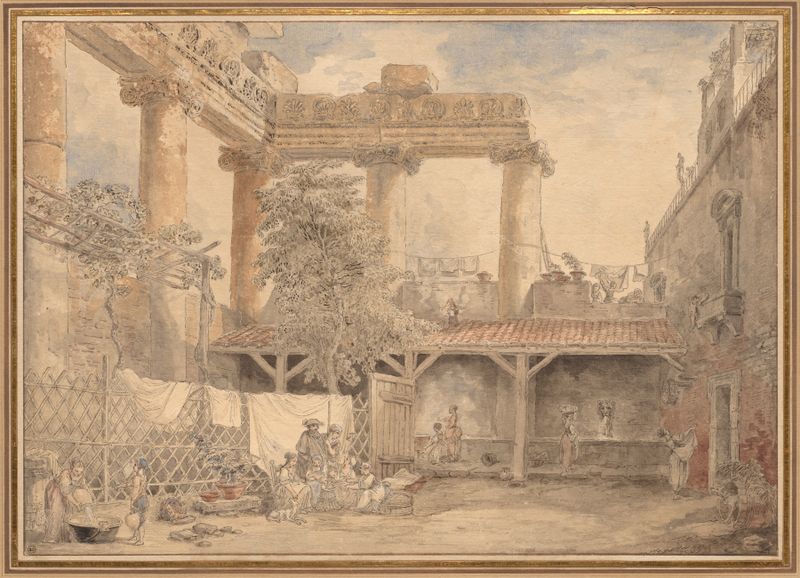
Roman Ruins, Villa Pamfili
Hubert Robert

The Rustic Bridge, Château de Méréville, France
Hubert Robert

The Portico of a Country Mansion
Hubert Robert

Architectural Capriccio
Hubert Robert

The Obelisk
Hubert Robert
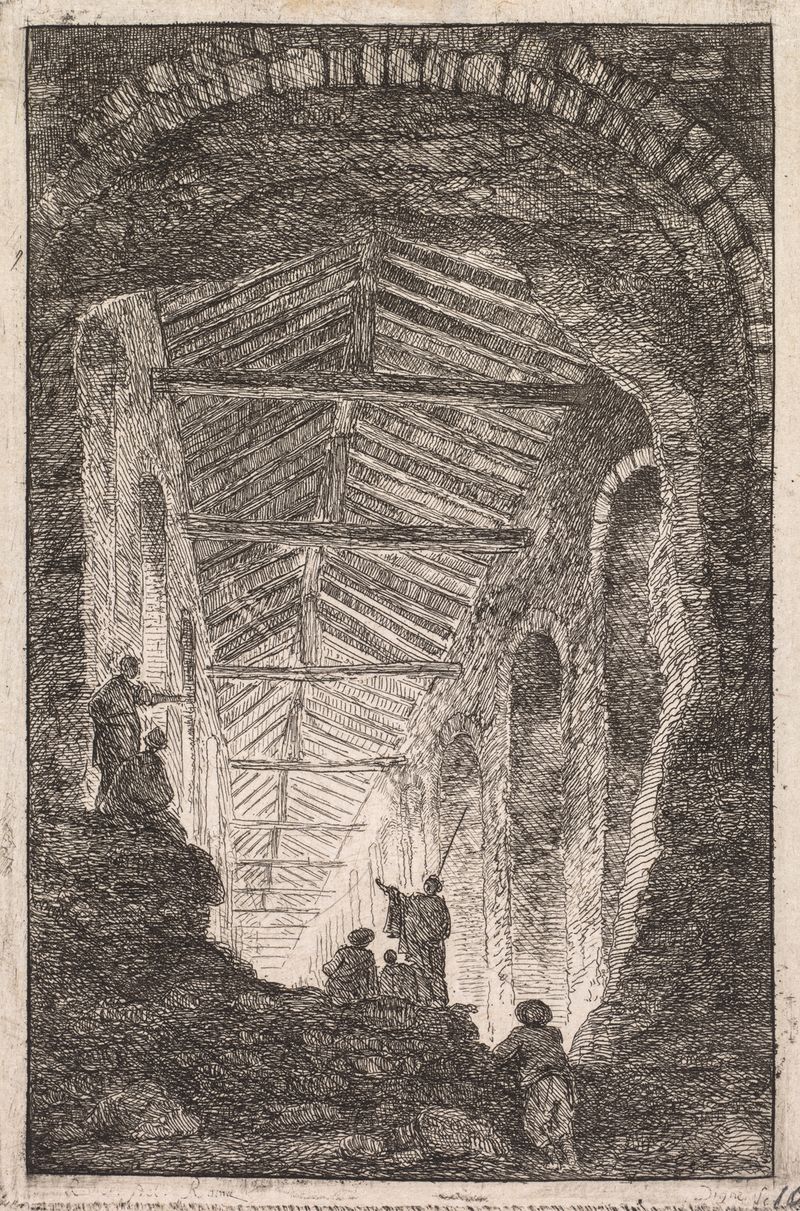
The Antique Gallery
Hubert Robert

L’incendie de l’Opéra, vu des jardins du Palais-Royal, le 8 juin 1781
Hubert Robert
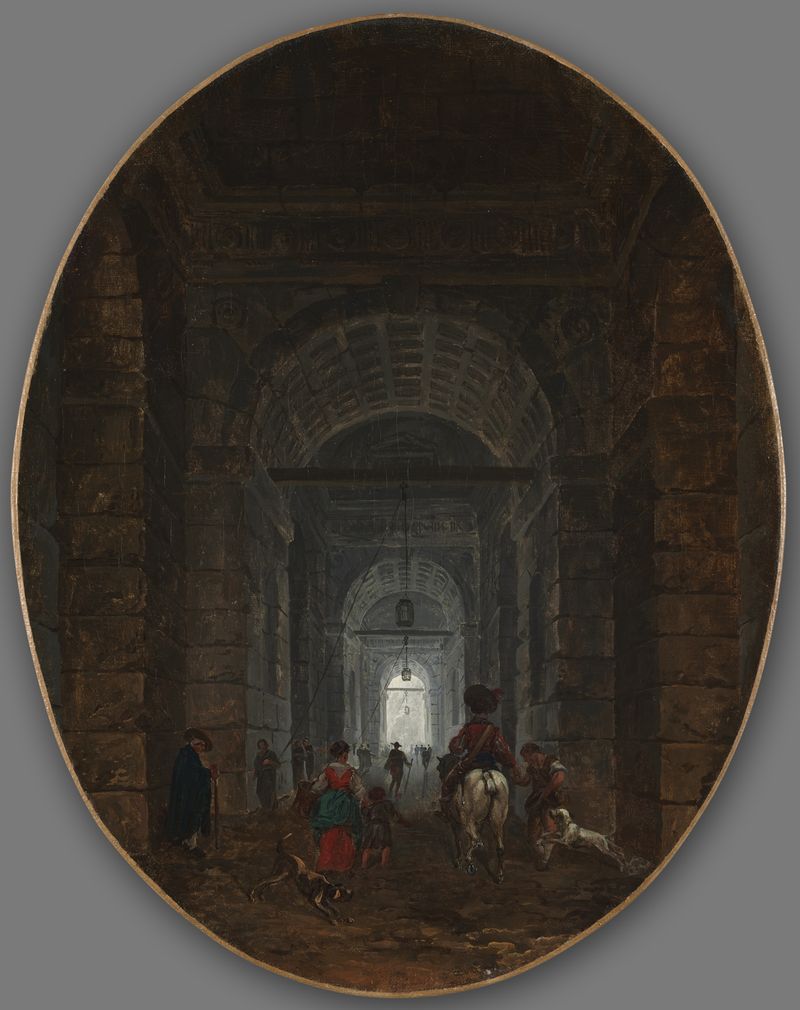
The Grotto of Posillipo
Hubert Robert

Architectural Capriccio with ruins of the Temple of Saturn and the Colosseum in the background
Hubert Robert
More Historical Art
Browse all →
The Night Watch Militia Company of District II under the Command of Captain Frans Banninck Cocq
Rembrandt van Rijn

Lincoln Memorial
Henry Bacon

The Third of May 1808
Francisco de Goya

Isaac and Rebecca, Known as ‘The Jewish Bride’
Rembrandt van Rijn

The Charge of the Mamelukes (1814)
Francisco de Goya

De vier ruiters van de apocalyps
Albrecht Dürer