
Le Palais des Tuileries en 1690, vue du quai de la Grenouillère — History & Facts
In the quiet of time, memories transform into faith, revealing the life that once was. Look to the center of the canvas, where the grand structure of the Tuileries Palace stands majestically, bathed in soft, golden light. The artist employs a gentle palette of greens and browns, capturing the essence of the gardens that surround the palace, while the shimmering water reflects the grandeur of the architecture. Notice the delicate interplay of light and shadow, which brings a sense of serenity to the scene, inviting viewers to lose themselves in a moment suspended between past and present. Yet, there’s an emotional tension lurking beneath the surface.
The palace, a symbol of power and history, is rendered with an almost melancholic detachment that hints at the passage of time and the fragility of beauty. The understated energy of the figures scattered along the banks suggests a collective memory, an echo of laughter and life that mingles softly with the stillness of the water. Each detail, from the distant trees to the ripples on the surface, speaks of an enduring faith in the permanence of art amid the transience of human existence. During the years between 1915 and 1945, Fédor Hoffbauer painted Le Palais des Tuileries en 1690, vue du quai de la Grenouillère while living in France amid global upheaval.
This was a period marked by two World Wars, which intensified his exploration of themes related to time, memory, and history. As the world around him descended into chaos, he chose to capture the beauty of a bygone era, infusing his work with a poignant sense of longing and resilience.
More Artworks by Fédor Hoffbauer
Browse all →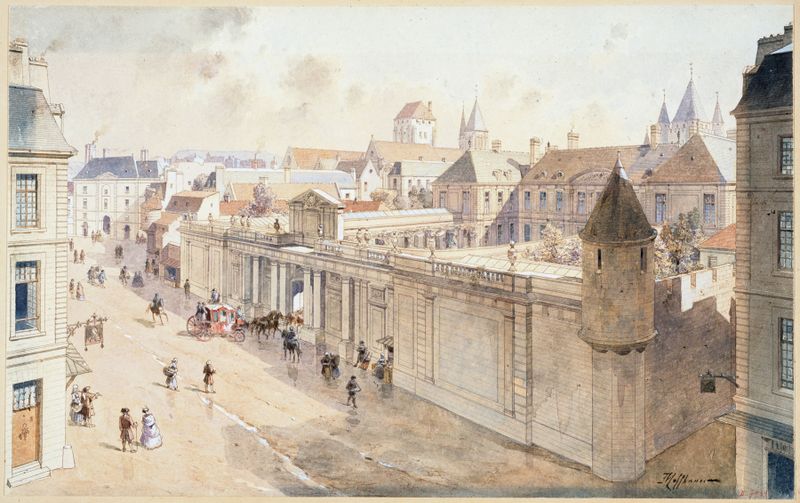
Le palais du Grand Prieur au Temple, en 1770
Fédor Hoffbauer
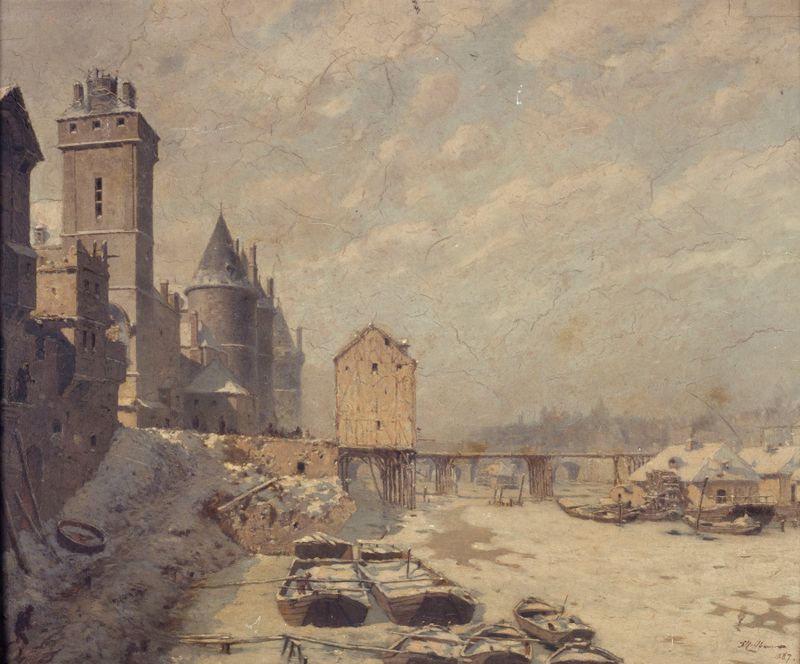
La tour de l’Horloge, la Conciergerie et le pont au Change, en 1621
Fédor Hoffbauer

Banquet des officiers de la marine Russe, dans la salle des fêtes à l’Hôtel de Ville. Fêtes Franco-Russes à Paris
Fédor Hoffbauer

Le Grand Châtelet et le pont de Bois, 1621-1645
Fédor Hoffbauer
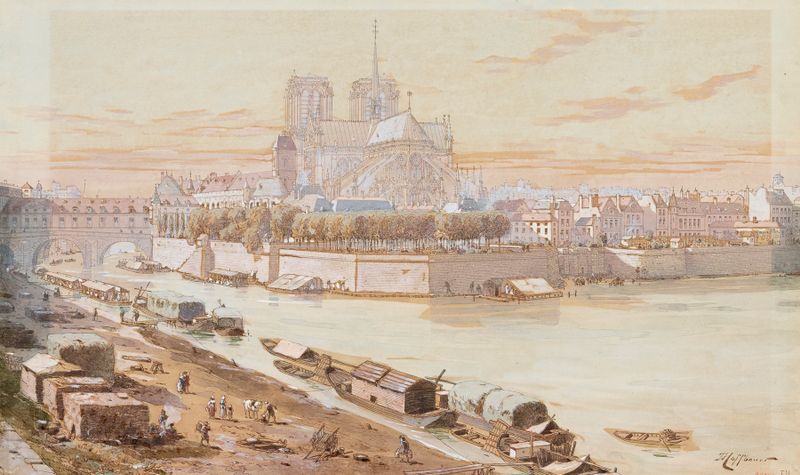
Notre-Dame et l’Evêché en 1750
Fédor Hoffbauer

Vue panoramique de Paris en 1588, depuis les toits du Louvre, avec le Pont-Neuf en construction
Fédor Hoffbauer
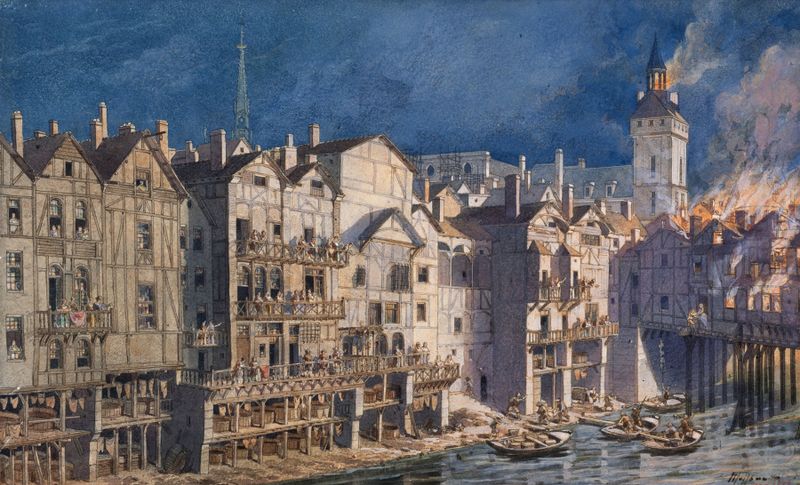
La Cité entre le pont Notre Dame et le pont au Change en 1621
Fédor Hoffbauer

L’Hôtel de Ville et le pont d’Arcole en 1842
Fédor Hoffbauer

Le Cimetière des Innocents en 1750
Fédor Hoffbauer
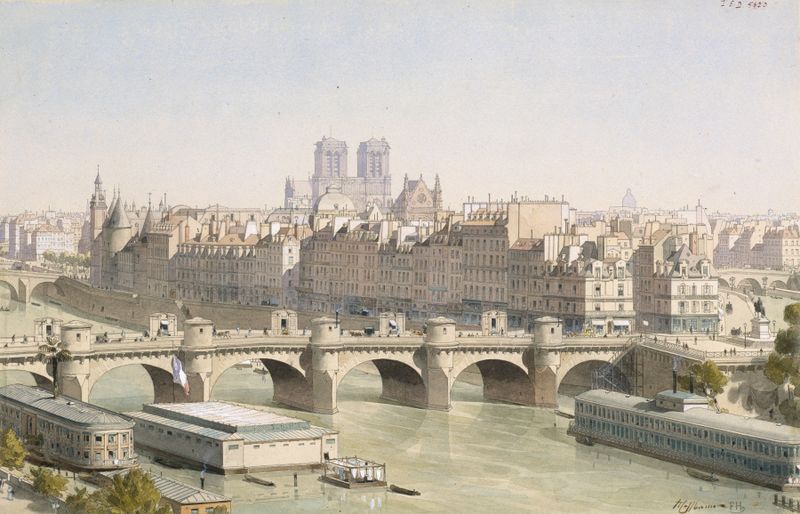
Vue de l’île de la Cité et le pont-Neuf avec ses boutique, vers 1840
Fédor Hoffbauer
More Architecture Art
Browse all →
The statue of Liberty
Frédéric Auguste Bartholdi

View of Houses in Delft, Known as ‘The Little Street’
Johannes Vermeer

View of Houses in Delft, Known as ‘The Little Street’
Johannes Vermeer

The Cathedral in Rouen. The portal, Grey Weather
Claude Monet

The yellow house
Vincent van Gogh

The Church in Auvers-sur-Oise, View from the Chevet
Vincent van Gogh