
Le Paquebot — History & Facts
Is this a mirror — or a memory? The world captured in Le Paquebot invokes a divine sense of introspection, urging viewers to confront the essence of their own journeys. Look to the soft blues and greens that dominate the canvas, swirling together in an embrace that mimics the gentle rocking of water. Notice how the boat, rendered with a tender simplicity, takes center stage amidst the tranquil horizon. The sunlight dances across the surface, illuminating the vessel's form while casting elongated shadows that suggest movement and transition, as if the boat itself is on the brink of a new adventure. Beneath the calm exterior lies a subtle tension between solitude and exploration.
The solitary ship, adrift in the expansive sea, speaks of both freedom and isolation, a duality that resonates deeply with the human experience. The faint outlines of distant shores remind us of destinations unknown, while the fluidity of the waves reflects the ever-changing nature of memory — a reminder of moments both cherished and fleeting. In the early 1940s, Marquet was living in Paris, navigating the tumultuous landscape of war. Amidst the backdrop of uncertainty, he painted Le Paquebot as an expression of hope and resilience.
This piece, along with others from this period, illustrates his search for beauty and serenity in an increasingly chaotic world, capturing a moment that transcended his immediate surroundings.
More Artworks by Albert Marquet
Browse all →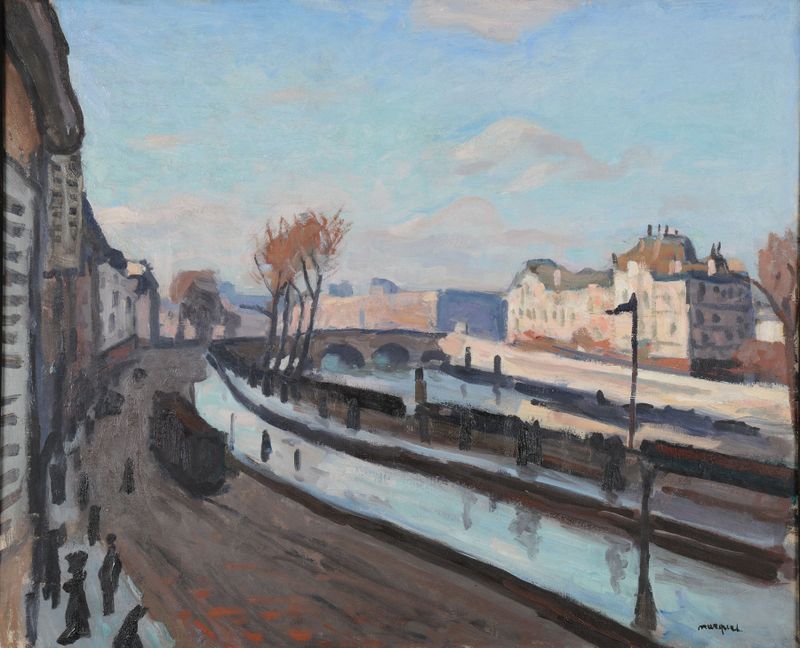
Le quai des Grands Augustins
Albert Marquet
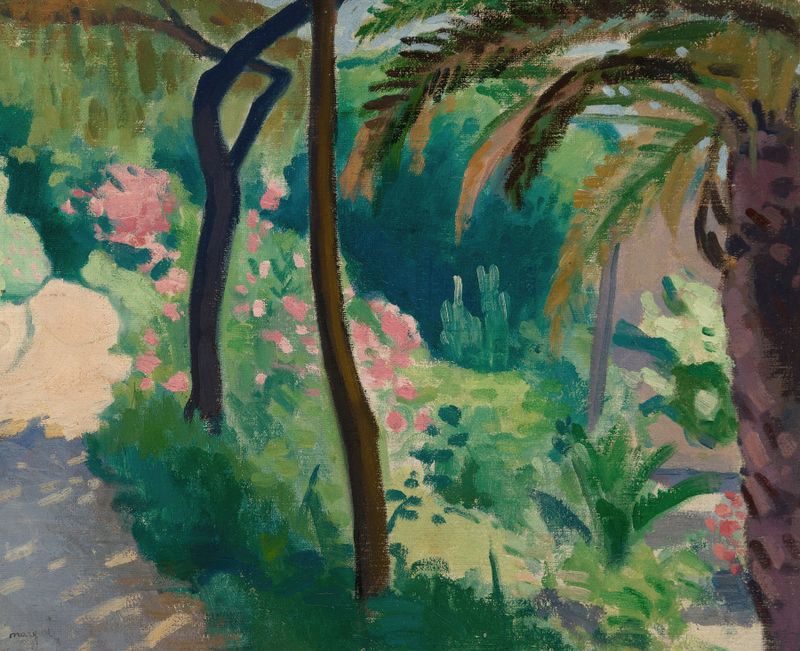
Le jardin à l’Estaque
Albert Marquet
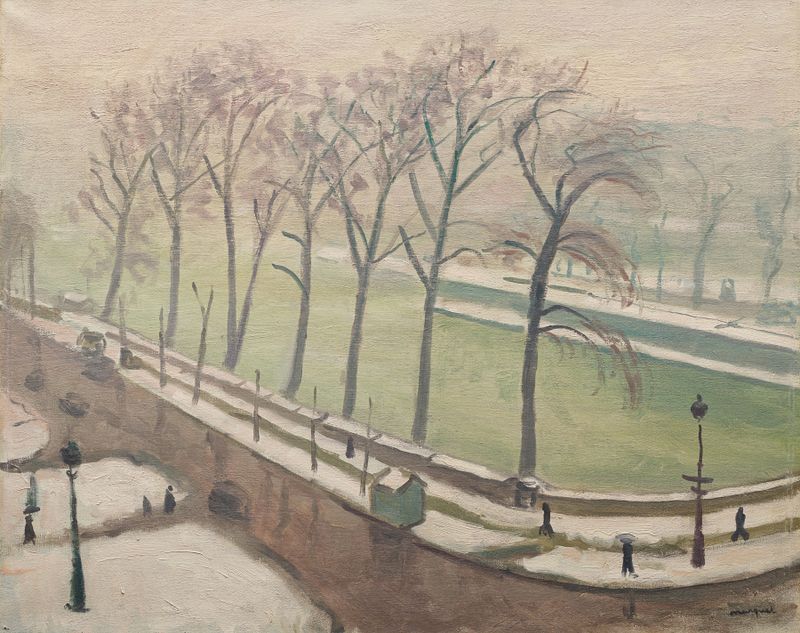
Pont-Neuf sous la neige
Albert Marquet
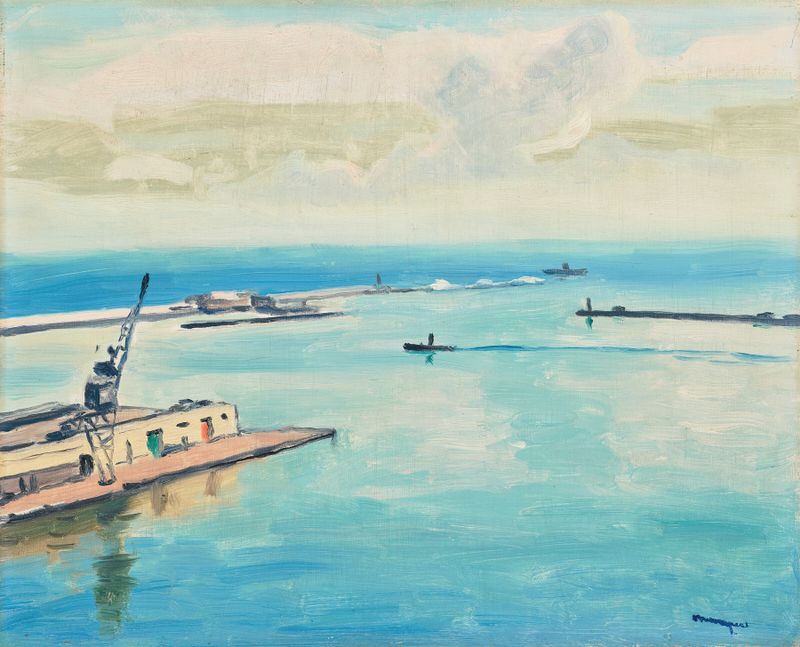
Le Port d’Alger
Albert Marquet
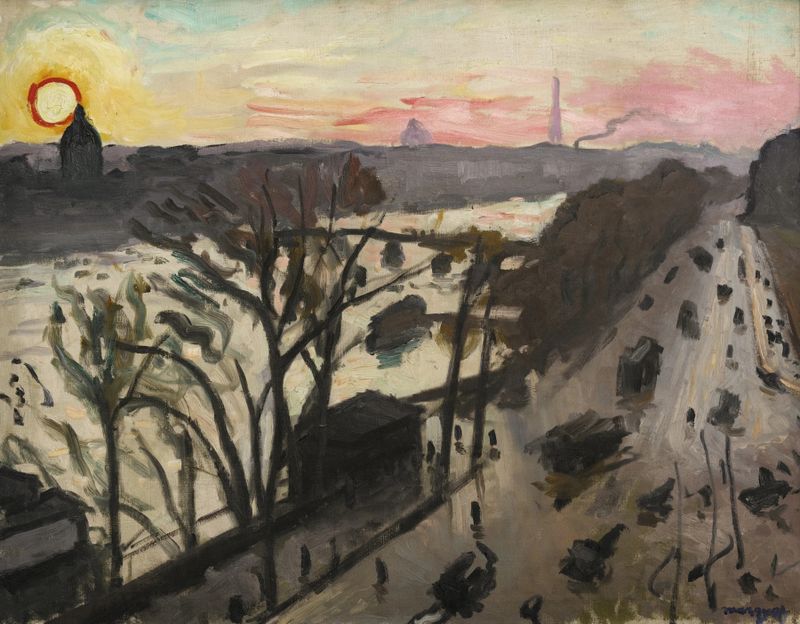
Paris, quai du Louvre, soleil d’hiver
Albert Marquet
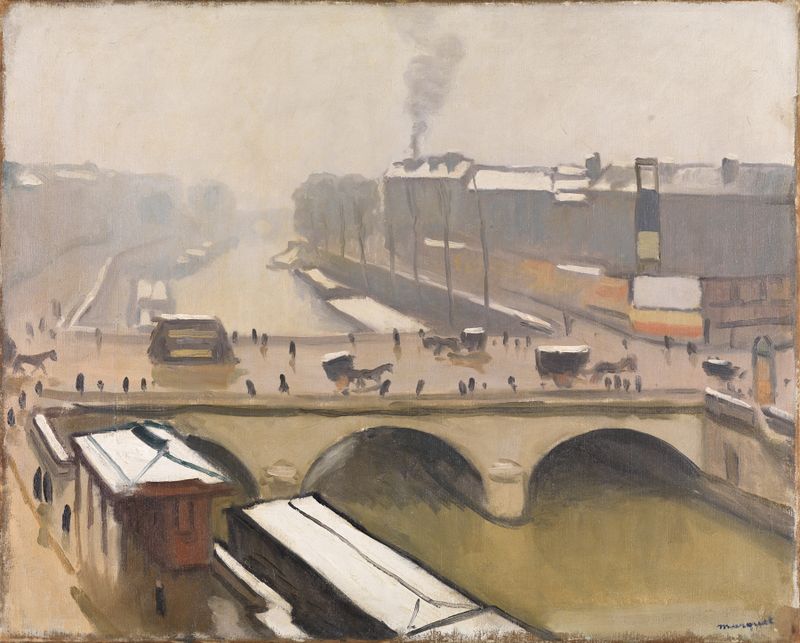
View of the Pont Saint-Michel in Paris
Albert Marquet
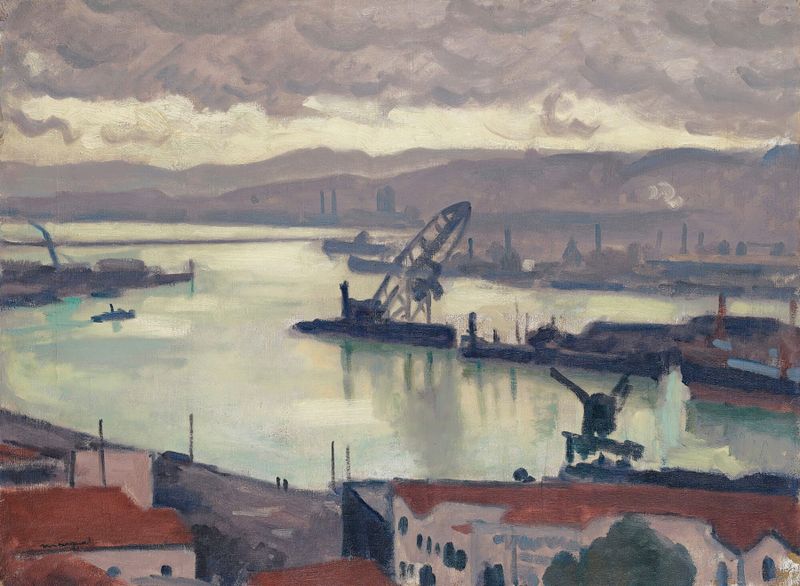
Alger, Temps Gris
Albert Marquet
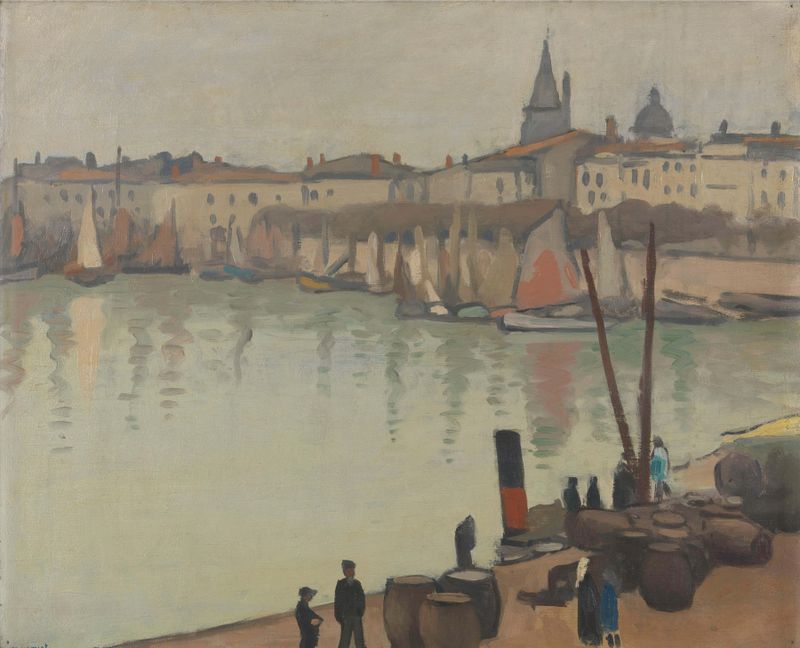
Port of La Rochelle
Albert Marquet
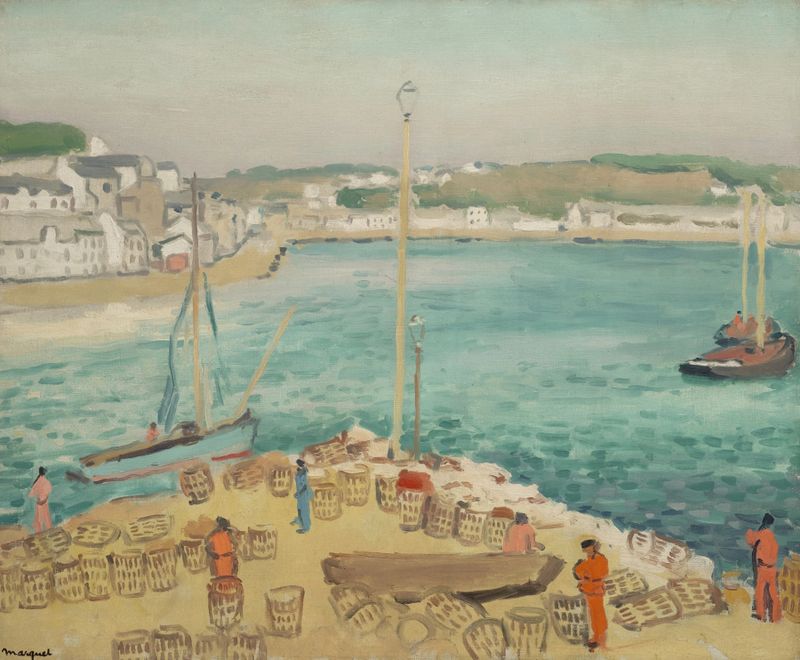
Audierne, les tonneaux
Albert Marquet
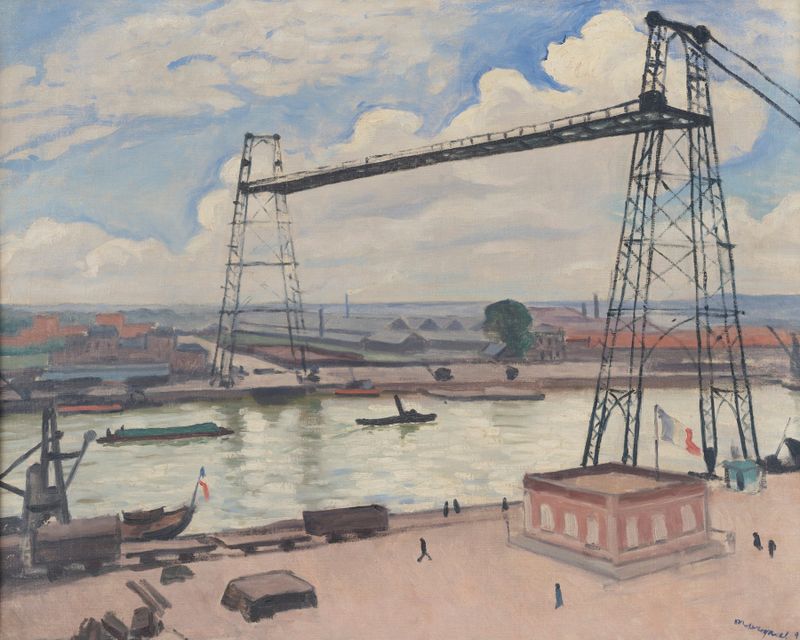
Rouen, le pont transbordeur
Albert Marquet





