
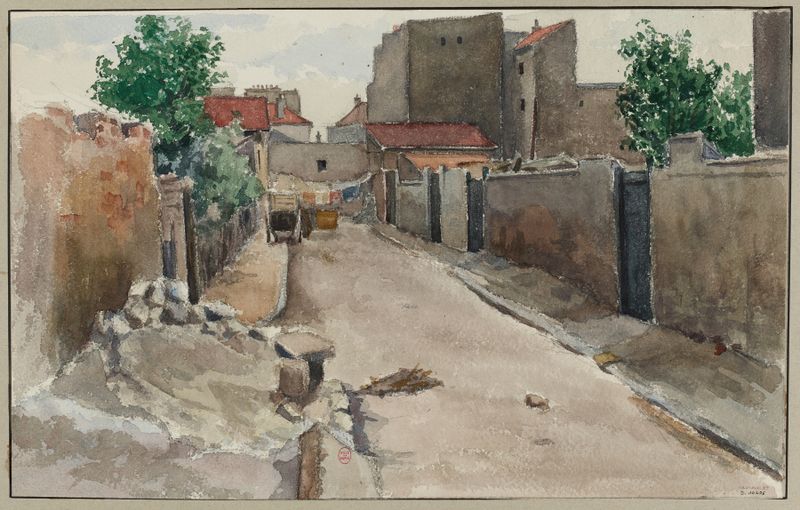
Le percement de la rue de la Convention, prise du 155 rue Blomet à travers les rues de Vaugirard et OLivier de Serres — History & Facts
Could a single brushstroke hold eternity? In the intricate play of light and shadow, nostalgia lingers, evoking a world that once was—a fleeting moment captured forever on canvas. Look closely at the foreground, where the soft hues of a setting sun bleed into the cobblestone streets. The viewer’s eye is first drawn to the dynamic interplay between the vibrant oranges and deep blues that frame the scene. Notice how the artist expertly layers the paint to create texture in the buildings, giving them a sense of life and history.
The stark contrast between the warm glow of the lamps and the cooler tones of dusk pulls us into a moment suspended in time. Delve deeper into the urban tapestry; the scattered figures hint at stories untold. The solitary figure beneath the awning, the mingling shadows of passersby, and the distant silhouette of the horizon speak to a collective experience of nostalgia—each brushstroke echoing the rhythms of everyday life. The gentle curves of the streets seem to guide our gaze, weaving a narrative that hints at the passage of time and the ever-present longing for what has been lost. In 1896, Séguin was painting in Paris amidst the burgeoning modernist movement.
The city was undergoing rapid transformation, with bustling streets and new architecture reshaping the urban landscape. This period marked a time of reflection for many artists, as they grappled with the tension between progress and sentimentality. Séguin’s work captures this duality, offering a poignant glimpse into the heart of a city caught between the past and an uncertain future.
More Artworks by F. Séguin
Browse all →
Rue Brantôme. (anciennement rue des Petits Champs donnant rue Saint Martin et rue Beaubourg)
F. Séguin
La rue de Chambéry, prise de la rue de Nice la Frontière
F. Séguin
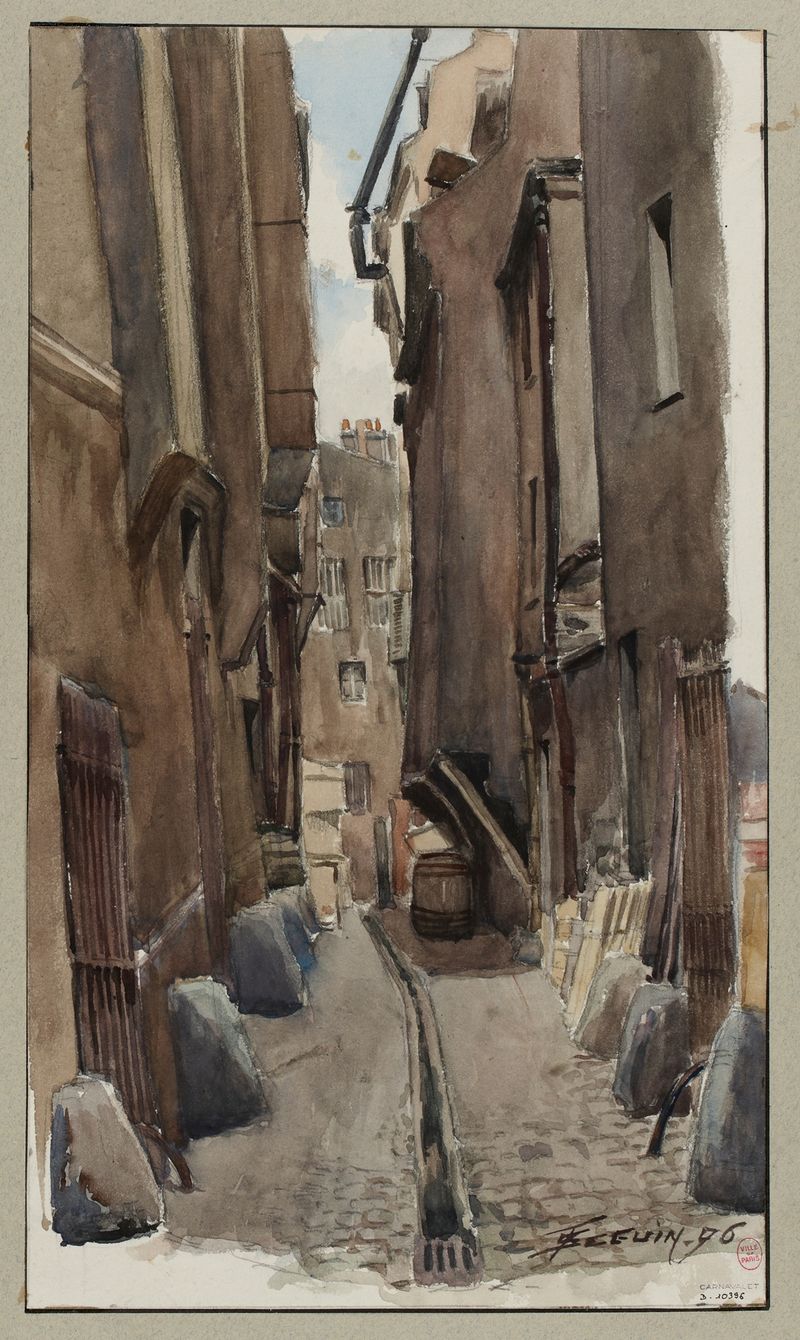
Le Cul de sac du Bœuf, (rue Saint Merri)
F. Séguin

Rue Descartes
F. Séguin
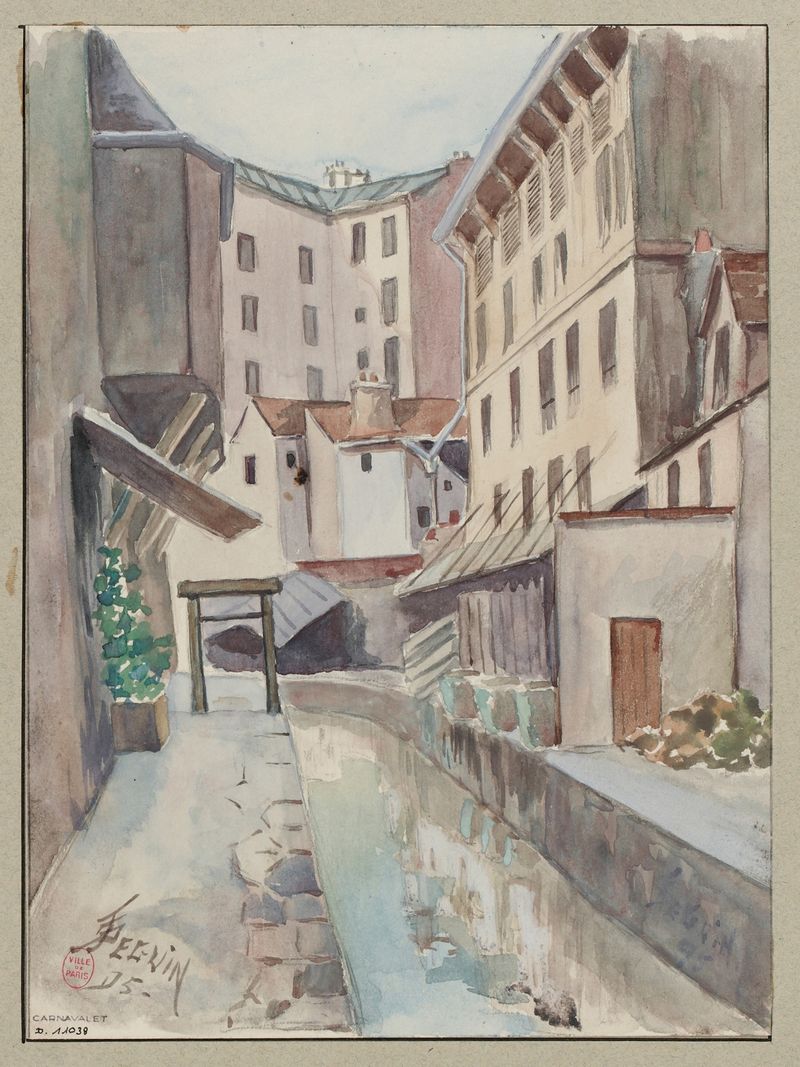
Le bord de la Bièvre à l’avenue des Gobelins
F. Séguin

Villa des Otages mur où furent fusillés les 52 derniers otages de la Commune, rue Haxo
F. Séguin
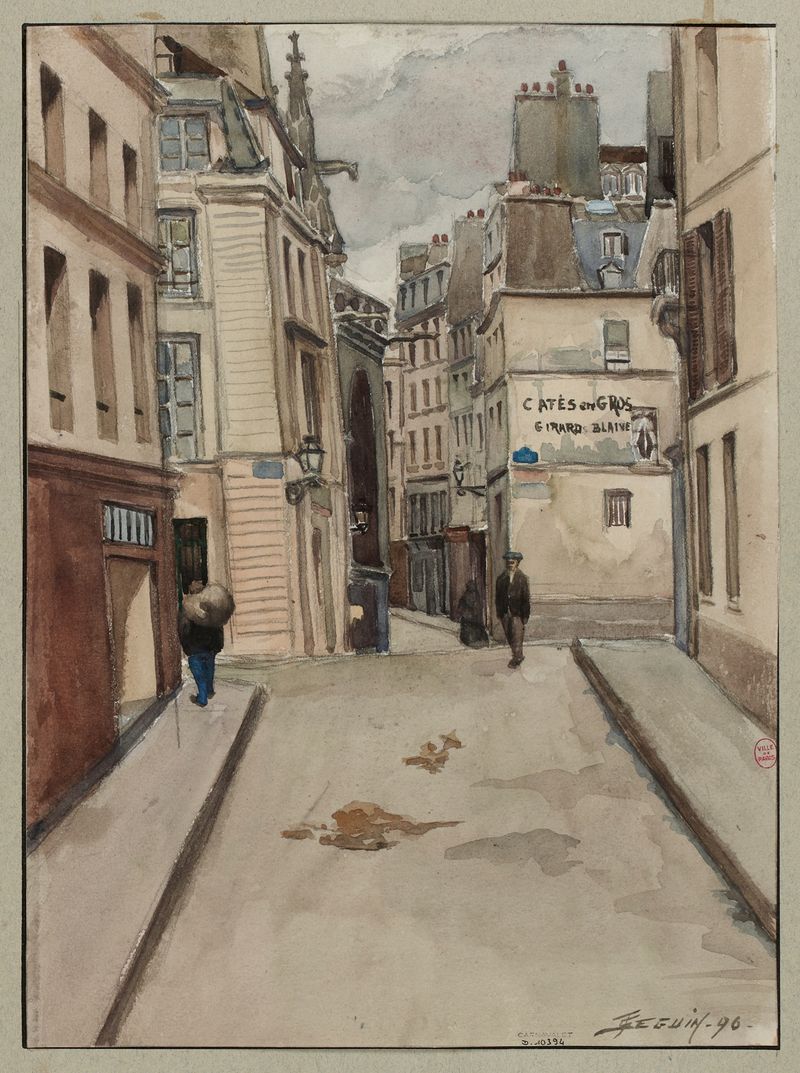
Rue du Cloître Saint Mérry, de la rue du Renard à la rue Saint Martin
F. Séguin
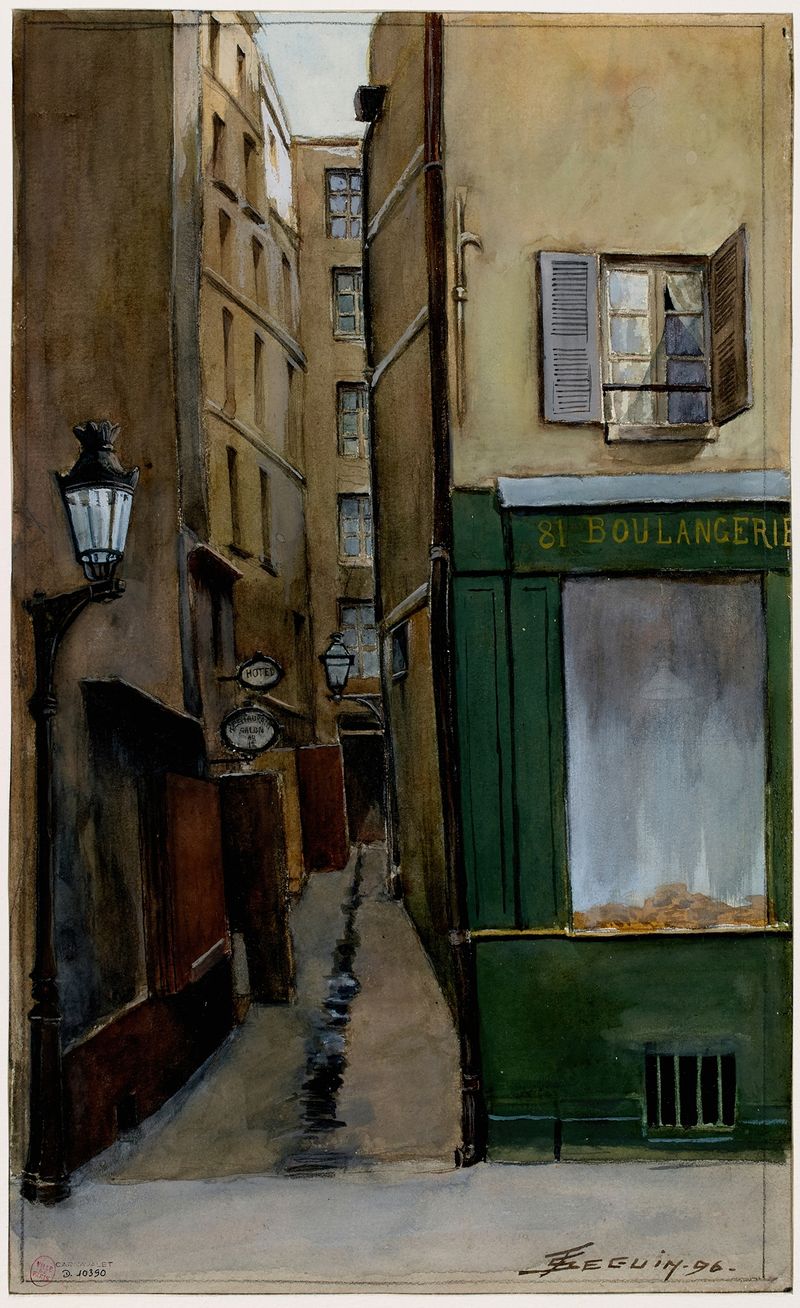
Cul de sac du Fiacre, 81 rue Saint Martin
F. Séguin
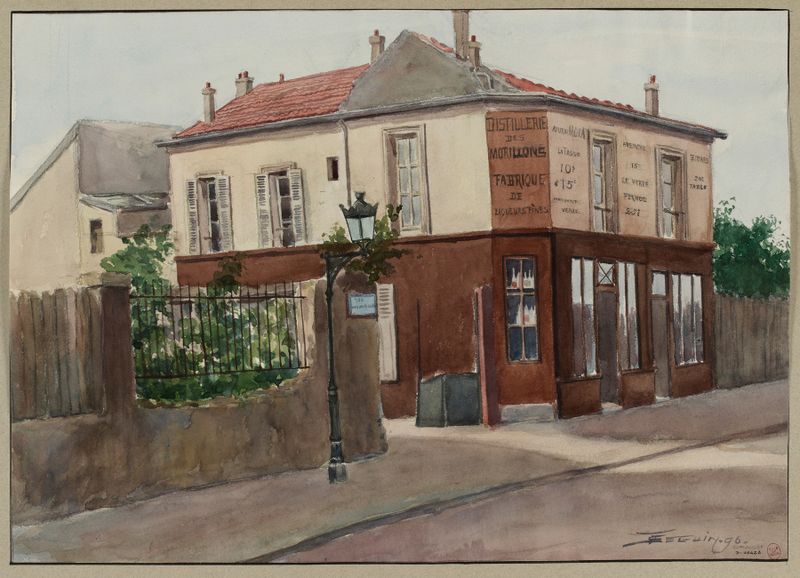
Angle de l’impasse Carlier et au 24 rue des Morillons, Vaugirard
F. Séguin
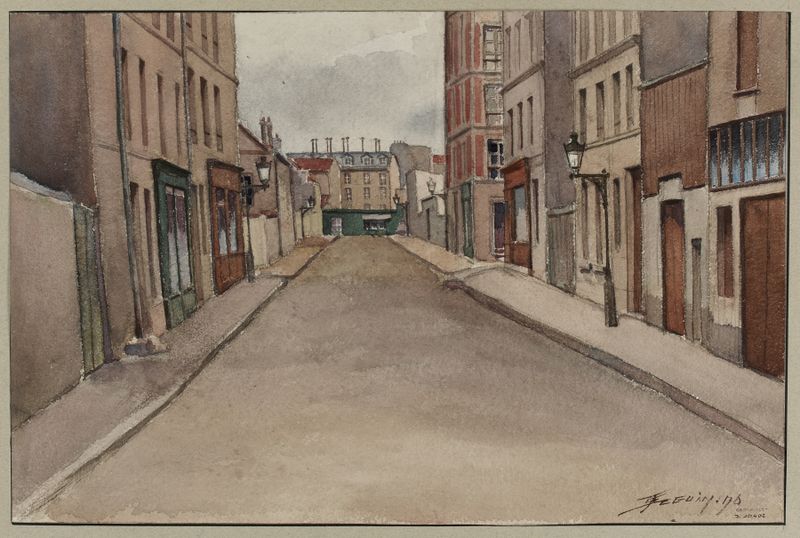
Rue Franquet
F. Séguin





