
Le Petit-Pont et le Petit-Châtelet après l’incendie du 27 avril 1718, actuellement rue du Petit-Pont, quai Montebello — History & Facts
What if beauty was never meant to be finished? In Le Petit-Pont et le Petit-Châtelet après l’incendie du 27 avril 1718, a sense of lingering hope seeps through the remnants of destruction. Look to the left at the delicate contours of the Petit-Pont, where the arches rise defiantly against the chaos that surrounds them. The cool blues and soft grays of the sky contrast with hints of orange and ochre that hint at the recent flames, while light streams through broken structures, casting elongated shadows. The artist’s brushwork captures the essence of resilience, with strokes that dance between chaos and calm, inviting the viewer to trace the path of recovery through the ruins. Amidst the devastation, tiny figures navigate the landscape, their actions imbued with a quiet determination.
This interplay of destruction and vitality speaks to the persistent pulse of life, suggesting that even in the aftermath of disaster, the city breathes anew. The juxtaposition of the fiery past and the serene present conveys an emotional depth, urging contemplation of what beauty can emerge from loss and the rebirth that follows. Fédor Hoffbauer painted this work during a turbulent period in history, specifically between 1915 and 1945, a time marked by both the scars of war and the hope for renewal. Living in France, Hoffbauer was immersed in the struggle of rebuilding after the devastation of World War I, reflecting the spirit of recovery that permeated the artistic community.
He navigated a world that was grappling with the impermanence of beauty and the enduring nature of hope, capturing that essence on canvas.
More Artworks by Fédor Hoffbauer
Browse all →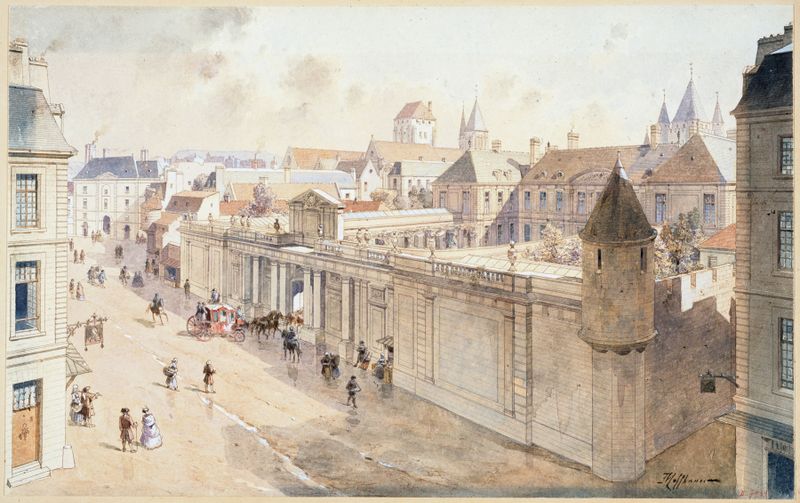
Le palais du Grand Prieur au Temple, en 1770
Fédor Hoffbauer
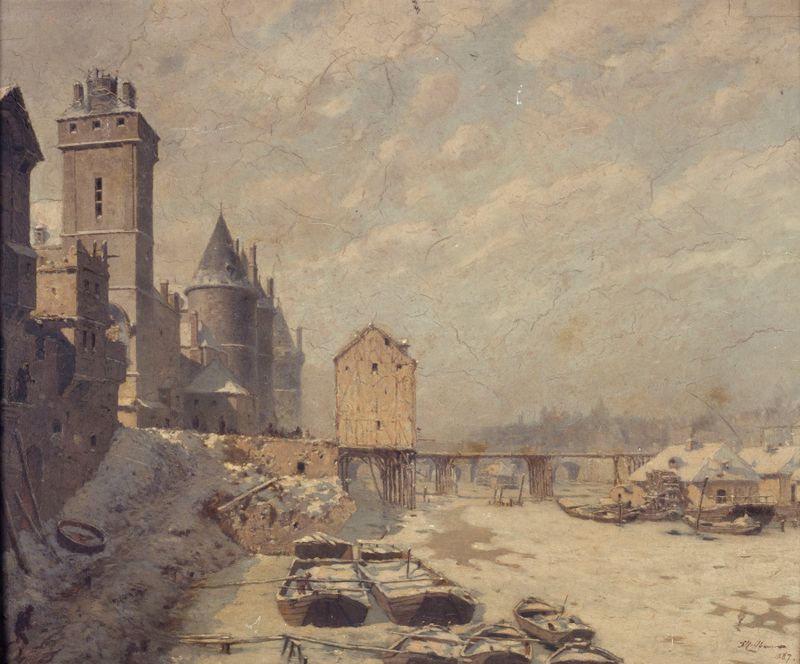
La tour de l’Horloge, la Conciergerie et le pont au Change, en 1621
Fédor Hoffbauer

Banquet des officiers de la marine Russe, dans la salle des fêtes à l’Hôtel de Ville. Fêtes Franco-Russes à Paris
Fédor Hoffbauer

Le Grand Châtelet et le pont de Bois, 1621-1645
Fédor Hoffbauer
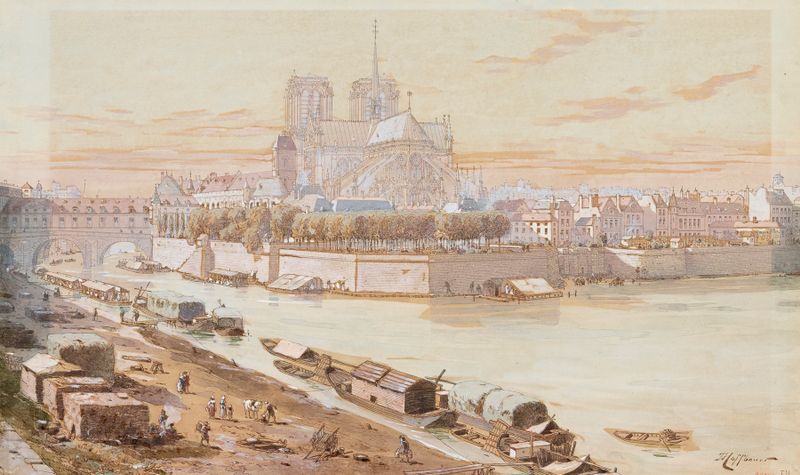
Notre-Dame et l’Evêché en 1750
Fédor Hoffbauer

Vue panoramique de Paris en 1588, depuis les toits du Louvre, avec le Pont-Neuf en construction
Fédor Hoffbauer
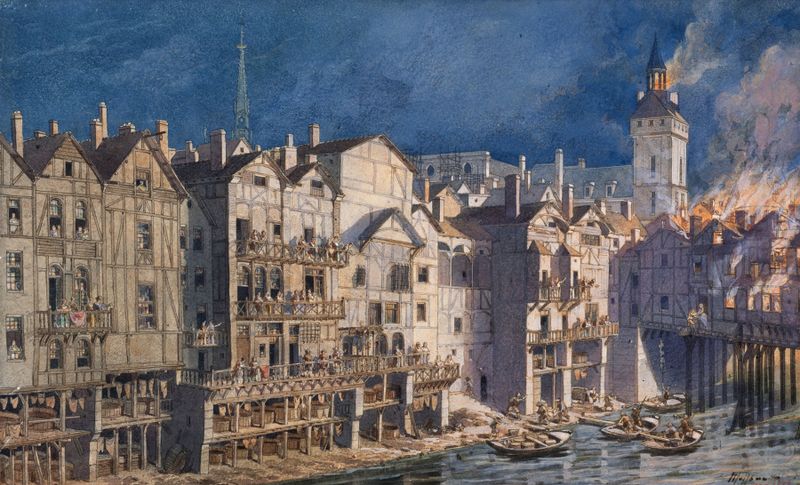
La Cité entre le pont Notre Dame et le pont au Change en 1621
Fédor Hoffbauer

L’Hôtel de Ville et le pont d’Arcole en 1842
Fédor Hoffbauer

Le Cimetière des Innocents en 1750
Fédor Hoffbauer
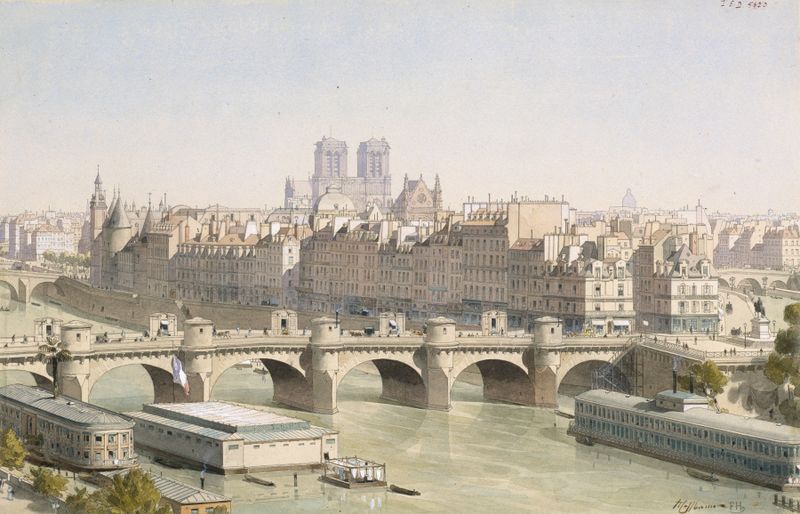
Vue de l’île de la Cité et le pont-Neuf avec ses boutique, vers 1840
Fédor Hoffbauer
More Architecture Art
Browse all →
The statue of Liberty
Frédéric Auguste Bartholdi

View of Houses in Delft, Known as ‘The Little Street’
Johannes Vermeer

View of Houses in Delft, Known as ‘The Little Street’
Johannes Vermeer

The Cathedral in Rouen. The portal, Grey Weather
Claude Monet

The yellow house
Vincent van Gogh

The Church in Auvers-sur-Oise, View from the Chevet
Vincent van Gogh