
Le Point-du-Jour après de l’armée de Versailles en mai 1871 — History & Facts
Who listens when art speaks of silence? In the aftermath of conflict, a canvas can become a mirror reflecting not only the world but also the echoes of unspoken emotions. Focus on the horizon, where soft hues of dawn break against the remnants of a weary landscape. The delicate interplay of light and shadow captures the quiet aftermath of turmoil, inviting the viewer to linger on the subtle transitions of color. Notice how the brushwork evokes a sense of movement, contrasting the stillness of the scene with the vibrancy of life beginning anew.
Richomme's use of muted tones enhances the reflective quality, creating an atmosphere that feels both serene and haunting. The juxtaposition of the landscape and the barren remnants of war conveys a profound message about resilience and loss. Each brushstroke bears witness to the silence that follows a storm, making evident the emotional weight carried by the land. The trees stand as sentinel figures, their forms suggesting both endurance and vulnerability, embodying the spirit of a community beginning to heal.
This harmony of elements invites contemplation on the duality of destruction and rebirth. Jules Richomme created this piece in the spring of 1871, shortly after the Franco-Prussian War. At that time, he was living in France, surrounded by a nation grappling with the scars of conflict. The art world was shifting towards Impressionism, and Richomme’s work reflects the emerging interest in capturing atmosphere and emotion, paving the way for a new era in French art.
More Artworks by Jules Richomme
Browse all →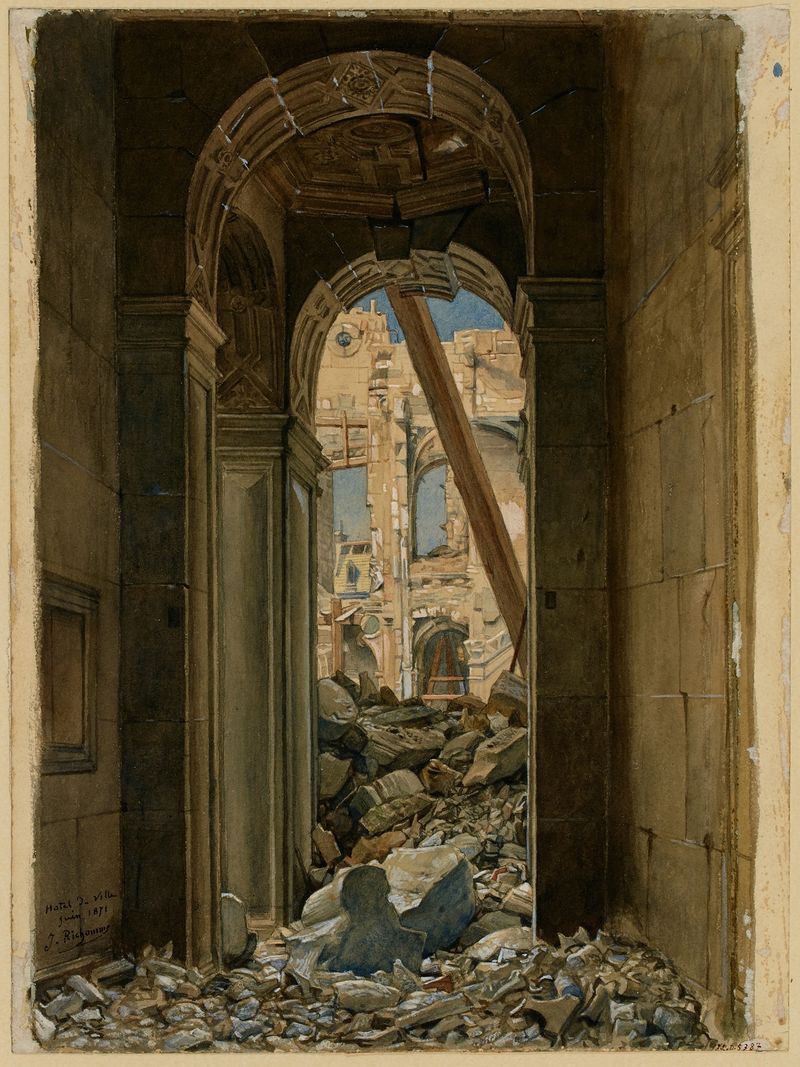
Les décombres de l’Hôtel de Ville en juin 1871
Jules Richomme
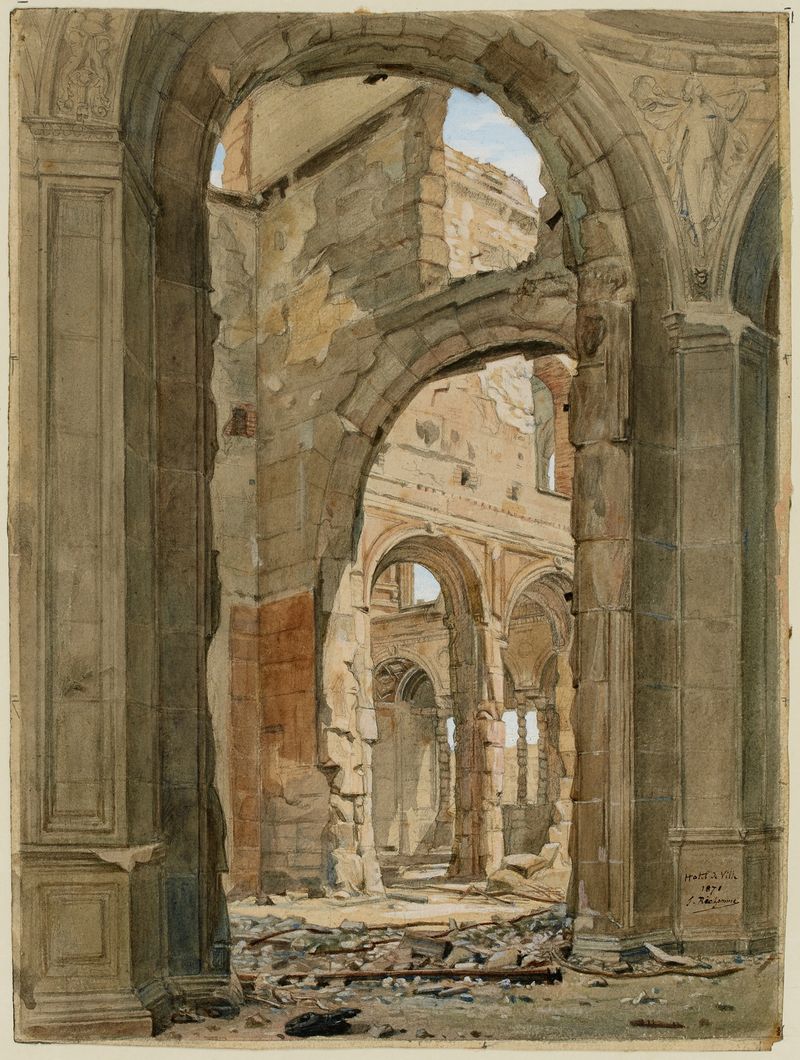
Les décombres de l’Hôtel de Ville après l’incendie de 1871
Jules Richomme
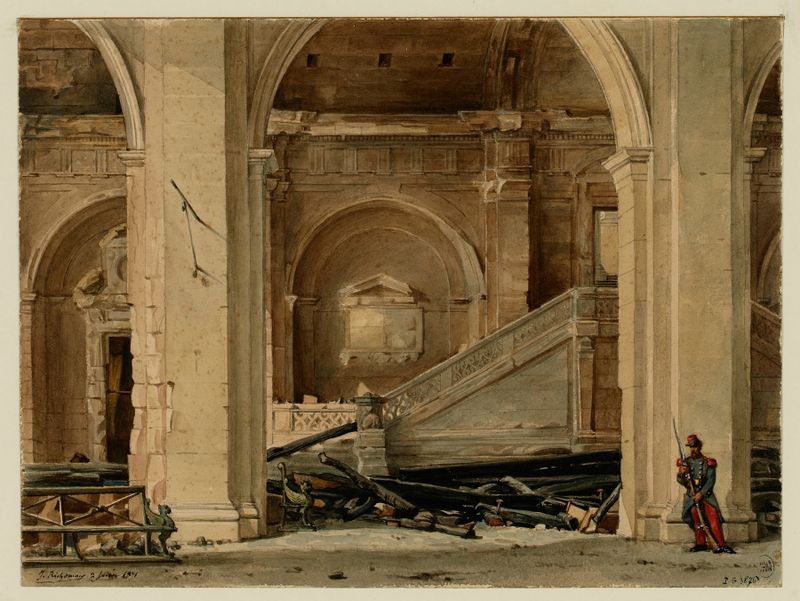
L’escalier du Palais de Justice après l’incendie de 1871
Jules Richomme
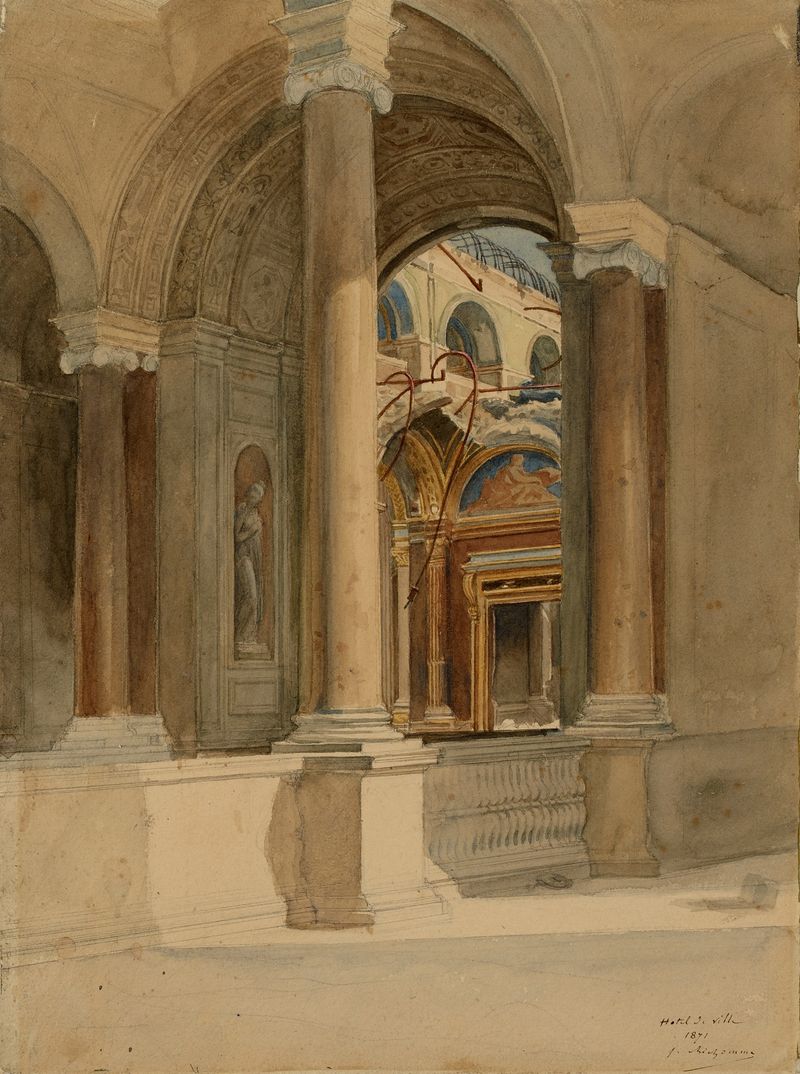
L’Hôtel de Ville après l’incendie 1871
Jules Richomme
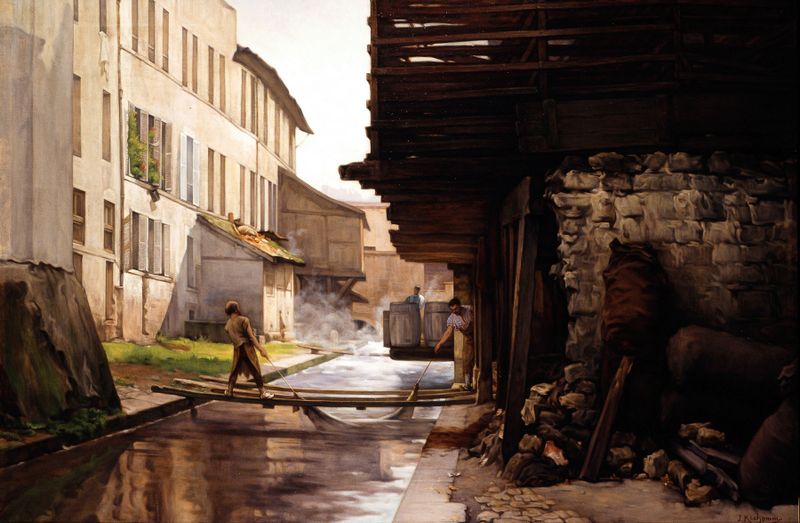
Tannerie sur la Bièvre
Jules Richomme
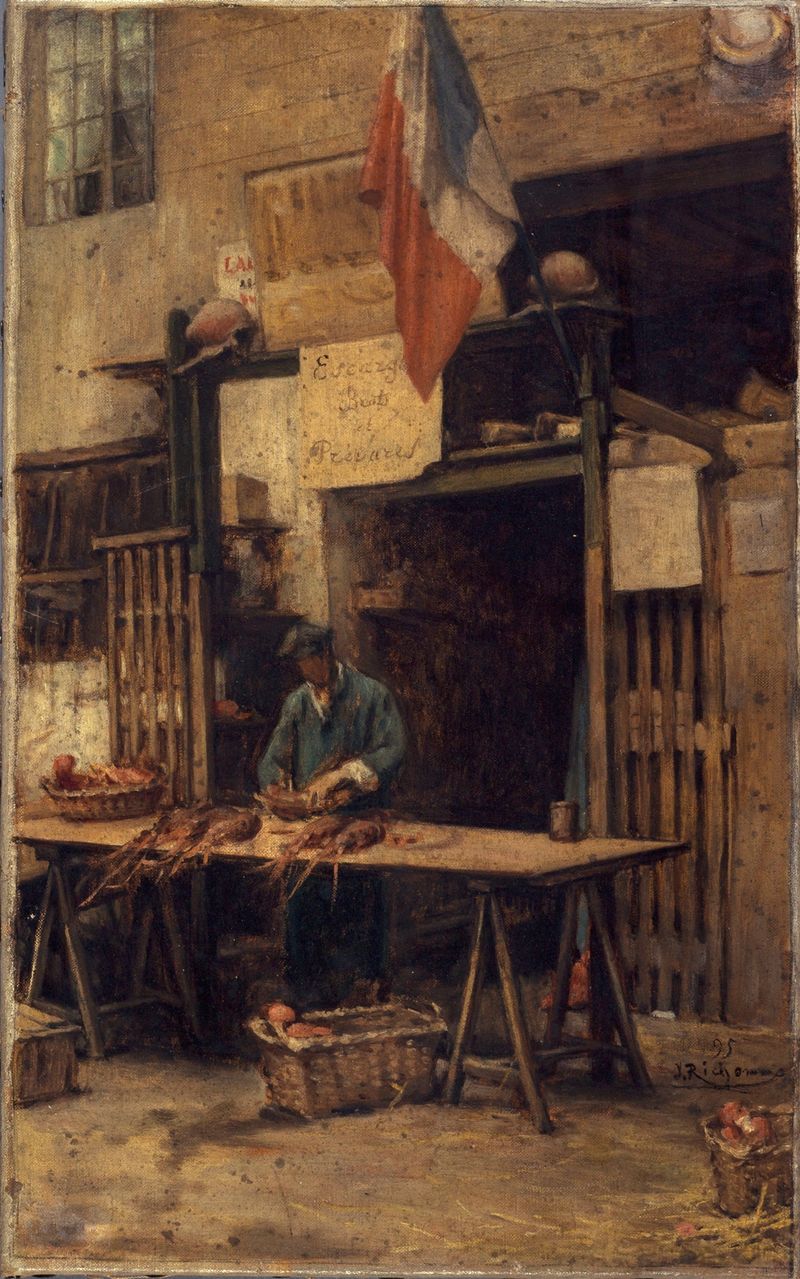
La Cour du Heaume, rue Pirouette
Jules Richomme
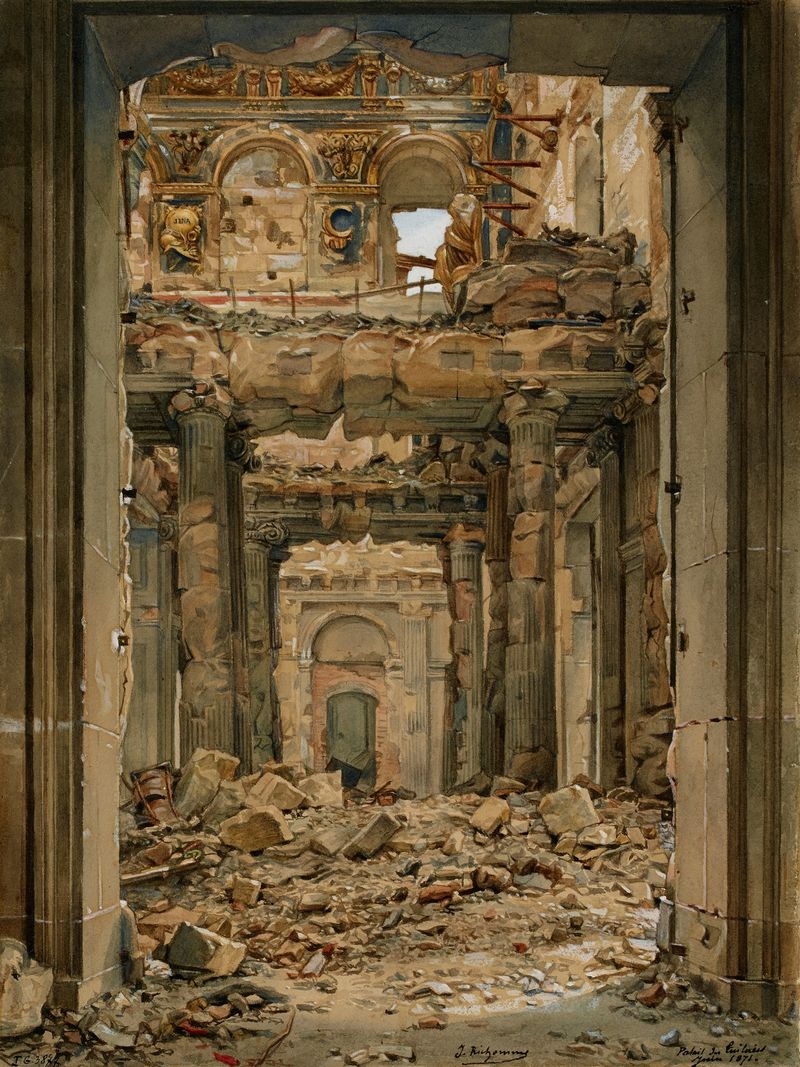
Portail des Tuileries après l’incendie de 1871
Jules Richomme





