
L’Hôtel de Ville après l’incendie 1871 — History & Facts
Can beauty exist without sorrow? In L’Hôtel de Ville après l’incendie 1871, the somber remnants of a once-grand structure resonate with a haunting yearning for its past glory. Look closely at the billowing smoke that curls above the charred remnants, painting a stark contrast against the muted tones of the scene. The light filters through the haze, illuminating the edges of the ruins as if to highlight the beauty found within decay. The debris sprawls across the foreground, while shadows cling to the walls, whispering stories of loss and resilience.
Richomme’s brushwork evokes a poignant stillness, inviting the viewer to linger over the details of despair and the echoes of life that once thrived within those walls. Amid the devastation, a subtle tension emerges between the destruction and the lingering memories of grandeur. The stark lines of the structure, although crumbling, still possess an elegance that speaks to its former splendor. Each fractured piece of stone seems to echo a story of cultural identity and the fragility of art in the face of human conflict.
This artwork reflects the duality of destruction and beauty, urging us to confront the scars of history and the yearning for restoration. Jules Richomme painted this piece in the wake of the 1871 Paris Commune, specifically in response to the destruction wrought upon the Hôtel de Ville. This period marked a tumultuous time in France, where the struggles between revolution and order shaped the artistic landscape. As a result, Richomme’s work becomes not only a depiction of physical ruins but a mirror reflecting the emotional turbulence of a society grappling with loss and hope.
More Artworks by Jules Richomme
Browse all →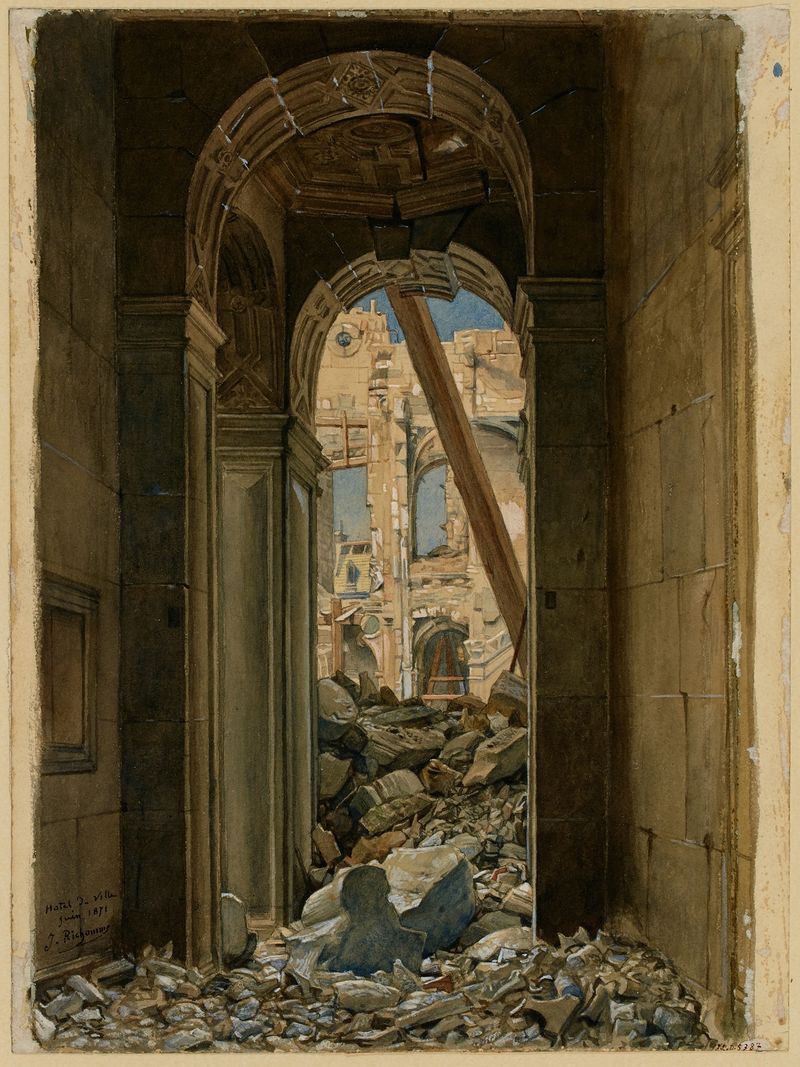
Les décombres de l’Hôtel de Ville en juin 1871
Jules Richomme
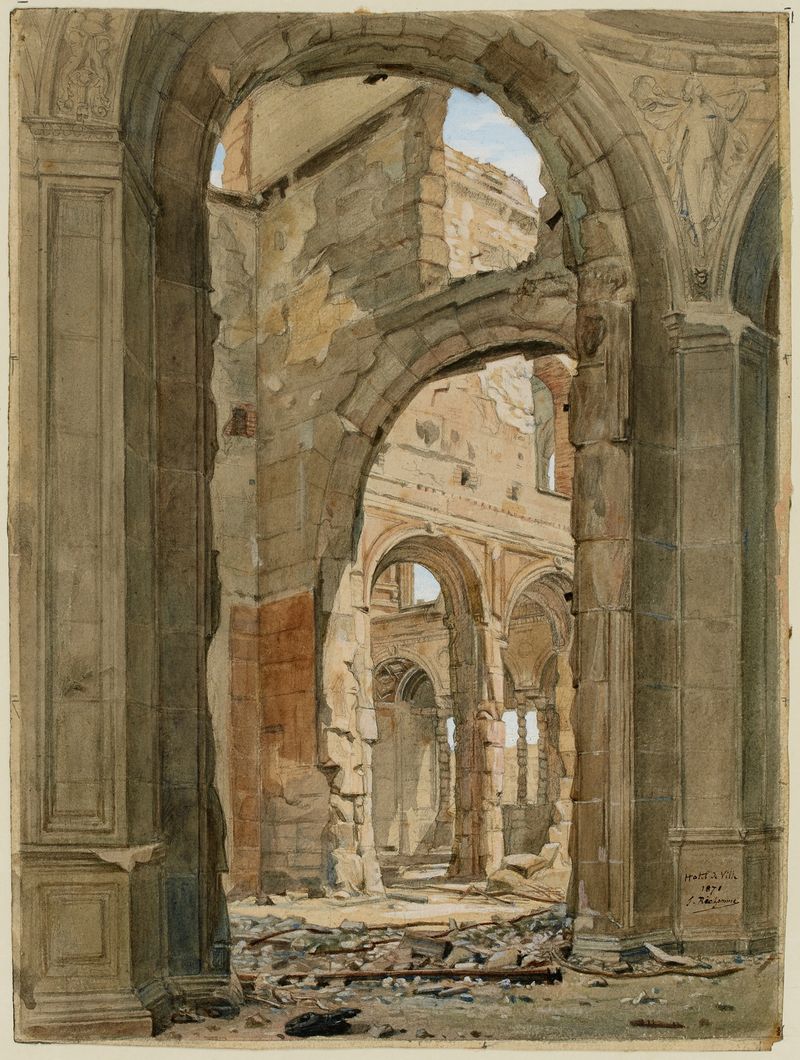
Les décombres de l’Hôtel de Ville après l’incendie de 1871
Jules Richomme
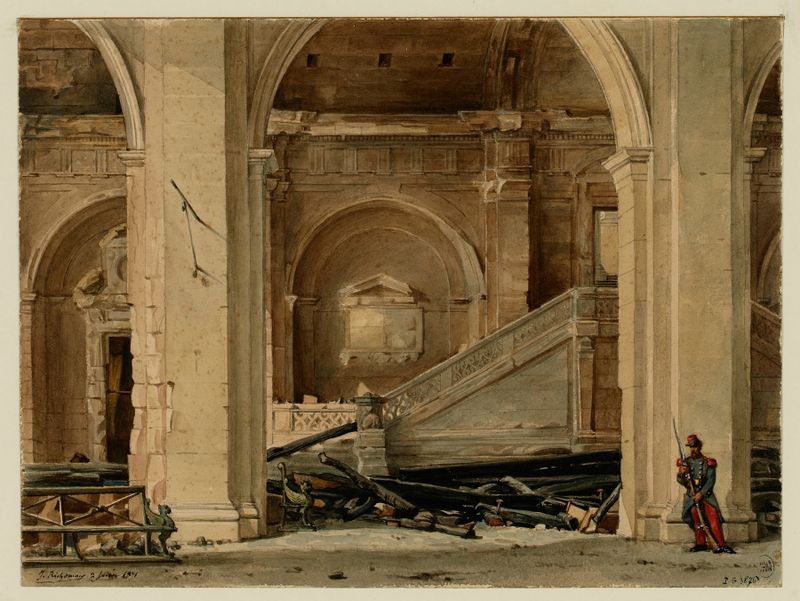
L’escalier du Palais de Justice après l’incendie de 1871
Jules Richomme
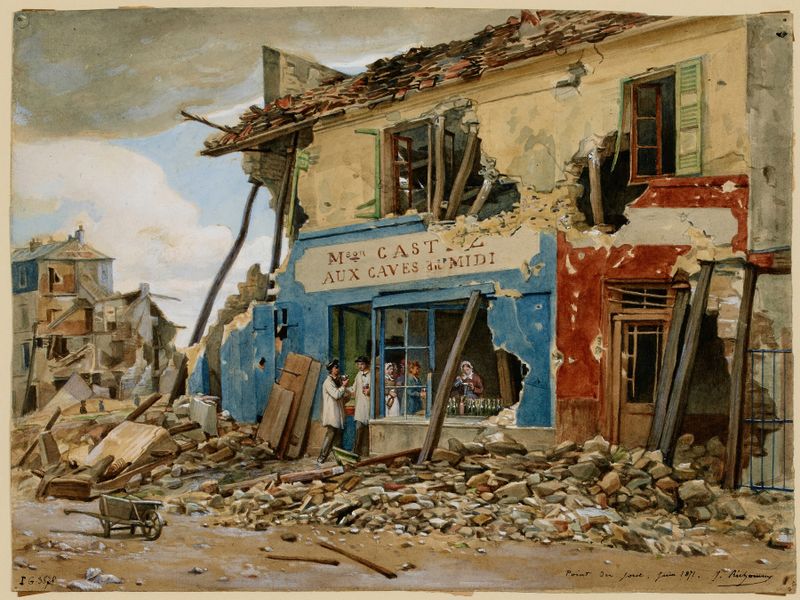
Le Point-du-Jour après de l’armée de Versailles en mai 1871
Jules Richomme
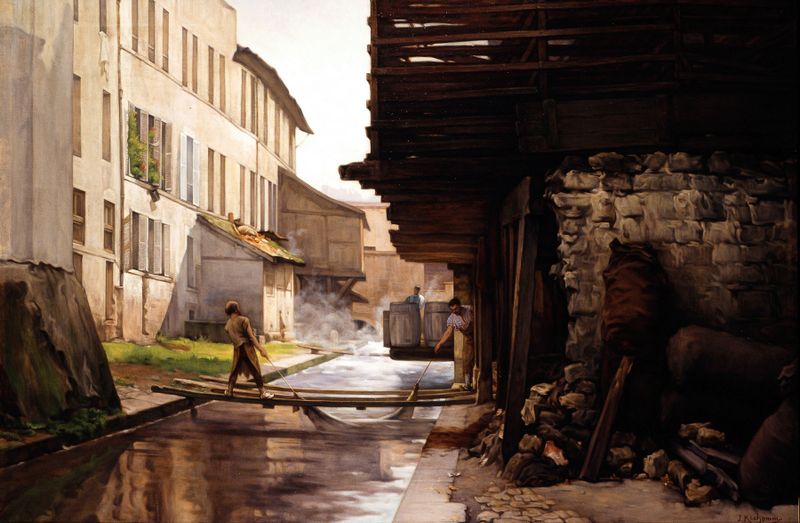
Tannerie sur la Bièvre
Jules Richomme
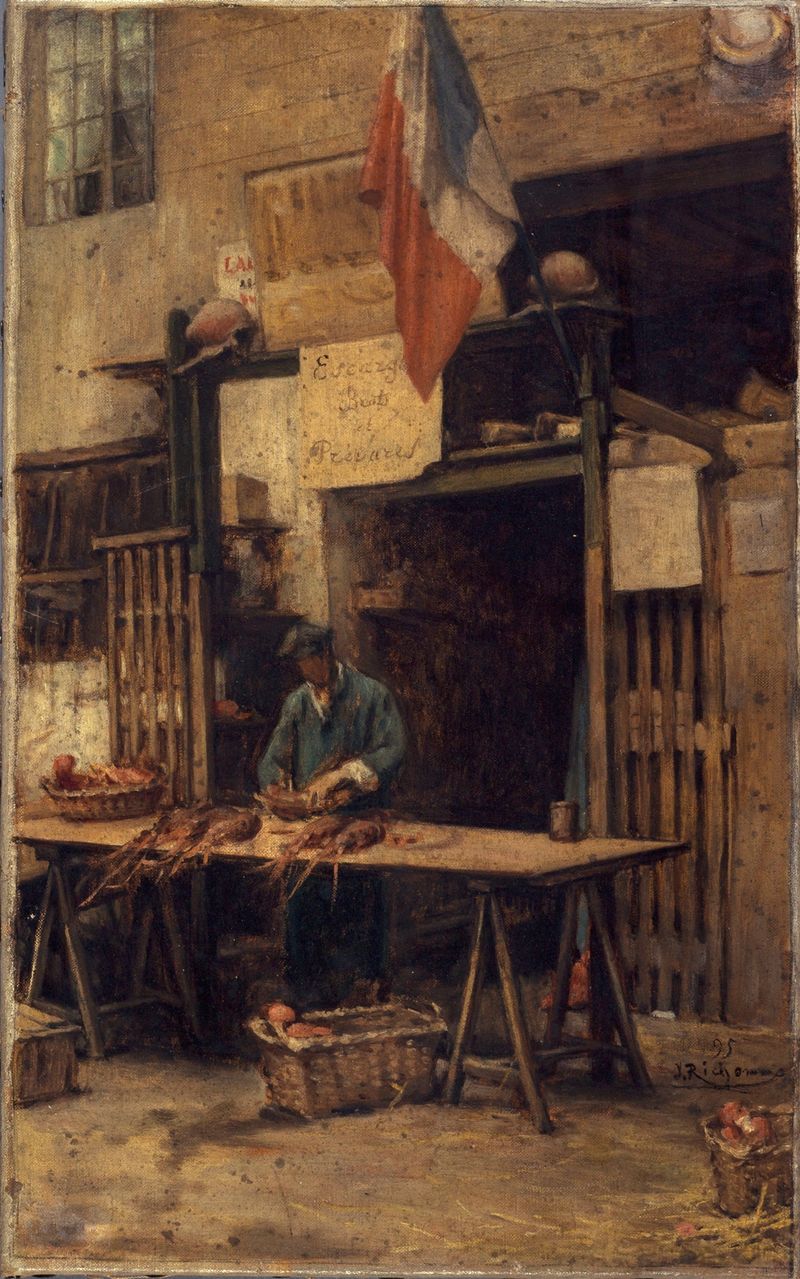
La Cour du Heaume, rue Pirouette
Jules Richomme
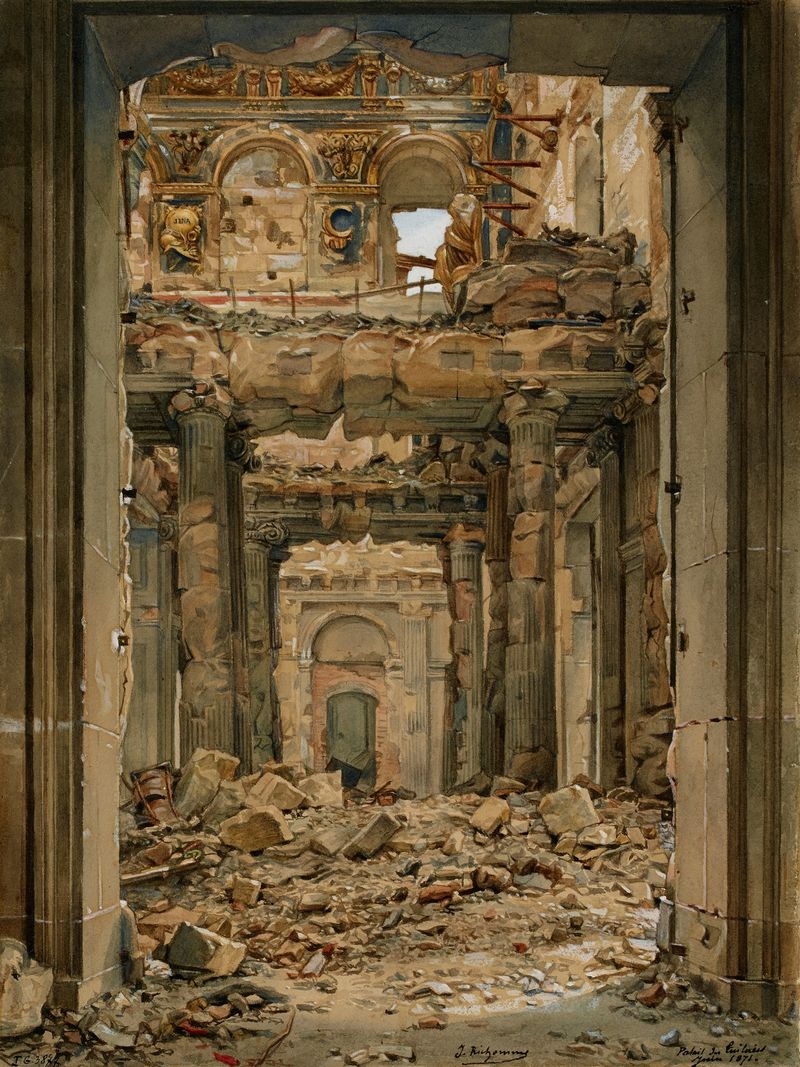
Portail des Tuileries après l’incendie de 1871
Jules Richomme
More Architecture Art
Browse all →
The statue of Liberty
Frédéric Auguste Bartholdi

View of Houses in Delft, Known as ‘The Little Street’
Johannes Vermeer

View of Houses in Delft, Known as ‘The Little Street’
Johannes Vermeer

The Cathedral in Rouen. The portal, Grey Weather
Claude Monet

The yellow house
Vincent van Gogh

The Church in Auvers-sur-Oise, View from the Chevet
Vincent van Gogh