
L’escalier du Palais de Justice après l’incendie de 1871 — History & Facts
What if beauty was never meant to be finished? In L’escalier du Palais de Justice après l’incendie de 1871, the echoes of destruction meld with remnants of grandeur, leaving an impression of haunting fragility. Look to the left at the crumbling balustrade; it tells a story of elegance now in decay. The artist’s careful brushstrokes reveal the interplay of light and shadow, accentuating the charred wood against the cool blue tones of the remaining walls. Richomme’s adept use of color conveys a stillness that belies the chaos, with flickers of sunlight suggesting life amidst the ruins, inviting the viewer to ponder the resilience of beauty. Within the desolation lies a poignant contrast between the past glory of the Palais de Justice and its current state of disrepair.
The remnants remind us of loss, while the light filtering through shattered windows hints at hope. Each brushstroke captures a moment frozen in time, evoking a sense of nostalgia for what once was, and a recognition of the fleeting nature of existence. This artwork is a meditation on fragility, where even destruction holds a certain beauty. In 1871, Richomme painted this piece in the aftermath of the Paris Commune, a turbulent period marked by upheaval and upheaval in France.
The fire that ravaged the Palais de Justice was a reflection of the chaos surrounding him, and in this stark moment, the artist grappled with the intersection of art and history. This work stands not only as a testament to loss but also as a powerful commentary on the resilience of architecture and the human spirit.
More Artworks by Jules Richomme
Browse all →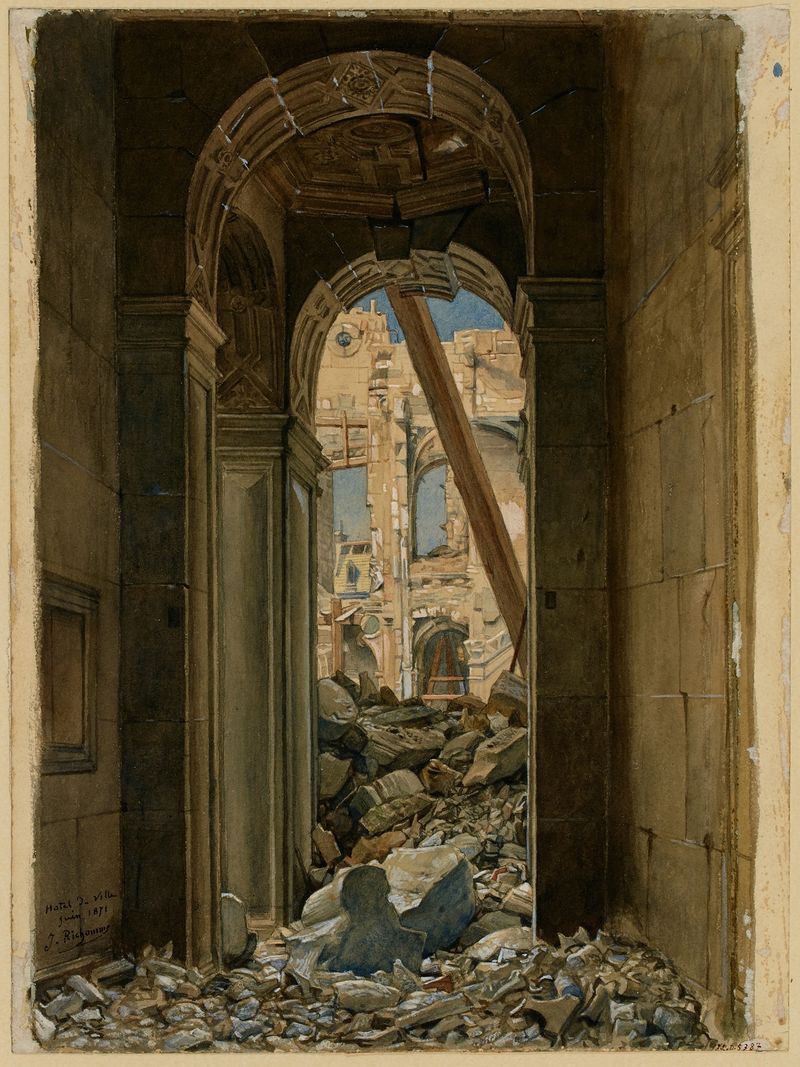
Les décombres de l’Hôtel de Ville en juin 1871
Jules Richomme
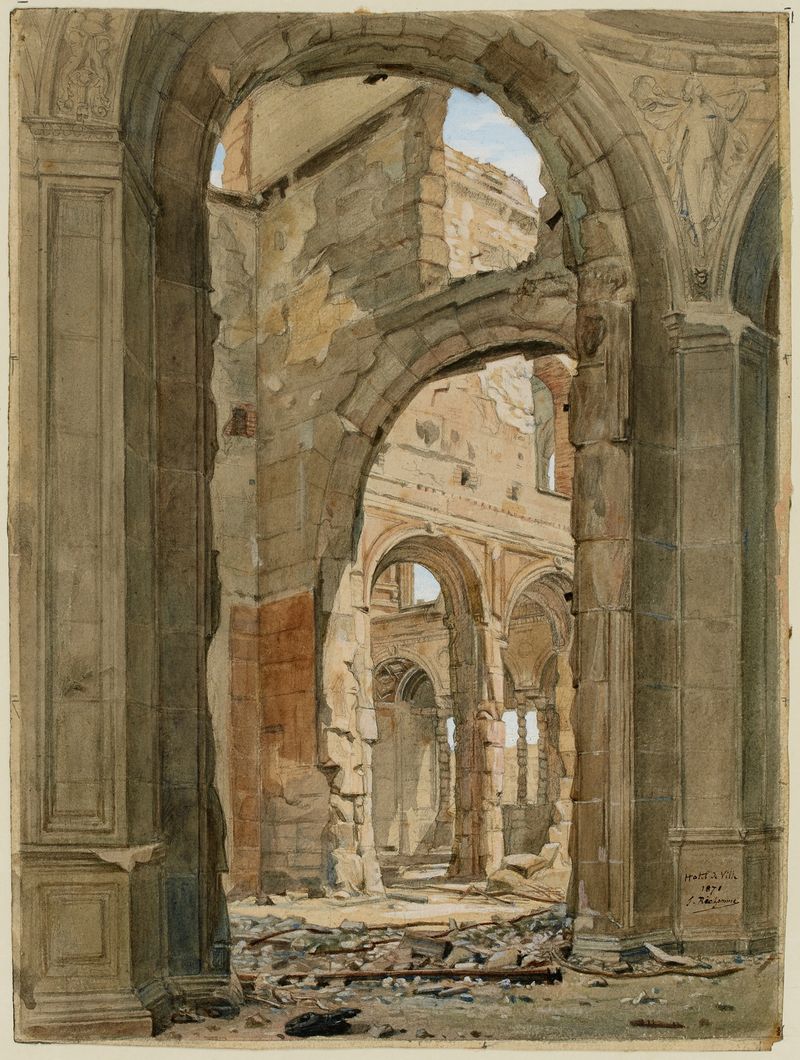
Les décombres de l’Hôtel de Ville après l’incendie de 1871
Jules Richomme
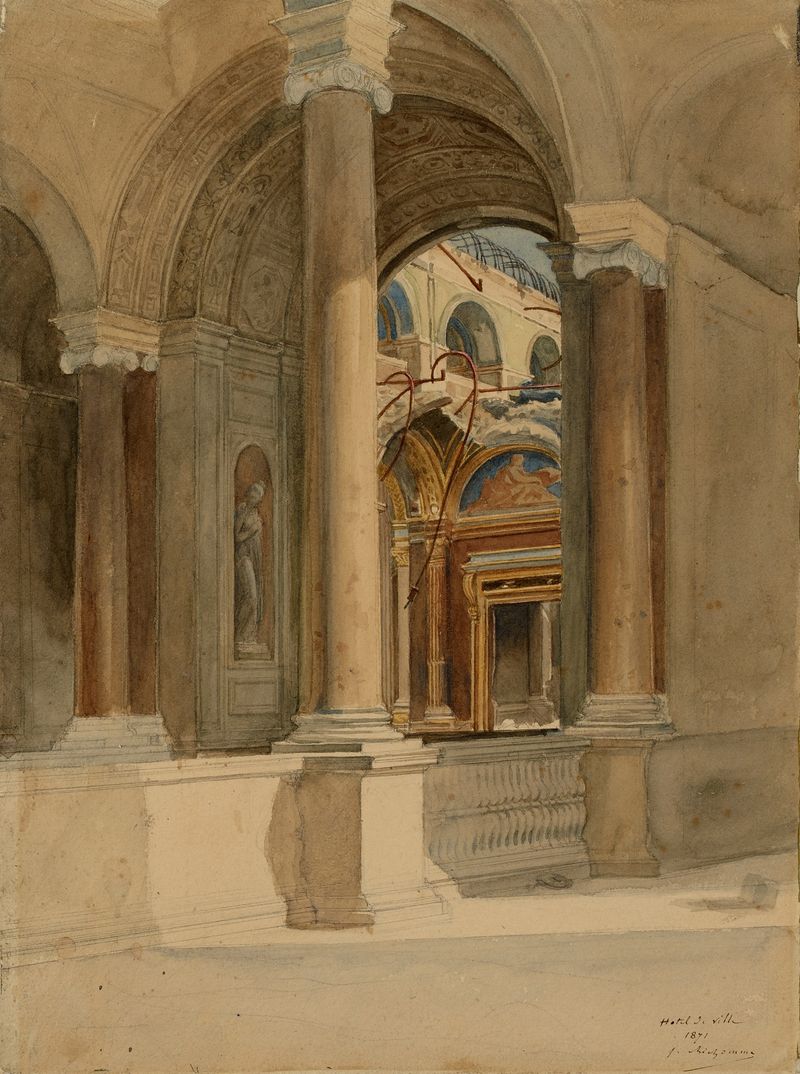
L’Hôtel de Ville après l’incendie 1871
Jules Richomme
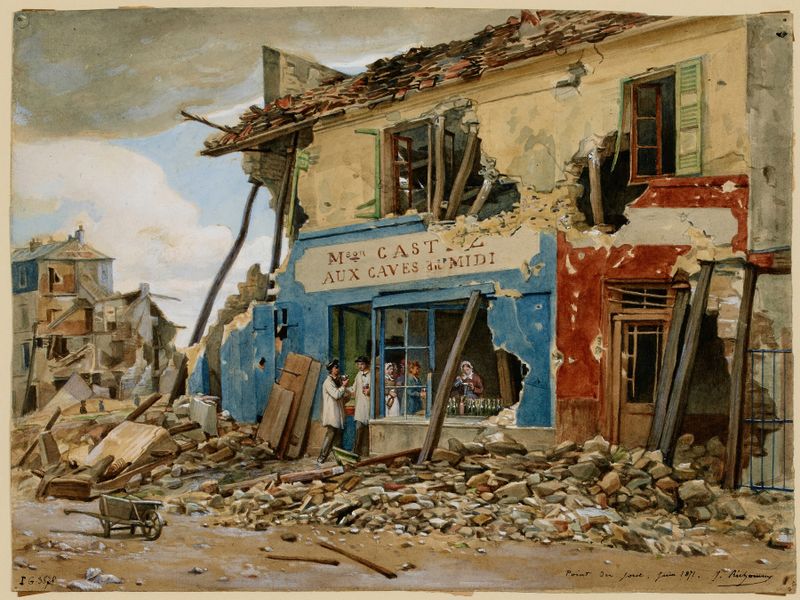
Le Point-du-Jour après de l’armée de Versailles en mai 1871
Jules Richomme
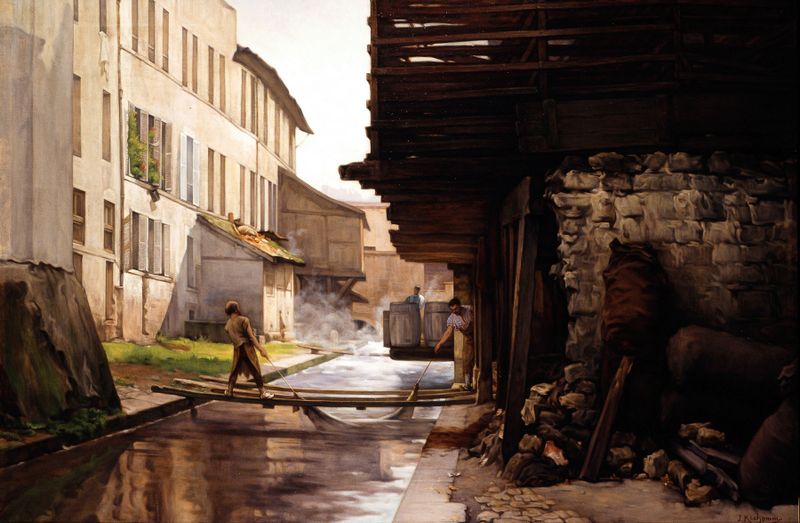
Tannerie sur la Bièvre
Jules Richomme
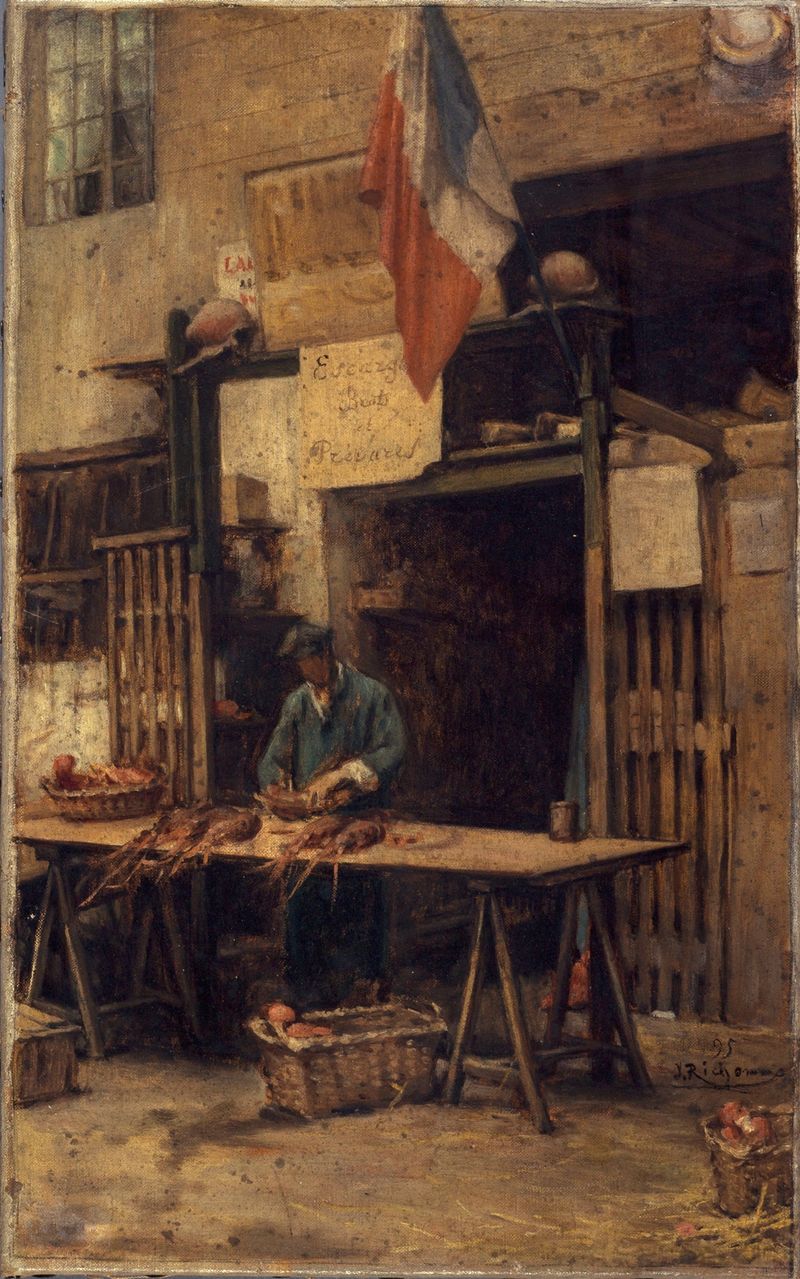
La Cour du Heaume, rue Pirouette
Jules Richomme
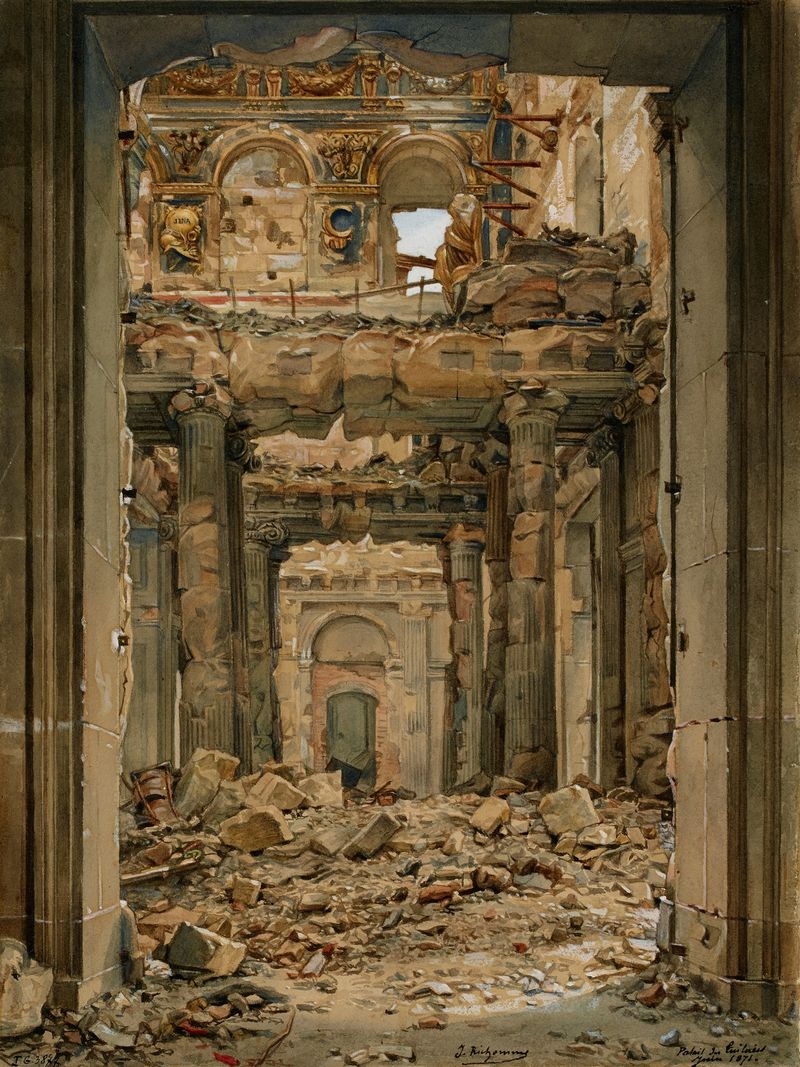
Portail des Tuileries après l’incendie de 1871
Jules Richomme
More Architecture Art
Browse all →
The statue of Liberty
Frédéric Auguste Bartholdi

View of Houses in Delft, Known as ‘The Little Street’
Johannes Vermeer

View of Houses in Delft, Known as ‘The Little Street’
Johannes Vermeer

The Cathedral in Rouen. The portal, Grey Weather
Claude Monet

The yellow house
Vincent van Gogh

The Church in Auvers-sur-Oise, View from the Chevet
Vincent van Gogh