
Tannerie sur la Bièvre — History & Facts
In the delicate dance between memory and reality, lies the true essence of artistic creation, where moments of violence resonate beneath the surface. Look closely at the left side of the canvas, where the Bièvre river flows quietly, framed by lush greenery. The water reflects shades of cerulean and gold, evoking tranquility, yet betraying an undercurrent of tumultuous history. Notice the figures tending to the tannery; their postures are rigid, absorbed in labor, signaling a hard existence that contrasts sharply with the idyllic landscape.
Richomme’s muted palette, punctuated by earthy browns and soft pastels, intertwines beauty with an unspoken struggle, inviting the viewer to ponder the unseen narratives behind the serene façade. In the juxtaposition of pastoral charm and industrial labor, hidden tensions emerge. The tannery, a site of transformation, symbolizes both creation and destruction, as the process of turning hides into leather elicits thoughts of violence against the natural world. Each brushstroke holds the weight of the laborers' lives and the environmental cost of their work, subtly critiquing the romanticism of pastoral life.
This duality compels the audience to confront the often-overlooked brutality woven into everyday existence. In 1892, Jules Richomme created this poignant work in France, during a period marked by rapid industrialization and social change. As the nation grappled with modernization, artists were increasingly drawn to the relationships between nature and industry. Richomme's choice to depict a scene that balances beauty with a nod toward the darker aspects of labor reflects his engagement with contemporary themes, positioning him in the midst of a pivotal moment in art and society.
More Artworks by Jules Richomme
Browse all →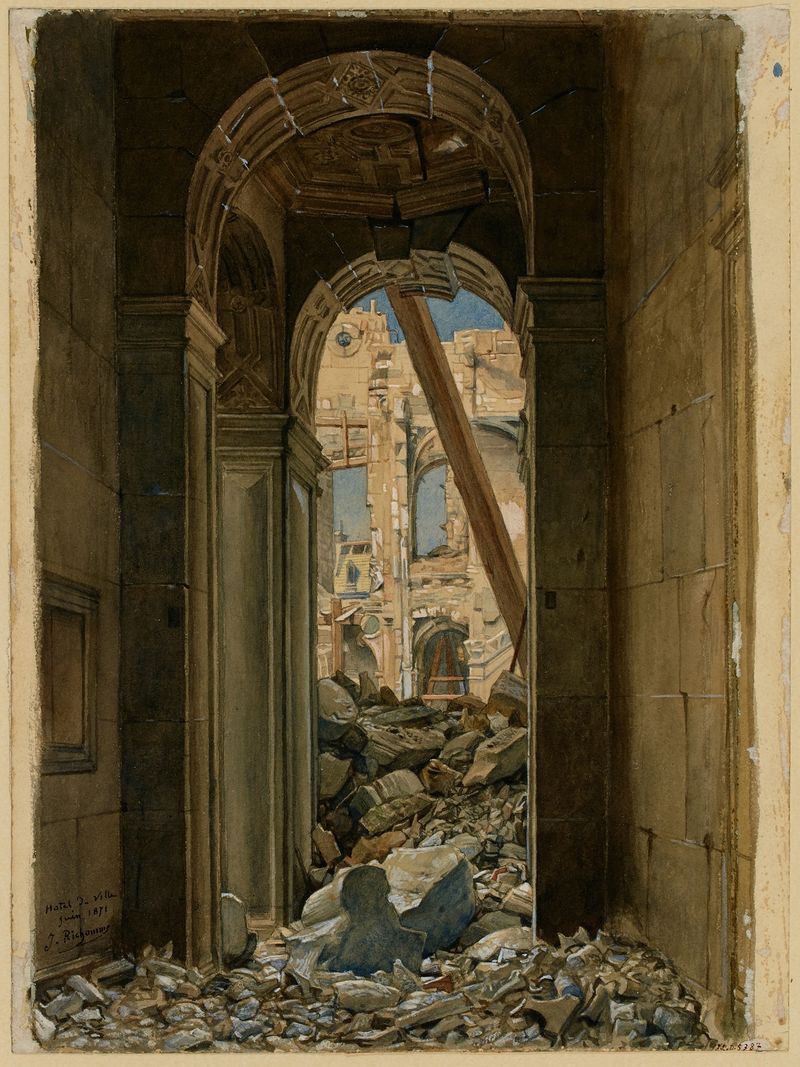
Les décombres de l’Hôtel de Ville en juin 1871
Jules Richomme
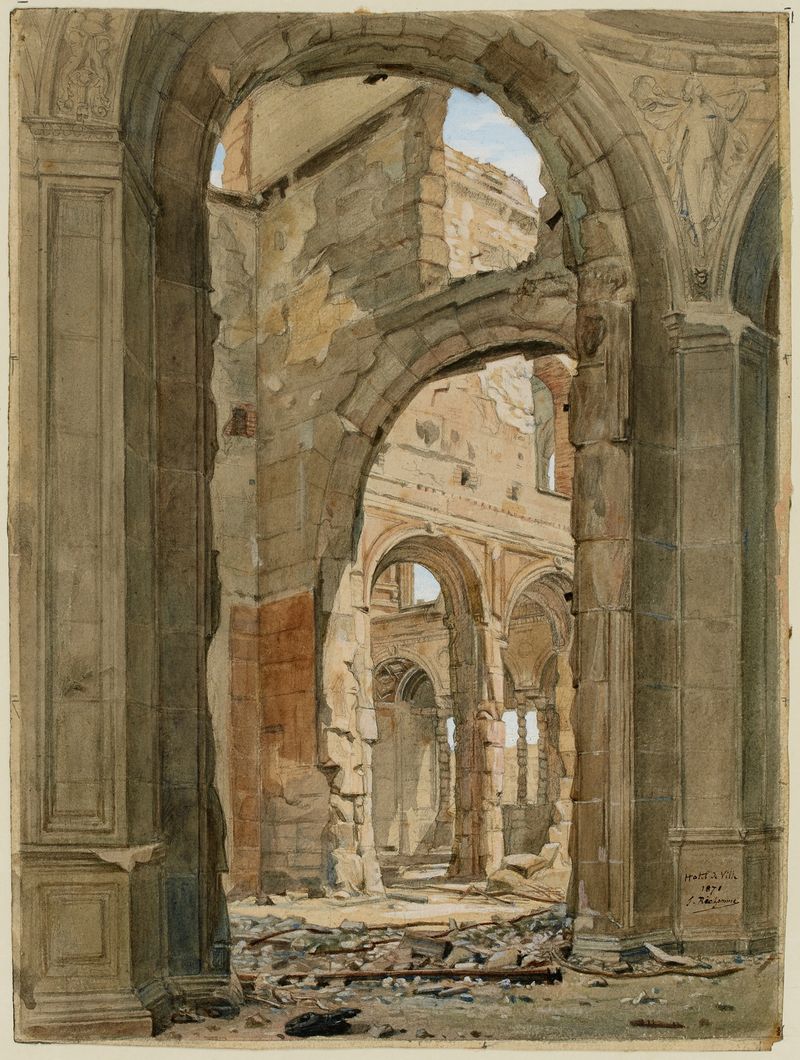
Les décombres de l’Hôtel de Ville après l’incendie de 1871
Jules Richomme
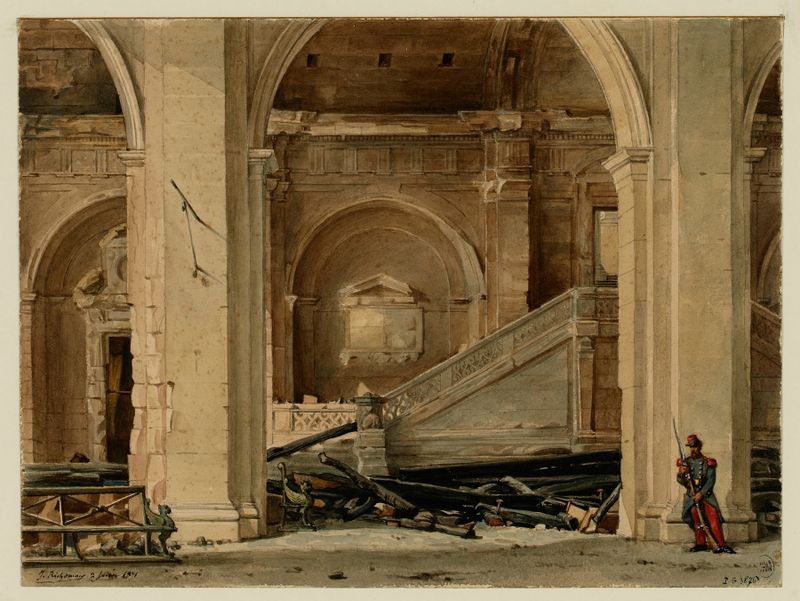
L’escalier du Palais de Justice après l’incendie de 1871
Jules Richomme
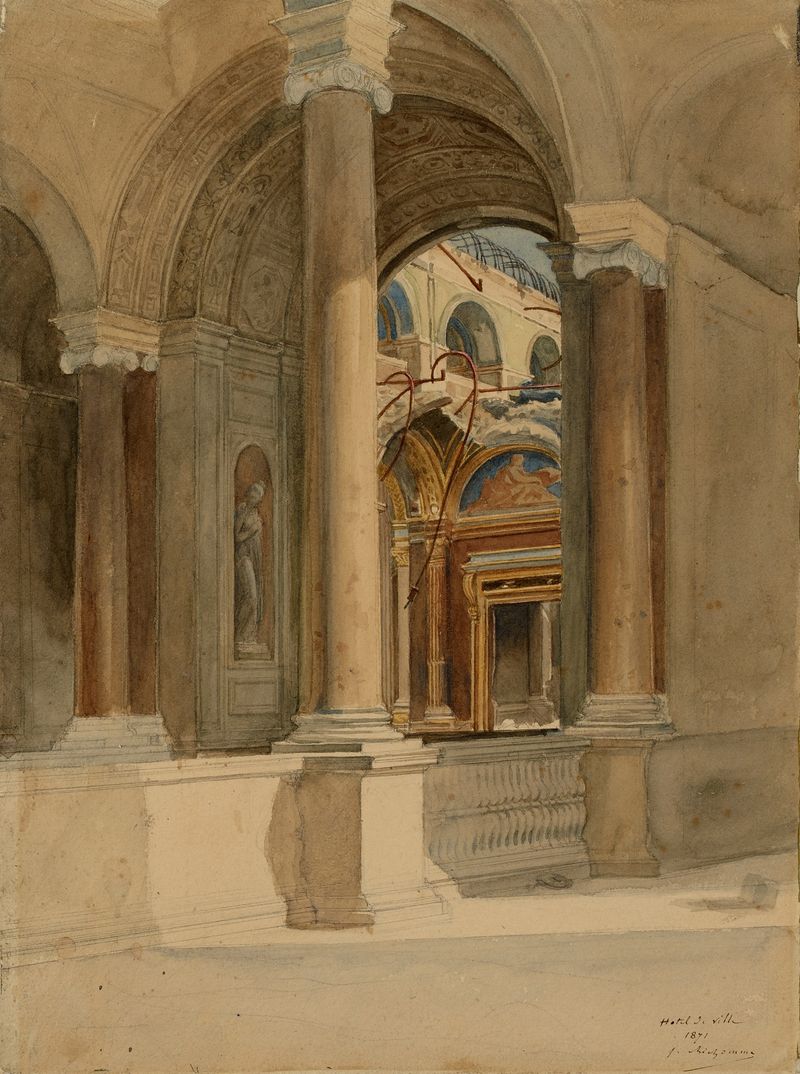
L’Hôtel de Ville après l’incendie 1871
Jules Richomme
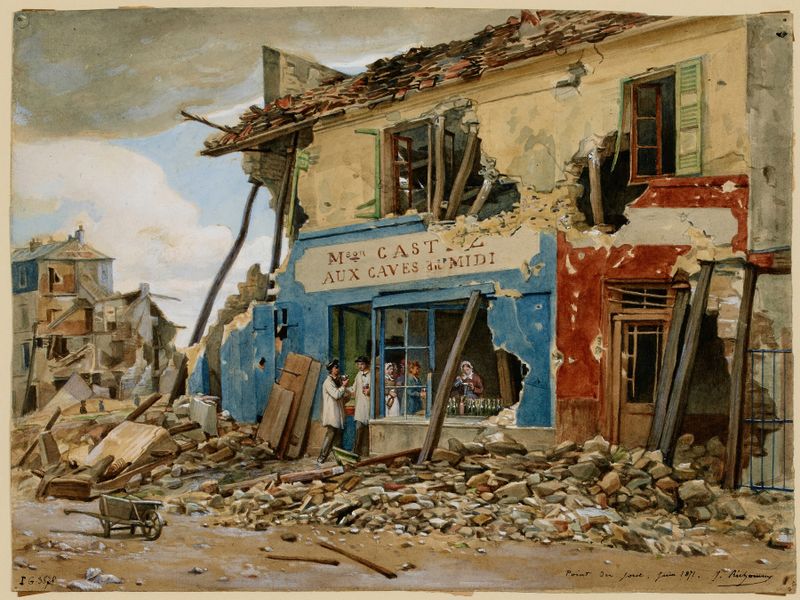
Le Point-du-Jour après de l’armée de Versailles en mai 1871
Jules Richomme
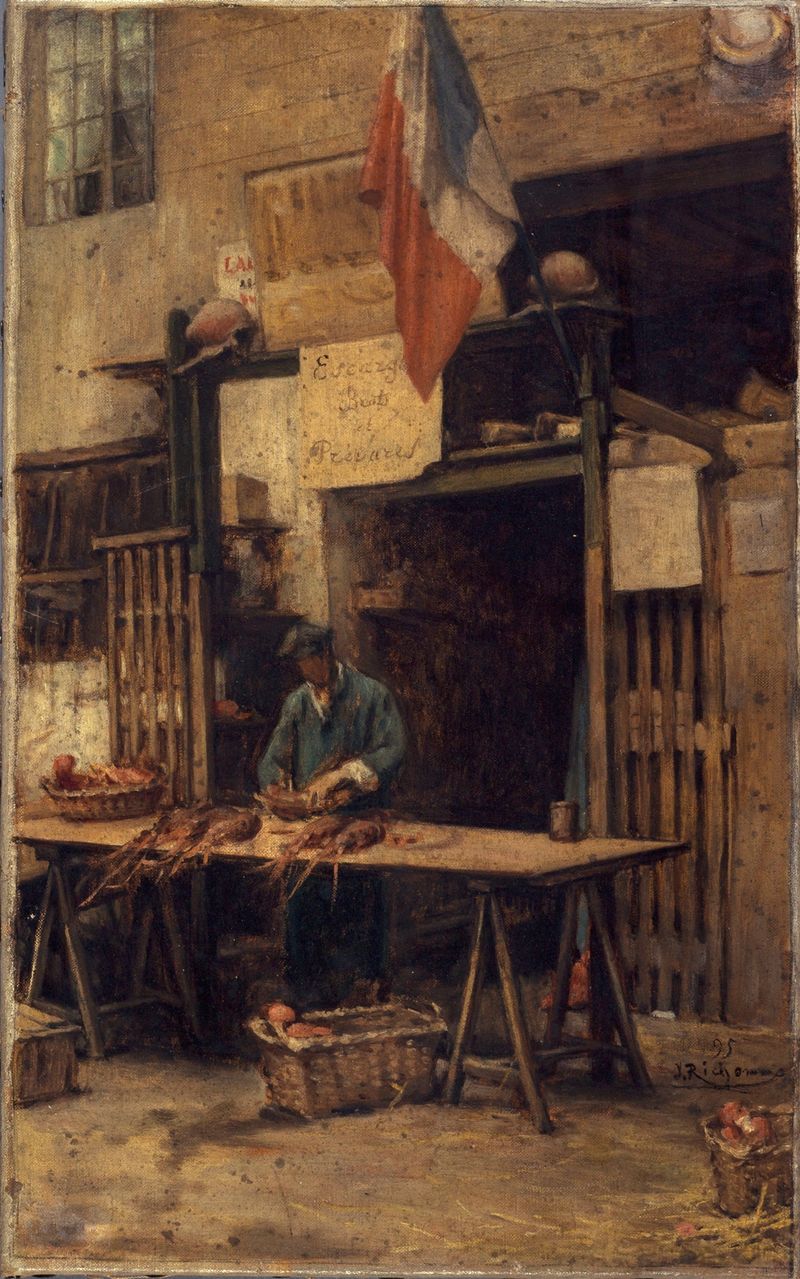
La Cour du Heaume, rue Pirouette
Jules Richomme
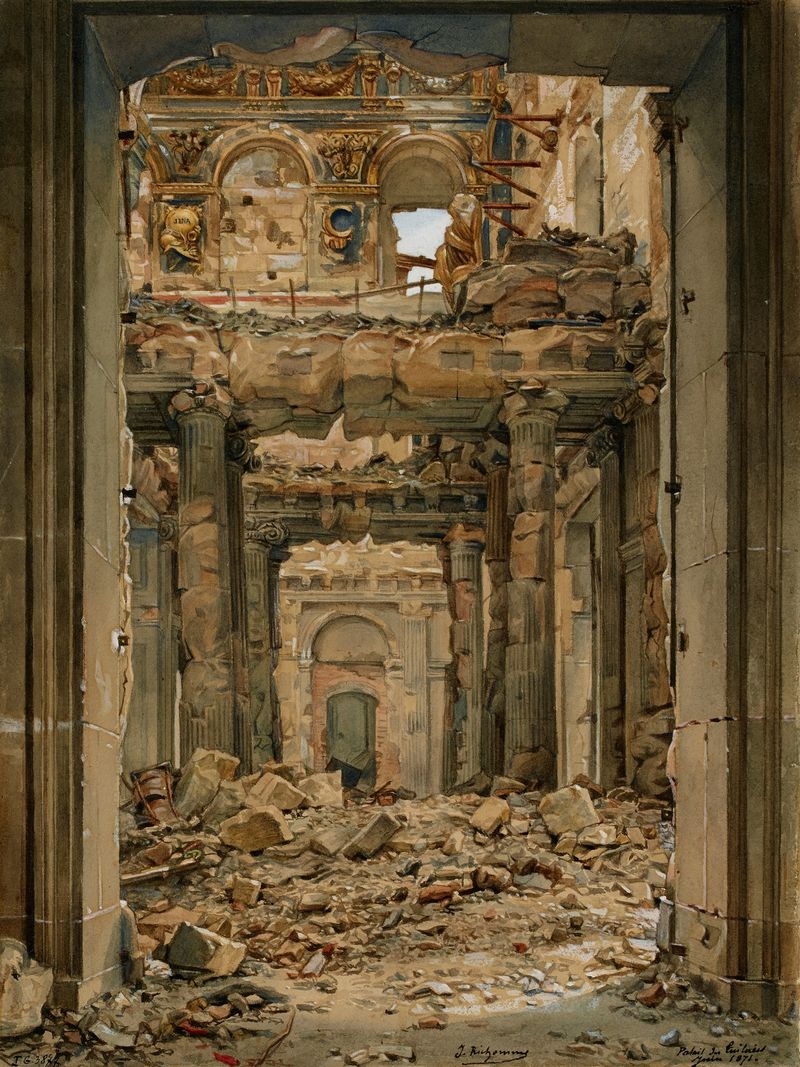
Portail des Tuileries après l’incendie de 1871
Jules Richomme





