
Le Spui À La Haye — History & Facts
In Le Spui À La Haye, the essence of movement dances across the canvas, inviting the viewer to immerse themselves in a world alive with energy and subtle turmoil. Look to the lower right where the water ripples beneath the bustling boats, their sails billowing like whispers in the wind. The technique reveals Jongkind's mastery of light, with sun illuminating the shimmering surface, casting reflections that pulse with vitality. Colors blend seamlessly—lush greens and vibrant blues contrast against the golden hues of the setting sun, creating an atmosphere that is both tranquil and charged with urgency. As you explore further, notice how the figures engaged in their daily routines seem almost suspended in time, caught between the familiarity of their tasks and the relentless march of the tide.
This juxtaposition evokes an emotional tension; while life around them flows, the figures remain steadfast, suggesting a deeper yearning for freedom amidst life's constraints. The interplay between movement and stillness encapsulates the struggle of existence, representing the dualities inherent in human experience. In 1868, Jongkind painted this piece while living in The Hague, a period marked by his burgeoning reputation as a pivotal figure in Dutch Impressionism. His commitment to capturing the effects of light and atmosphere reflected the broader artistic movements of the time, seeking to break away from traditional conventions.
As he wandered the canals, the vibrant scene before him became a testament to both the beauty and the fleeting nature of life itself.
More Artworks by Johan Barthold Jongkind
Browse all →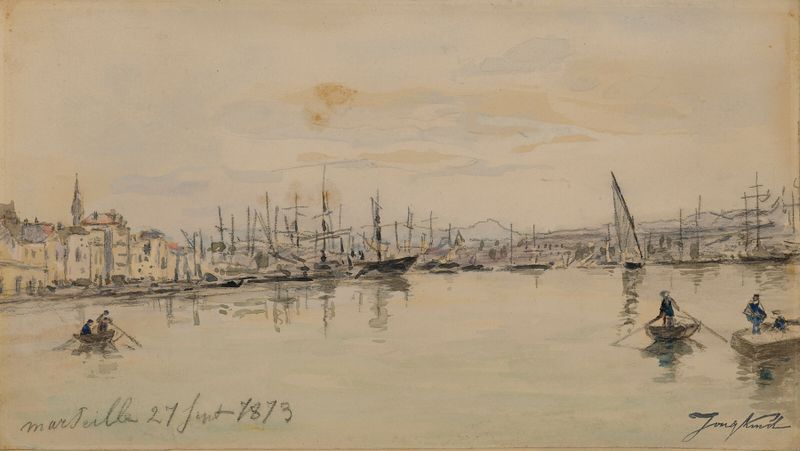
Le Port de Marseille
Johan Barthold Jongkind

Canal Saint-Martin
Johan Barthold Jongkind

Countryside near Brezins, between Grenoble and Vienne
Johan Barthold Jongkind

Notre-Dame vue du quai de la Tournelle
Johan Barthold Jongkind

Environs de Grenoble
Johan Barthold Jongkind

Clair de lune à Overschie (environs de Rotterdam)
Johan Barthold Jongkind

Port de Honfleur
Johan Barthold Jongkind
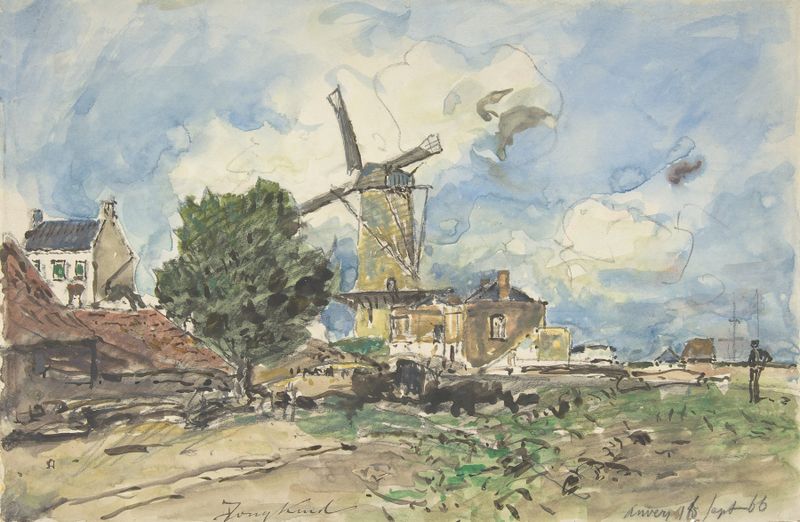
Wind Mill at Antwerp
Johan Barthold Jongkind

Le Havre
Johan Barthold Jongkind

The Church of Overschie
Johan Barthold Jongkind





