Le tas de pois. Camaret — History & Facts
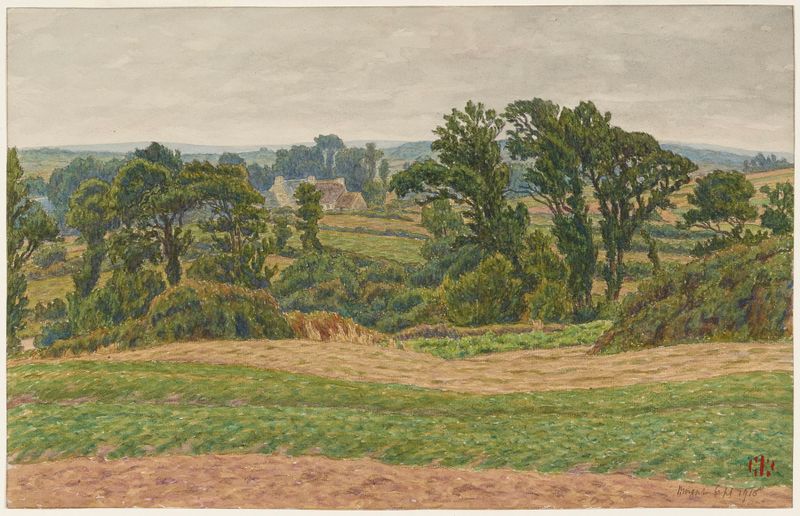
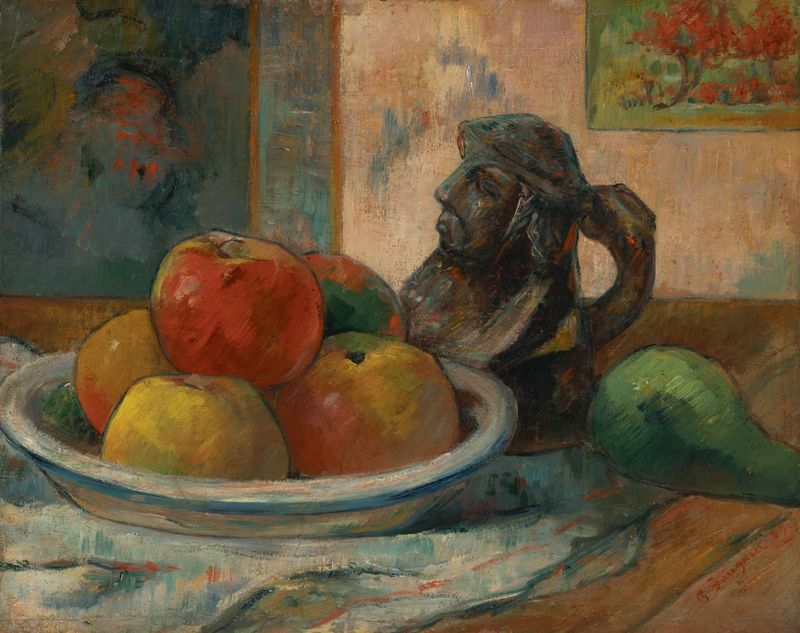
In the embrace of twilight, shadows dance upon the landscape, blurring the line between reality and dreams. Look to the left at the velvety hues of green that cradle the foreground, where a gentle pile of peas emerges, inviting yet surreal. The artist employs delicate brushstrokes that mimic the texture of the produce, contrasting the earthy tones with the ethereal blues and purples of the sky above. Notice how the composition draws your gaze upwards, as if beckoning you to explore the heavens, while the vibrant colors pulse with an emotional intensity, suggesting both the richness of life and its ephemeral nature. In this piece, the tension between abundance and transience reverberates.
The pile symbolizes nourishment and growth, yet its exaggerated form reveals an unsettling excess. The swirling sky hints at the inevitability of change, reminding us that beauty can be fleeting, a dream that slips away just as one reaches out to grasp it. Each brushstroke carries a whisper of longing, a desire to hold onto moments that, like dreams, often escape our grasp. Henri Rivière painted this work in 1911, a time marked by his continuous exploration of the beauty in nature and everyday life.
Living in Paris and deeply influenced by the Symbolist movement, he was intent on melding the material world with the dreamlike quality of artistic expression. It was an era of innovation, where artists sought to convey deeper emotional truths through their canvases, resonating with both personal and collective experiences.