
Place de la Trinité, Paris — History & Facts
What if silence could speak through light? In Place de la Trinité, Paris, the chaos of urban life is distilled into a moment of serene clarity, inviting the viewer to explore the delicate balance of sound and stillness. Look to the center of the canvas where the church rises majestically, its façade illuminated by a warm, golden hue that contrasts starkly with the cooler tones enveloping the bustling streets below. The artist masterfully employs a palette of muted grays and blues, punctuated by soft touches of white and ochre, creating a sense of harmony amidst the frenetic energy of city life. The figures meander through the scene, yet their movements are rendered almost ghostly, suggesting the fleeting essence of humanity in the midst of an ever-evolving metropolis. Notice the juxtaposition of the towering architecture against the small, animated figures, each absorbed in their own world.
This interplay of scale evokes a sense of isolation amid collective chaos, as if the silence of the church watches over the unruly life below. The interplay of light and shadow deepens this tension, casting long silhouettes that hint at the untold stories of those who traverse the space, all while enveloped in the embrace of Parisian ambiance. Jean François Raffaëlli painted this work around 1886, a period marked by the rise of Impressionism and a shift towards urban realism. Living in Paris, he witnessed the rapid industrialization and social changes that transformed the city.
His choice to depict this intersection reflects not only his artistic vision but also his commentary on the complex relationship between people, architecture, and the bustling life that fills the streets.
More Artworks by Jean François Raffaëlli
Browse all →
Autumn In Paris
Jean François Raffaëlli

Le jardin du Luxembourg
Jean François Raffaëlli
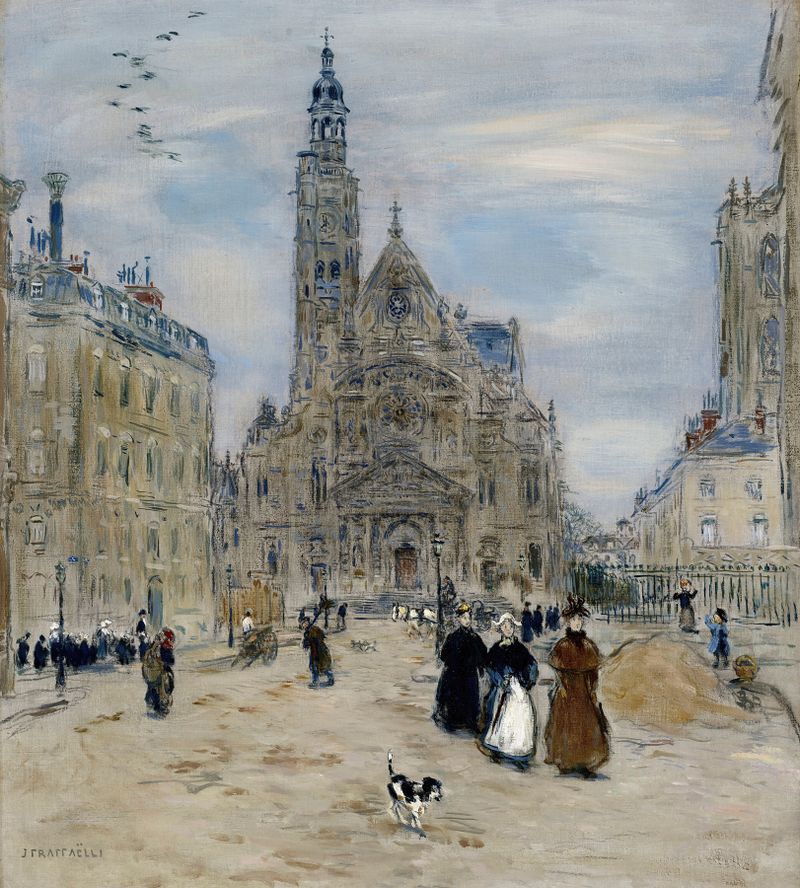
Saint-Étienne-du-Mont, Paris
Jean François Raffaëlli
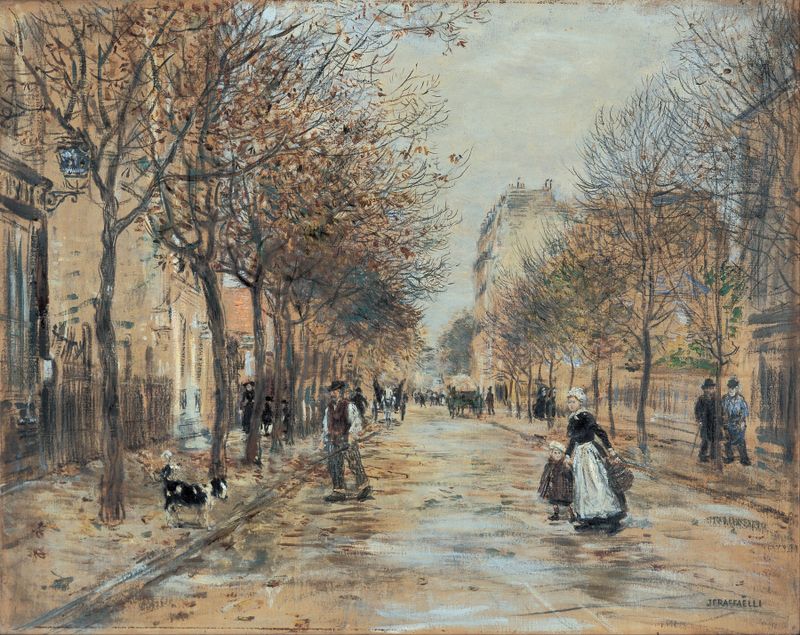
Street in Asnières
Jean François Raffaëlli
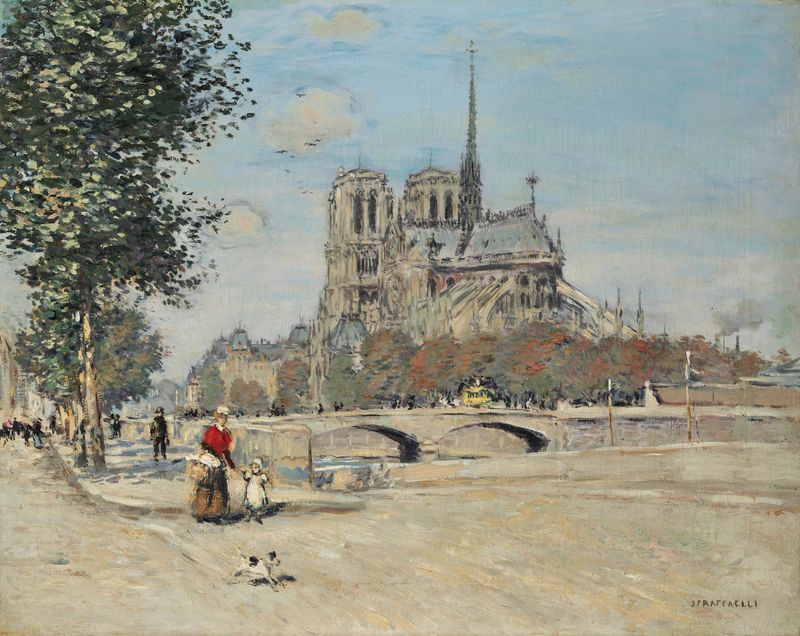
Notre-Dame de Paris et le pont de l’Archevêché
Jean François Raffaëlli

Place de Saint-Germain des Prés, Paris
Jean François Raffaëlli
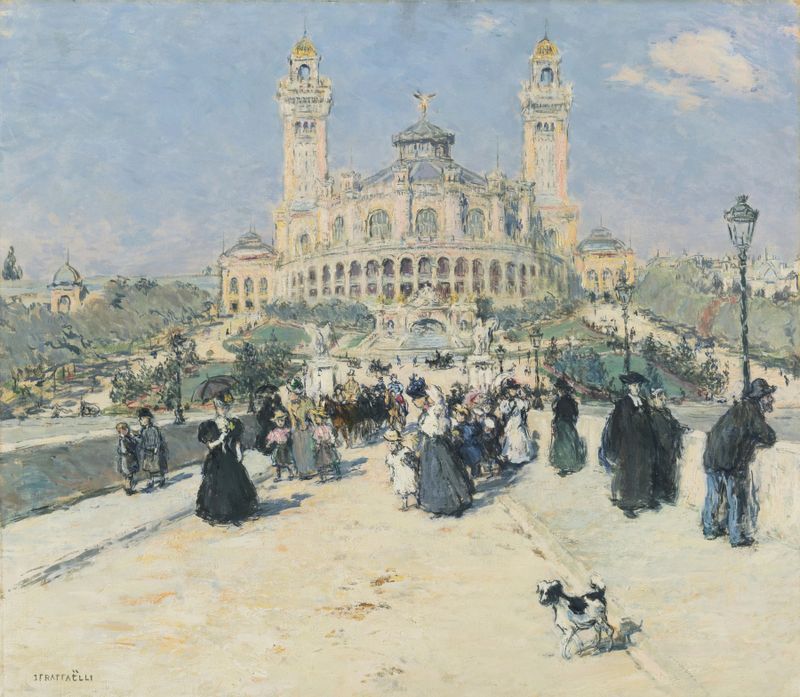
Le Trocadéro
Jean François Raffaëlli

Les Champs-Élysées
Jean François Raffaëlli

Le boulevard des Italiens
Jean François Raffaëlli

The Quai Malaquais, Paris
Jean François Raffaëlli
More Architecture Art
Browse all →
The statue of Liberty
Frédéric Auguste Bartholdi

View of Houses in Delft, Known as ‘The Little Street’
Johannes Vermeer

View of Houses in Delft, Known as ‘The Little Street’
Johannes Vermeer

The Cathedral in Rouen. The portal, Grey Weather
Claude Monet

The yellow house
Vincent van Gogh

The Church in Auvers-sur-Oise, View from the Chevet
Vincent van Gogh