Le Ventoux, vu de Vaison — History & Facts
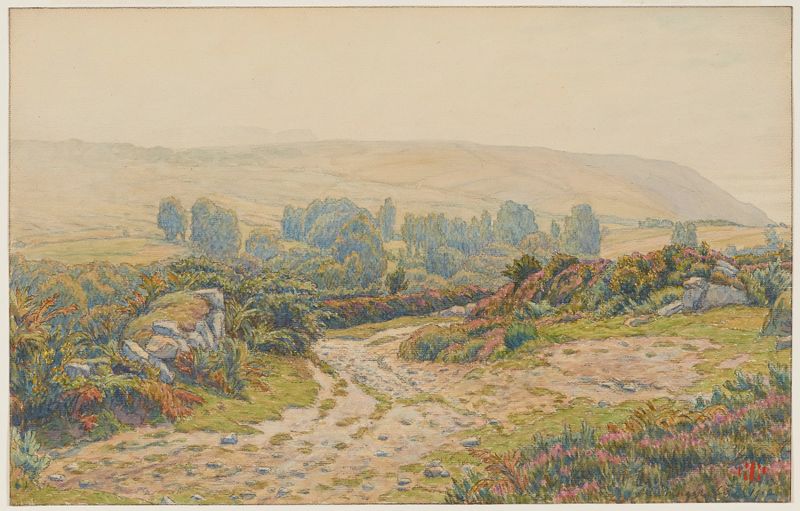
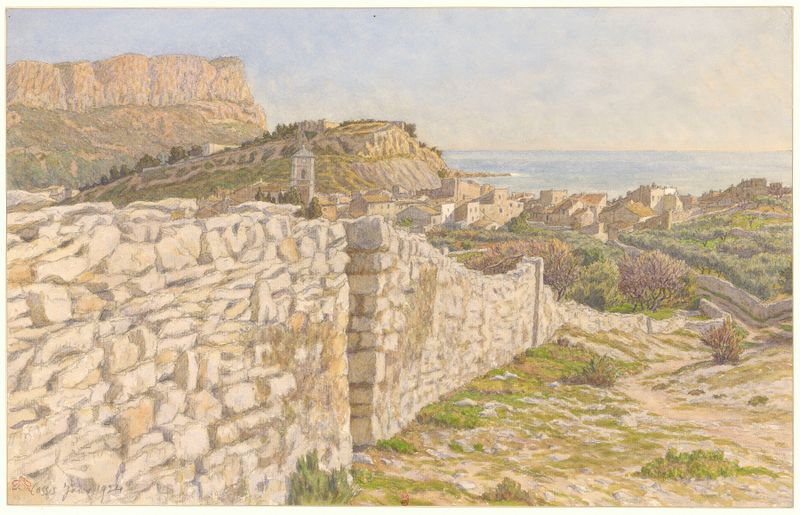
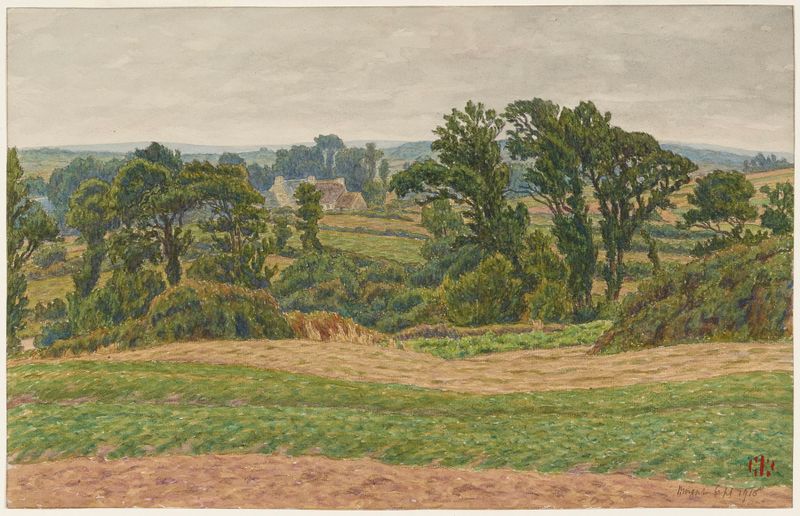
Can paint confess what words never could? In Le Ventoux, vu de Vaison, the vast emptiness of the landscape speaks volumes, inviting the viewer to contemplate solitude and nature's indifference. Focus on the serene ridge of Mont Ventoux, a monumental presence rising against a pale sky. Notice how the delicate brushstrokes create a gentle layering of blues and greens, with the mountain seemingly emerging from the canvas itself. The foreground, subtly textured and muted, contrasts with the ethereal backdrop, drawing the eye upward to the looming peak, underscoring the sense of vastness and isolation. In this work, the emptiness is palpable.
The expansive sky looms above, hinting at an existential silence that envelops the scene. The quietude of the landscape reflects an emotional tension between the grandeur of nature and the solitude felt by those who behold it. Rivière captures a moment where time seems to pause, allowing viewers to confront their inner landscapes through the lens of the external world. Henri Rivière painted Le Ventoux, vu de Vaison in 1934 while living in France during a period marked by significant artistic exploration and change.
The post-World War I context saw artists grappling with themes of dislocation and identity. Rivière, known for his focus on landscapes and his unique integration of printmaking techniques, contributed to this dialogue by presenting a scene that evokes both awe and contemplation, encapsulating the paradoxes of life and nature.