
Les Cascatelles de Tivoli — History & Facts
Within its still frame lies the chaotic dance of nature, a symphony of turbulent waters and silent stones that beckons the viewer to reflect on the wild beauty of the world. Look to the center of the painting, where the cascading waters of Tivoli tumble over a rocky precipice, enveloped by lush greenery. The artist’s deft brushwork captures the frothy chaos of the waterfalls, each droplet glimmering under the glow of the soft afternoon light. Notice the delicate shades of green and blue that Verne uses, harmonizing the elemental forces of nature with a serene palette that invites contemplation amidst the chaos. Beneath the surface of this idyllic scene lies a tension between tranquility and unrest.
The juxtaposition of the calm landscape surrounding the furious waterfalls evokes a sense of duality, capturing both the serene beauty of the Italian countryside and the untamed power of nature. Along the edges, small figures traverse the rocky paths, their presence emphasizing humanity’s fragile relationship with the wild, reminding us of our place amid nature’s chaos. In the period between 1740 and 1748, Vernet created this work in Italy, during a time when landscape painting was gaining prominence in Europe. The artist was deeply influenced by the picturesque beauty of the Tivoli area, a popular destination for artists and travelers alike.
It was an era that celebrated the sublime in nature, as artists sought to convey both the grandeur and the chaos of the natural world, marking a pivotal transition in the art of the time.
More Artworks by Claude-Joseph Vernet
Browse all →
An Italian Harbour in Stormy Weather
Claude-Joseph Vernet
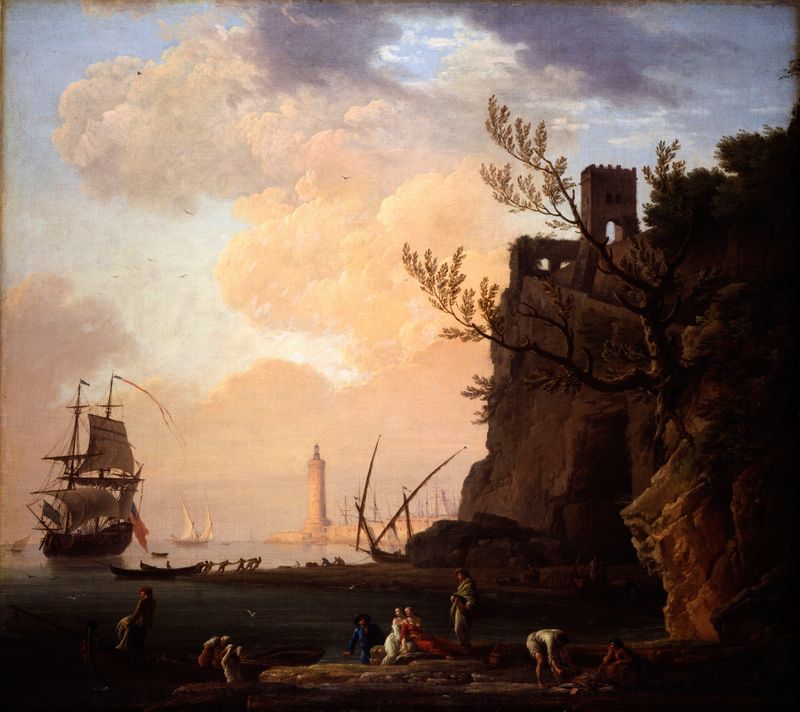
An Italianate Harbour Scene
Claude-Joseph Vernet
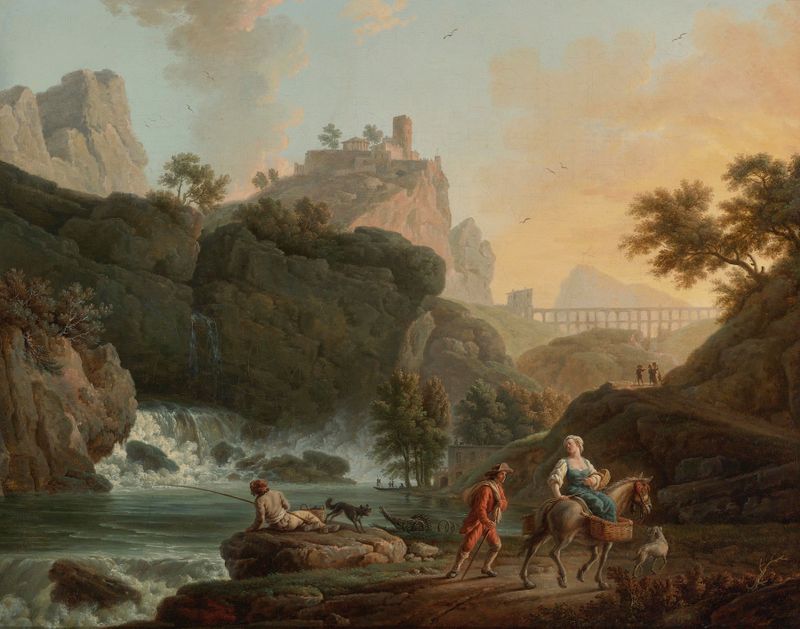
A Rocky Landscape With A fisherman And Travellers By A River With A Waterfall, An Aqueduct In The Distance
Claude-Joseph Vernet
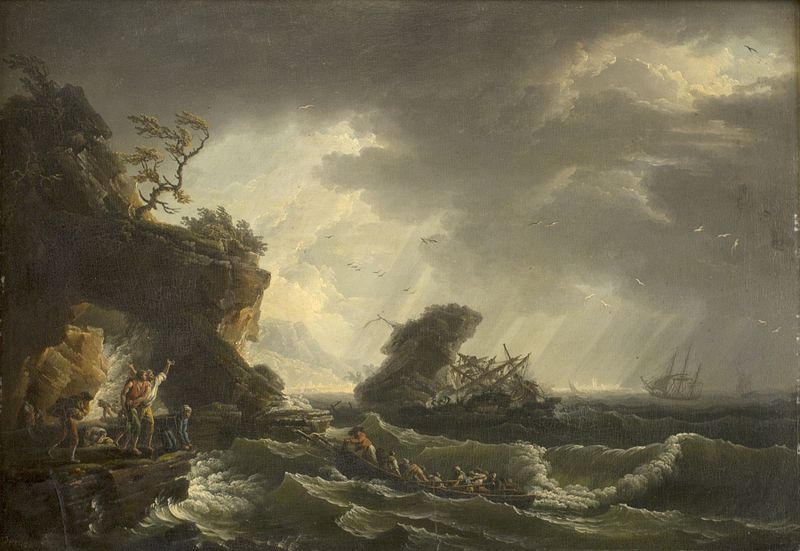
A Shipwreck
Claude-Joseph Vernet

A Mediterranean Harbor At Sunset With Fisherfolk At The Water’s Edge, A Lighthouse And A Man Of War At Anchor In The Bay
Claude-Joseph Vernet
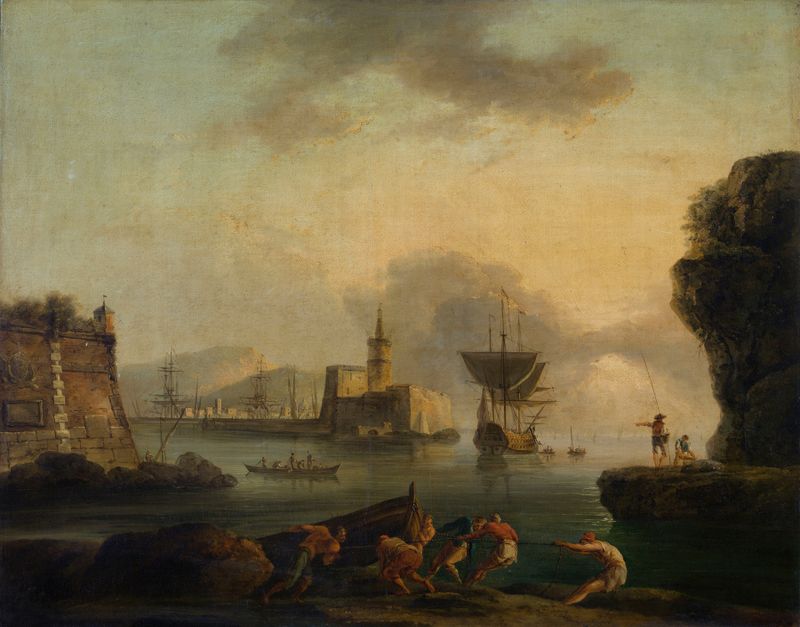
Naples
Claude-Joseph Vernet
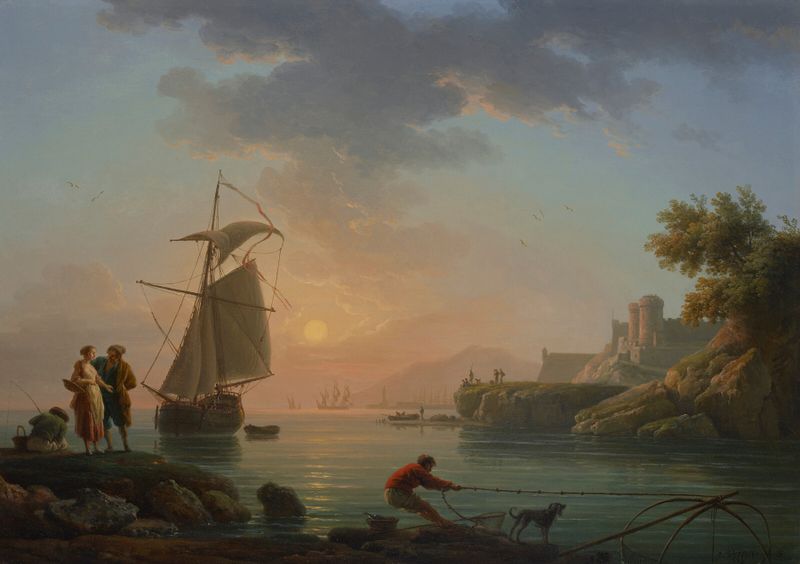
Mediterranean port at sunset, with a fisherman in the foreground
Claude-Joseph Vernet
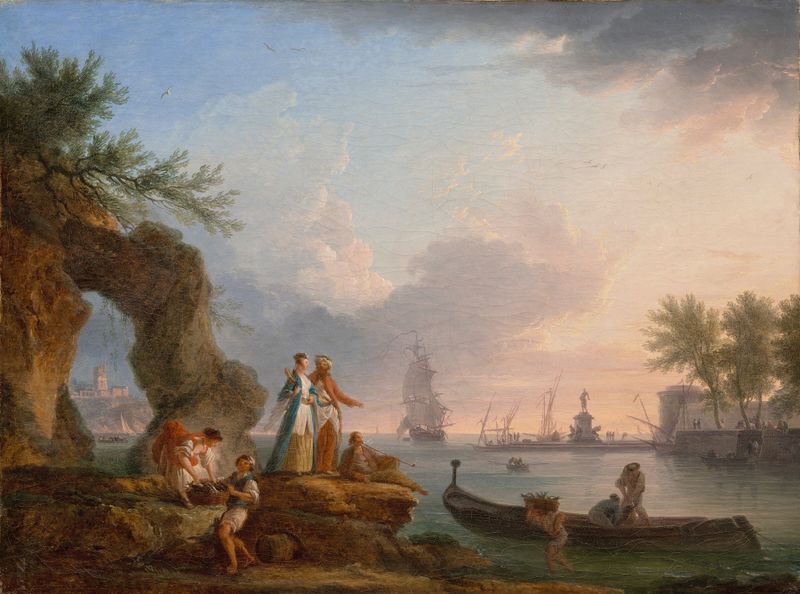
View of a port at sunset with fishermen and a couple in oriental dress
Claude-Joseph Vernet

A Calm at a Mediterranean Port
Claude-Joseph Vernet

A Grand View Of The Sea Shore Enriched With Buildings, Shipping And Figures
Claude-Joseph Vernet





