
Les Champs-Élysées — History & Facts
In the stillness of decay, the forgotten can breathe life anew. Look to the foreground where a figure, cloaked in shadow, leans against a weathered fence. Notice the muted tones of the buildings behind them, their once vibrant facades slowly succumbing to the relentless passage of time. The artist employs a palette of earthy browns and grays, conveying a sense of nostalgia and loss, while the brushstrokes blend seamlessly, inviting the viewer to ponder the fading beauty of a once-thriving urban landscape. The juxtaposition of life and decay permeates the work.
The solitary figure, perhaps a representation of the onlooker or a denizen of the streets, seems both part of the scene and yet profoundly separate from it. Elements of nature, such as creeping vines and crumbling bricks, weave through the urban environment, hinting at resilience amidst neglect. This delicate balance evokes a feeling of melancholy, yet also whispers of hope—an acknowledgement that beauty can be found even in the remnants of what once was. Created during the late 19th century in France, Raffaëlli's work emerged amidst a shifting cultural landscape marked by rapid industrialization and urban decline.
The artist, known for his depictions of the Parisian life, found inspiration in the streets, capturing both the vibrancy and desolation of city living. Through Les Champs-Élysées, he reflects the complexities of a society in flux, resonating with contemporary anxieties about the passage of time and the resilience of the human spirit.
More Artworks by Jean François Raffaëlli
Browse all →
Autumn In Paris
Jean François Raffaëlli

Le jardin du Luxembourg
Jean François Raffaëlli
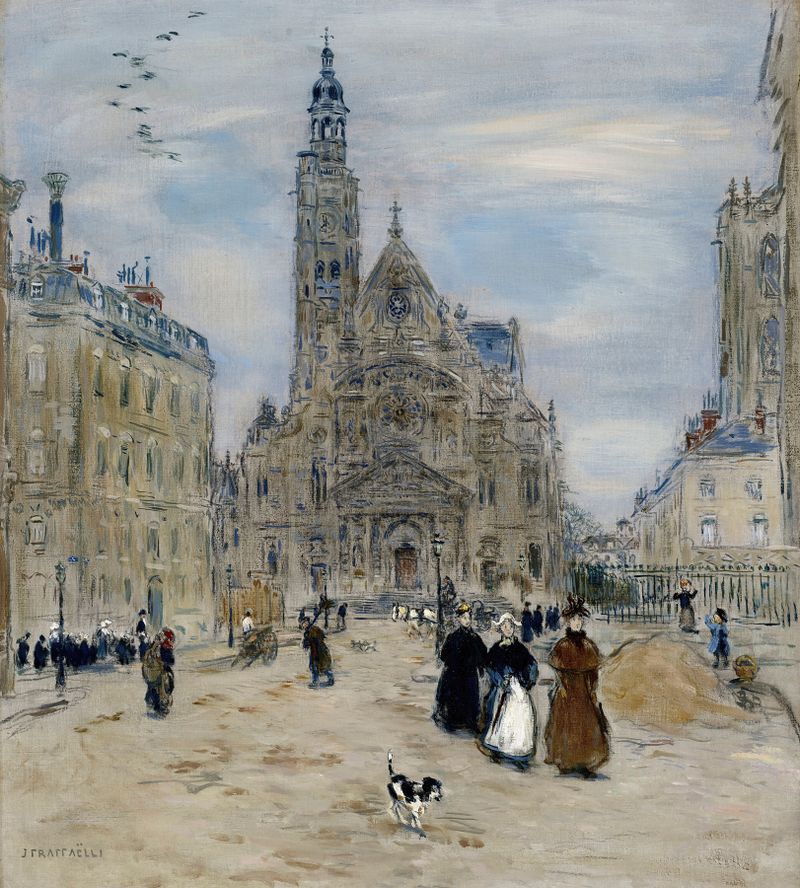
Saint-Étienne-du-Mont, Paris
Jean François Raffaëlli
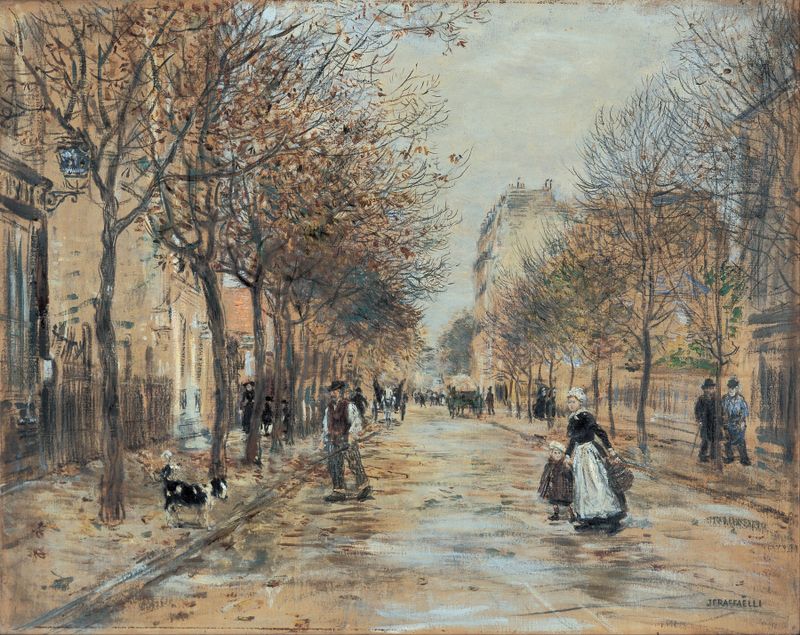
Street in Asnières
Jean François Raffaëlli
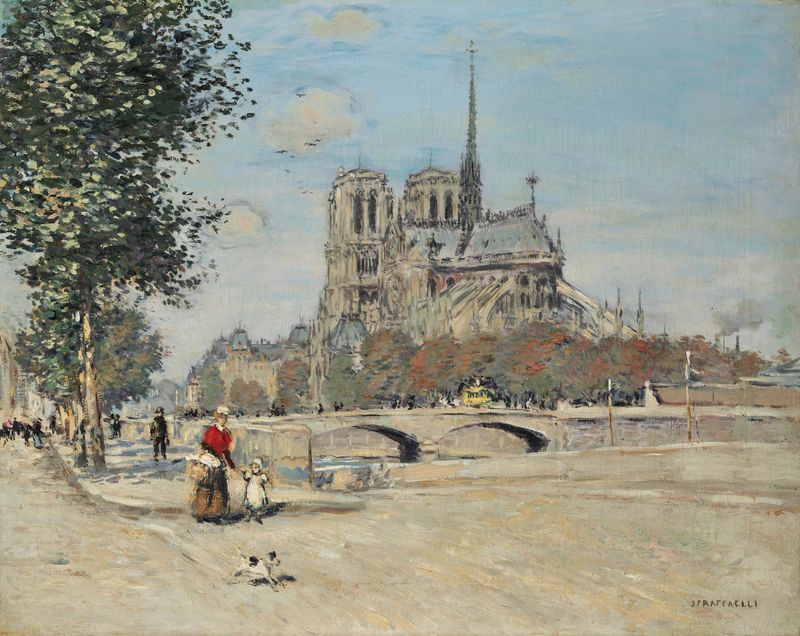
Notre-Dame de Paris et le pont de l’Archevêché
Jean François Raffaëlli

Place de Saint-Germain des Prés, Paris
Jean François Raffaëlli
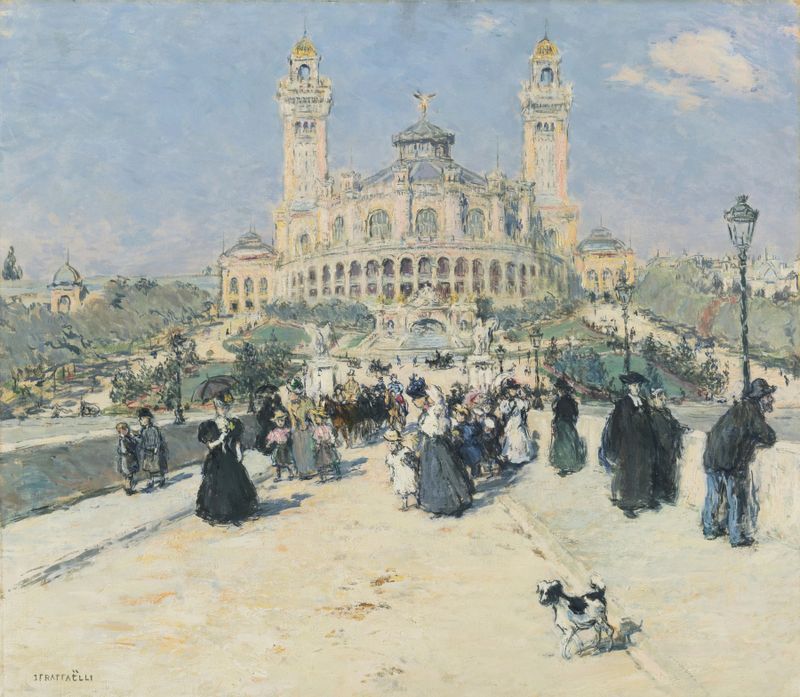
Le Trocadéro
Jean François Raffaëlli

Les Champs-Élysées
Jean François Raffaëlli

Le boulevard des Italiens
Jean François Raffaëlli

The Quai Malaquais, Paris
Jean François Raffaëlli





