
Les Invalides. — History & Facts
What if silence could speak through light? In Les Invalides, the stillness of a Parisian afternoon captures the essence of resilience amidst whispers of revolution. Focus on the center, where the golden dome rises majestically, its brilliant hue stark against the muted gray of the surrounding architecture. Notice how Raffaëlli plays with light, casting delicate shadows that dance across the textured surfaces, creating a palpable tension between the vibrancy of the scene and the underlying somber mood. The brushwork is both deliberate and impressionistic, drawing you into the moment while simultaneously inviting contemplation. There lies a contrast between the grandeur of the monument and the quiet streets below — a reminder of the lives that have shaped history, yet often go unnoticed.
The figures, small and dispersed, convey a sense of solitude that speaks to the forgotten voices of the city's past. The warm light envelops them, suggesting hope amid despair, hinting at the strength derived from those who walk in shadows, echoing the call for change that stirs just beneath the surface. Created in 1896 during a tumultuous time for France, Raffaëlli painted Les Invalides as the nation grappled with social upheaval and artistic transformation. Living in Paris, he was deeply influenced by the Impressionist movement while seeking to shed light on the struggles of the working class.
This painting reflects not just a moment in time, but a pivotal era of revolution that would redefine France’s identity.
More Artworks by Jean François Raffaëlli
Browse all →
Autumn In Paris
Jean François Raffaëlli

Le jardin du Luxembourg
Jean François Raffaëlli
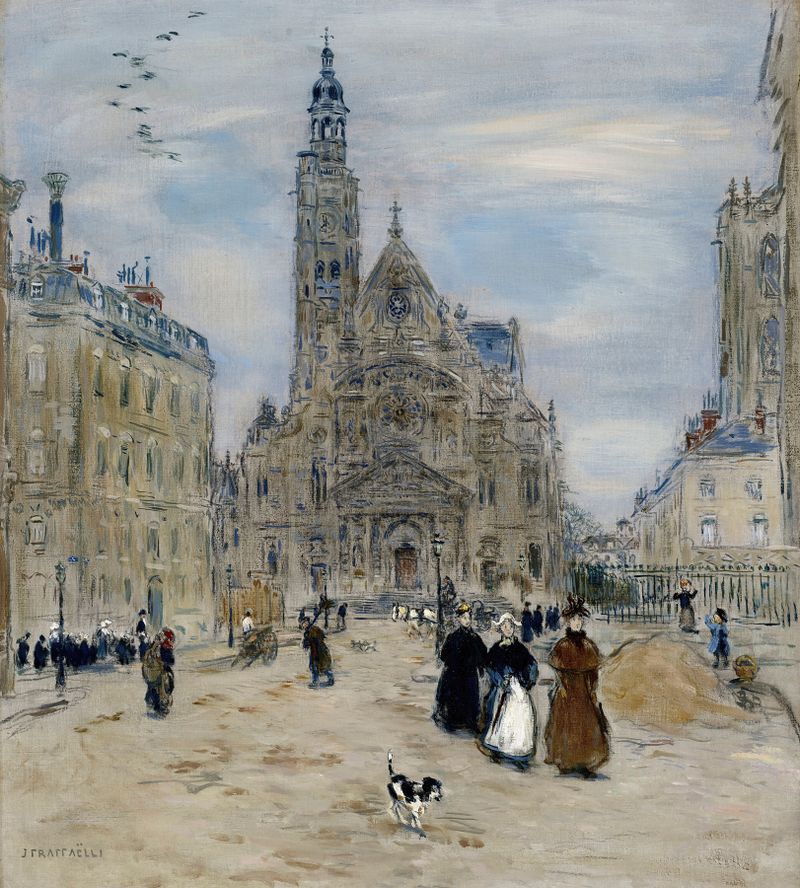
Saint-Étienne-du-Mont, Paris
Jean François Raffaëlli
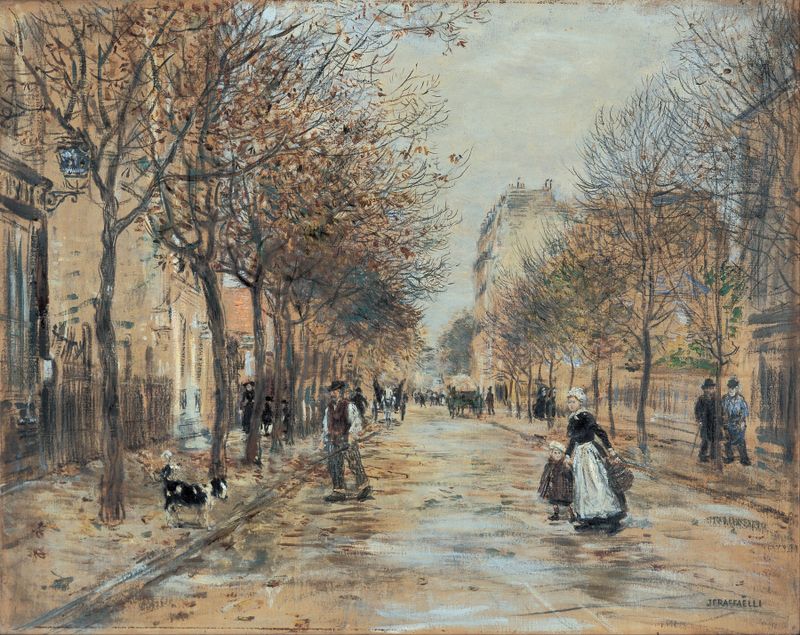
Street in Asnières
Jean François Raffaëlli
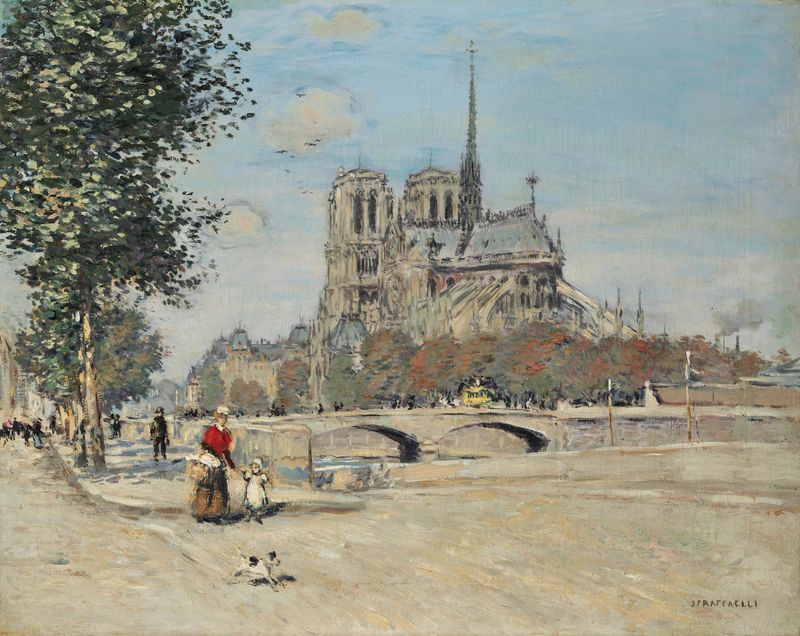
Notre-Dame de Paris et le pont de l’Archevêché
Jean François Raffaëlli

Place de Saint-Germain des Prés, Paris
Jean François Raffaëlli
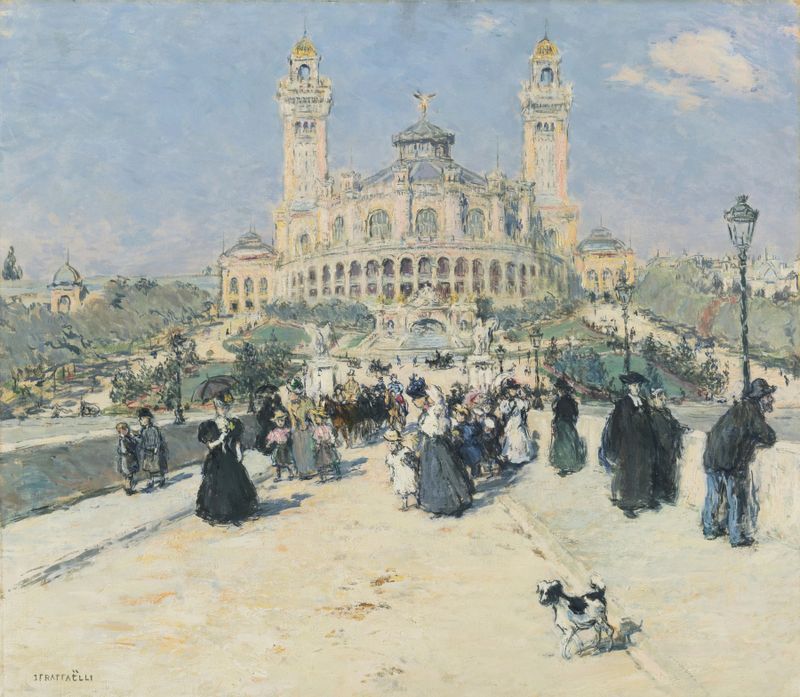
Le Trocadéro
Jean François Raffaëlli

Les Champs-Élysées
Jean François Raffaëlli

Le boulevard des Italiens
Jean François Raffaëlli

The Quai Malaquais, Paris
Jean François Raffaëlli
More Architecture Art
Browse all →
The statue of Liberty
Frédéric Auguste Bartholdi

View of Houses in Delft, Known as ‘The Little Street’
Johannes Vermeer

View of Houses in Delft, Known as ‘The Little Street’
Johannes Vermeer

The Cathedral in Rouen. The portal, Grey Weather
Claude Monet

The yellow house
Vincent van Gogh

The Church in Auvers-sur-Oise, View from the Chevet
Vincent van Gogh