
Les meules — History & Facts
In the quiet, still moments of the early morning, dreams linger in the air like mist, softly blurring the line between reality and imagination. Look to the left at the vibrant strokes of golden wheat, cascading downward like a gentle wave eager to embrace the earth. The thick, textured brushwork breathes life into the scene, where every stroke feels like a whispered secret of the harvest. Notice how the light dances across the rolling hills, accentuating the warm yellows and deep ochres that lead the eye toward the distant horizon. In Les meules, the juxtaposition of the solid, steadfast haystacks against the ethereal play of light speaks to the tension between permanence and transience.
The rich colors invite a sense of nostalgia, while the dreamlike quality reflects the fleeting nature of life and the passage of time. Each element harmonizes to evoke contemplation, subtly urging the viewer to ponder the relationship between nature’s bounty and human aspiration. Gustave Cariot created this work in 1929, during a period when French art was embracing modernism, yet still deeply rooted in the tradition of Impressionism. Working in a post-war France, he sought to capture the essence of rural life amidst the changing tides of society.
This piece exemplifies his commitment to the vibrancy of color and the beauty of the natural landscape, marking a significant moment in his artistic journey.
More Artworks by Gustave Cariot
Browse all →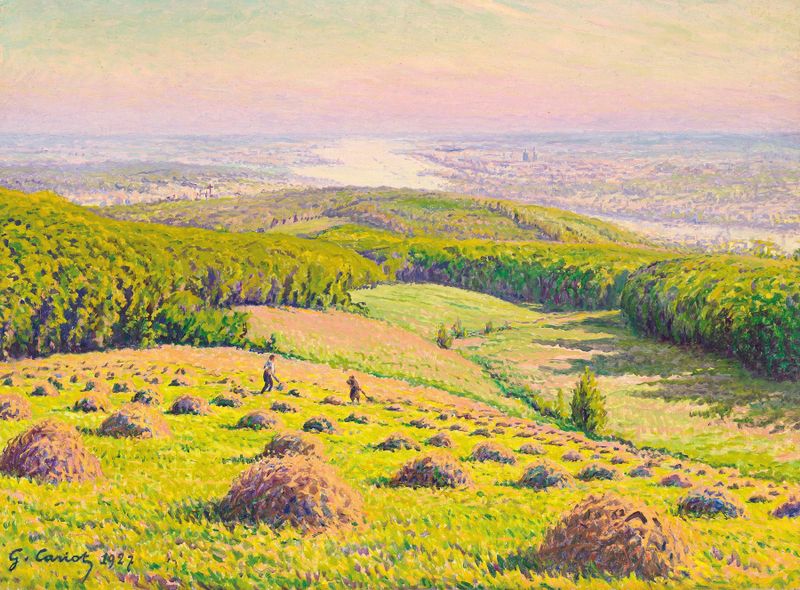
La vallée
Gustave Cariot

Le Jardin
Gustave Cariot

Les meules
Gustave Cariot
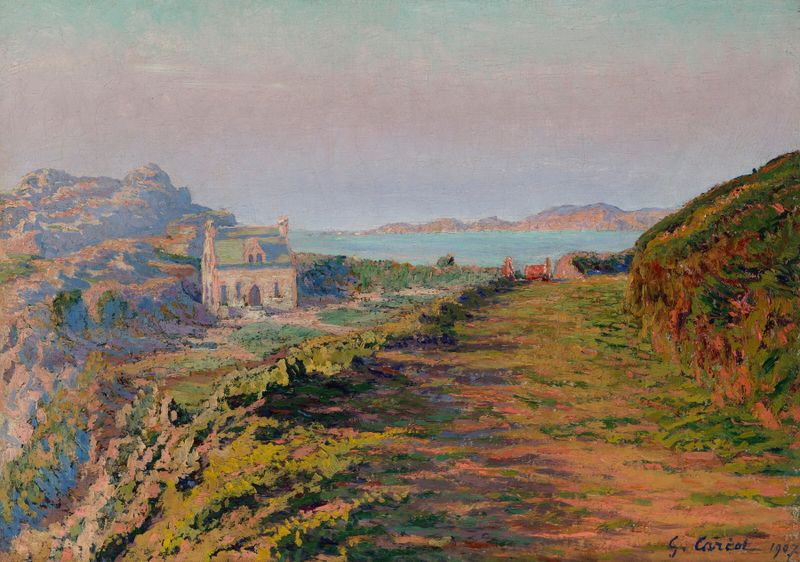
Maison Pen ar C’hastel à la pointe du Château, Perros-Guirrec
Gustave Cariot
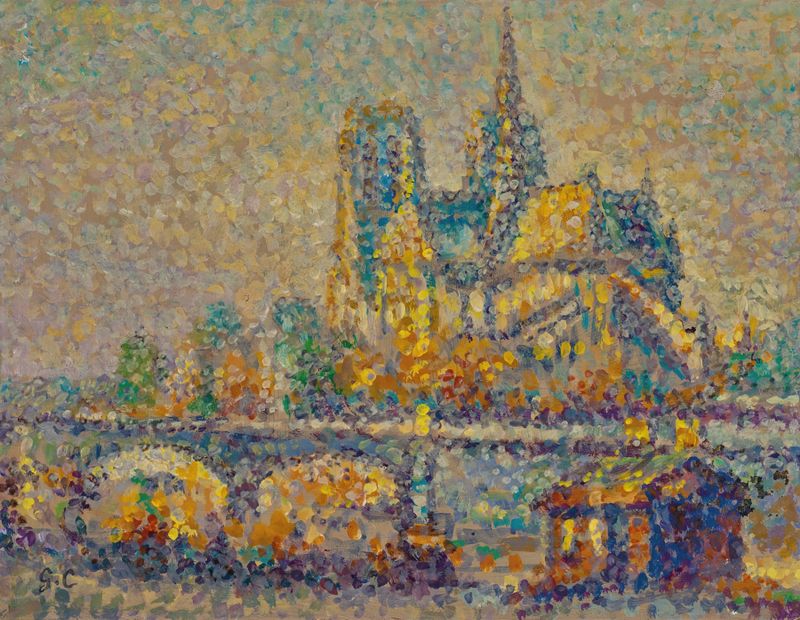
Notre-Dame de Paris
Gustave Cariot
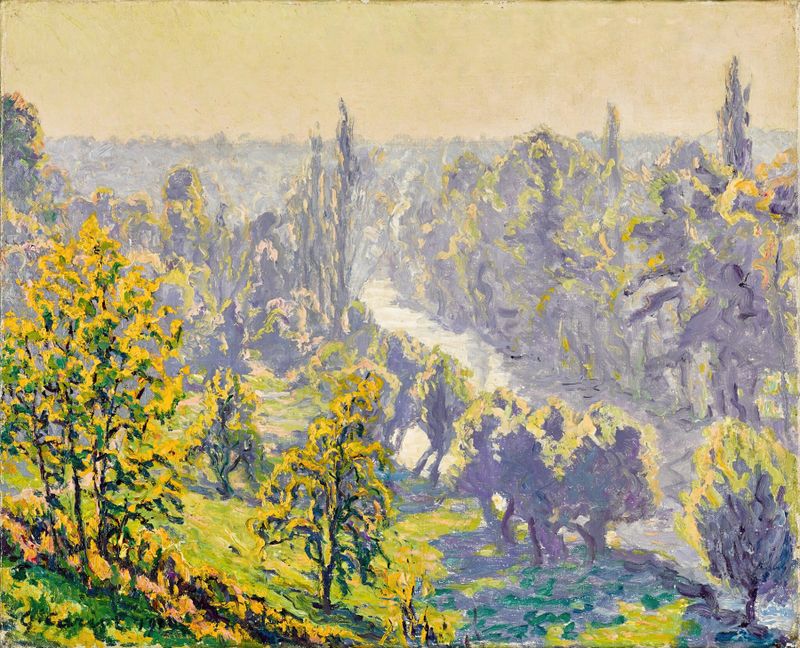
Périgny, automne, matinée sur l’Yerres
Gustave Cariot
Périgny, pont sur l’Yerres
Gustave Cariot
Le Pont-Neuf, eté, 20 heures
Gustave Cariot

Moulin de Périgny
Gustave Cariot

Le chemin à Mandres
Gustave Cariot





