
Les meules de foin — History & Facts
In Les meules de foin, a profound stillness envelops a landscape where nature and man-made structures coexist in delicate balance. The rhythmic patterns of the haystacks echo the undulating forms of the terrain, inviting contemplation of life’s cycles and the symbiosis of labor and tranquility. Look to the center of the canvas, where the golden haystacks rise like solemn sentinels beneath a vast, azure sky. Notice how the rich hues of ochre and green contrast sharply with the cool blues, creating a visual interplay that draws the eye across the field.
The brushstrokes are both expressive and deliberate, suggesting movement while retaining a serene harmony that captures the essence of rural life. The juxtaposition of light and shadow reveals underlying tensions; the vibrant warmth of the hay is tempered by the coolness of the surrounding landscape, reflecting the duality of nature’s bounty and the labor it requires. The absence of figures amplifies this balance, prompting a sense of introspection about humanity's place within this pastoral scene. Silence reigns, yet the work hums with unseen stories of toil and connection to the earth. In 1930, Gustave Cariot created this piece during an era marked by the interwar period in France, a time of both artistic experimentation and societal change.
While grappling with the evolving dynamics of modernity and tradition, he sought to reaffirm the beauty of rural existence. This painting encapsulates a moment of grace amidst the chaos, a reminder of the enduring relationship between humanity and the land.
More Artworks by Gustave Cariot
Browse all →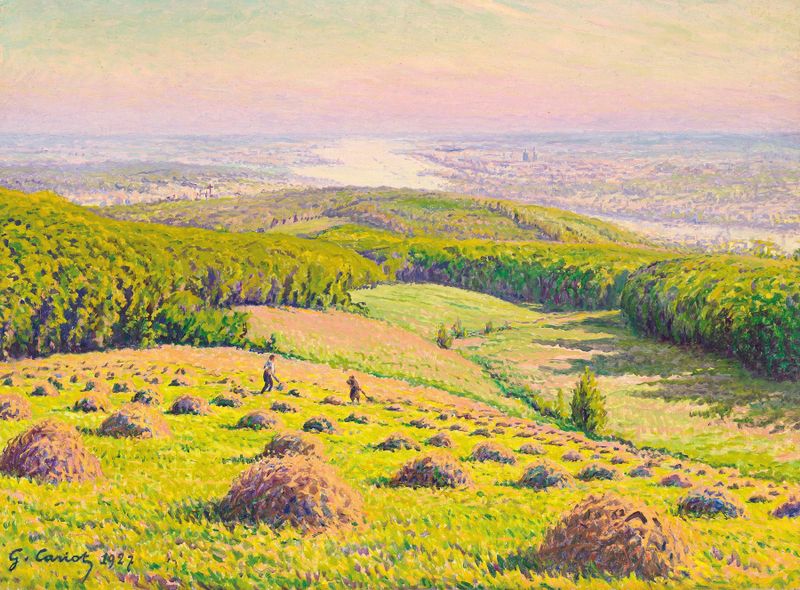
La vallée
Gustave Cariot

Le Jardin
Gustave Cariot

Les meules
Gustave Cariot
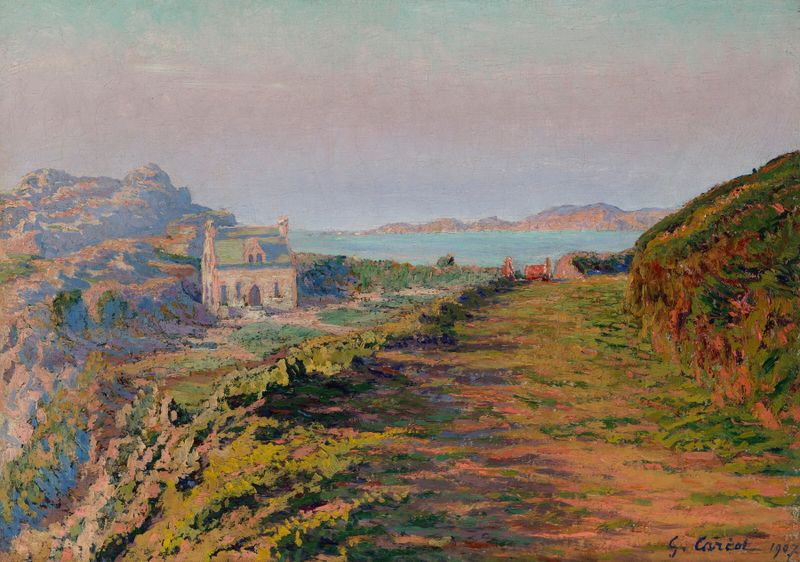
Maison Pen ar C’hastel à la pointe du Château, Perros-Guirrec
Gustave Cariot
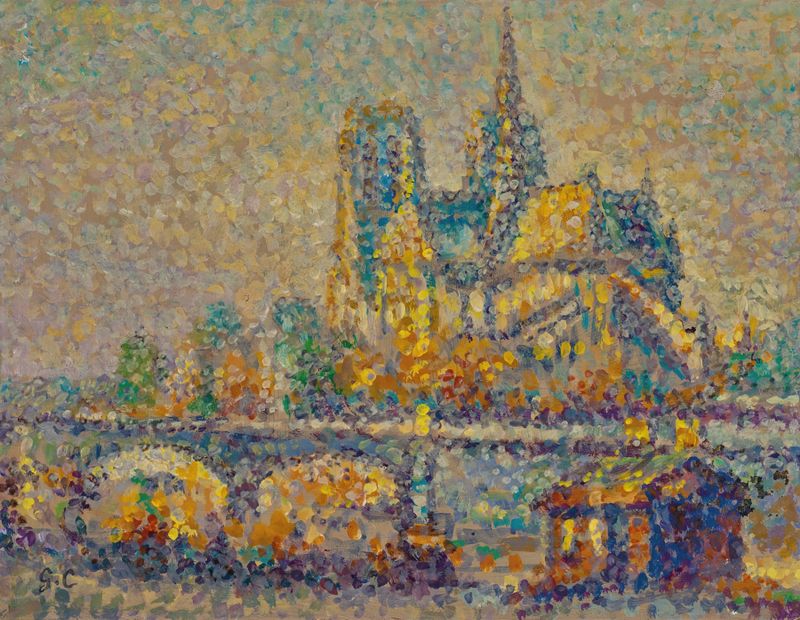
Notre-Dame de Paris
Gustave Cariot
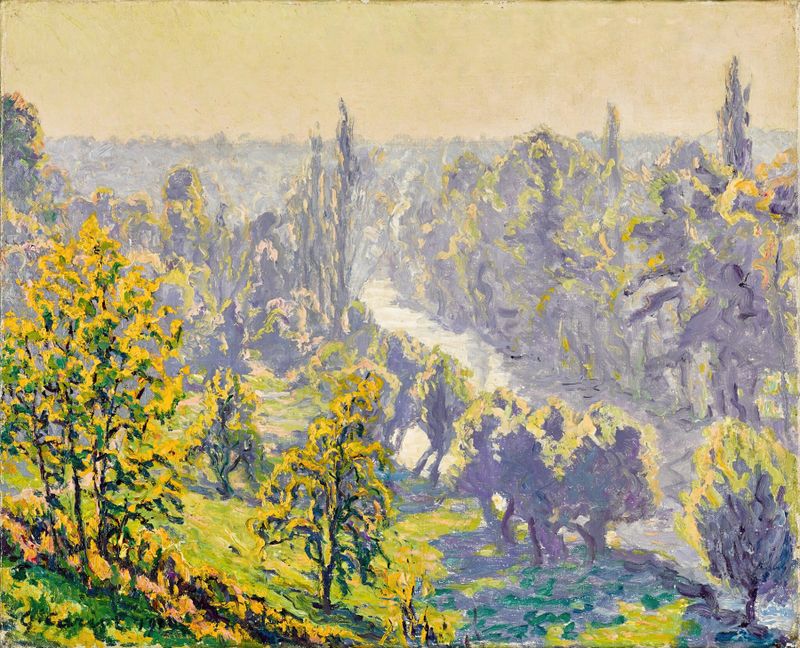
Périgny, automne, matinée sur l’Yerres
Gustave Cariot
Périgny, pont sur l’Yerres
Gustave Cariot
Le Pont-Neuf, eté, 20 heures
Gustave Cariot

Moulin de Périgny
Gustave Cariot

Le chemin à Mandres
Gustave Cariot





