
Les toits rouges — History & Facts
Who listens when art speaks of silence? In Les toits rouges, Cariot captures a moment steeped in nostalgia, evoking the whisper of rooftops beneath a soft, fading light. Look to the left, where a cascade of terracotta roofs stretches across the canvas, each tile rendered in meticulous detail. Notice how the warm hues of red and orange contrast with the cool blue sky, creating a harmony that draws the eye. The subtle brushstrokes mirror the gentle caress of an evening breeze, inviting you to linger in this tranquil scene, while the composition leads your gaze through a maze of gables and chimneys, ultimately culminating in the distant horizon. Beneath this idyllic surface lies a deeper emotional resonance.
The juxtaposition of the vibrant rooftops against the encroaching dusk suggests a fleeting moment in time, evoking feelings of longing for a past that slips away like the day. Shadows gather softly, hinting at the quiet stories of lives lived within those walls, and, perhaps, the weight of nostalgia that colors even the most picturesque memories. Gustave Cariot created Les toits rouges in 1909, during a period of significant experimentation in the art world, as Impressionism was giving way to new modern movements. Living in France, Cariot was influenced by the light and color theories of his predecessors while also breaking away to explore his distinct style.
His works from this era reflect not only a mastery of technique but also a poignant connection to the everyday beauty that permeates life.
More Artworks by Gustave Cariot
Browse all →
La vallée
Gustave Cariot

Le Jardin
Gustave Cariot

Les meules
Gustave Cariot
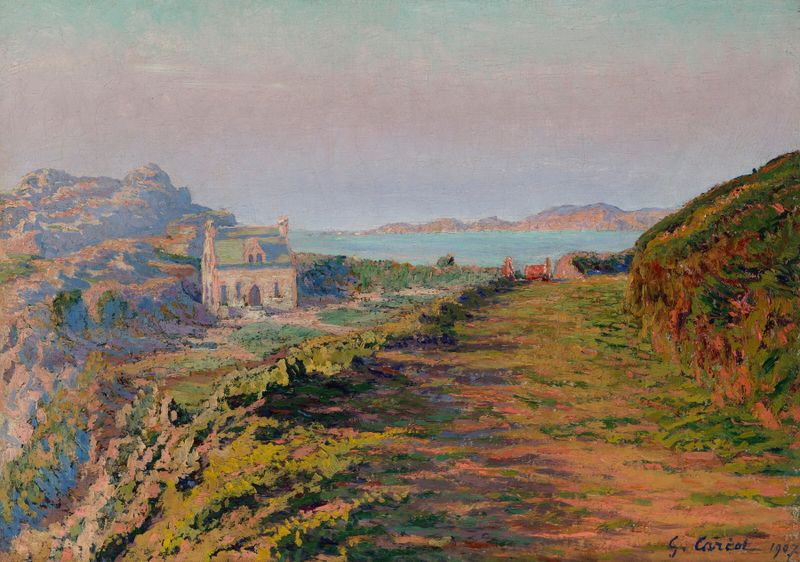
Maison Pen ar C’hastel à la pointe du Château, Perros-Guirrec
Gustave Cariot
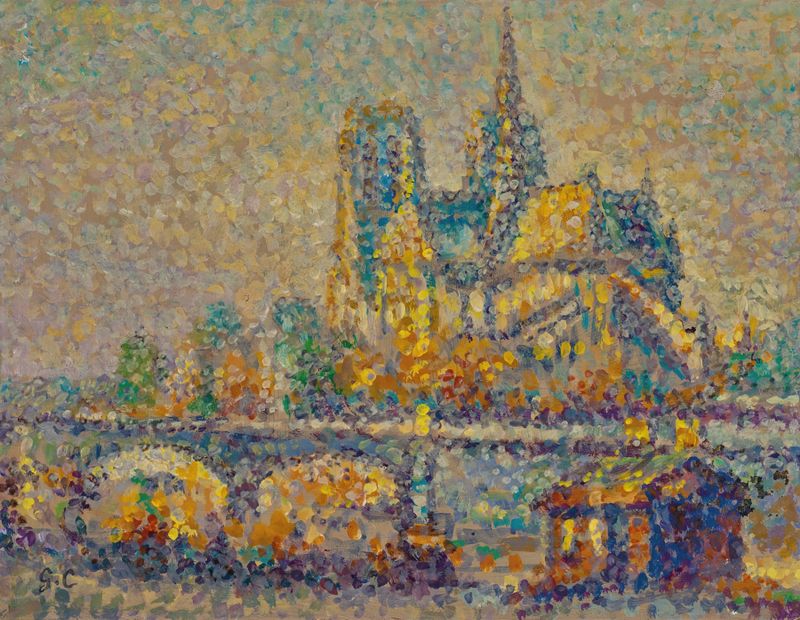
Notre-Dame de Paris
Gustave Cariot
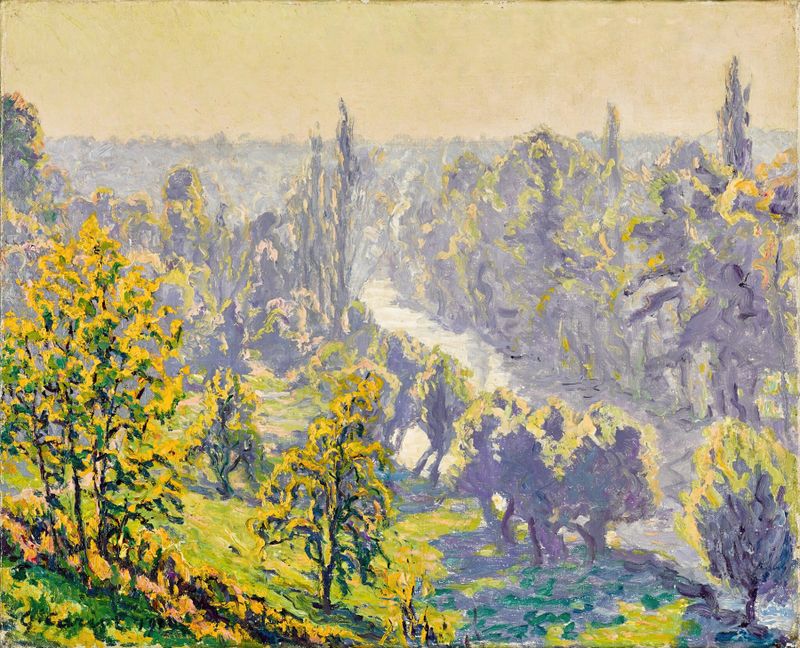
Périgny, automne, matinée sur l’Yerres
Gustave Cariot
Périgny, pont sur l’Yerres
Gustave Cariot
Le Pont-Neuf, eté, 20 heures
Gustave Cariot

Moulin de Périgny
Gustave Cariot

Le chemin à Mandres
Gustave Cariot





