
Les Tunisiennes — History & Facts
In Les Tunisiennes, Jules Pascin presents a vibrant scene filled with color. The painting features Tunisian women in traditional attire, surrounded by rich hues of blue, yellow, and red. The figures are depicted with a sense of movement, suggesting a lively atmosphere.
The background is a blend of abstract shapes that complement the figures, creating a harmonious composition. The painting is executed in oil on canvas, showcasing Pascin's skillful brushwork and use of color. The dimensions are approximately 80 x 100 cm, making it a substantial piece that draws the viewer's attention. The artist employs a modernist style, blending realism with expressive elements.
The light and shadow play across the figures, enhancing their three-dimensionality. Jules Pascin was known for his depictions of women and everyday life, often drawing inspiration from his travels. Les Tunisiennes reflects his fascination with North African culture, which he encountered during his time in Tunisia. An interesting fact about this work is that it captures not just the beauty of the subjects but also the essence of their daily lives.
This painting is a testament to Pascin's ability to blend cultural elements into his art.
Sources: Wikidata Q28128860
More Artworks by Jules Pascin
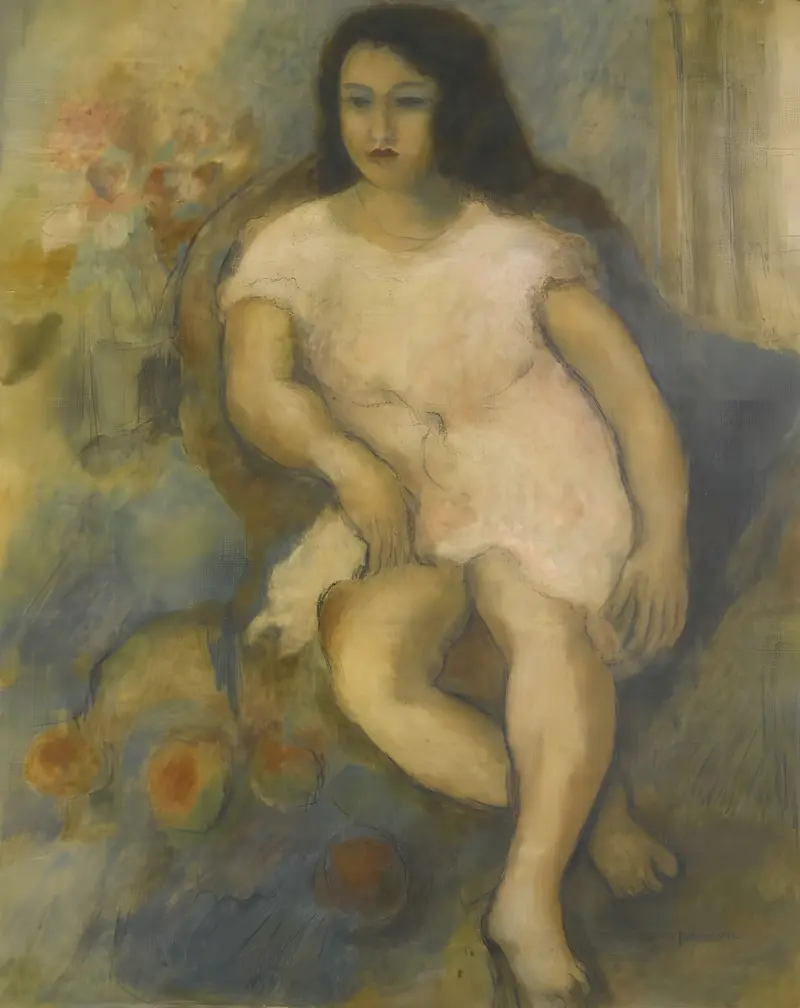
Jeune femme assise
Jules Pascin

Jeune fille en chemise
Jules Pascin

Brune Au Collier Bleu
Jules Pascin
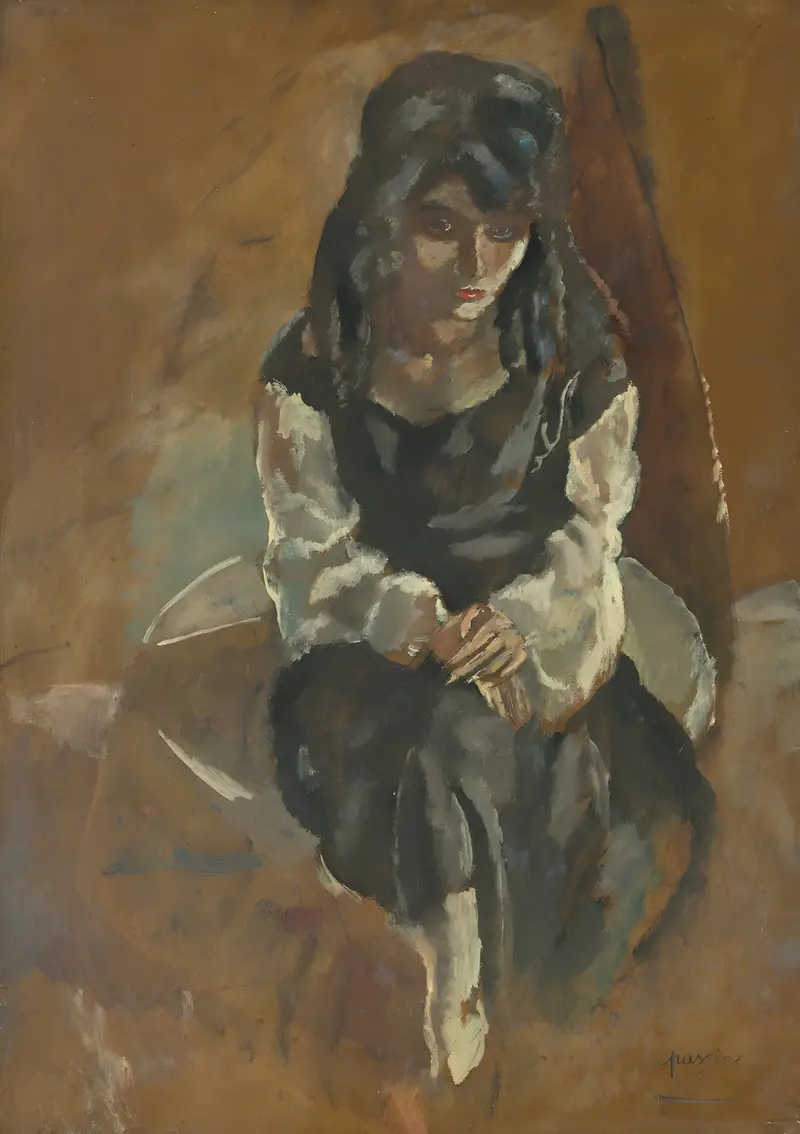
La Princesse persane
Jules Pascin
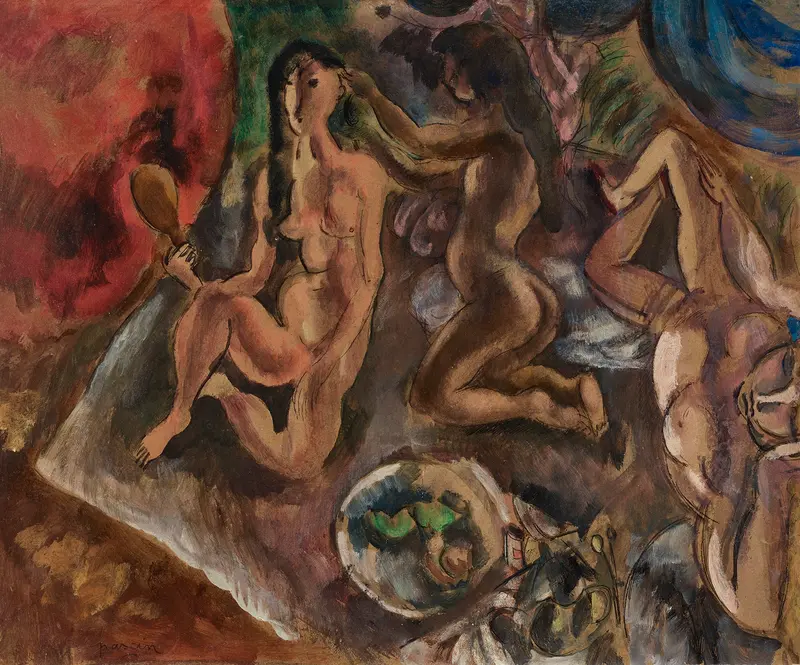
La toilette aux tropiques
Jules Pascin

Le Peintre Et Son Modèle
Jules Pascin
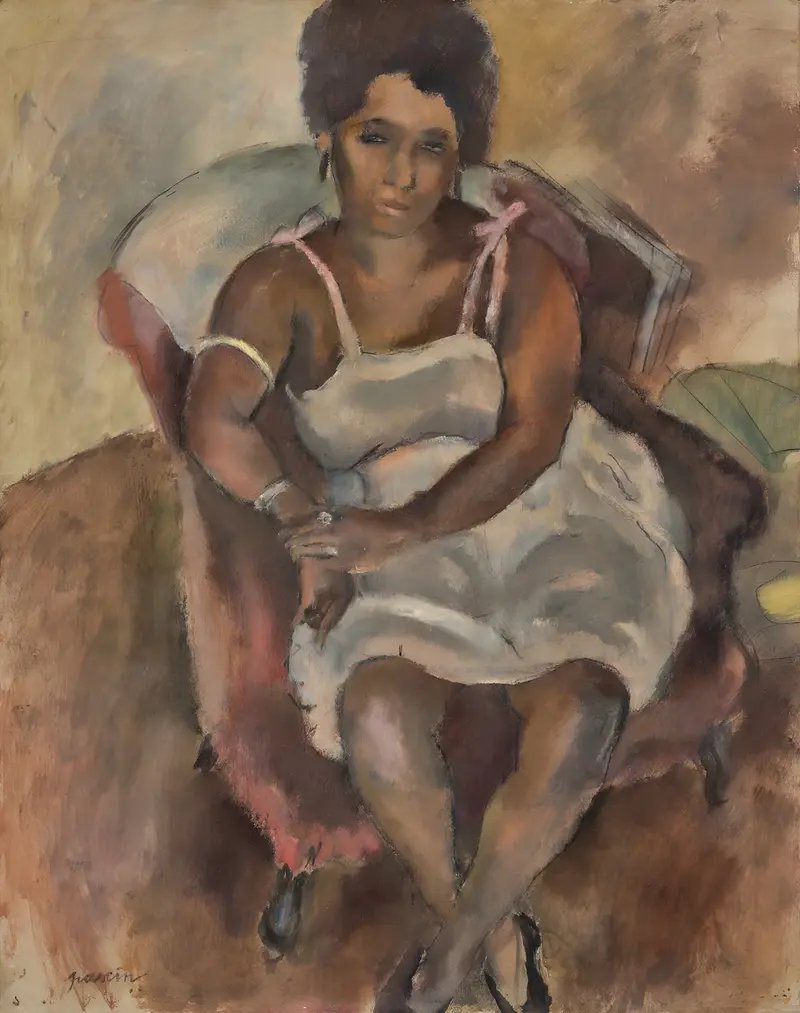
Julie, la Martiniquaise
Jules Pascin
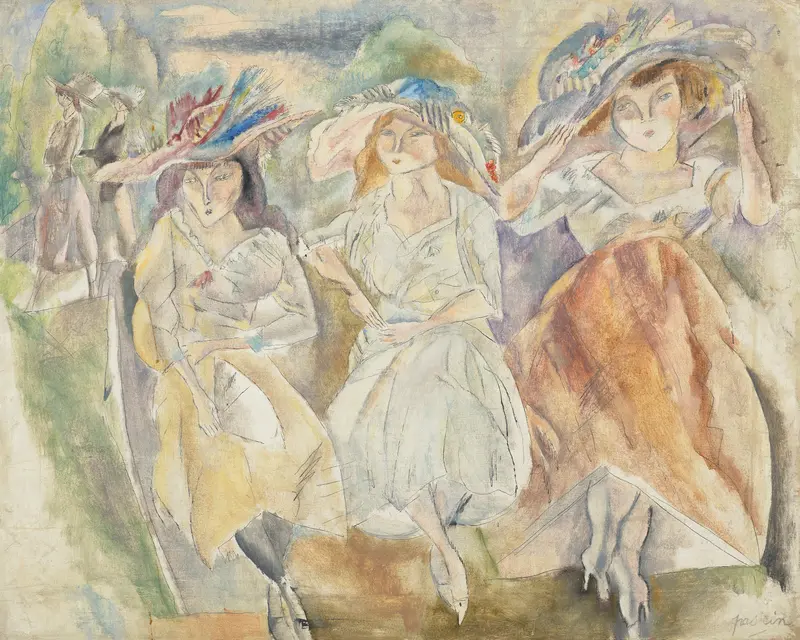
Les grands chapeaux
Jules Pascin
Liegende
Jules Pascin
Modèle en Amérique
Jules Pascin
More Genre Scene Art

Banquet of the Officers of the St George Civic Guard
Frans Hals

Rembrandt and Saskia in the Scene of the Prodigal Son
Rembrandt van Rijn

Bal du moulin de la Galette
Pierre-Auguste Renoir

Quadrille at the Moulin Rouge
Henri de Toulouse-Lautrec

A Burial at Ornans
Gustave Courbet

When Will You Marry?
Paul Gauguin