Lever de lune à Roc-Neven — History & Facts
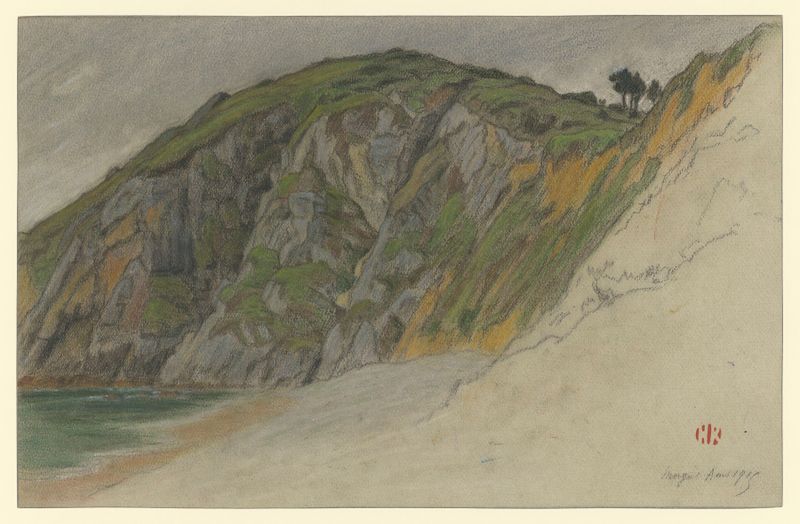
What if beauty was never meant to be finished? In Lever de lune à Roc-Neven, the dawn’s gentle embrace speaks of a world bathed in possibility, where colors meld like whispers of a fleeting dream. Look to the center of the composition, where the moon hangs low, its pale luminescence spilling across the water's surface. Notice how the soft gradient of blues transitions into warm golden hues along the horizon, inviting your eye to journey across this tranquil seascape. The delicate brushwork captures the shimmering reflections, creating a dance between light and color that draws you deeper into the moment. There’s an emotional tension between the stillness of the water and the impending dawn, suggesting both a serene conclusion and an awakening.
The interplay of blues and golds serves not only as a visual invitation but also symbolically represents the transition from night to day, a reminder of the cyclical nature of existence. In every stroke, Rivière plays with the duality of beauty and impermanence, offering a glimpse into the fleeting moments that define our experience of nature. Henri Rivière painted this piece in 1900, during a time when he was deeply engaged with the Symbolist movement in France. The artist was exploring innovative techniques that emphasized color and light, seeking to evoke emotion rather than merely depict reality.
This period coincided with a broader fascination with nature and its representation in art, as artists began to move away from strict realism towards more expressive forms.