
Lilacs in a Window — History & Facts
In 1880, Mary Cassatt gave Lilacs in a Window as a gift to her friend, the celebrated Parisian art dealer Paul Durand-Ruel. This gesture was more than personal—it marked a pivotal moment in Cassatt’s career, as Durand-Ruel became a champion of the Impressionist painters, helping introduce their work to wider audiences in Europe and America. The painting stands as a testament to the close-knit relationships and mutual support that fueled the Impressionist movement, and it is one of the few floral still lifes Cassatt ever painted. Cassatt focuses her attention on a humble bouquet of lilacs, arranged in a glass vase and set against a softly illuminated window.
The blooms, rendered with loose, flickering brushstrokes, seem to breathe with the spring air filtering through the pane. The cool purples and fresh greens are offset by the gentle play of light on glass and sill—a quiet meditation on domestic beauty. Unlike Édouard Manet’s more dramatic floral arrangements, Cassatt’s lilacs are intimate and unpretentious, their placement in the window suggesting a private moment of appreciation rather than a formal display.
The painting invites the viewer to pause and notice the simple pleasures of everyday life, a theme that echoes throughout Cassatt’s work. After its creation, Lilacs in a Window remained in Durand-Ruel’s collection for many years, a cherished token of friendship and artistic alliance. Over time, it passed through the hands of private collectors before entering the public domain, where it is now held by the Metropolitan Museum of Art in New York. The work stands apart in Cassatt’s oeuvre, as she is best known for her portraits and scenes of women and children; this rare still life offers a glimpse into her versatility and her engagement with the Impressionist fascination with light and color.
Today, it quietly honors both a personal connection and a broader story of artistic innovation.
More Artworks by Mary Cassatt

The Child's Bath
Mary Cassatt
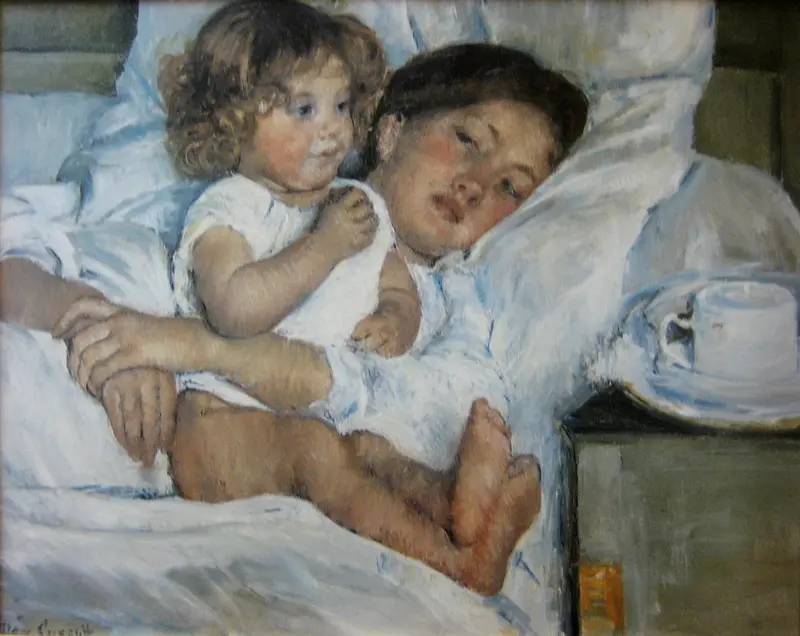
Breakfast in Bed
Mary Cassatt

Mother and Child (Baby Getting Up from His Nap)
Mary Cassatt
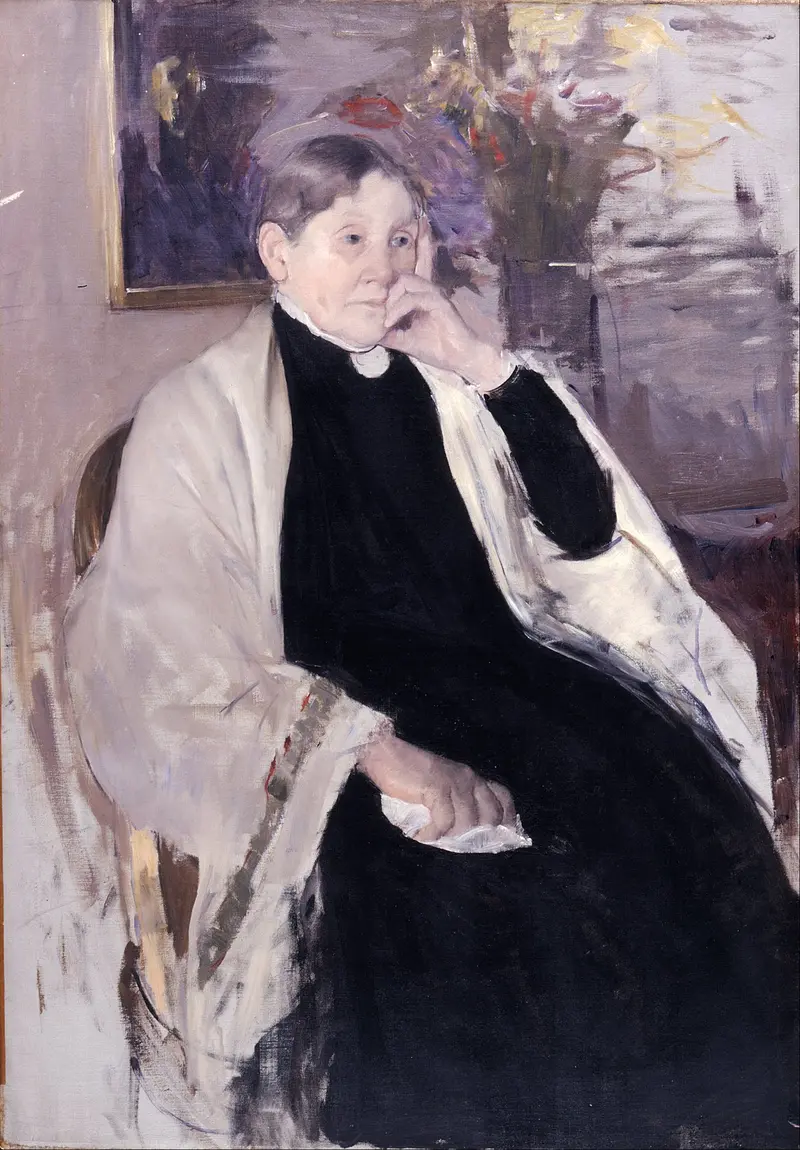
Mrs. Robert S. Cassatt, the Artist's Mother
Mary Cassatt
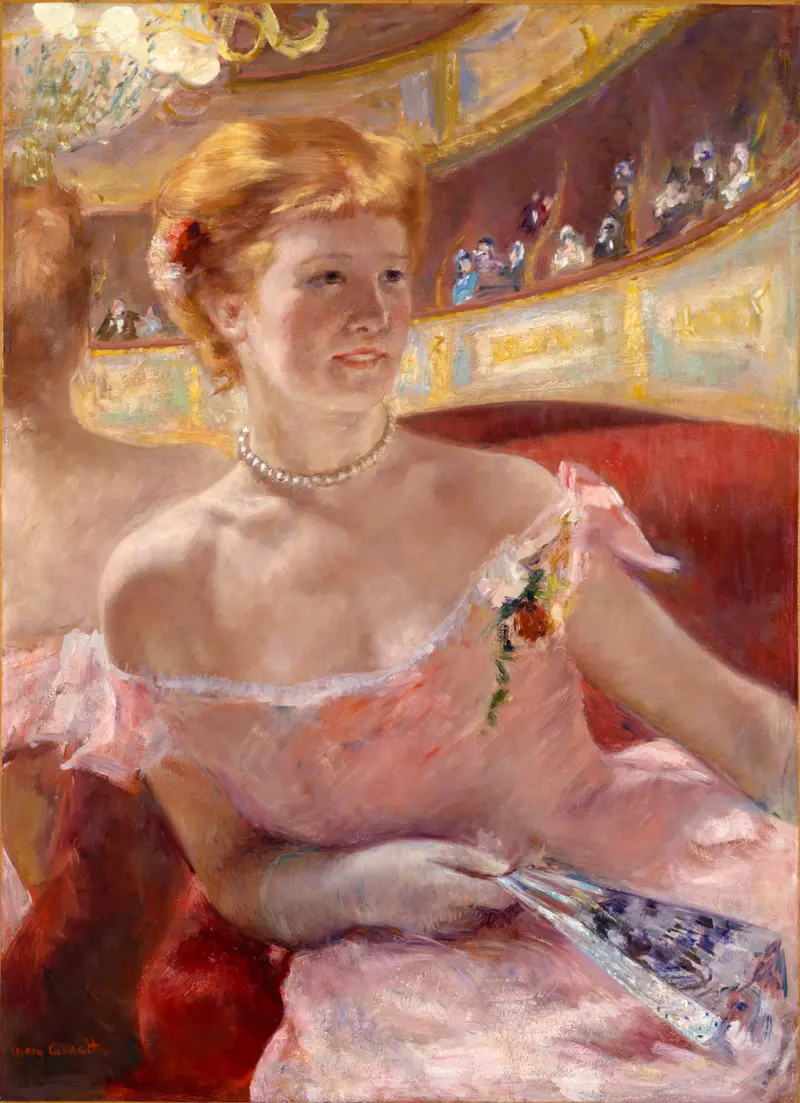
Woman with a Pearl Necklace in a Loge
Mary Cassatt
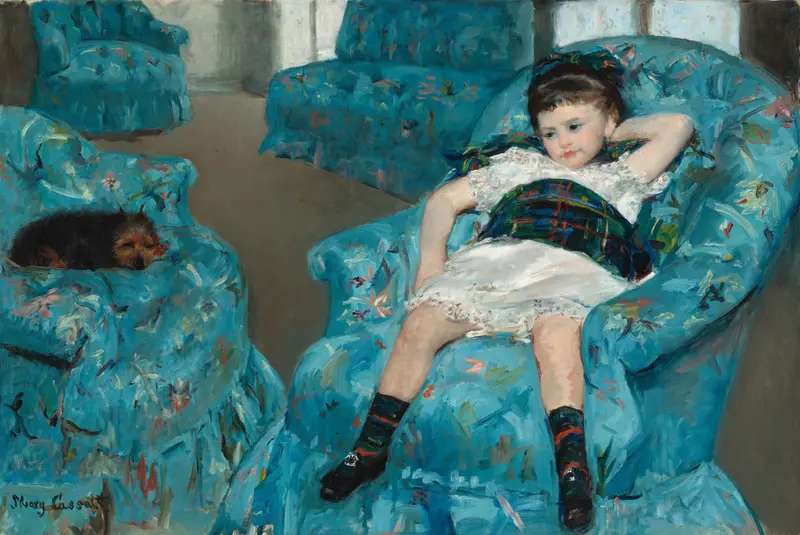
Little Girl in a Blue Armchair
Mary Cassatt
Mother and Child (The Oval Mirror)
Mary Cassatt
Mother and Child
Mary Cassatt
In The Loge
Mary Cassatt
On a Balcony
Mary Cassatt





