
Locomotive en manœuvre — History & Facts
Can paint confess what words never could? In Locomotive en manœuvre, the artist transforms the raw power of locomotion into a haunting exploration of loss, resonating in the silence of an industrial landscape. Focus on the dappled light that spills across the canvas, illuminating the locomotive as it stands resolute amid a muted palette of grays and browns. Notice how the bold strokes of Raffaëlli capture not just the machine but the very essence of labor and the people who have been rendered invisible by progress. The intricate details of the train's metalwork draw the eye, while the subtle textures represent both the weight of the moment and the passage of time. The juxtaposition of the imposing locomotive against the backdrop of distant figures conveys a poignant tension.
It evokes a sense of nostalgia for an era where industry reigned, yet hints at the isolation it imposed on humanity. The absence of vibrant colors and the starkness of the composition amplify the emotional depth, suggesting that as cities grow and machinery thrives, something essential is lost in the wake of modernization. In 1880, Raffaëlli painted this piece during a transformative period in Paris, where the Industrial Revolution was reshaping society. As an artist invested in capturing the lives of everyday people, he sought to reflect the impact of these changes on the working class.
This period also marked a growing interest in realism, as artists began to focus on the complexities of modern life, revealing both its advancements and its darker undertones.
More Artworks by Jean François Raffaëlli
Browse all →
Autumn In Paris
Jean François Raffaëlli

Le jardin du Luxembourg
Jean François Raffaëlli
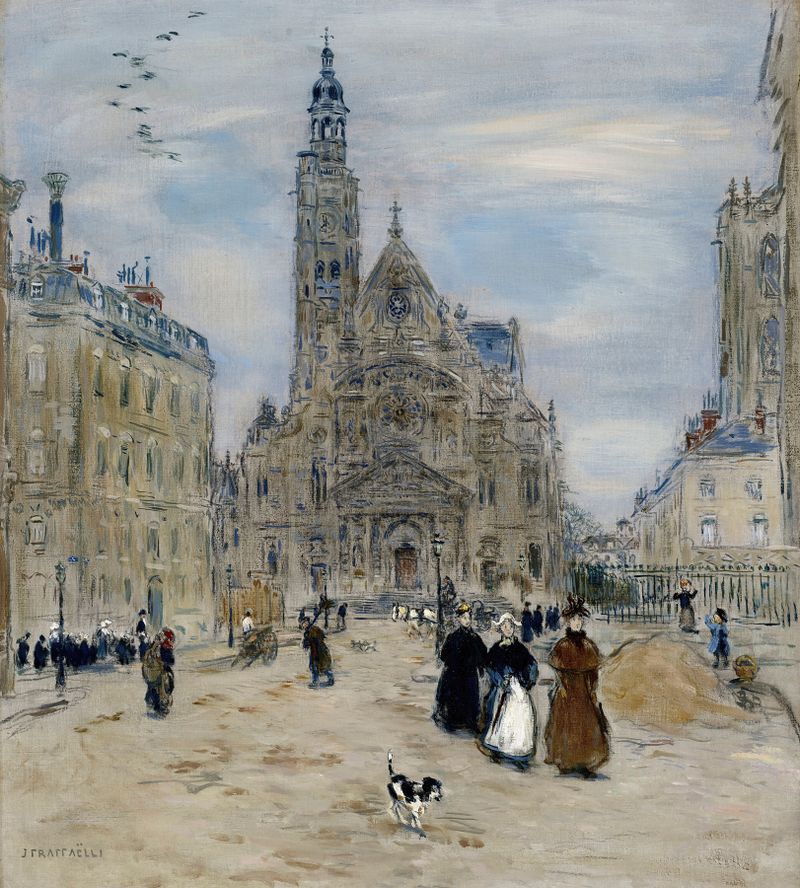
Saint-Étienne-du-Mont, Paris
Jean François Raffaëlli
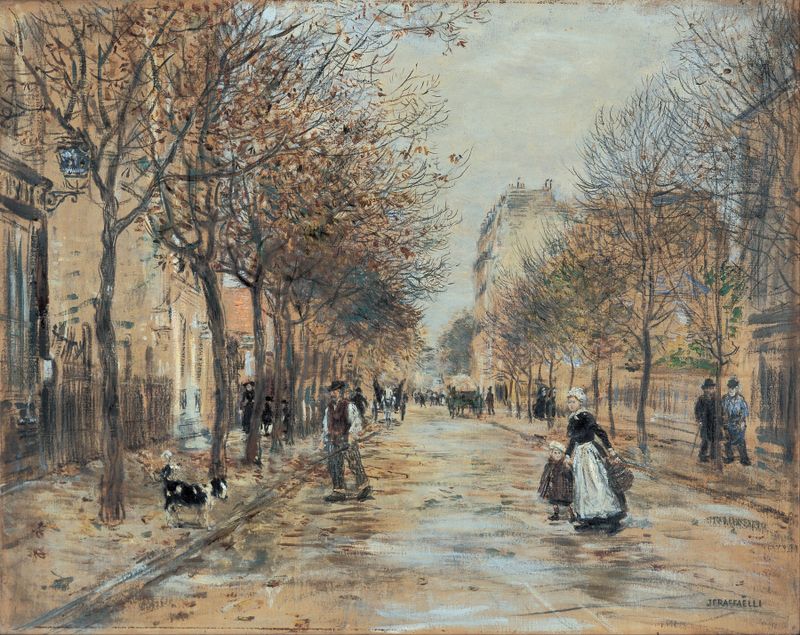
Street in Asnières
Jean François Raffaëlli
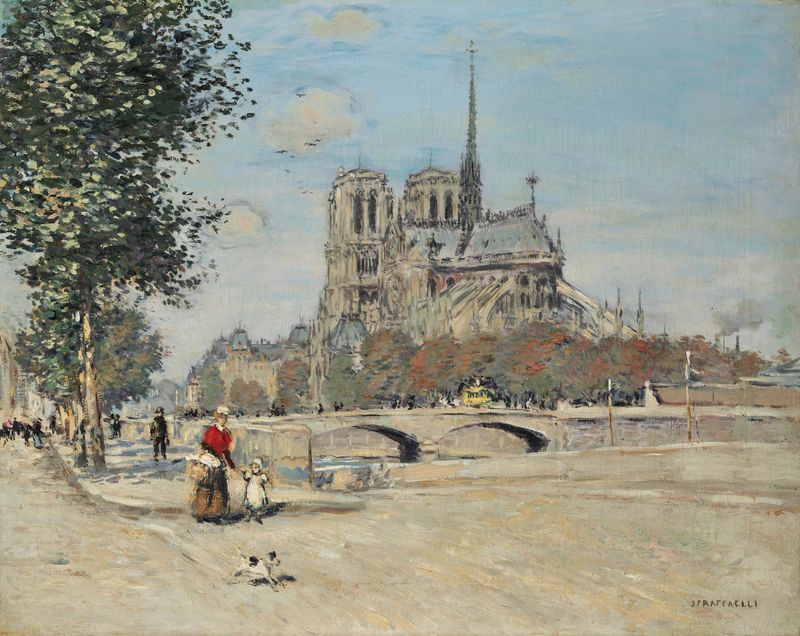
Notre-Dame de Paris et le pont de l’Archevêché
Jean François Raffaëlli

Place de Saint-Germain des Prés, Paris
Jean François Raffaëlli
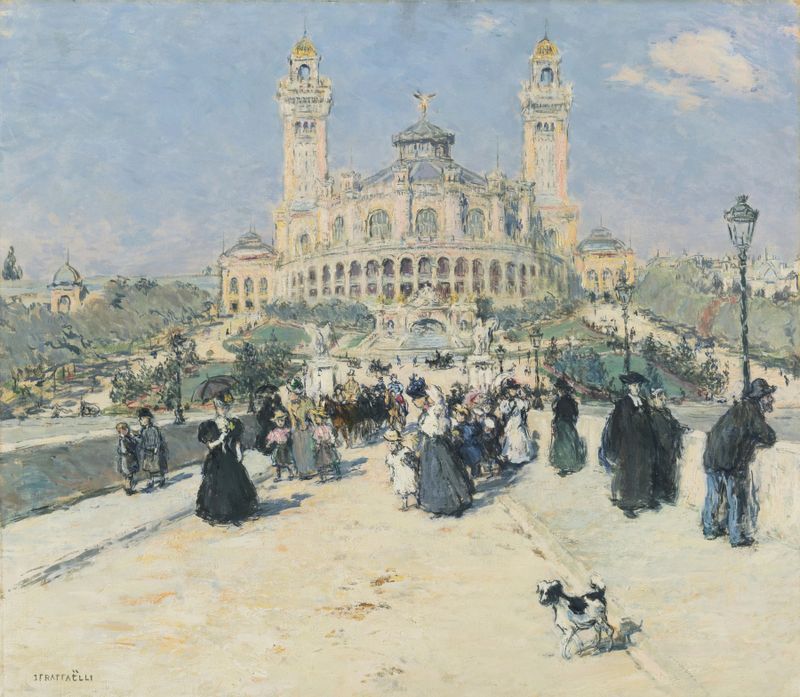
Le Trocadéro
Jean François Raffaëlli

Les Champs-Élysées
Jean François Raffaëlli

Le boulevard des Italiens
Jean François Raffaëlli

The Quai Malaquais, Paris
Jean François Raffaëlli





