London Street — History & Facts
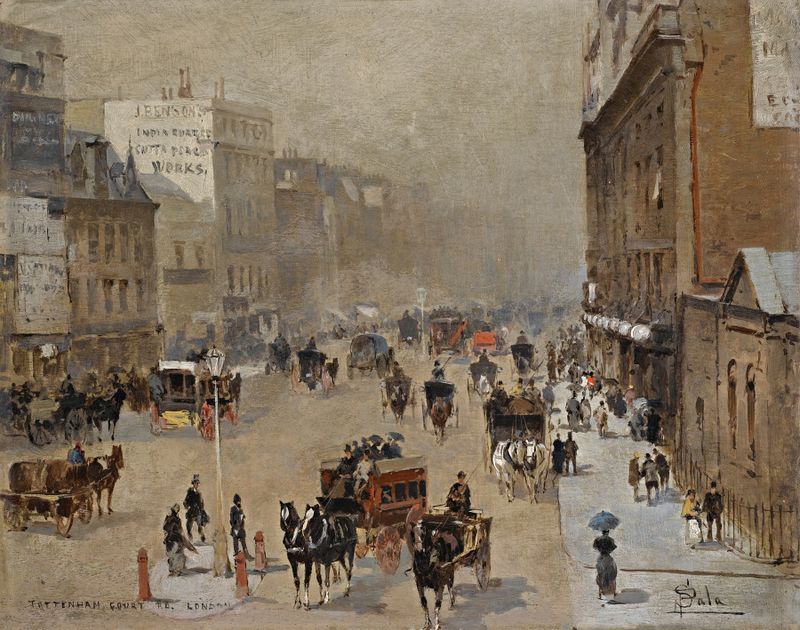
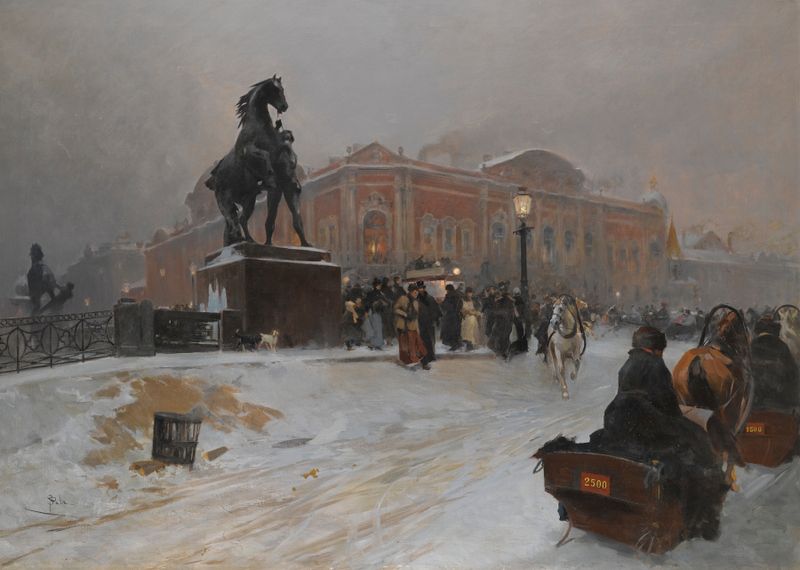
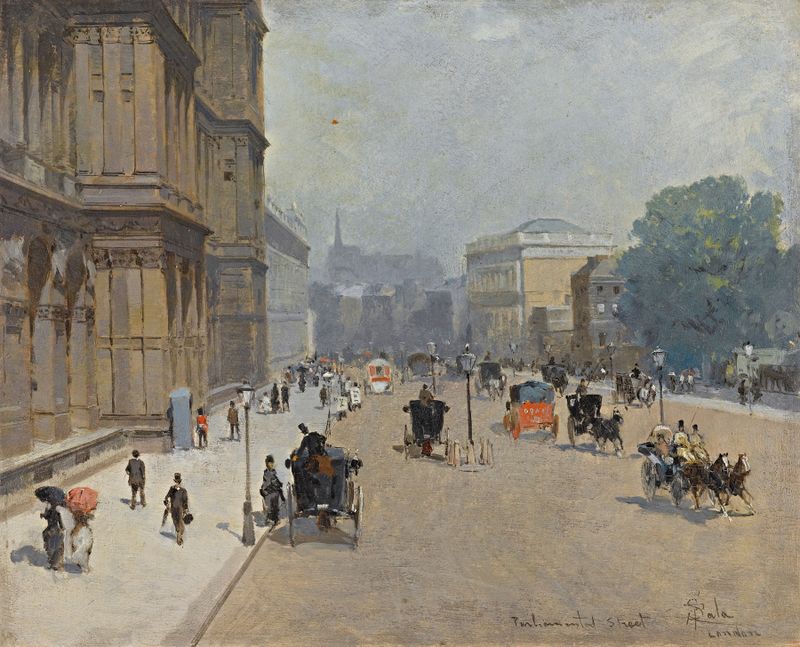
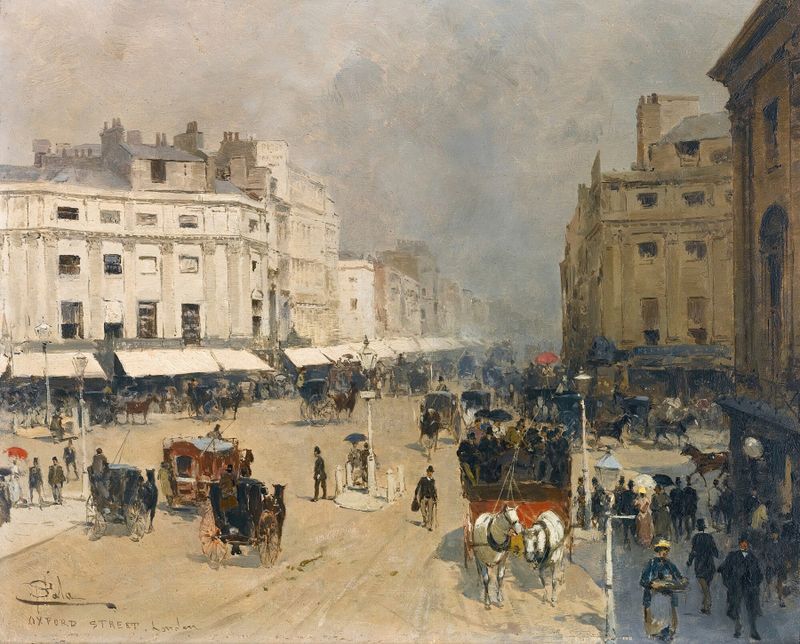
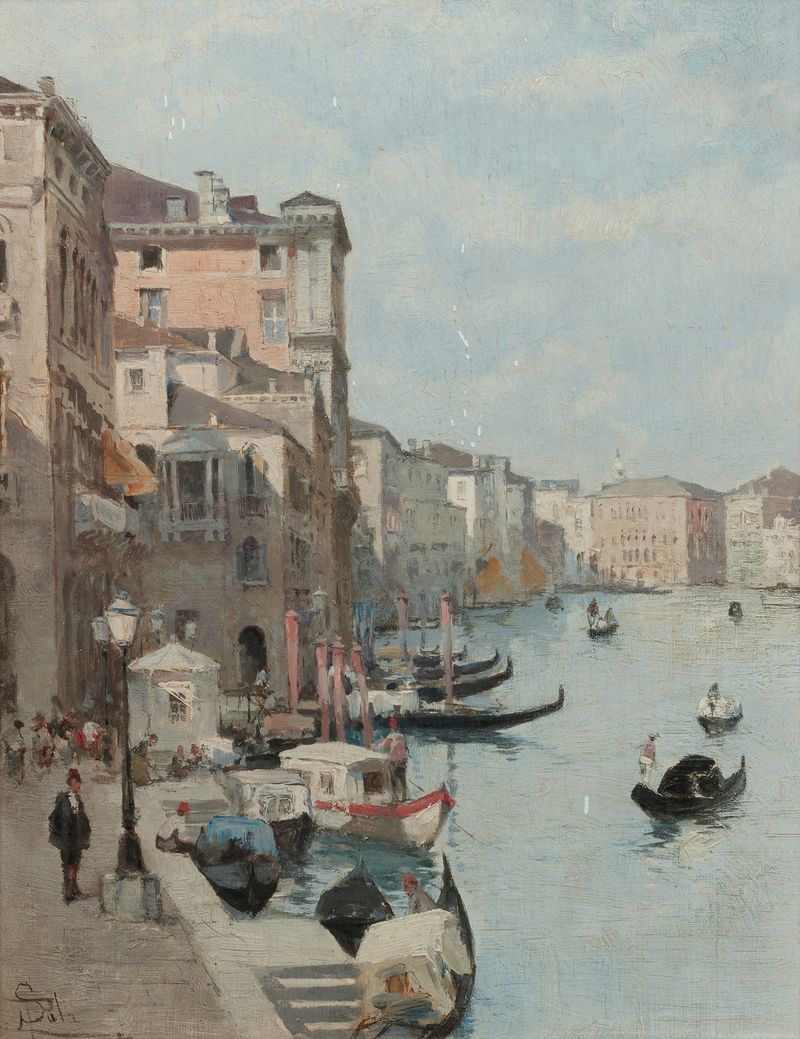
Did the painter know this moment would outlive them? In the heart of the bustling 19th-century city, a single street corner holds a universe of stories, encapsulating the divine in everyday life. Look to the foreground, where a group of figures huddles around a vendor's cart, their animated gestures a testament to a shared experience. The soft glow of gas lamps bathes the cobblestones in a warm, golden light, casting long shadows that stretch like whispers into the night. Notice how the deep blues and rich browns of the buildings contrast with the vibrant colors of the vendors’ wares, creating a vivid tapestry of urban existence that invites you to step closer. Within this lively tableau lies an exploration of social dynamics—a reflection of the era's class disparities subtly hinted at through the attire and positioning of the figures.
The juxtaposition of the vendor, perhaps a humble tradesperson, against the backdrop of the imposing architecture signifies the often-overlooked divine spark within the mundane. Each character, caught in their moment of commerce and conversation, reveals the beauty and struggle of life on these city streets, a reminder of the shared human experience in a rapidly modernizing world. Paolo Sala created this piece in the vibrant milieu of 19th-century London, a time marked by industrial expansion and social flux. As urban life transformed, the artist sought to capture not just the scenes of the city but its underlying spirit.
This work emerged as part of a broader artistic movement that emphasized realism, seeking to immortalize everyday life against the backdrop of great change.