Tottenham Court Road, London — History & Facts
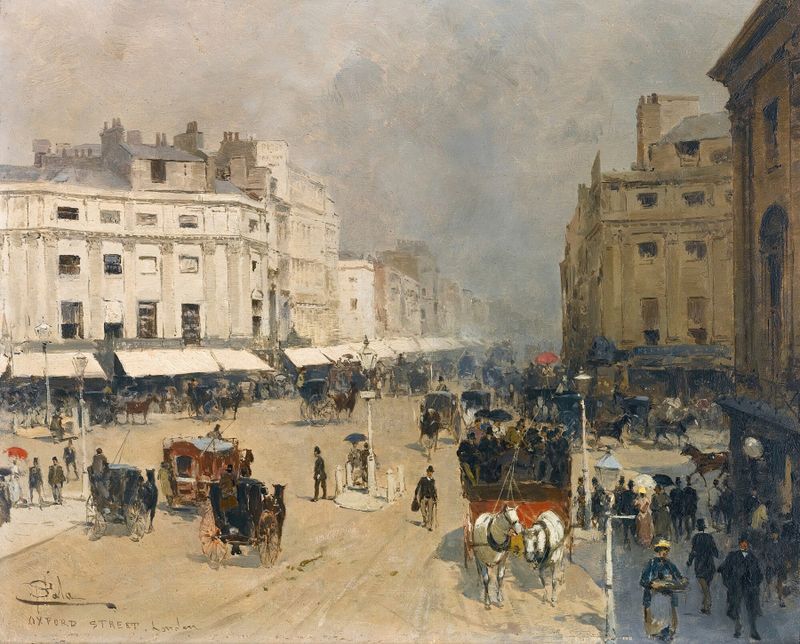
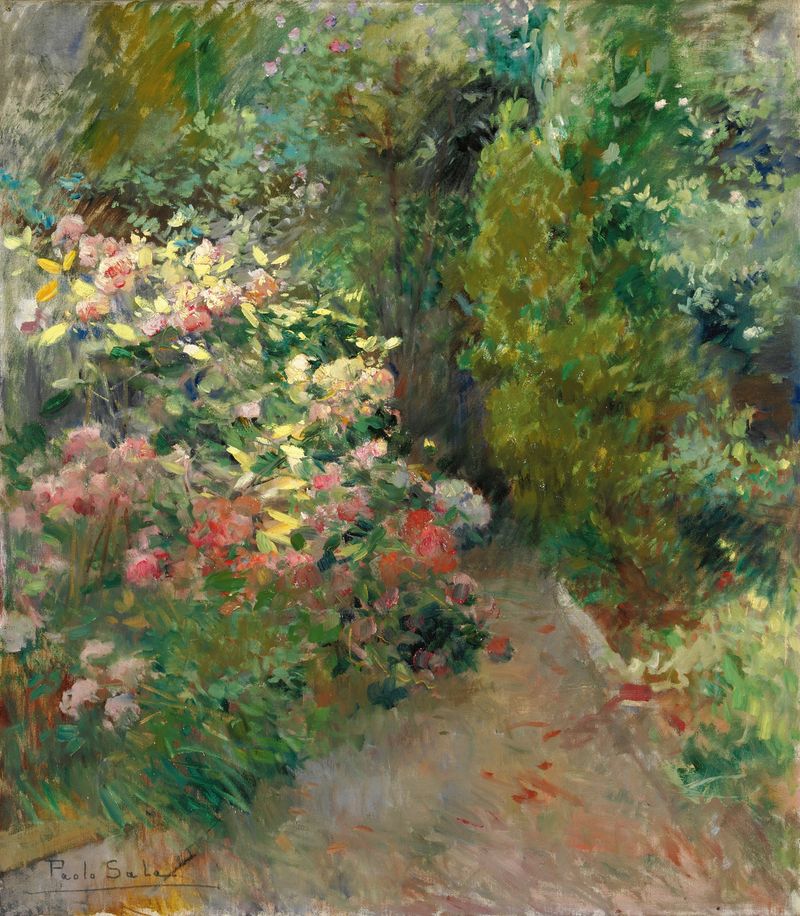
Is this a mirror — or a memory? In Tottenham Court Road, London, chaos bursts forth, inviting us to explore the tumult of urban life, where the familiar becomes a dizzying whirl of color and movement. Look to the center of the canvas, where a cacophony of shapes and hues collide. The brushstrokes are frenetic, creating an electrifying rhythm that pulls the eye in multiple directions. Notice how the cool blues and bold reds mingle, capturing both the vibrancy and disarray of a bustling street.
The artist employs a layered technique, allowing the colors to blend and clash, echoing the complexity of the scene depicted. We are drawn into an urban dance, where chaos feels alive and palpable. Hidden within this disorder lies a narrative of human experience. The juxtaposition of sharp, angular forms against softer, blurred edges hints at fleeting moments — connections made and lost among the crowd.
Each stroke seems to whisper of stories untold, echoing the restless spirit of the city. This artwork reflects the tension between solitude and community, revealing how chaos can both unite and isolate us in modern life. During an indeterminate period of his career, Paolo Sala created this piece, likely influenced by the fervor of the urban landscape around him. While details of his life remain sketchy, his work resonates with a post-war sensibility, capturing the zeitgeist of a time when cities were evolving rapidly.
The world of art was shifting towards abstraction, and Sala's interpretation is a testament to that transitional phase, where the emotional weight of chaos found its way onto the canvas.