
Louvre—Autumn Afternoon — History & Facts
What draws the eye first in Louvre—Autumn Afternoon is the way the building’s silhouette rises, half-veiled by trees, as if the city itself is pausing for breath. Arthur Bowen Davies allows the viewer to drift into the scene: two long boats glide across the water, their dark forms anchoring the foreground, while the bridge to the left hints at the steady passage of people and time. The loose, fluid brushwork of the trees softens the monumental architecture, making the Louvre seem less a fortress and more a memory glimpsed through autumn haze.
Light pools gently on the surface of the river, guiding the gaze from the shadowed boats to the luminous facade behind, and the entire composition feels suspended—caught between movement and stillness, public grandeur and private reverie. Painted in 1925, this watercolor belongs to a moment when American artists like Davies were absorbing the lessons of European modernism and the poetry of urban life. Watercolors of this era often served as travel mementos or studies, capturing fleeting impressions rather than grand narratives, and they were prized for their immediacy and intimacy. The Metropolitan Museum of Art, which now holds this drawing, was itself part of a broader movement to collect and celebrate such works, recognizing their role in shaping transatlantic artistic dialogues.
History has kept few traces of this particular afternoon, but Davies’s brush preserves the mood: a city reflected in water, a monument softened by season and light. Look again, and you may find yourself adrift on that quiet river, watching the world blur into art.
More Artworks by Arthur Bowen Davies

Mirror of Illusion
Arthur Bowen Davies
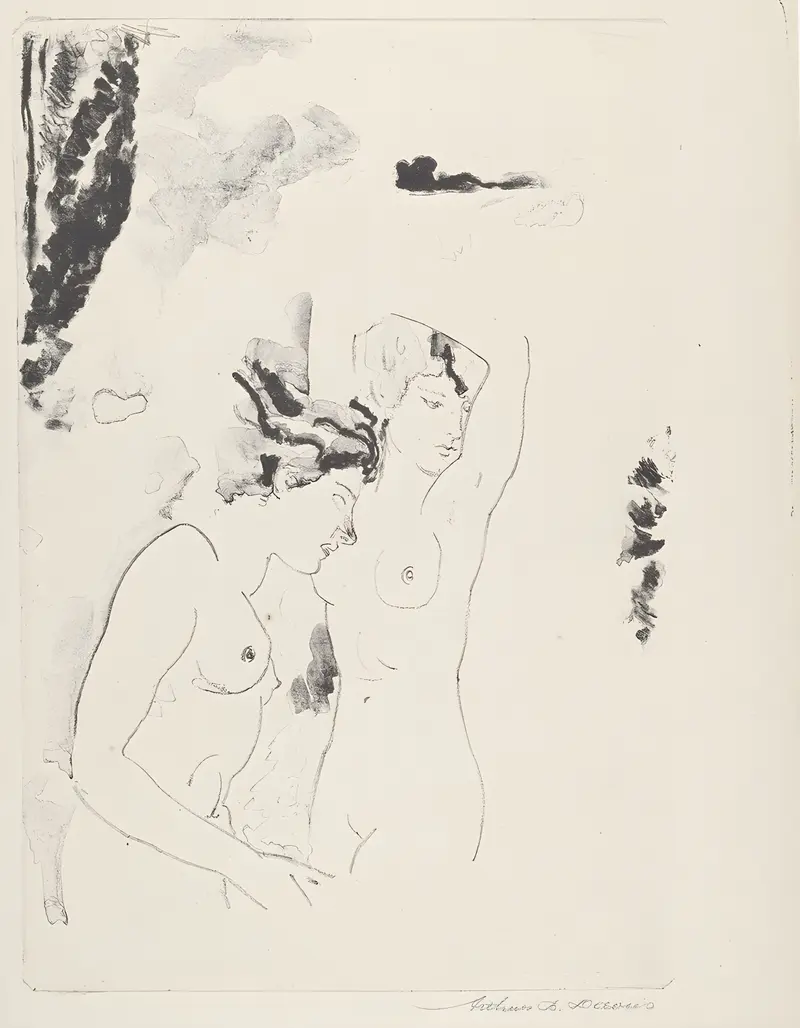
Nymphs of the Stream
Arthur Bowen Davies

Woman Dancing
Arthur Bowen Davies
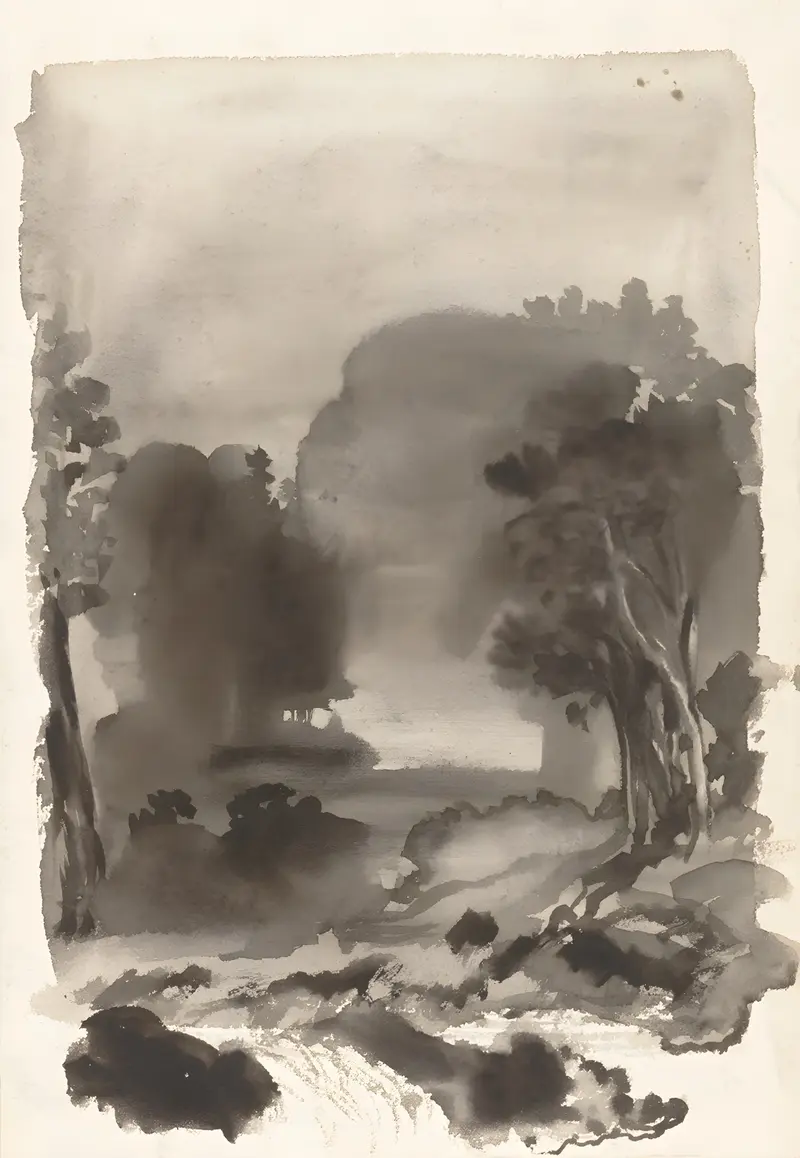
Landscape 2
Arthur Bowen Davies
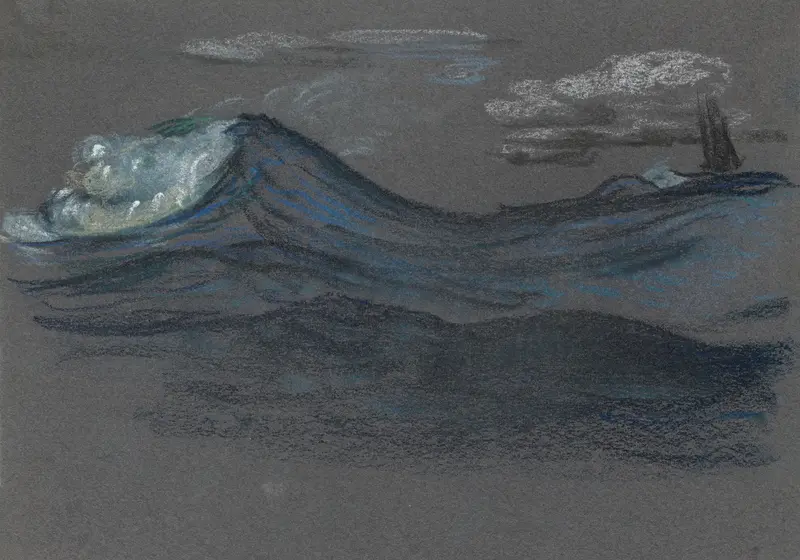
Ocean Swells
Arthur Bowen Davies
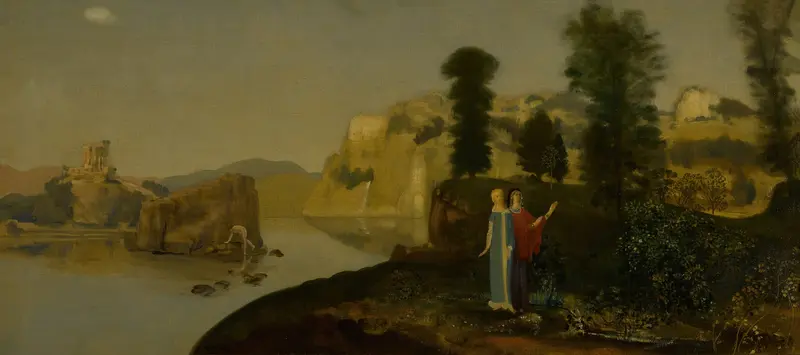
Silver Springs
Arthur Bowen Davies
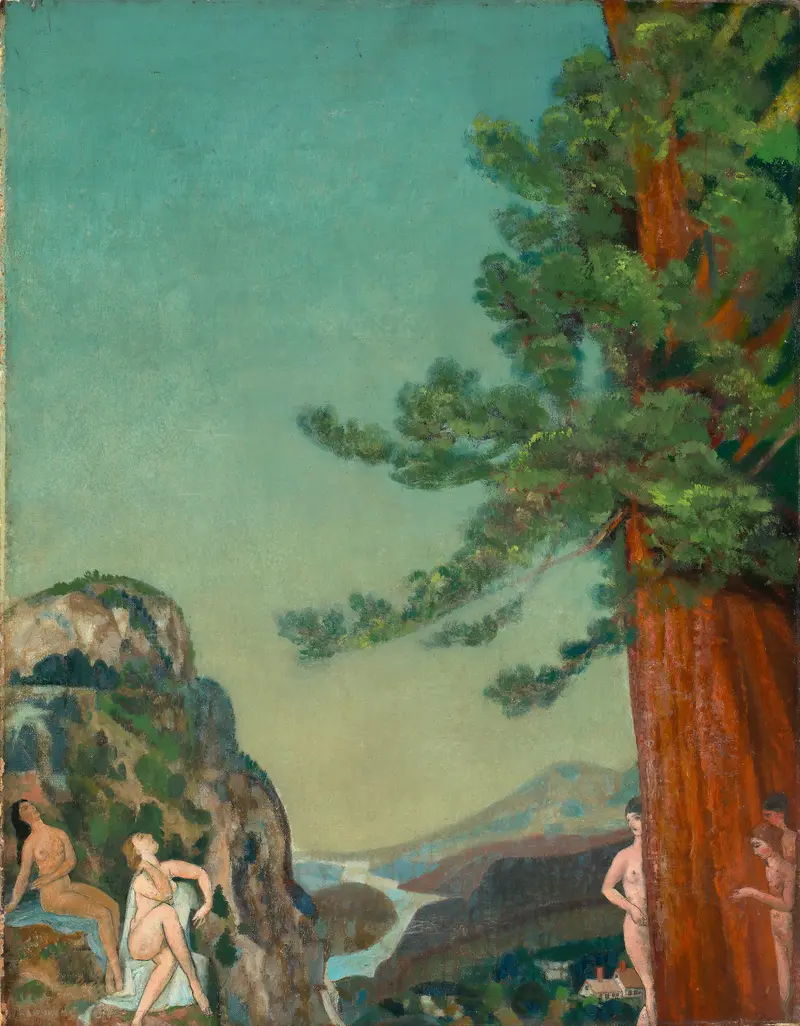
On the Cliffs
Arthur Bowen Davies

Landscape
Arthur Bowen Davies
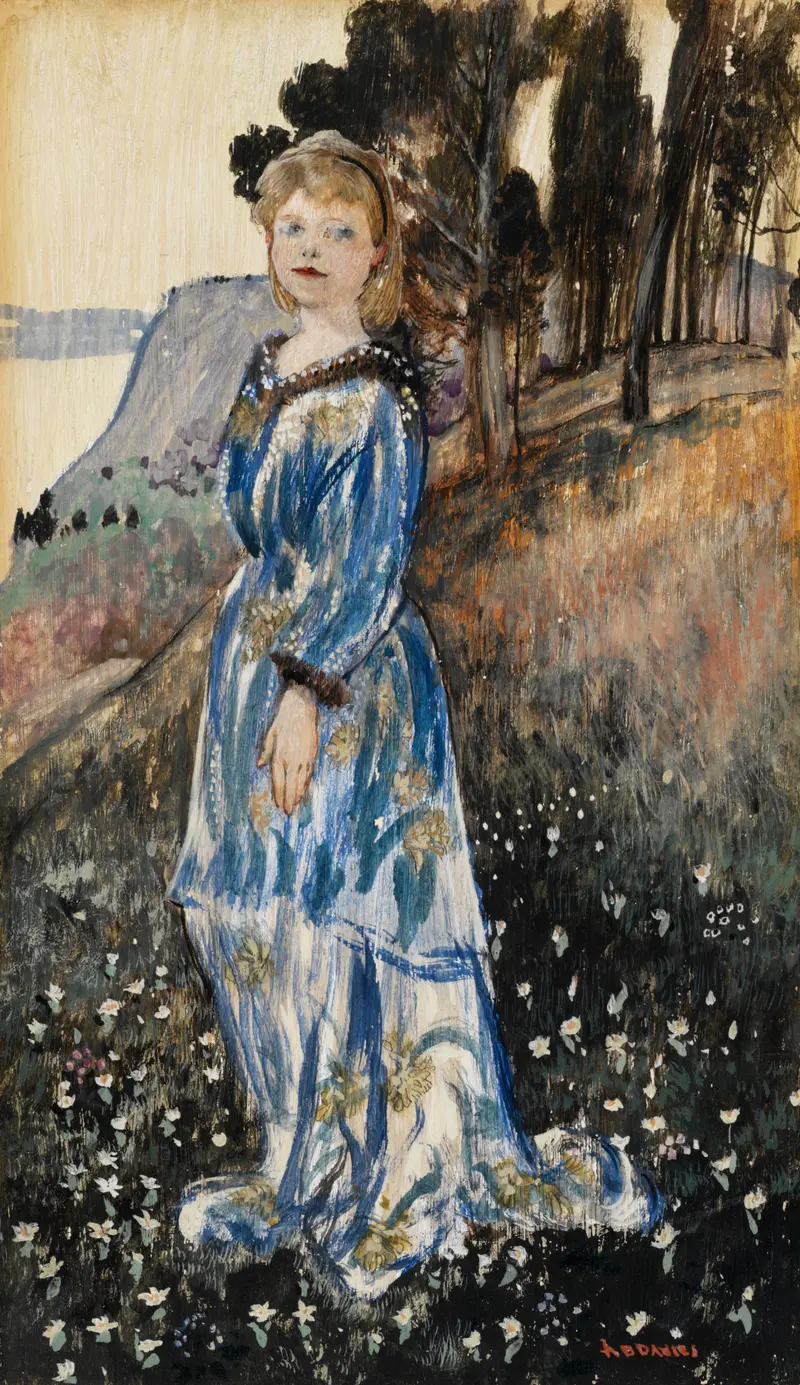
Flora
Arthur Bowen Davies
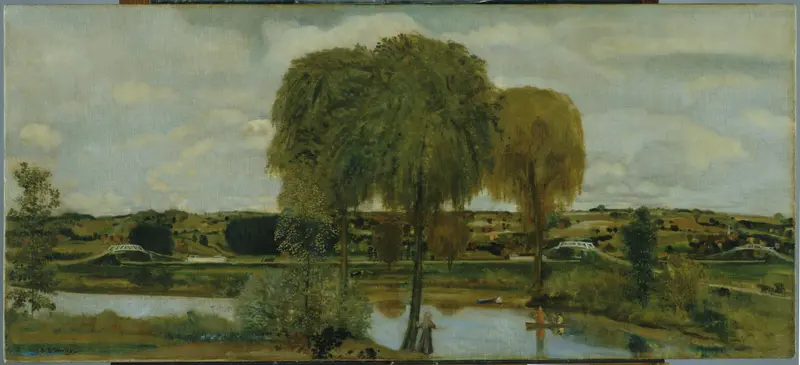
Along the Erie Canal
Arthur Bowen Davies
More Landscape Art

The Starry Night
Vincent van Gogh

View of Delft
Johannes Vermeer

Water Lilies
Claude Monet

The Grand Canal, Venice, looking north-west from the Ca' Corner to the Ca' Contarini degli Scrigni, with the campanile of Santa Maria della Carità
Canaletto

Windsor Castle
Canaletto

The Grand Canal looking North-East from the Palazzo Dolfin-Manin to the Rialto Bridge
Canaletto