
Ludlow Church — History & Facts
The haunting tranquility of an empty space can echo louder than the busiest of streets. It invites introspection, allowing the viewer to navigate the depths of their own solitude. Look to the center of the canvas, where the church stands resolute against a vast, muted landscape. The somber tones of gray and green envelop the structure, emphasizing its isolation.
Notice how the light, filtered through a veil of clouds, casts a delicate glow upon the church’s weathered stones, each shadow intricately detailing the passage of time. This careful rendering reveals the artist’s intention to capture not just a physical space, but a profound sense of absence. As you explore further, consider the contrast between the solidity of the church and the ethereal atmosphere that surrounds it. The barren trees in the foreground seem to reach for something unattainable, their skeletal branches a poignant reminder of lost connections.
The empty paths leading to the church evoke a sense of yearning, inviting contemplation of faith, community, and the passage of time. It’s as if the scene is waiting for a whisper, or perhaps a confession, to break the stillness. Paul Sandby Munn created this captivating work during a period of personal exploration, likely in the early 19th century. He found himself at a crossroads within the burgeoning Romantic movement, where the essence of nature and solitude was celebrated.
Amidst shifting artistic landscapes in England, Munn's focus on quiet, derelict spaces marked a poignant reflection of the human condition, capturing both the beauty and the melancholy of absence.
More Artworks by Paul Sandby Munn
Browse all →
View of Side Farm, Patterdale
Paul Sandby Munn

Landscape with Farmhouse, Figures and Pond
Paul Sandby Munn

Shanklin Chine, Isle of Wight
Paul Sandby Munn
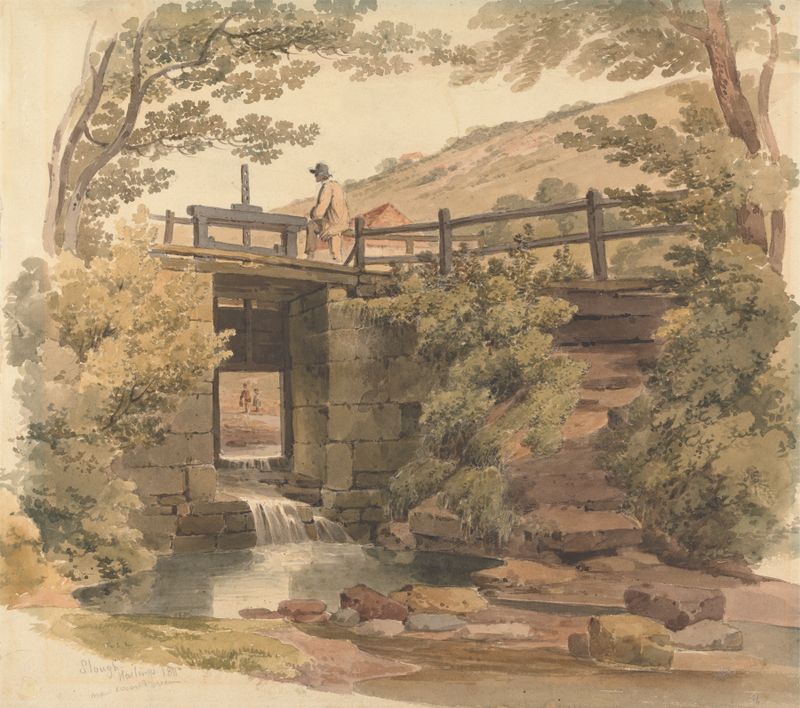
The Sluice Gate near Slough
Paul Sandby Munn
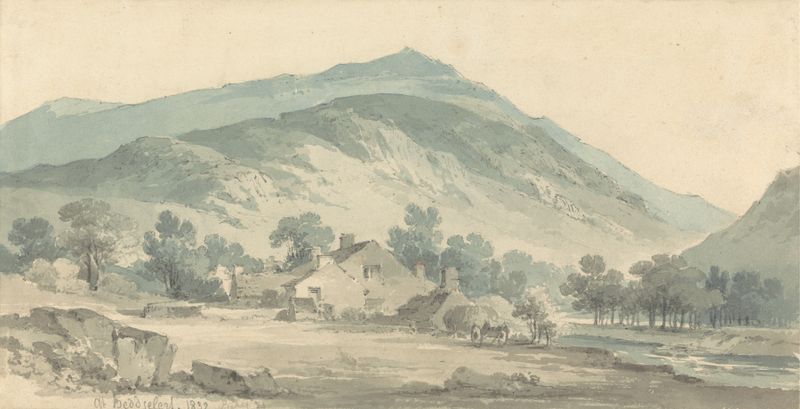
Landscape at Beddgelert, North Wales
Paul Sandby Munn
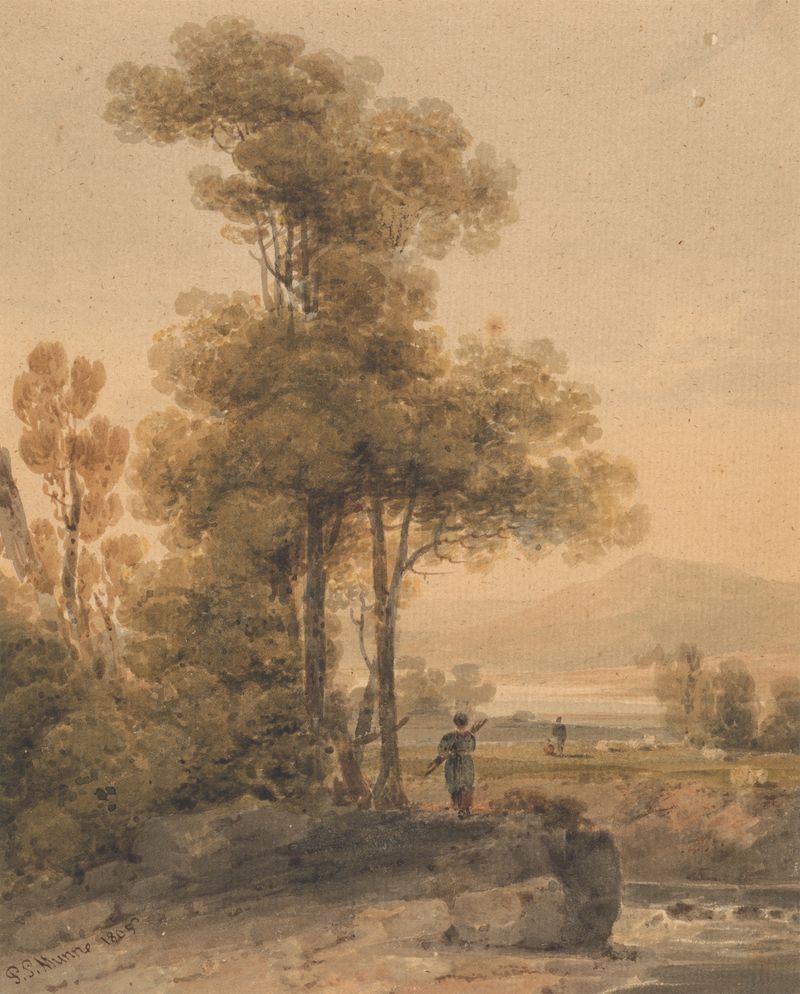
Landscape waith Figures, Cromach Water
Paul Sandby Munn

A Cornfield
Paul Sandby Munn
More Architecture Art
Browse all →
The statue of Liberty
Frédéric Auguste Bartholdi

View of Houses in Delft, Known as ‘The Little Street’
Johannes Vermeer

View of Houses in Delft, Known as ‘The Little Street’
Johannes Vermeer

The Cathedral in Rouen. The portal, Grey Weather
Claude Monet

The yellow house
Vincent van Gogh

The Church in Auvers-sur-Oise, View from the Chevet
Vincent van Gogh