
Lutèce au Bas-Empire aqueduc d’Arcueil au premier plan, palais et citadelle à l’arrière plan — History & Facts
This sentiment resonates deeply within the layers of history depicted in this work, where past and present intertwine, urging us to confront the delicate truths of our existence. Focus on the aqueduct in the foreground, its arches a testament to architectural grandeur, a silent witness to the passage of time. The warm hues of ochre and rust contrast vividly with the cool greens of the distant landscape, creating a dialogue between the enduring and the ephemeral. Notice how the light dances across the stone, illuminating details that evoke a sense of nostalgia, inviting the viewer to explore the remnants of a storied civilization. In the background, the palace and citadel rise majestically, hinting at the power structures that once ruled this land.
The juxtaposition of natural elements with human constructs speaks to the tension between nature's permanence and humanity's transient footprints. The aqueduct stands resilient, perhaps a metaphor for the truths that withstand the ravages of time, while the skyline of man-made structures suggests the inevitability of decay and transformation, urging us to reflect on our own legacies. Fédor Hoffbauer painted this piece between 1915 and 1945, a tumultuous period marked by two world wars and immense societal change. Working in France during this time, he sought to capture the essence of his surroundings while reaffirming the beauty of history amid chaos.
His art serves not only as a record but as a reminder of the enduring nature of truth, even when obscured by the veil of time.
More Artworks by Fédor Hoffbauer
Browse all →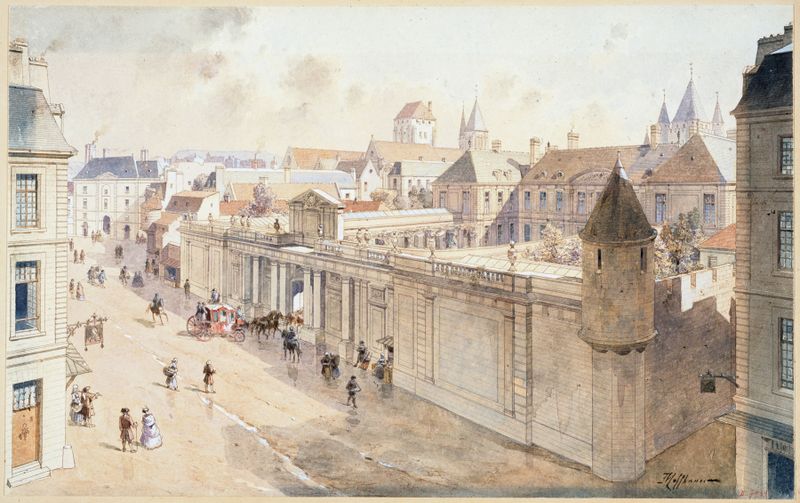
Le palais du Grand Prieur au Temple, en 1770
Fédor Hoffbauer
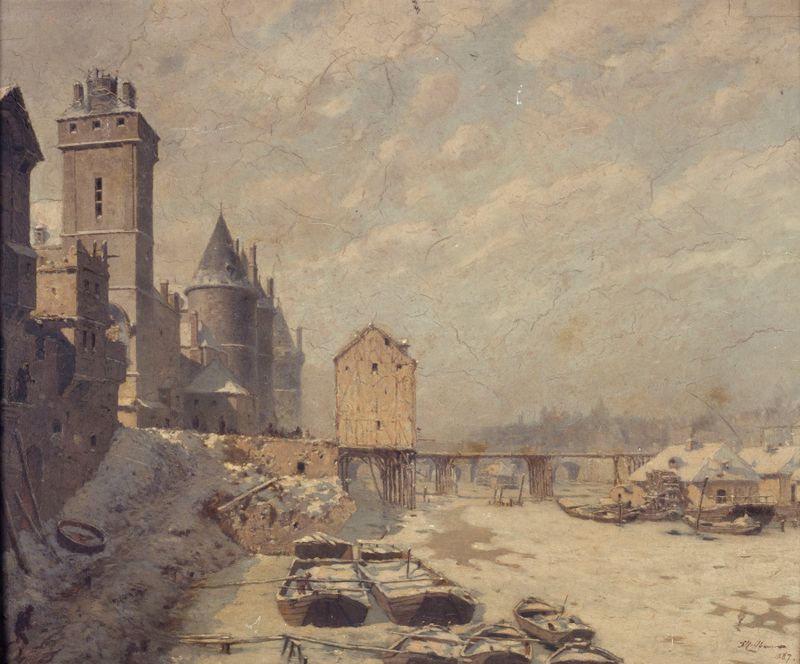
La tour de l’Horloge, la Conciergerie et le pont au Change, en 1621
Fédor Hoffbauer

Banquet des officiers de la marine Russe, dans la salle des fêtes à l’Hôtel de Ville. Fêtes Franco-Russes à Paris
Fédor Hoffbauer

Le Grand Châtelet et le pont de Bois, 1621-1645
Fédor Hoffbauer
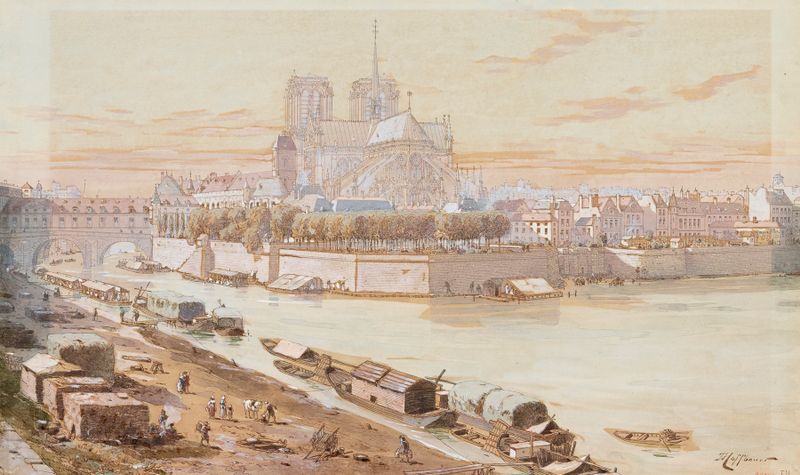
Notre-Dame et l’Evêché en 1750
Fédor Hoffbauer

Vue panoramique de Paris en 1588, depuis les toits du Louvre, avec le Pont-Neuf en construction
Fédor Hoffbauer
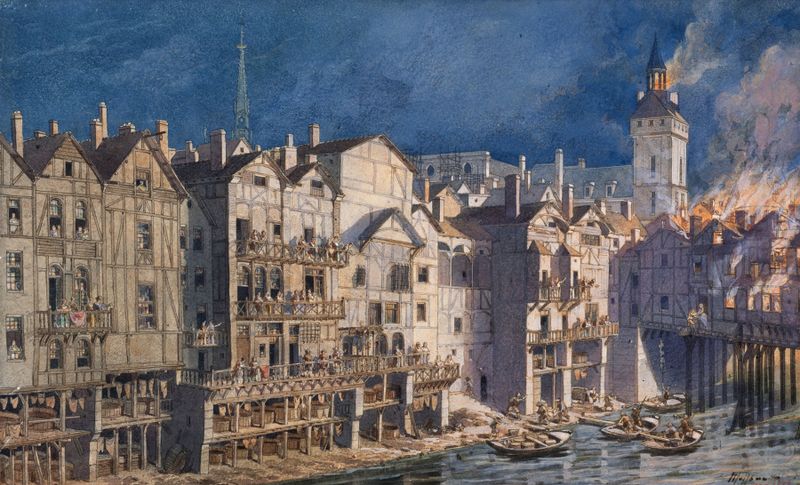
La Cité entre le pont Notre Dame et le pont au Change en 1621
Fédor Hoffbauer

L’Hôtel de Ville et le pont d’Arcole en 1842
Fédor Hoffbauer

Le Cimetière des Innocents en 1750
Fédor Hoffbauer
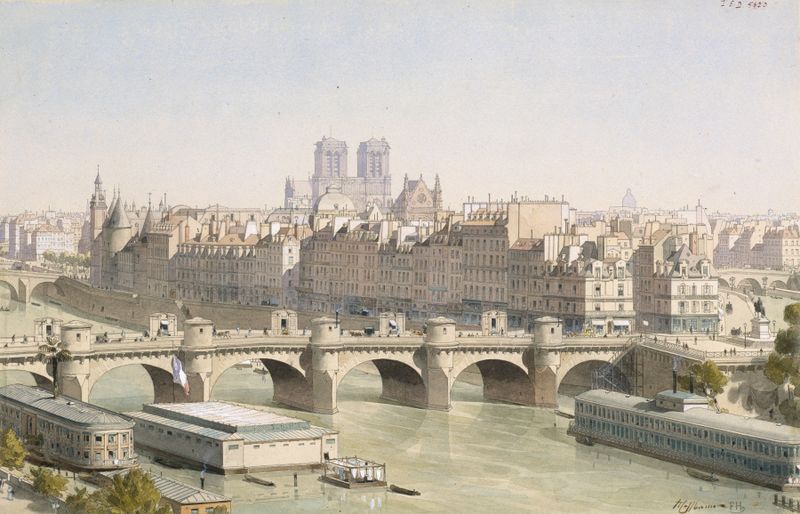
Vue de l’île de la Cité et le pont-Neuf avec ses boutique, vers 1840
Fédor Hoffbauer
More Architecture Art
Browse all →
The statue of Liberty
Frédéric Auguste Bartholdi

View of Houses in Delft, Known as ‘The Little Street’
Johannes Vermeer

View of Houses in Delft, Known as ‘The Little Street’
Johannes Vermeer

The Cathedral in Rouen. The portal, Grey Weather
Claude Monet

The yellow house
Vincent van Gogh

The Church in Auvers-sur-Oise, View from the Chevet
Vincent van Gogh