
Madonna and Child and the Young St John the Baptist — History & Facts
No fewer than five versions of Madonna and Child and the Young St John the Baptist by Sandro Botticelli are known to exist, each with subtle differences that have fueled scholarly debate for centuries. The proliferation of these images in Florence around 1500 speaks to the immense popularity of this tender scene among the city’s elite, who often commissioned such works for their private devotion. The version from 1505 stands out for its serene intimacy and the delicate interplay between the figures, capturing a moment both universal and deeply personal. At the heart of the painting, the Virgin Mary cradles the Christ Child, while the young St John the Baptist—recognizable by his camel-hair tunic—kneels in adoration.
Botticelli freezes the moment where the infant John offers a gesture of blessing or greeting, his small hand raised in reverence, while Christ returns his gaze with a gentle curiosity. The Madonna’s eyes, lowered in contemplation, draw the viewer into a circle of quiet affection. The soft, golden light and the subtle landscape beyond evoke a sense of peace, a marked contrast to the more dramatic interpretations by contemporaries like Leonardo da Vinci in his Virgin of the Rocks, where the figures are shrouded in mystery and shadow. The precise origins of this particular version remain uncertain; its medium is still debated, though Botticelli often worked in tempera on panel.
Like many devotional images of its era, it likely passed through the hands of private collectors before entering the public sphere. The painting reflects Botticelli’s late style, marked by a gentler palette and a more introspective mood compared to his earlier, more decorative works. Today, it stands as a testament to the enduring appeal of Botticelli’s vision, bridging the gap between public worship and private contemplation in Renaissance Florence.
More Artworks by Sandro Botticelli
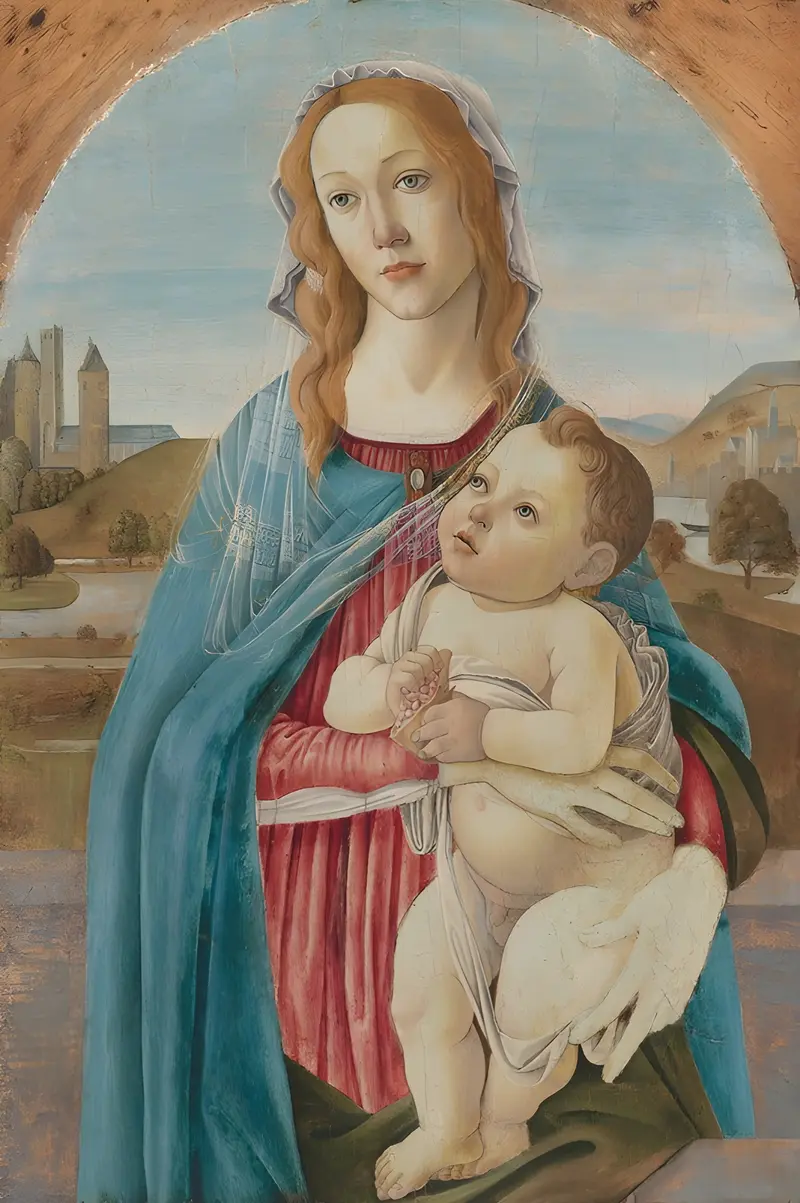
Virgin and Child
Sandro Botticelli
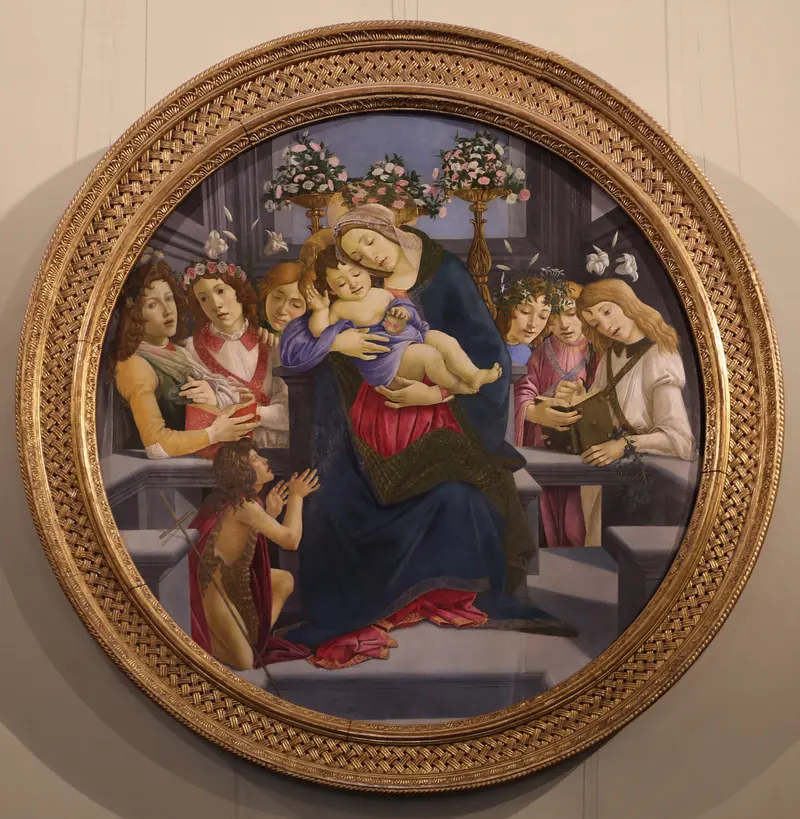
Madonna and Child with six angels and Saint John the Baptist as Child
Sandro Botticelli
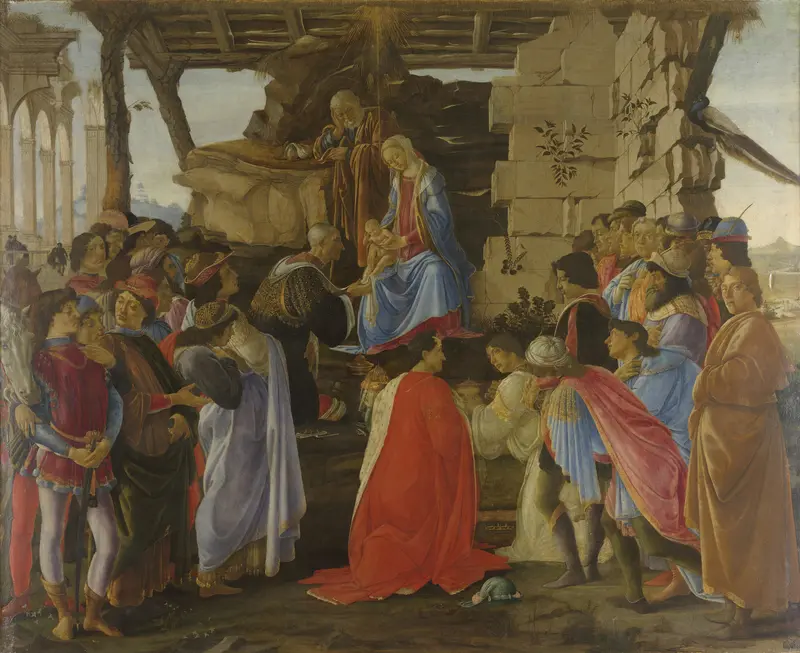
Adoration of the Magi
Sandro Botticelli

Virgin and Child with the Young Saint John the Baptist
Sandro Botticelli
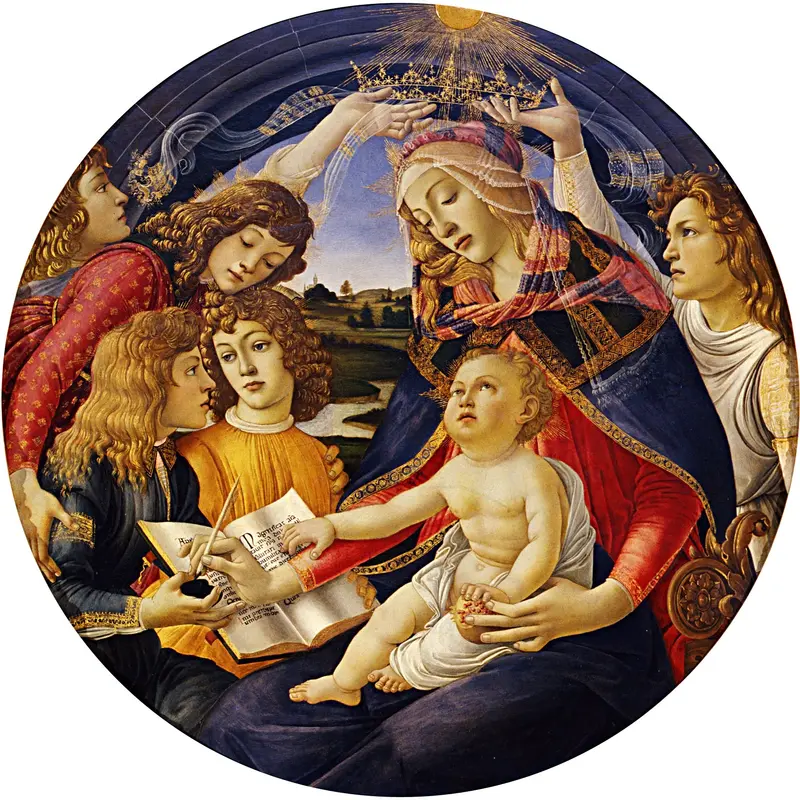
Madonna of the Magnificat
Sandro Botticelli
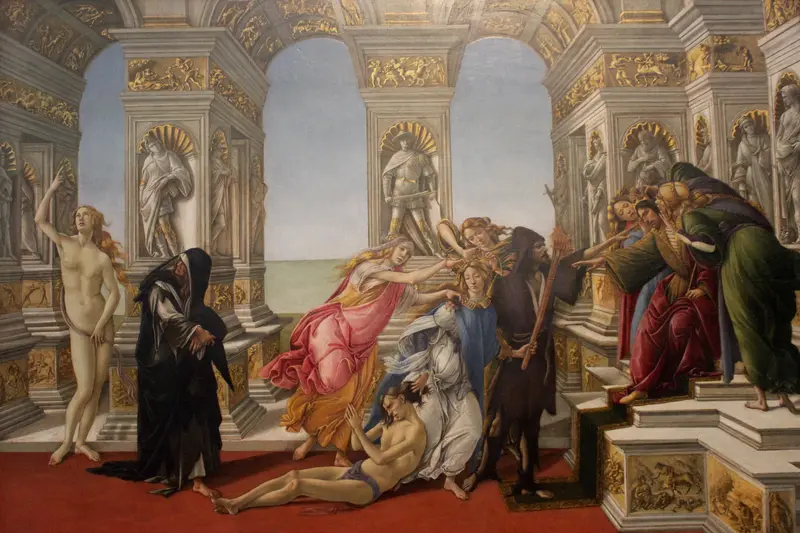
Calumny of Apelles
Sandro Botticelli
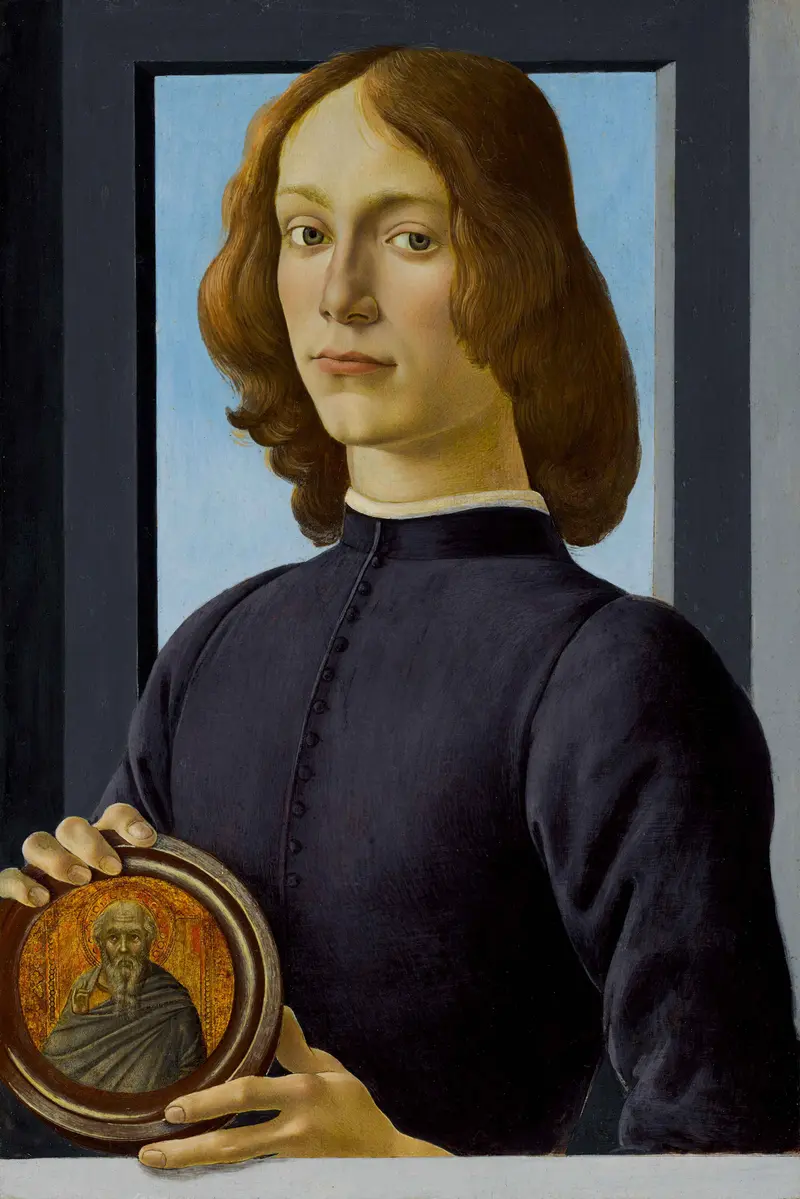
Portrait of a young man holding a roundel
Sandro Botticelli

The Trinity with Saint Mary Magdalene and Saint John the Baptist, the Archangel Raphael and Tobias
Sandro Botticelli
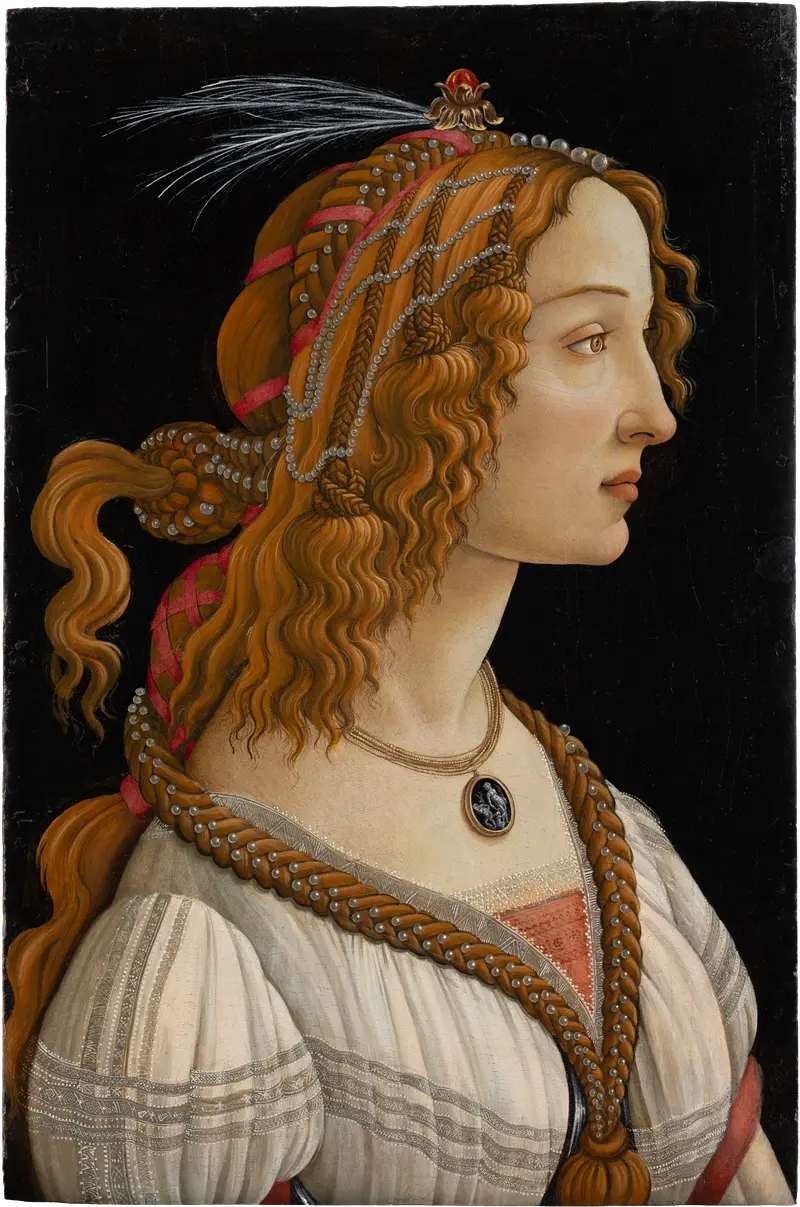
Idealized Portrait of a Lady (Portrait of Simonetta Vespucci as Nymph)
Sandro Botticelli

Annunciation
Sandro Botticelli





