
Madonna of the Magnificat (smaller version) — History & Facts
In Madonna of the Magnificat, Sandro Botticelli depicts the Virgin Mary holding a book, surrounded by angels. The color palette is rich, with deep blues and vibrant reds dominating the scene. The figures are elegantly arranged, creating a harmonious composition.
The background features a serene landscape, enhancing the spiritual atmosphere of the painting. This painting is executed in tempera on panel, a common medium during the Renaissance. Botticelli's technique showcases delicate brushwork and intricate details, particularly in the faces of the figures. The use of gold leaf highlights adds a luminous quality to the artwork.
This is a smaller version of the famous tondo in the Uffizi, 62.9 cm across and without the crown that two angels hold over Mary in the Florence painting; it was formerly in the Paul G. Allen collection. Sandro Botticelli was a prominent figure of the Italian Renaissance, known for his unique style and themes. The Madonna of the Magnificat is particularly interesting as it reflects Botticelli's deep religious devotion and his ability to convey emotion through facial expressions.
This work was likely created for a private devotion, emphasizing the personal connection between the viewer and the divine. It remains one of Botticelli's notable contributions to religious art.
More Artworks by Sandro Botticelli
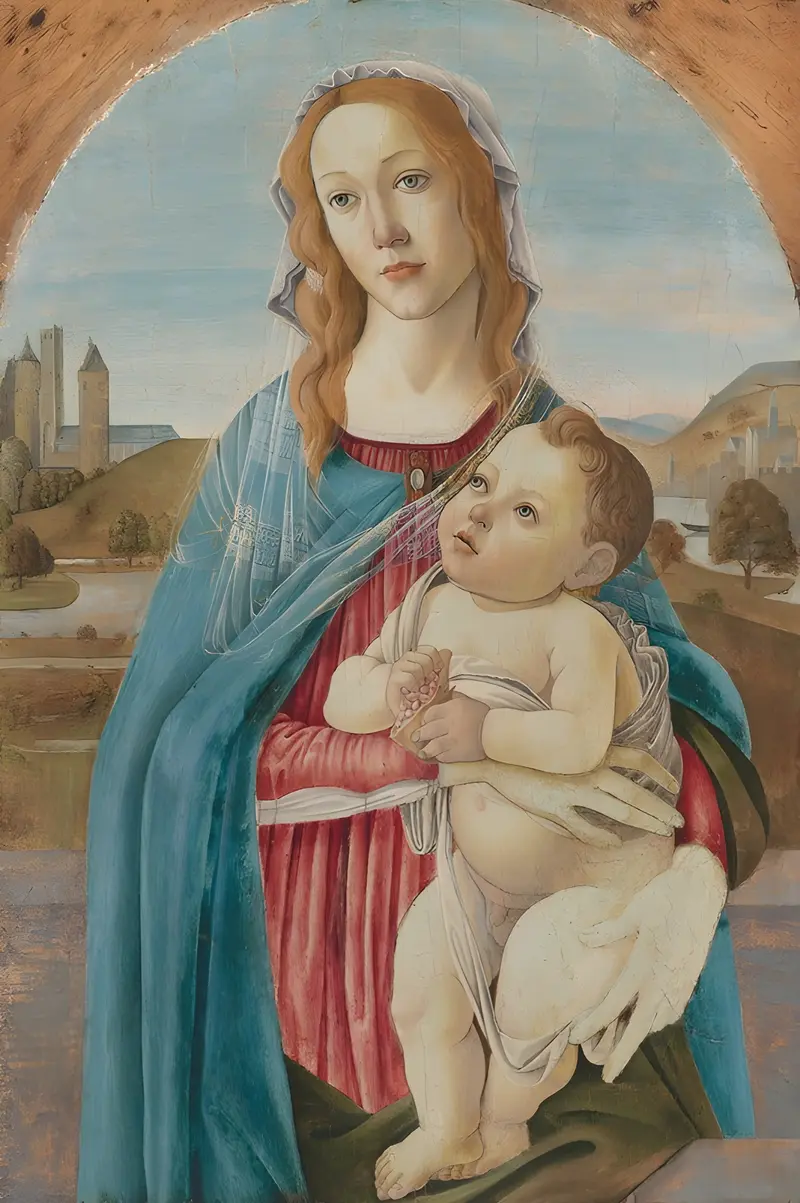
Virgin and Child
Sandro Botticelli
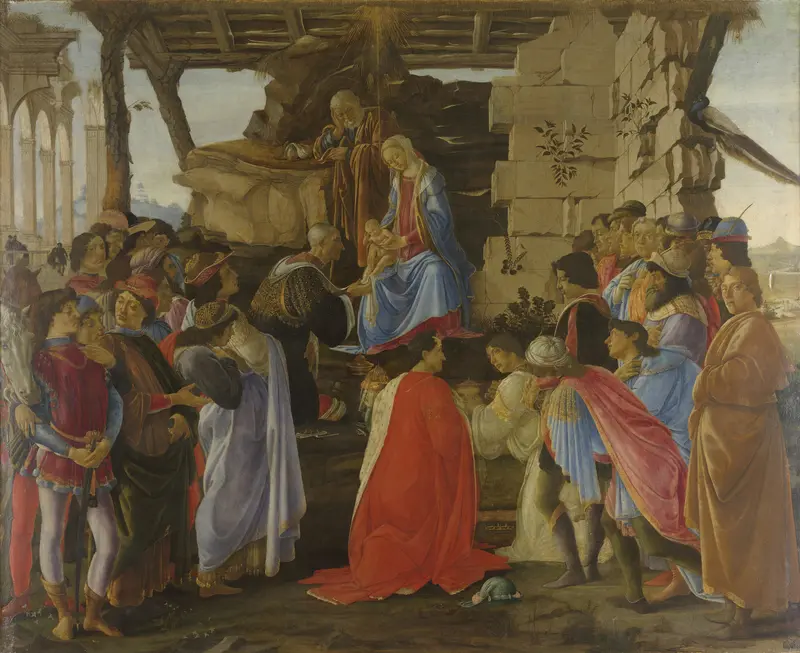
Adoration of the Magi
Sandro Botticelli
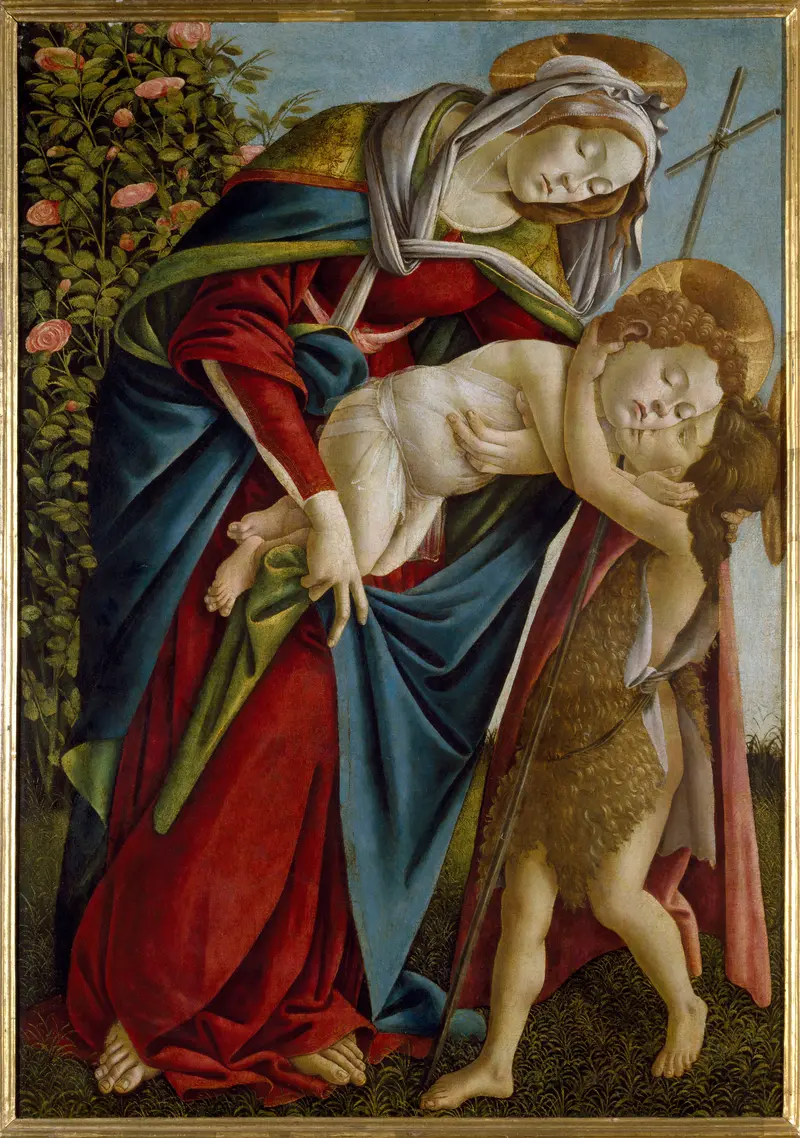
Madonna and Child and the Young St John the Baptist
Sandro Botticelli
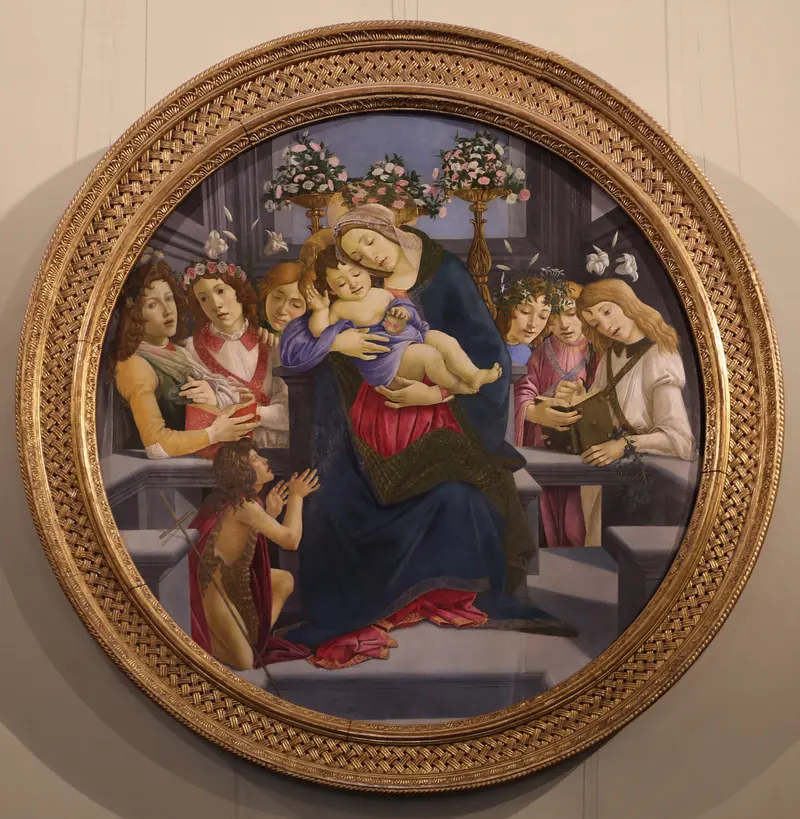
Madonna and Child with six angels and Saint John the Baptist as Child
Sandro Botticelli

Virgin and Child with the Young Saint John the Baptist
Sandro Botticelli
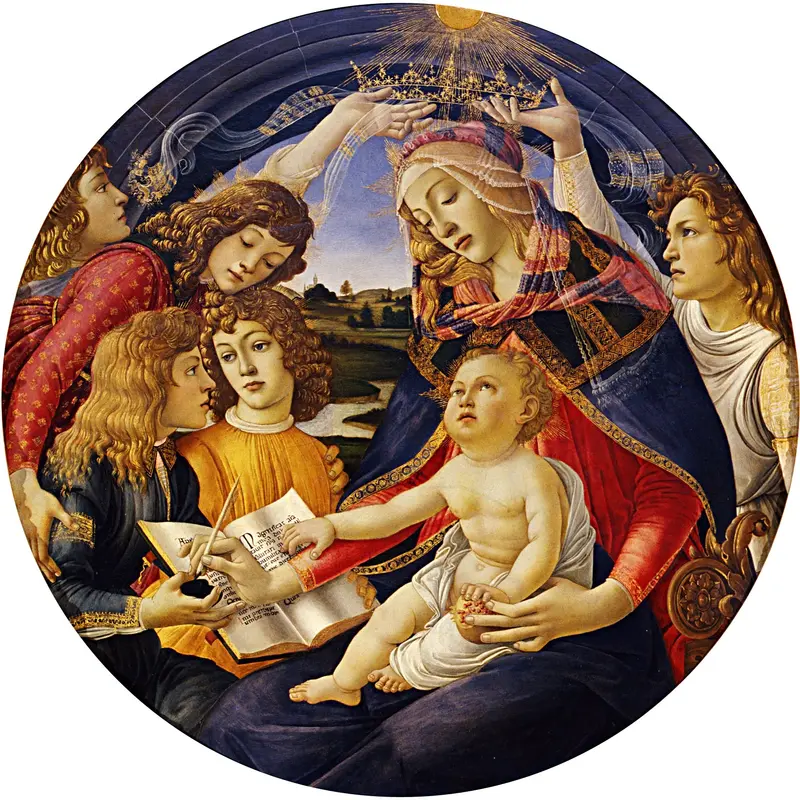
Madonna of the Magnificat
Sandro Botticelli
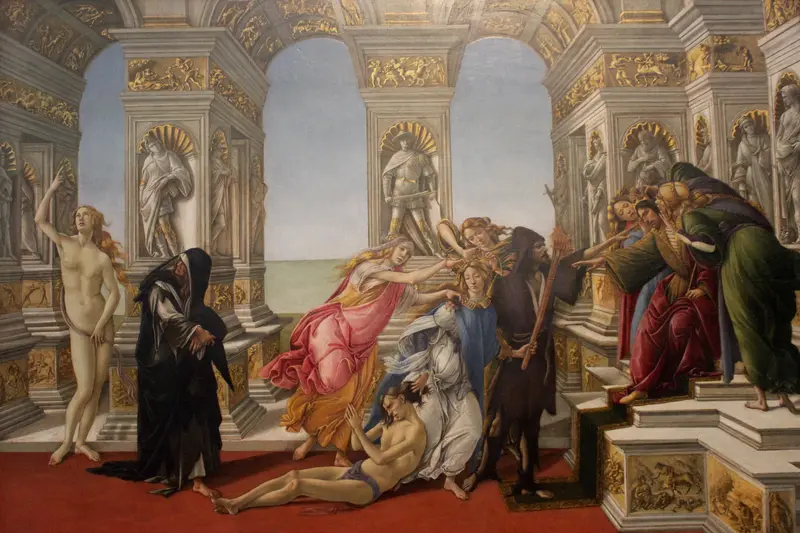
Calumny of Apelles
Sandro Botticelli
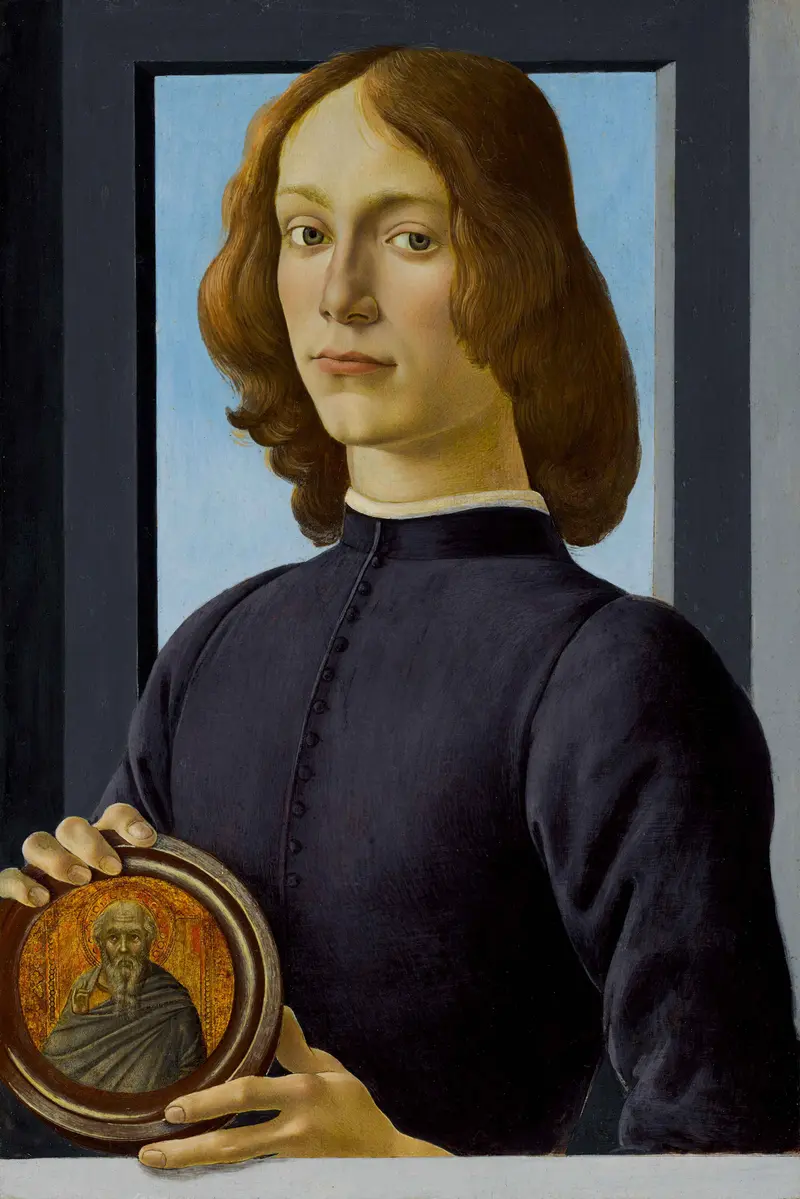
Portrait of a young man holding a roundel
Sandro Botticelli

The Trinity with Saint Mary Magdalene and Saint John the Baptist, the Archangel Raphael and Tobias
Sandro Botticelli
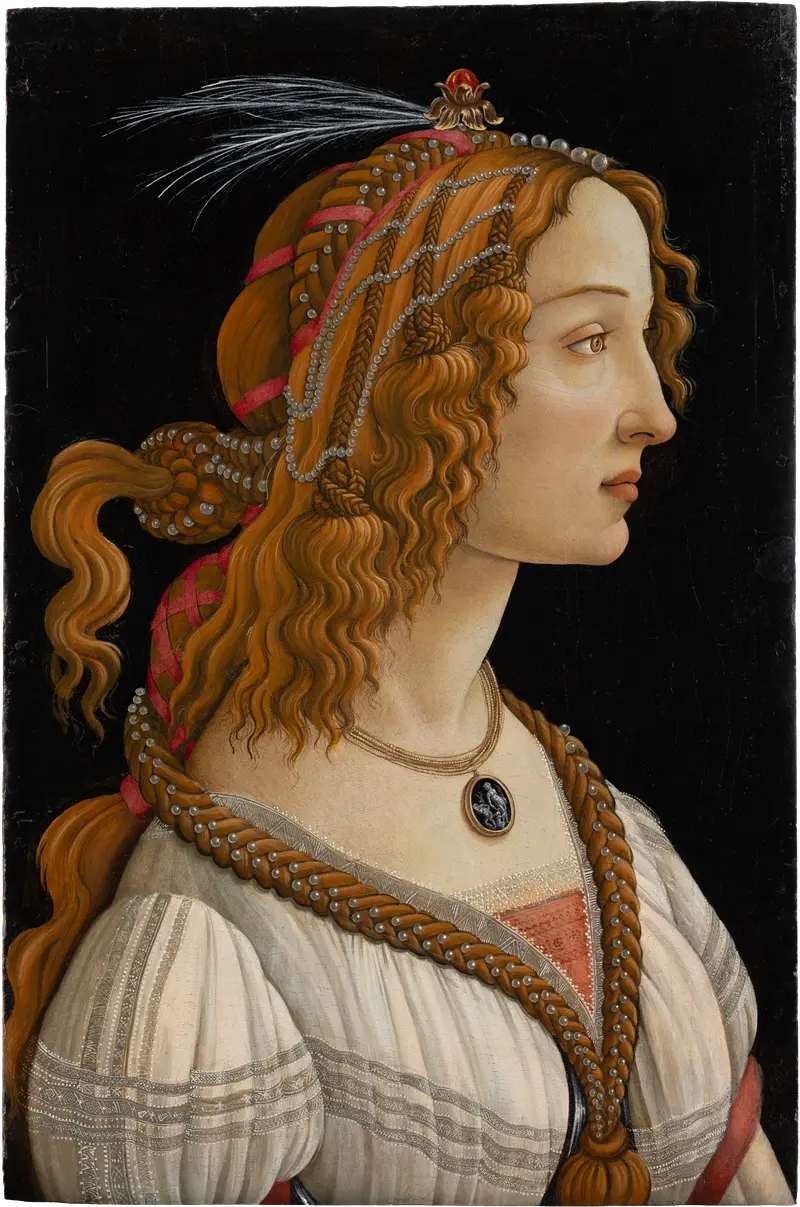
Idealized Portrait of a Lady (Portrait of Simonetta Vespucci as Nymph)
Sandro Botticelli





