
The Adoration Of The Magi — History & Facts
At the center of the composition, the Madonna sits beneath a ruined classical structure, cradling the Christ Child in her lap as both face the viewer. The infant Christ is depicted as a small boy, his right hand raised in blessing toward the kneeling Magi who approach from the left foreground. A crowd of attendants and onlookers fills the left and right sides, their faces turned toward the holy family, some gesturing animatedly or bowing in respect.
On the right, a group of men and horses waits outside the ruined portico, with one horse adorned in pink harness and another in blue, their riders engaged in conversation. The architecture is rendered with pale, creamy tones and precise linear perspective, its broken columns and exposed beams framing the figures and opening onto a luminous landscape. Beyond the ruins, rolling green hills and distant blue mountains recede under a clear sky, while slender trees rise on the right, their leaves delicately painted against the light.
The figures are arranged in a sweeping arc that guides the gaze from the foreground kneelers to the central group, then outward to the bustling retinue and the tranquil countryside. Botticelli uses soft, blended brushstrokes for faces and drapery, with subtle modulations of color in the robes—pinks, blues, greens, and golds set off by the pale stone and dark earth. Details such as the Magi’s jeweled gifts, the delicate hands of the worshippers, and the expressive faces reveal careful attention and a refined technique.
The surface shows a smooth, even finish, with crisp outlines and gentle modeling that creates a sense of clarity and calm. Painted by Sandro Botticelli in 1482, The Adoration of the Magi belongs to the Early Renaissance, a movement known for its interest in perspective, naturalism, and classical forms. The subject is a scene of adoration, with the Christ Child, Mary, and the Biblical Magi at its heart, reflecting the religious art typical of the period. This work is part of the Andrew W.
Mellon collection and is identified by the National Gallery of Art as inventory 1937.1.22.
Sources: National Gallery of Art, record 1937.1.22 · Wikidata Q3201474
More Artworks by Sandro Botticelli
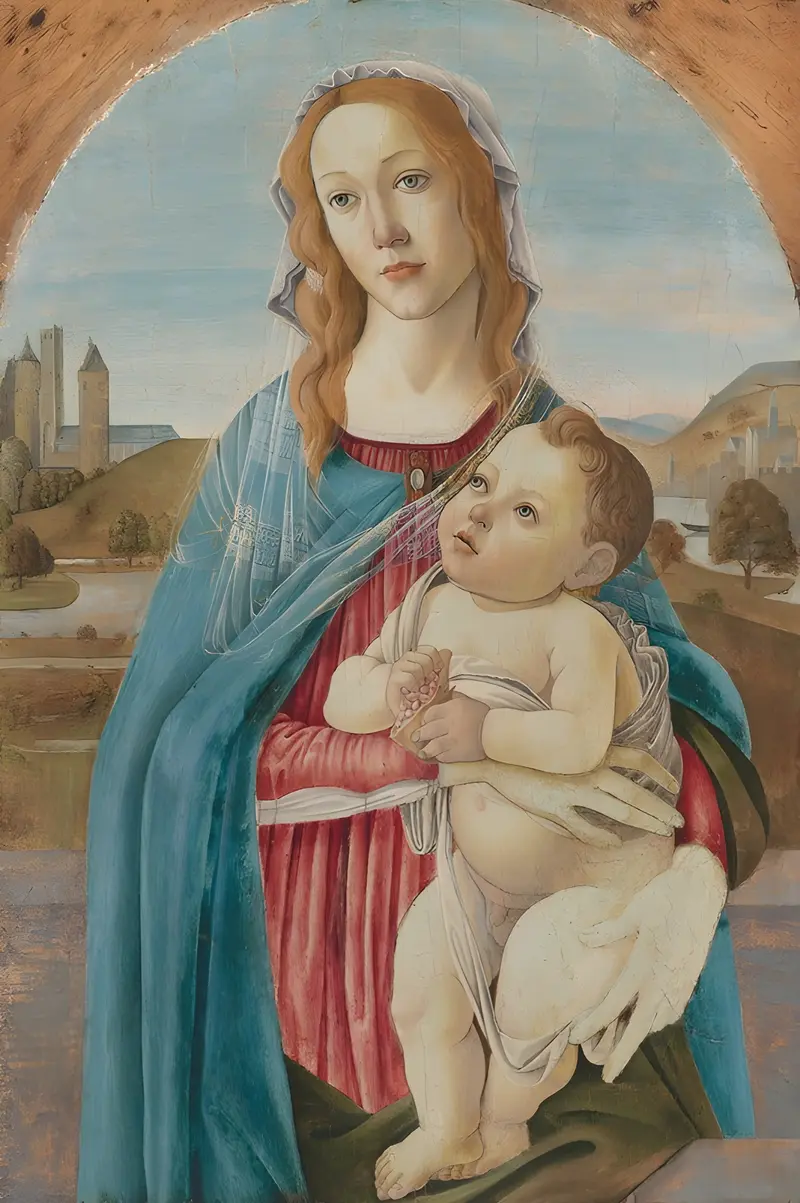
Virgin and Child
Sandro Botticelli
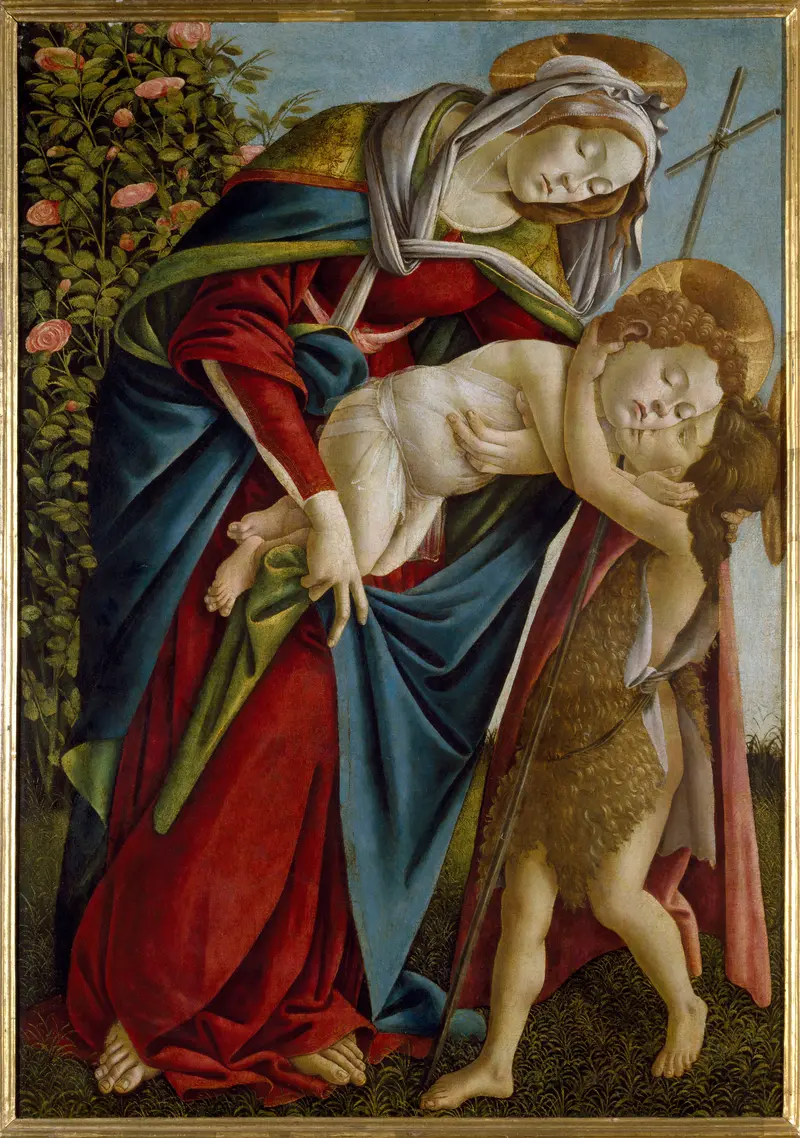
Madonna and Child and the Young St John the Baptist
Sandro Botticelli
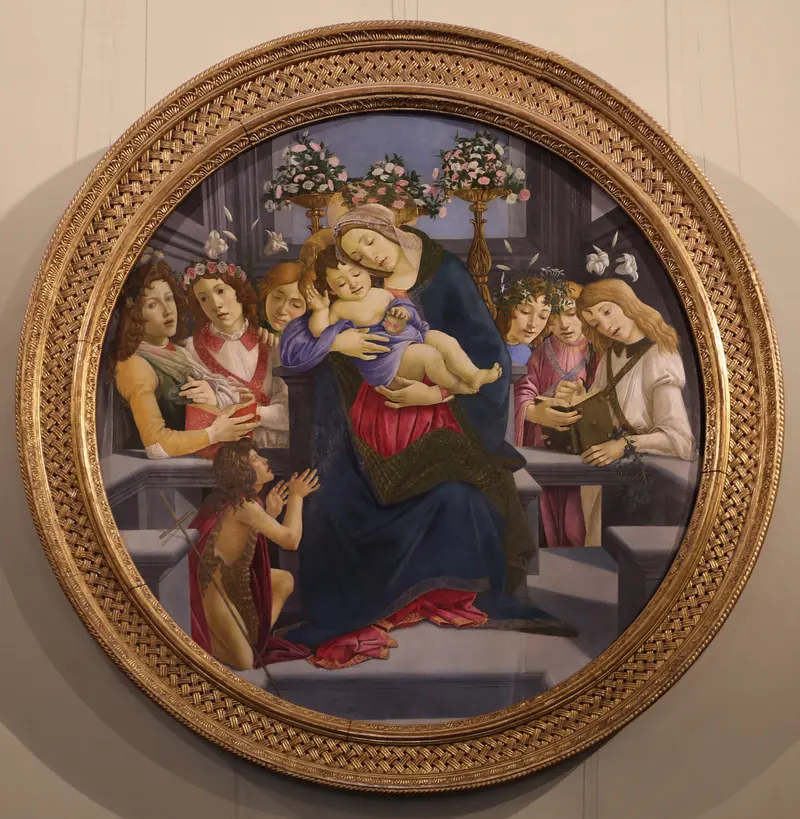
Madonna and Child with six angels and Saint John the Baptist as Child
Sandro Botticelli
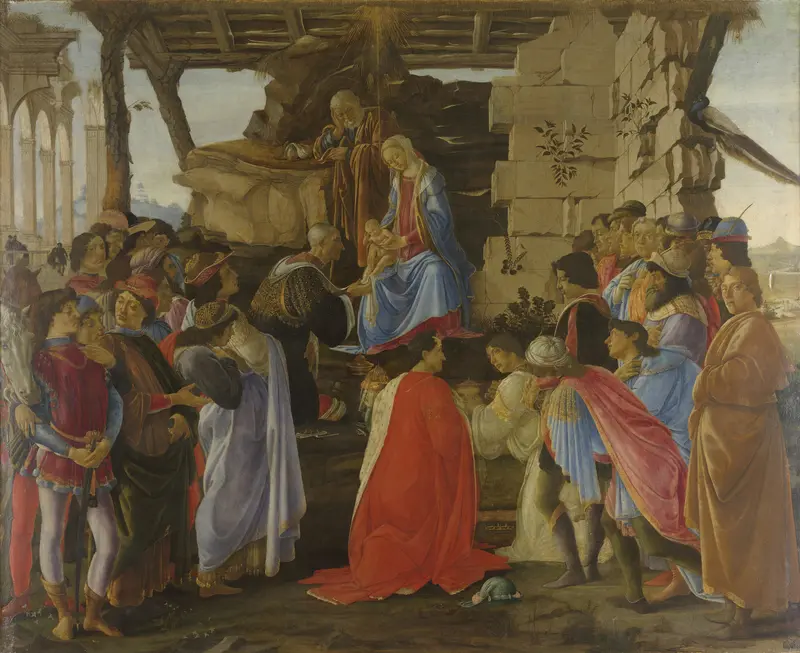
Adoration of the Magi
Sandro Botticelli

Virgin and Child with the Young Saint John the Baptist
Sandro Botticelli
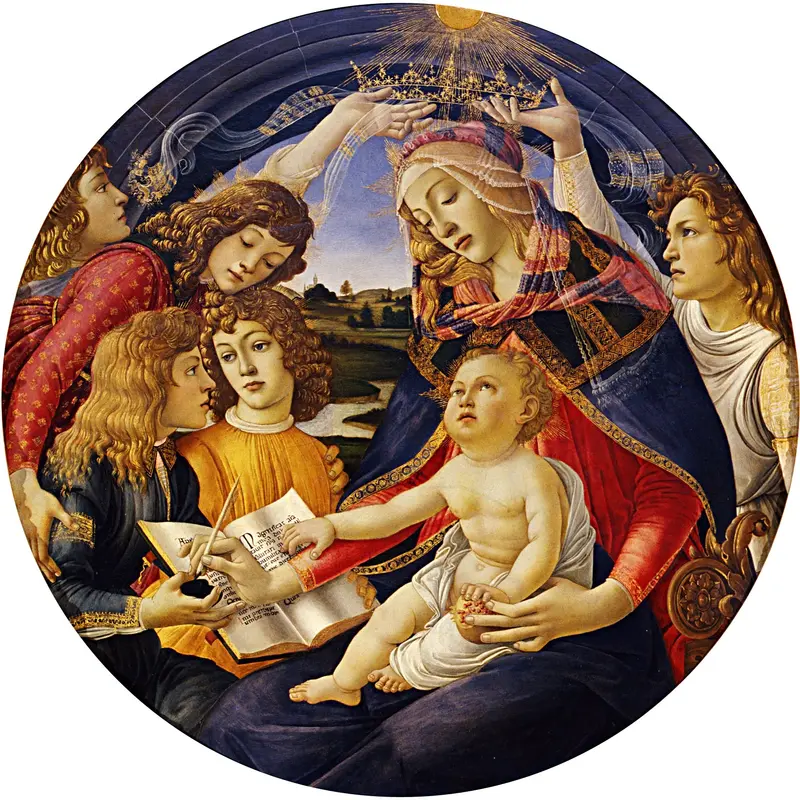
Madonna of the Magnificat
Sandro Botticelli
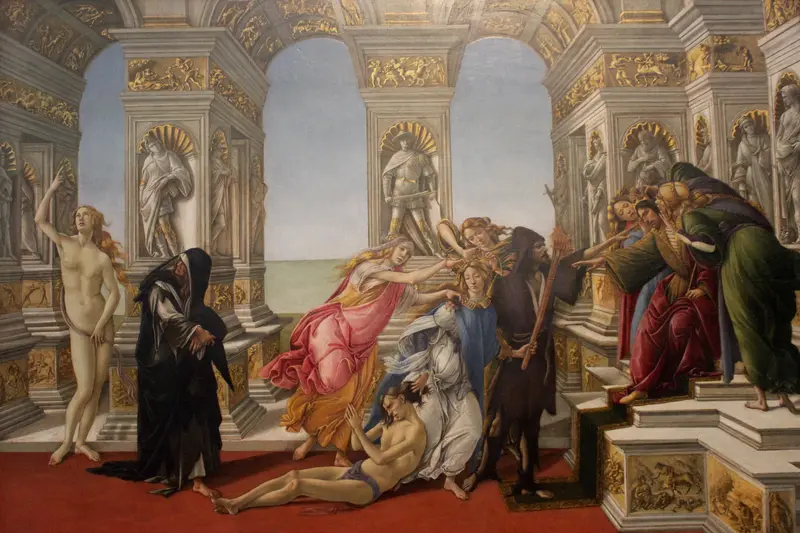
Calumny of Apelles
Sandro Botticelli
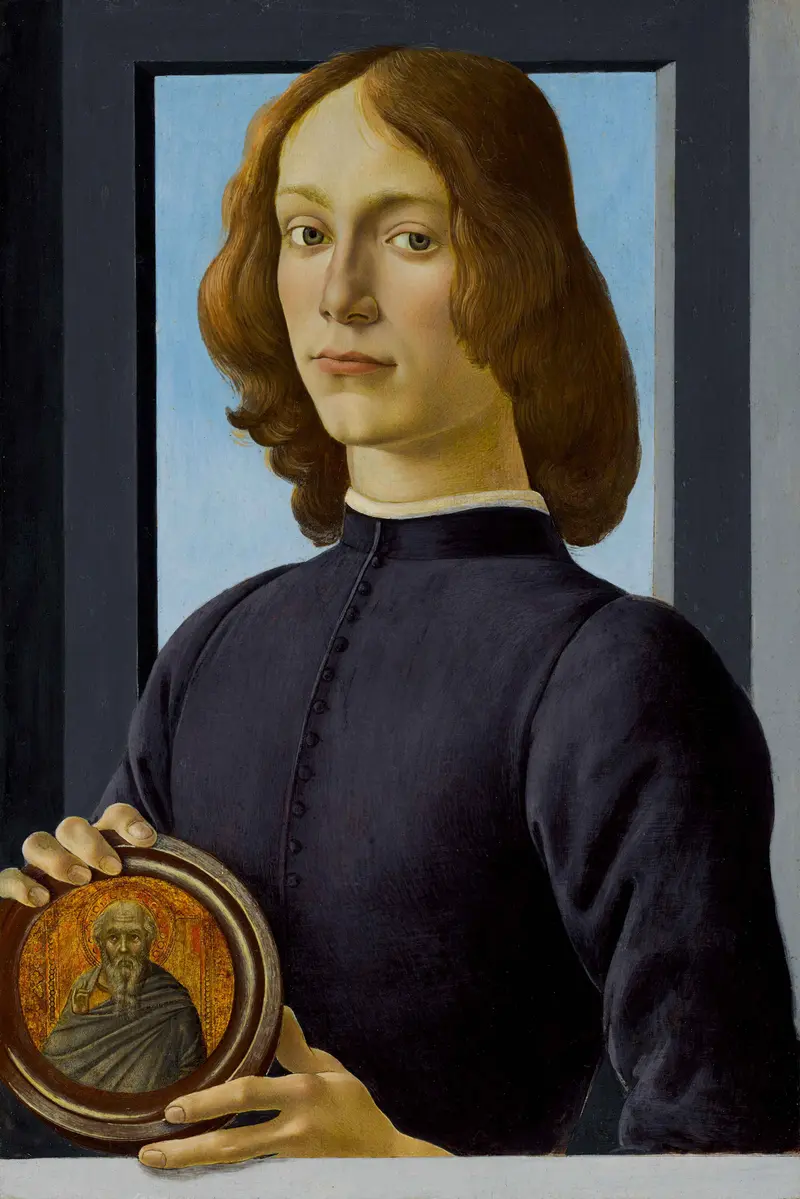
Portrait of a young man holding a roundel
Sandro Botticelli

The Trinity with Saint Mary Magdalene and Saint John the Baptist, the Archangel Raphael and Tobias
Sandro Botticelli
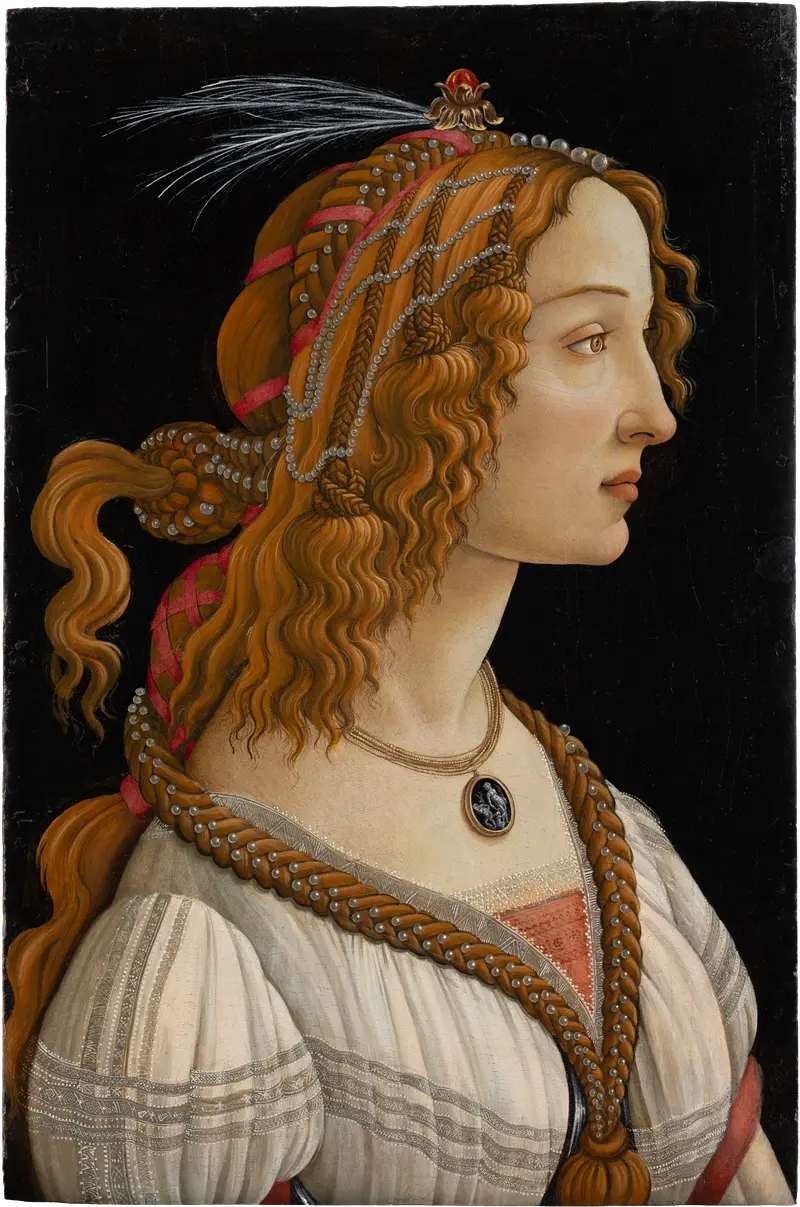
Idealized Portrait of a Lady (Portrait of Simonetta Vespucci as Nymph)
Sandro Botticelli





