
Madonna with the Siskin — History & Facts
What first catches the eye in Madonna with the Siskin is the way Albrecht Dürer stages an intimate exchange between the sacred and the everyday. The Madonna, robed in deep blue, sits enthroned yet approachable, her gaze both gentle and direct. The Christ Child, playful and restless, reaches for a siskin perched at his side—a small bird that, in Renaissance iconography, hints at Christ’s future Passion.
Two cherubs hover above, their tiny hands lowering a crown of flowers onto Mary’s head, while at her feet, John the Baptist as a child presents a sprig of greenery, his reed cross hinting at the fate awaiting both children. The landscape behind them opens into a sunlit vista, its ruins and trees drawing the viewer into a world that feels at once eternal and vividly present. Painted in 1506, this work belongs to a moment when artists like Dürer were absorbing the lessons of the Italian Renaissance—its clarity, its luminous color, its fascination with the natural world—while still rooted in the devotional traditions of Northern Europe. Paintings of the Madonna and Child were commissioned for both public altars and private devotion, serving as bridges between the earthly and the divine.
The meticulous attention to detail—the embroidered book cover, the crisp folds of blue drapery, the note on the ledge—reflects the era’s belief that the sacred could be found in the textures and objects of daily life. Today, Madonna with the Siskin resides in the collection of the Staatliche Museen zu Berlin, inviting us to linger over every gesture and glance, and to wonder at the world Dürer conjured with brush and imagination.
More Artworks by Albrecht Dürer

Melancholia
Albrecht Dürer

St. George and the dragon.
Albrecht Dürer
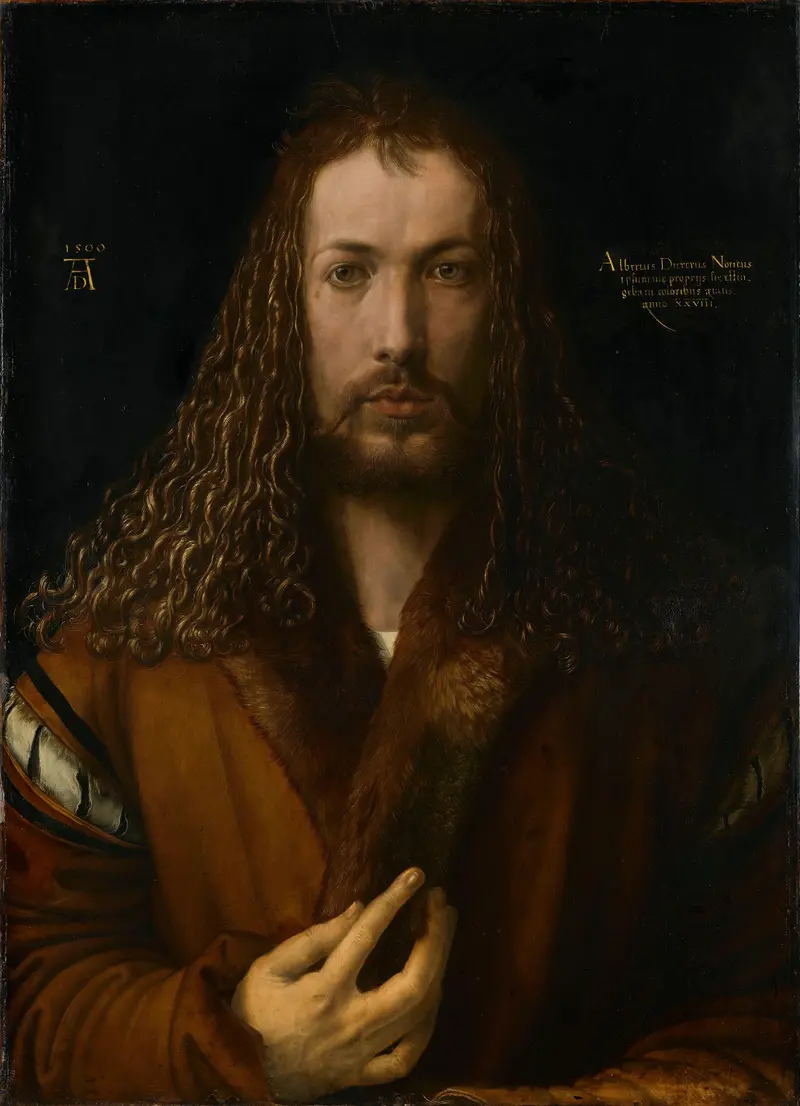
Self-Portrait with Fur-Trimmed Robe
Albrecht Dürer

Wing of a European Roller
Albrecht Dürer

Iris
Albrecht Dürer

The Great Piece of Turf
Albrecht Dürer
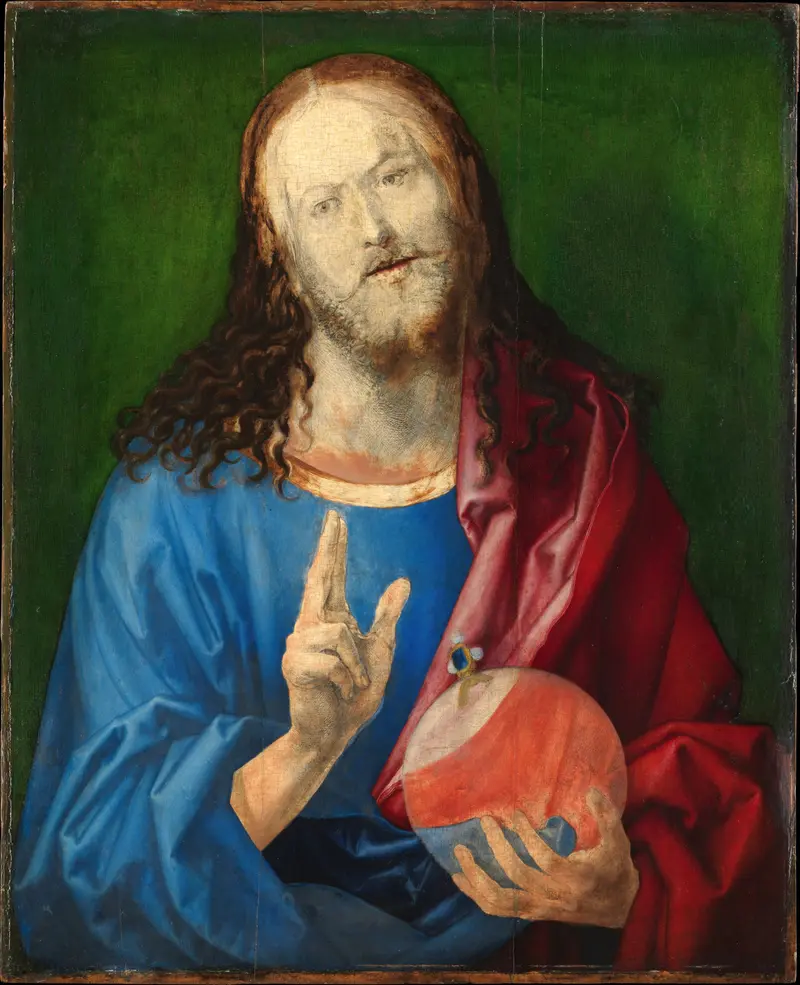
Salvator Mundi
Albrecht Dürer
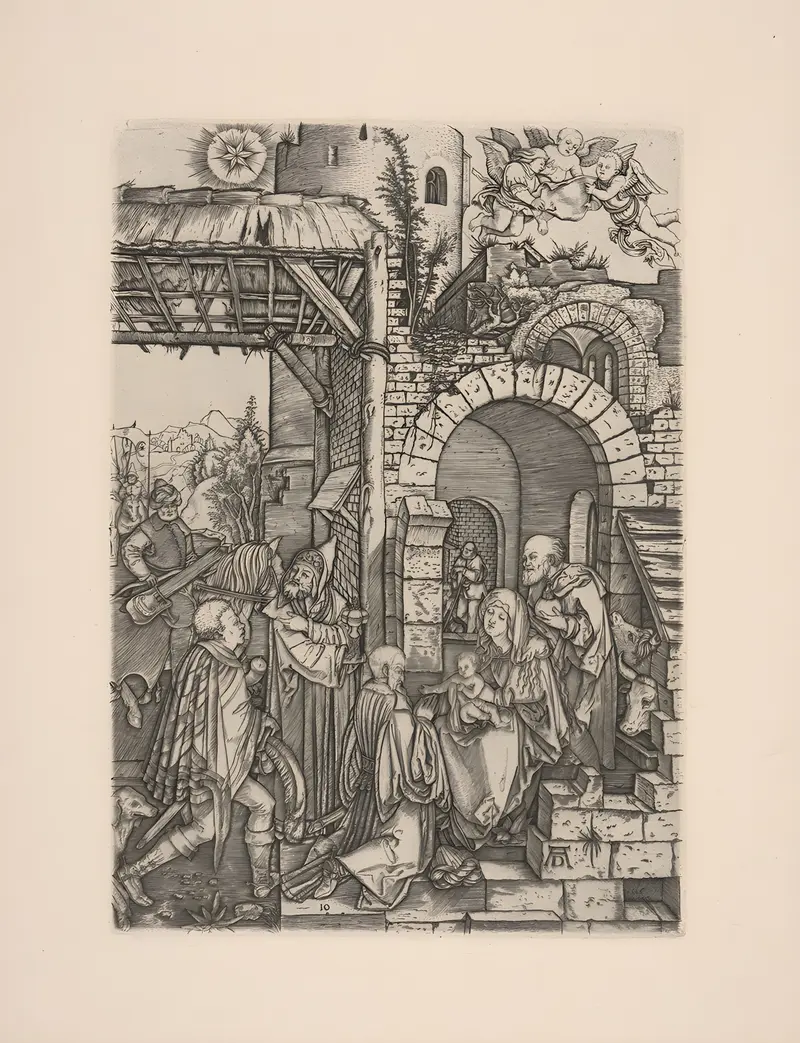
The Adoration of the Magi
Albrecht Dürer
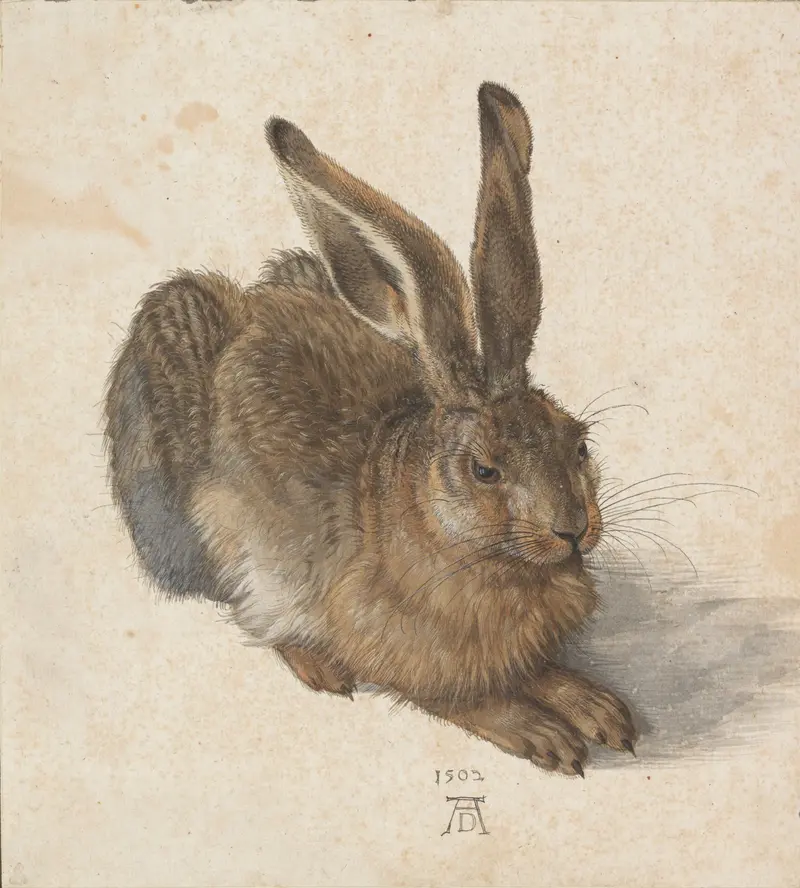
Young Hare
Albrecht Dürer
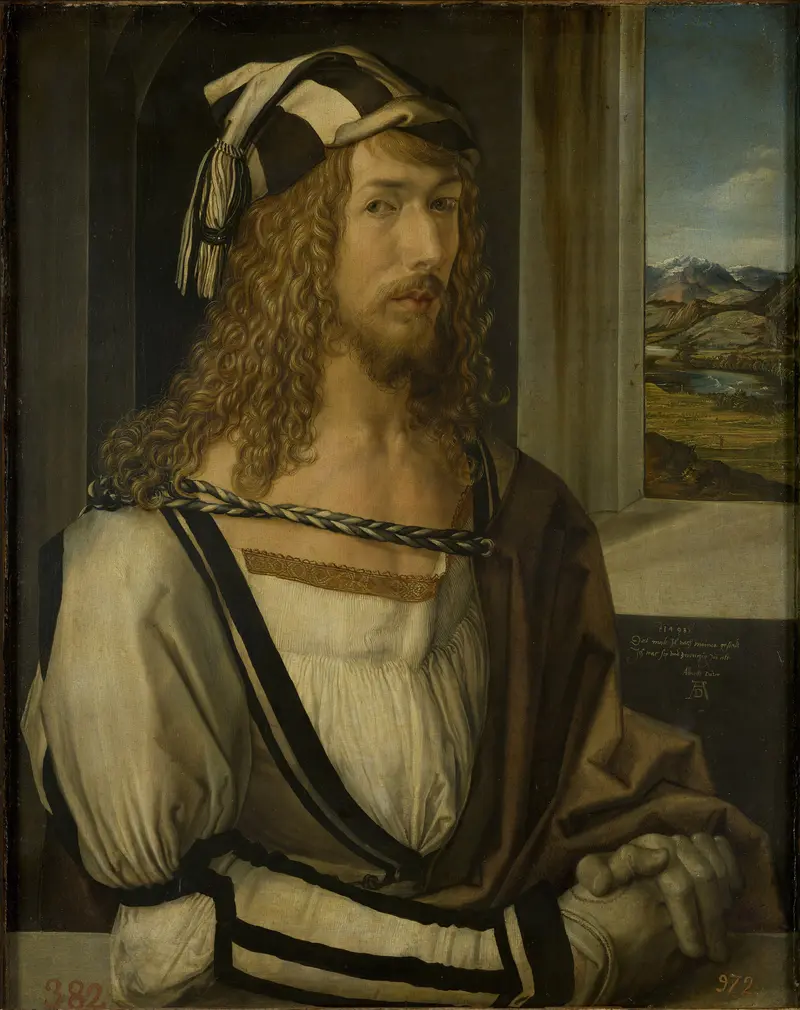
Self-portrait
Albrecht Dürer





