
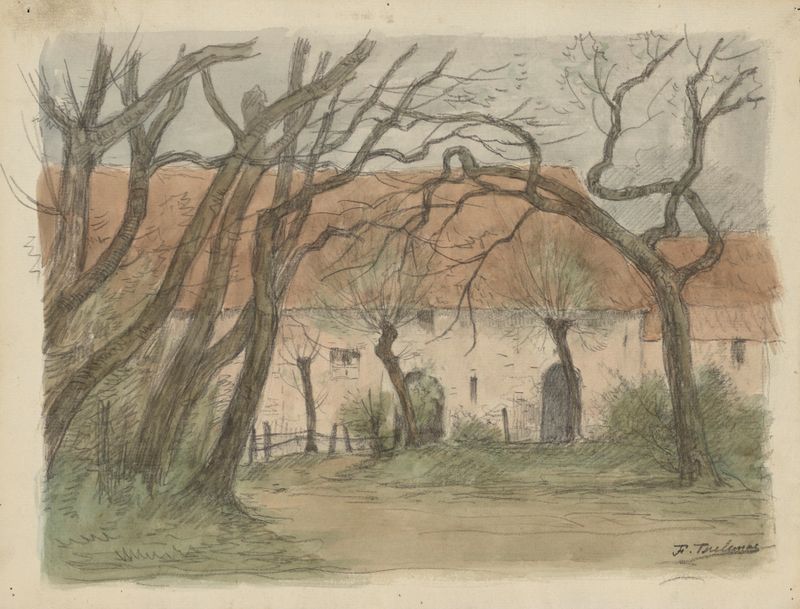
Maison campagnarde, entrée couverte à droite, deux arbres à l’avant-plan — History & Facts
The gentle allure of nature often conceals deeper fears, just as a tranquil scene can harbor underlying tension. Look to the left at the soft hues of the farmhouse's façade, where warm yellows and muted greens blend seamlessly to create an inviting yet apprehensive atmosphere. The covered entrance offers a sense of shelter, inviting viewers in while simultaneously hinting at a barrier. Notice the two trees in the foreground; their gnarled branches stretch outward, suggesting the weight of time and unspoken stories.
Each leaf dances lightly in the breeze, contrasting the stillness of the house, thus evoking a sense of duality—comfort intertwined with unease. As you gaze deeper, consider the shadows that gather around the entrance. They hint at the isolation that can accompany beauty, suggesting that security often masks vulnerability. The juxtaposition of the vibrant landscape and the subdued structure ignites a fear of abandonment, echoing the universal struggle of seeking warmth amidst the chill of solitude.
The entire composition elicits a tension between the serene and the ominous, urging the viewer to confront what lies beneath the surface. In 1922, Jean-François Taelemans painted this work during a time of societal upheaval post-World War I. Living in Belgium, he engaged with a world recovering from turmoil, where art became a refuge and a means of exploration. As he navigated his own creative journey, Taelemans captured the essence of a changing landscape, reflecting both an appreciation of beauty and a commentary on the fears that linger within it.
More Artworks by Jean-François Taelemans
Browse all →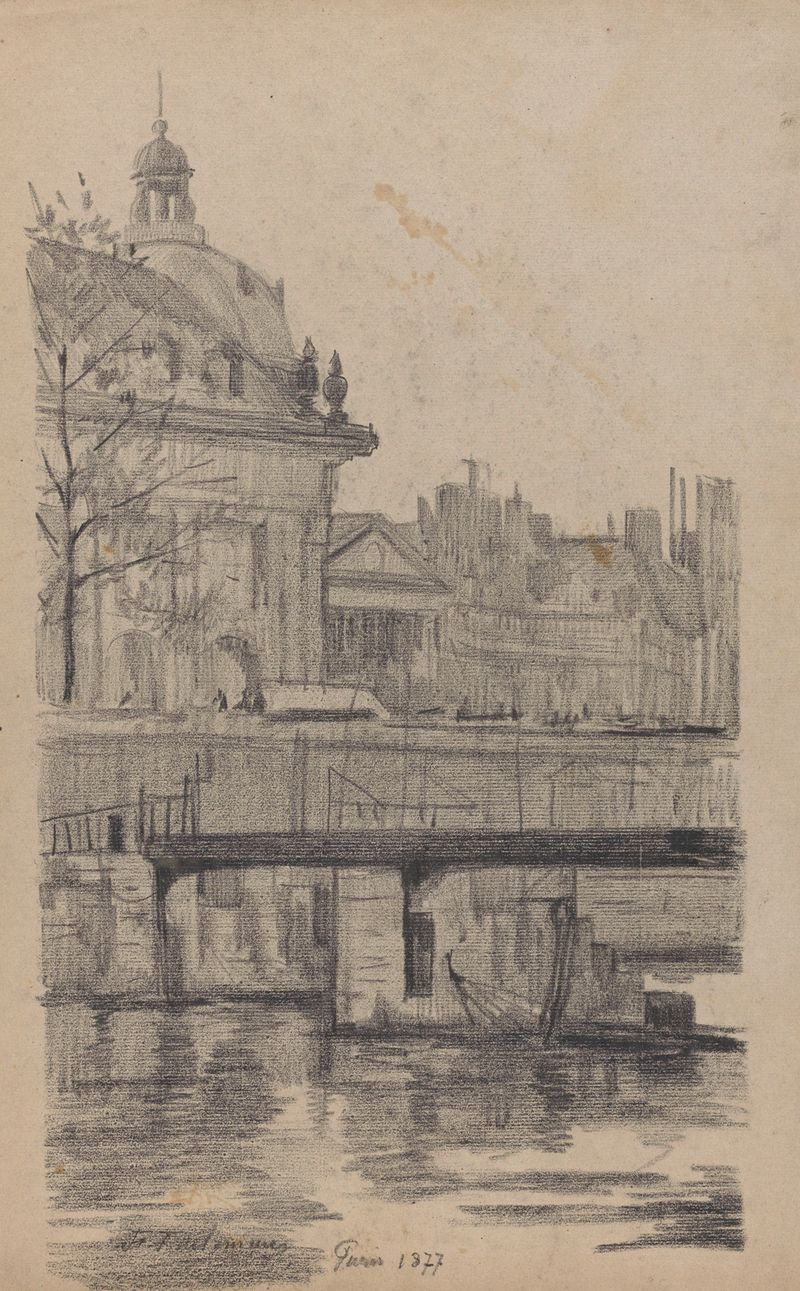
Paris (vue de la Seine et du Collège des Quatre Nations (actuellement siège de l’Institut de France)
Jean-François Taelemans
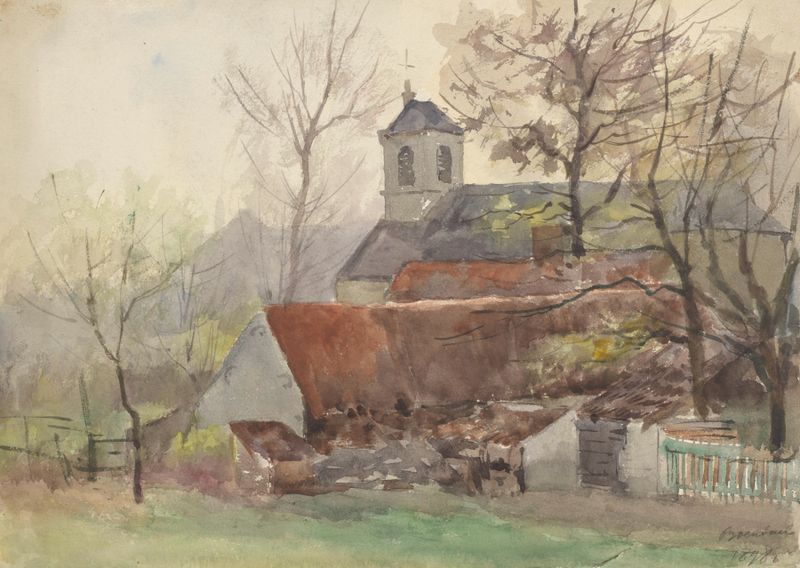
Boendael (église)
Jean-François Taelemans
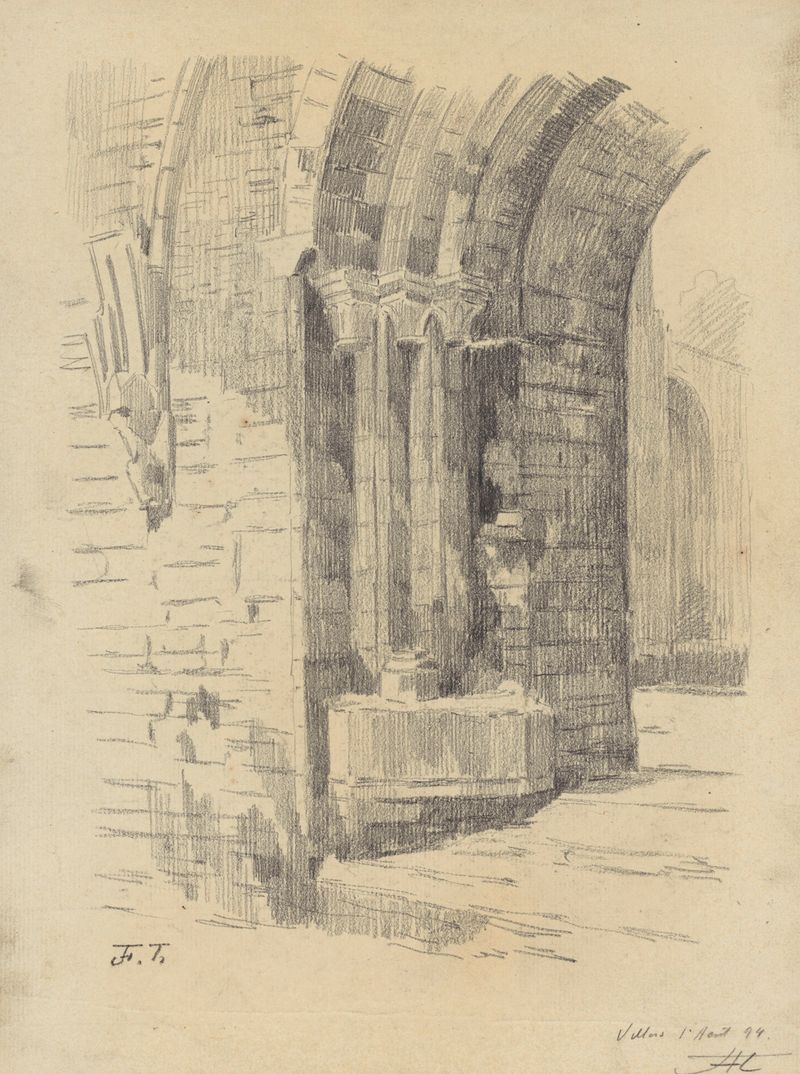
Ruines de l’abbaye de Villers-la-Ville – porche entre le cloître et l’église abbatiale (côté droit)
Jean-François Taelemans
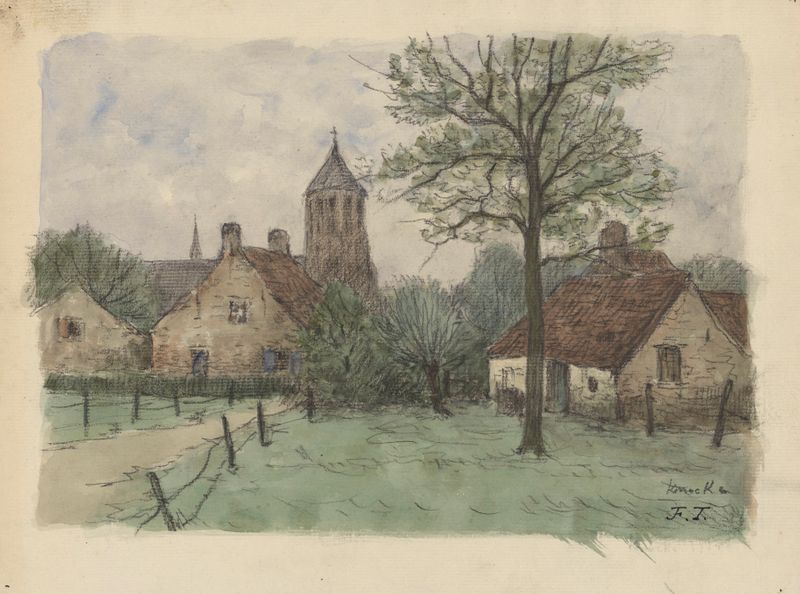
Village et église Sint Margaretha à Knocke
Jean-François Taelemans
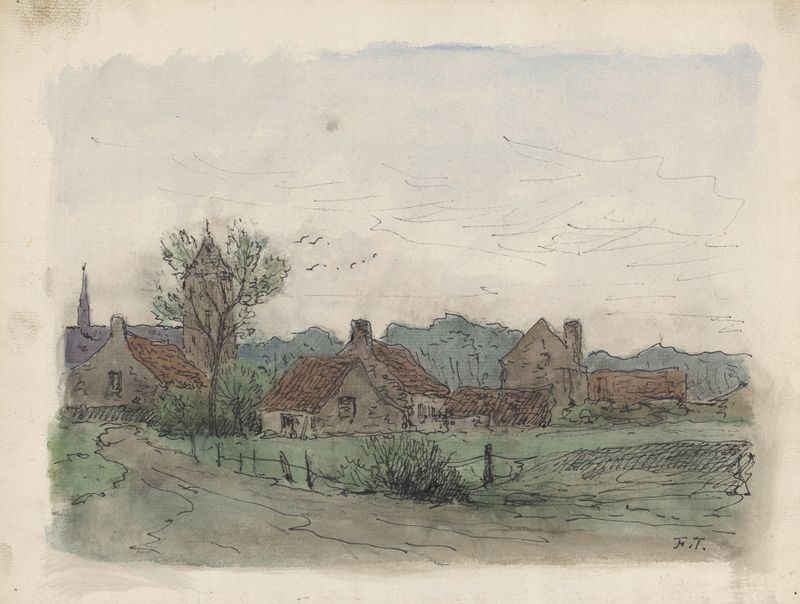
Village
Jean-François Taelemans
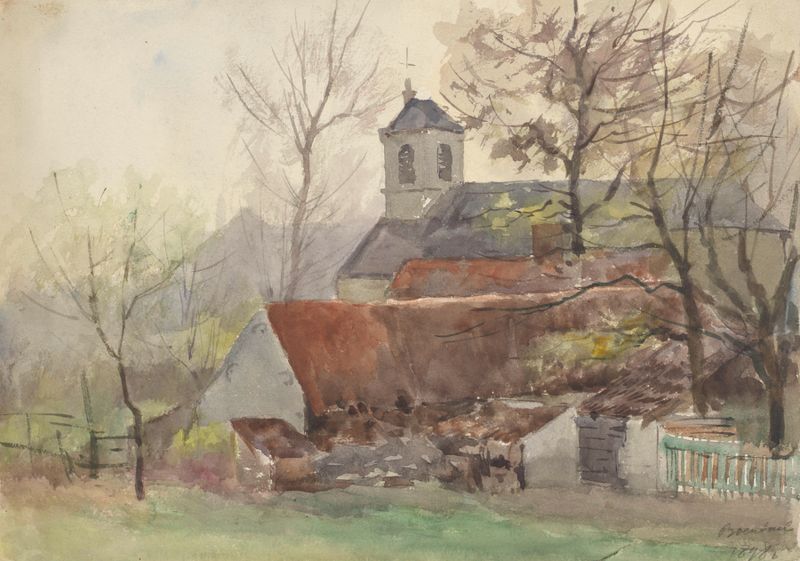
Boendael (église)
Jean-François Taelemans
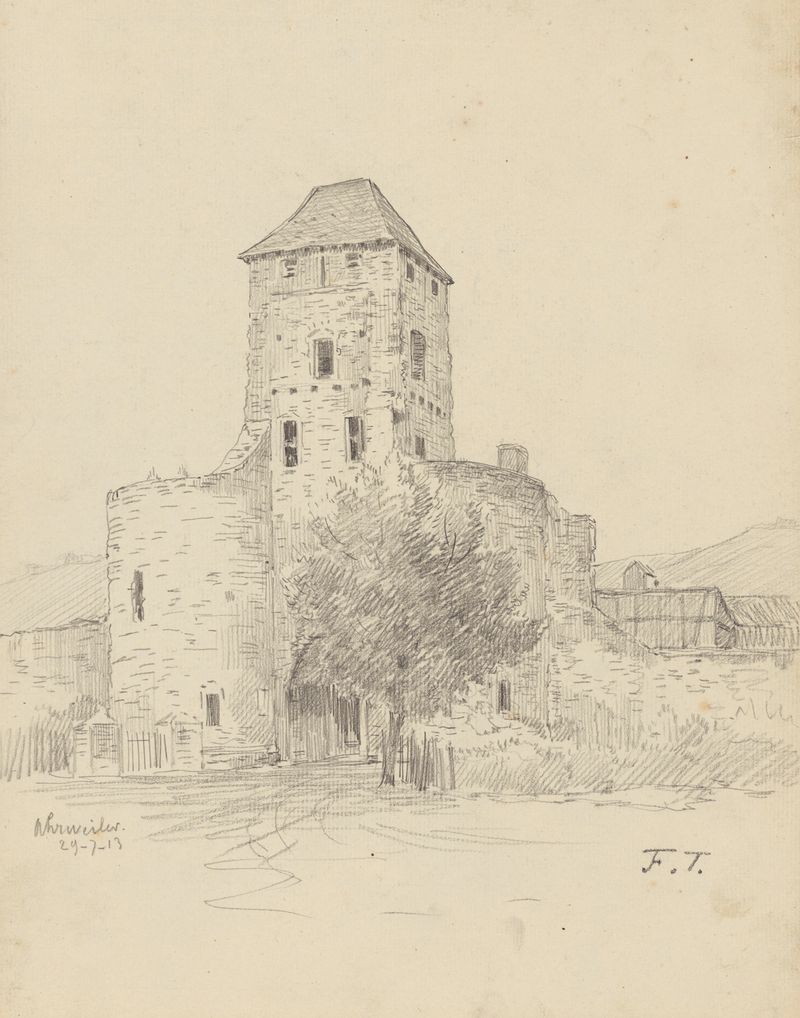
Vieille tour (porte) à Ahrweiler (Allemagne)
Jean-François Taelemans
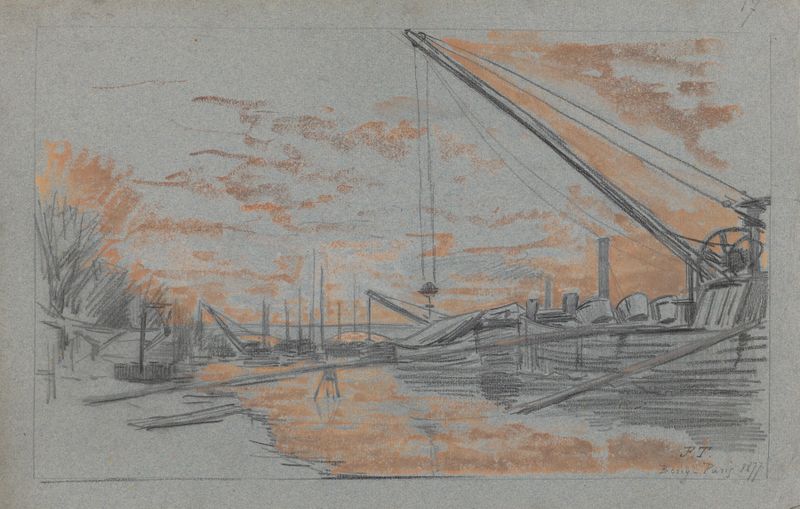
Bercy – Paris (bord de Seine avec chalands à l’ancre en cours de chargement, soleil couchant)
Jean-François Taelemans
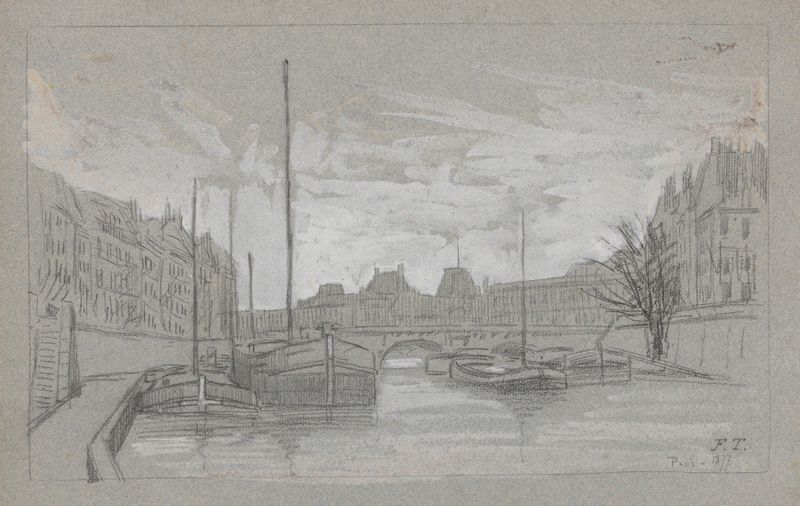
Paris (bateaux sur la Seine près d’un pont)
Jean-François Taelemans
Grande maison campagnarde derrière un bouquet d’arbres
Jean-François Taelemans
More Architecture Art
Browse all →
The statue of Liberty
Frédéric Auguste Bartholdi

View of Houses in Delft, Known as ‘The Little Street’
Johannes Vermeer

View of Houses in Delft, Known as ‘The Little Street’
Johannes Vermeer

The Cathedral in Rouen. The portal, Grey Weather
Claude Monet

The yellow house
Vincent van Gogh

The Church in Auvers-sur-Oise, View from the Chevet
Vincent van Gogh