
Vieille tour (porte) à Ahrweiler (Allemagne) — History & Facts
Within the stillness of Vieille tour (porte) à Ahrweiler, the viewer is invited to uncover layers of revelation hidden within the aged stones and weathered wood. The painting stands as a testament to time itself, whispering secrets of the past that resonate through its quiet surfaces. Look to the center of the canvas, where the ancient tower rises, steadfast and imposing. Notice how the muted palette of greys and browns envelops the structure, evoking a sense of solemnity and history.
The soft light filtering through the trees casts gentle shadows, creating a contrast that enhances the depth of the scene. The intricate details of the brickwork and the slight wear on the doorframe speak volumes, suggesting stories of those who have passed through. Yet beneath its serene facade lies a tension between permanence and decay. The tower, a symbol of strength, stands in juxtaposition with the signs of erosion that hint at vulnerability and the inevitable passage of time.
This duality evokes a sense of nostalgia, prompting reflections on what it means to endure—both as a building and as a memory. The surrounding foliage adds an organic softness, suggesting nature’s quiet reclaiming of space, as if to remind us that every structure is a brief moment in the continuum of life. Jean-François Taelemans painted Vieille tour (porte) à Ahrweiler in 1913, during a period when Europe was on the brink of profound change. Living in Belgium, he was influenced by the art movements of his time, embracing the transition from realism to impressionism.
This work reflects his fascination with architectural forms, capturing not just a physical structure but the essence of a place steeped in history and memory, poised at the intersection of past and future.
More Artworks by Jean-François Taelemans
Browse all →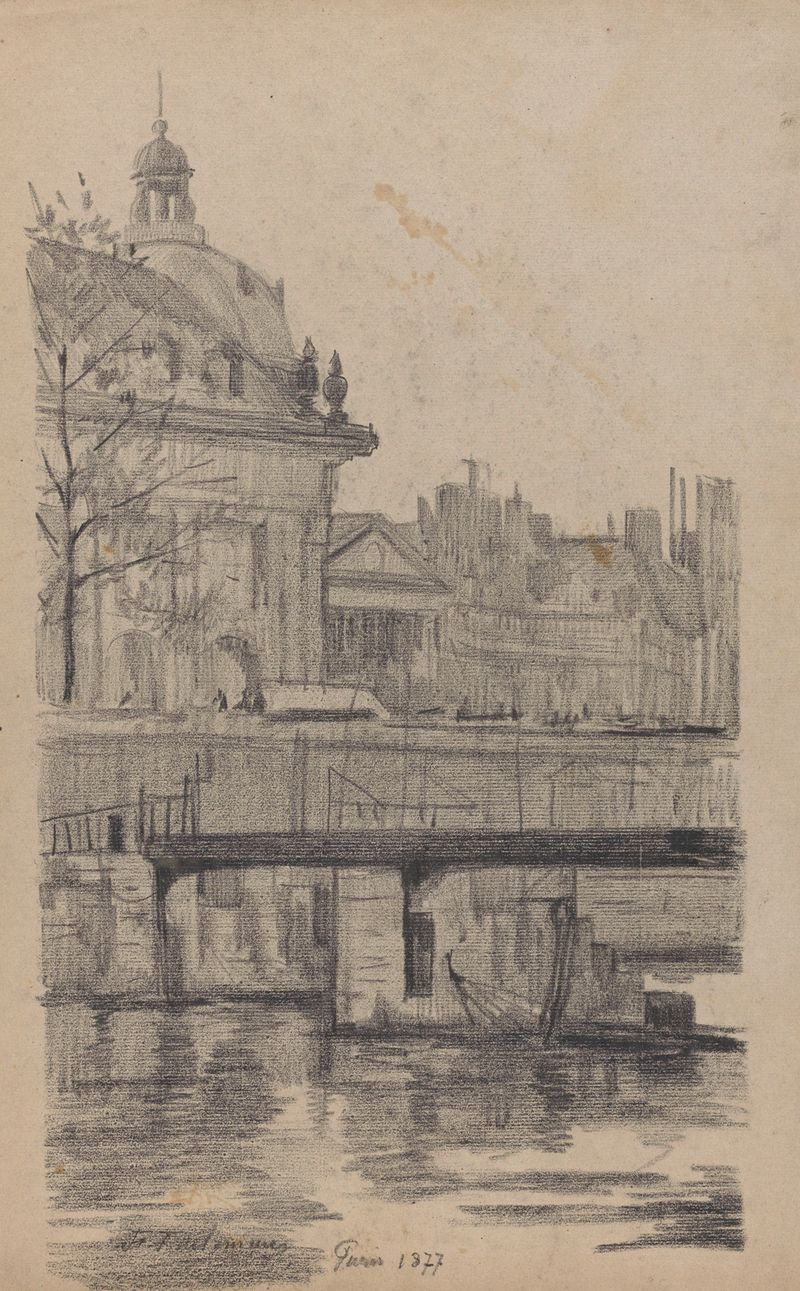
Paris (vue de la Seine et du Collège des Quatre Nations (actuellement siège de l’Institut de France)
Jean-François Taelemans
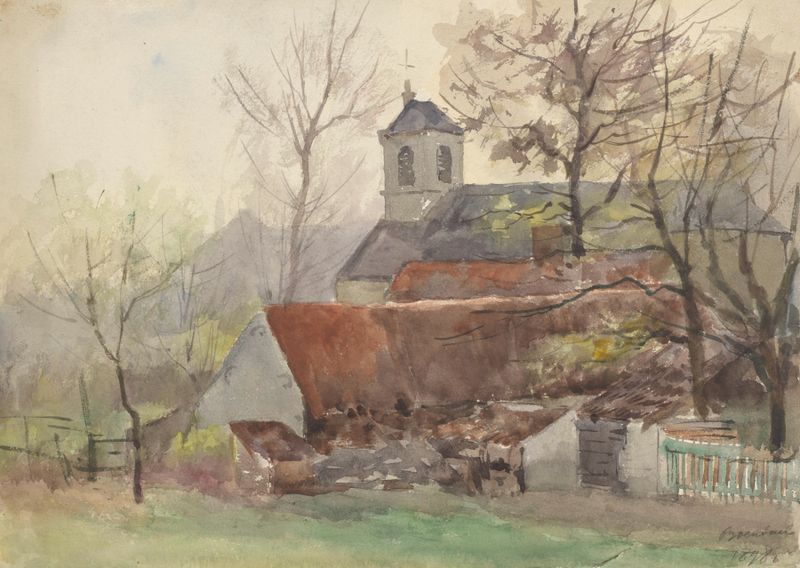
Boendael (église)
Jean-François Taelemans
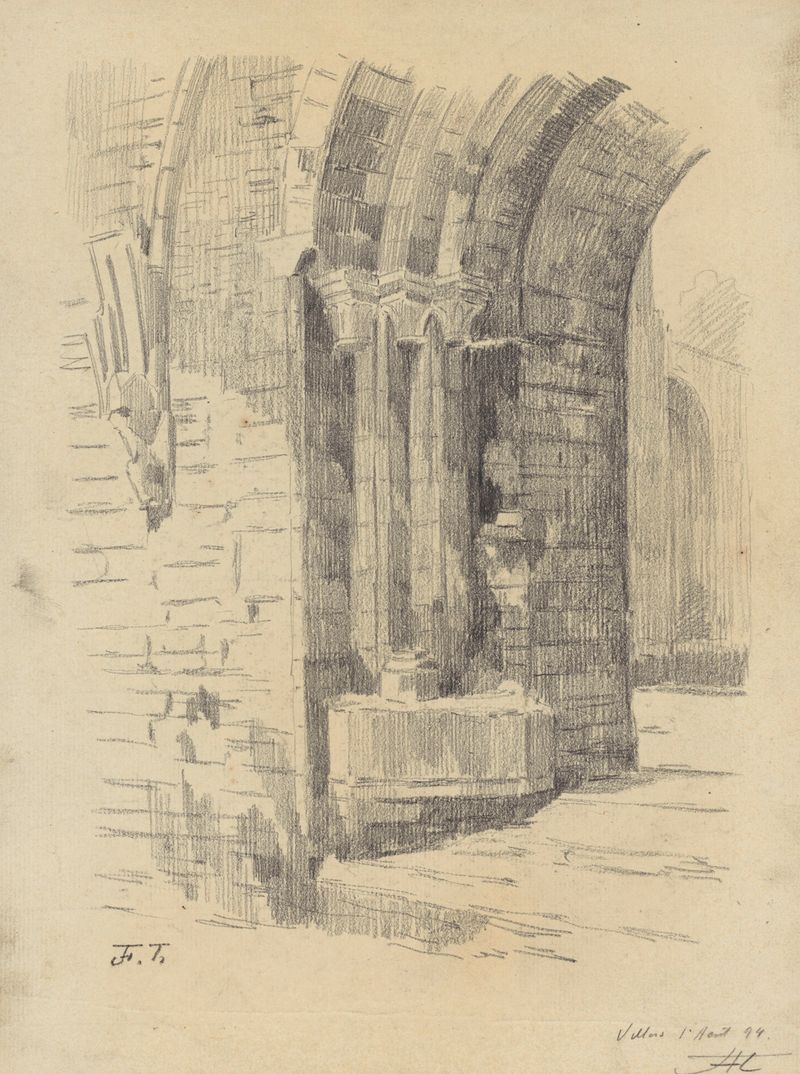
Ruines de l’abbaye de Villers-la-Ville – porche entre le cloître et l’église abbatiale (côté droit)
Jean-François Taelemans
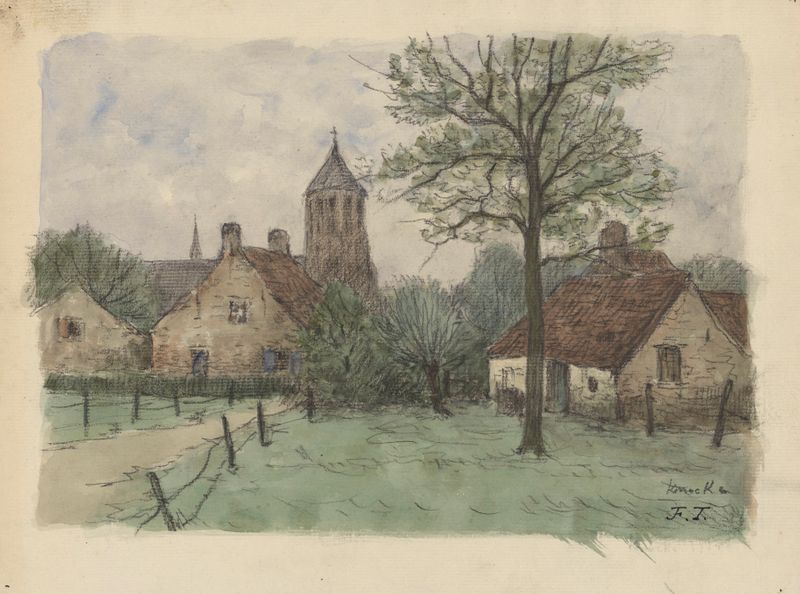
Village et église Sint Margaretha à Knocke
Jean-François Taelemans
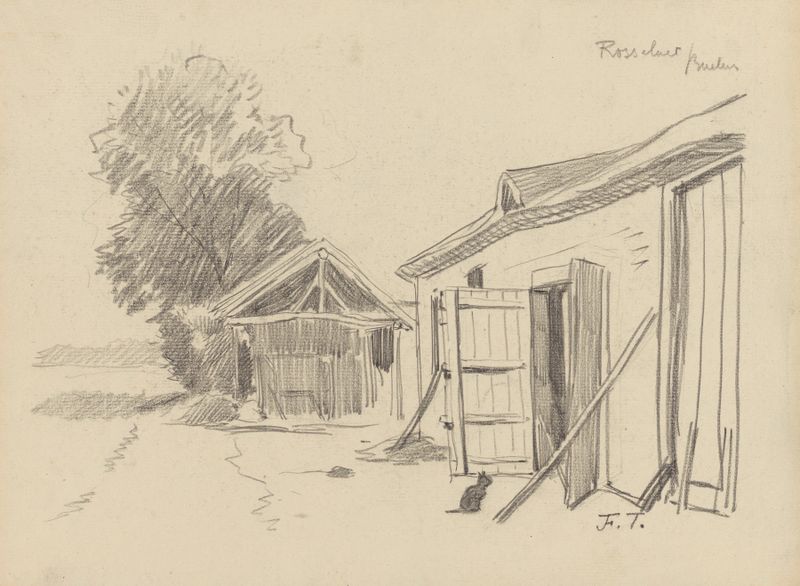
Croquis de deux remises de ferme à Rosselaer
Jean-François Taelemans
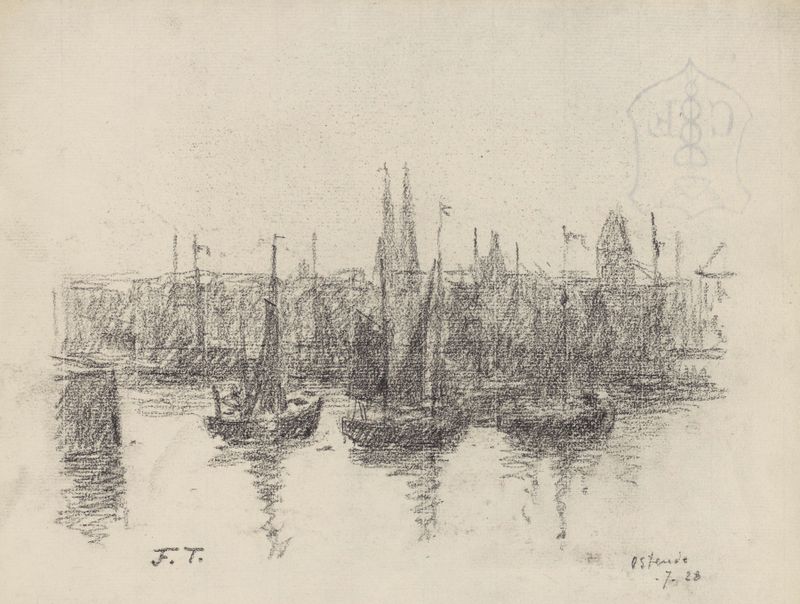
Ostende – port de pêche
Jean-François Taelemans
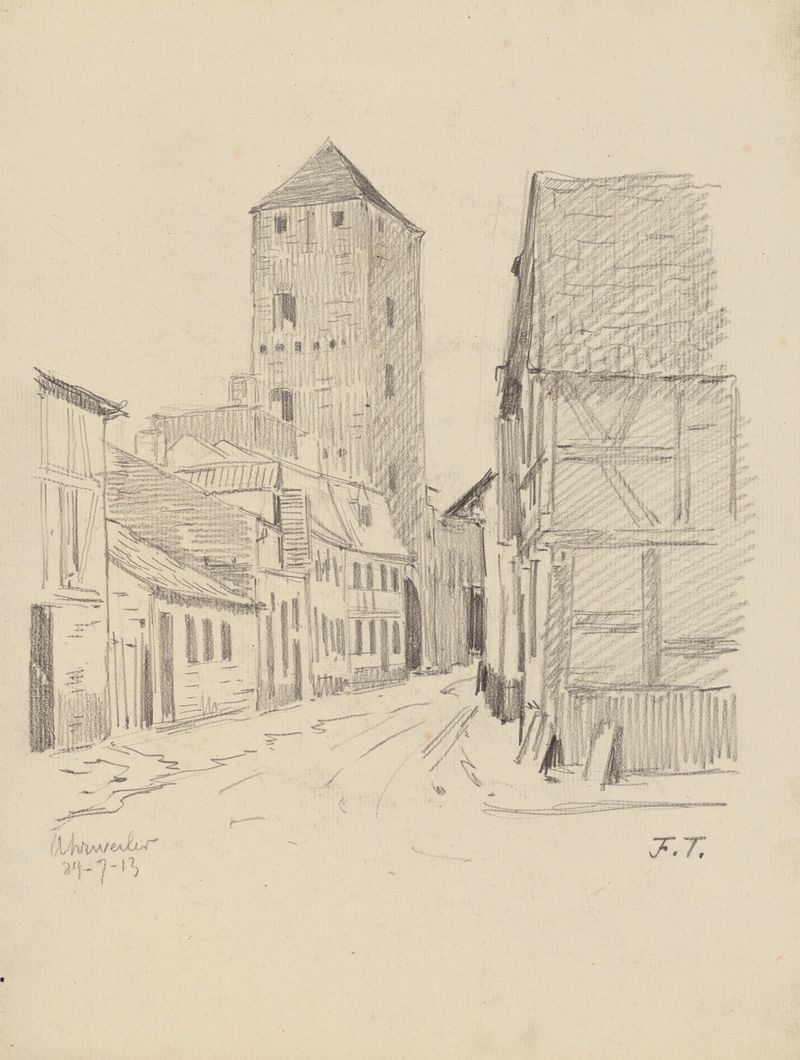
Ruelle et tour carrée à Ahrweiler (Rhénanie-Palatinat)
Jean-François Taelemans
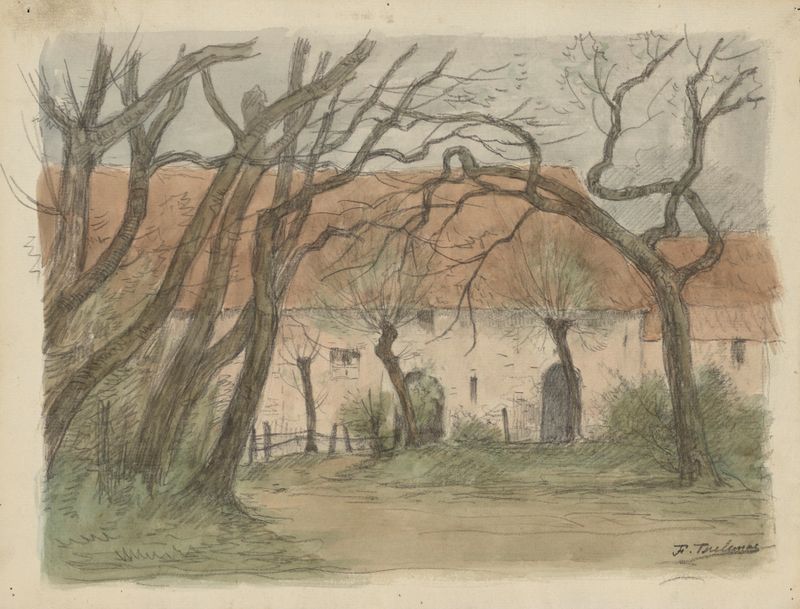
Grande maison campagnarde derrière un bouquet d’arbres
Jean-François Taelemans
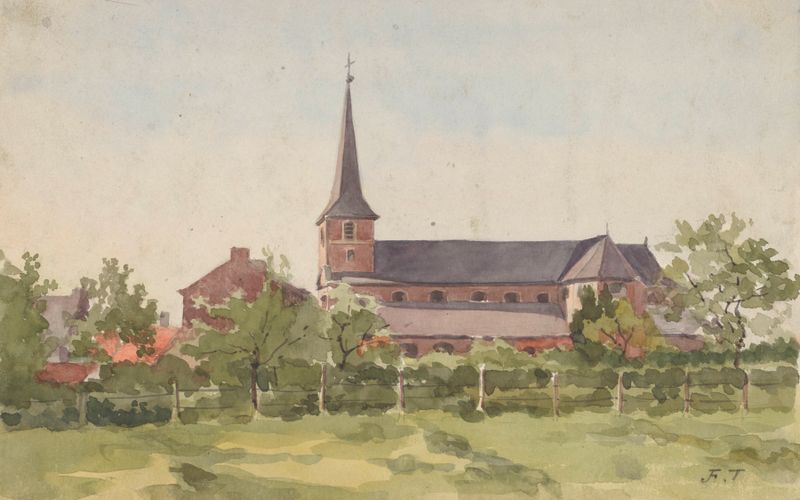
Eglise de village vue sur son flanc droit derrière une haie clôturée, pré à l’avant-plan
Jean-François Taelemans
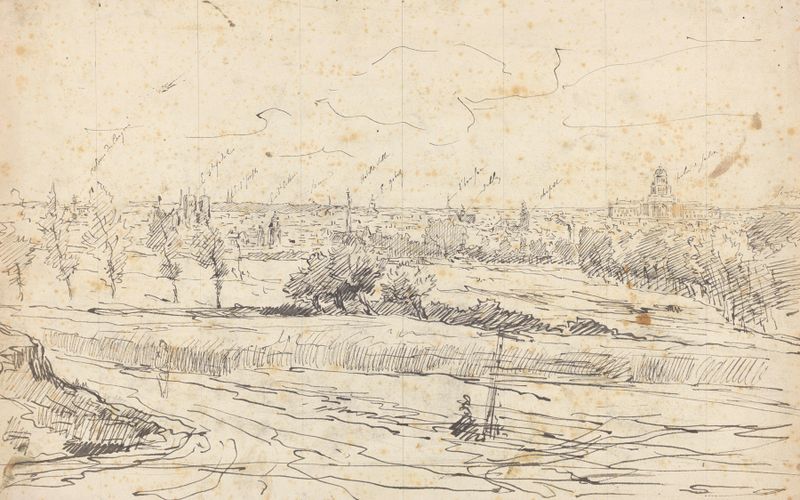
Panorama de Bruxelles
Jean-François Taelemans
More Architecture Art
Browse all →
The statue of Liberty
Frédéric Auguste Bartholdi

View of Houses in Delft, Known as ‘The Little Street’
Johannes Vermeer

View of Houses in Delft, Known as ‘The Little Street’
Johannes Vermeer

The Cathedral in Rouen. The portal, Grey Weather
Claude Monet

The yellow house
Vincent van Gogh

The Church in Auvers-sur-Oise, View from the Chevet
Vincent van Gogh